Table of Contents >> Show >> Hide
- What Toenail Fungus Looks Like (and What It Can Be Confused With)
- Why Toenail Fungus Is Stubborn (It’s Not Just You)
- The Smart At-Home Game Plan (What to Do Before You Buy 14 “Miracle” Oils)
- Over-the-Counter Treatments That Actually Have a Track Record
- Home Remedies: What’s Popular, What’s Plausible, What’s Mostly Hype
- Prescription Treatments (The Heavy Hitters)
- How Long Does Treatment Take (and How to Tell It’s Working)
- Prevention: How to Stop the Fungus From Coming Back for a Reunion Tour
- FAQs People Secretly Google at 2:00 AM
- Putting It All Together: A Practical, Realistic Routine
- Experiences People Commonly Share About Toenail Fungus (and What They Learned)
- The runner who blamed the shoe (and wasn’t totally wrong)
- The gym-goer who didn’t fear the treadmill, but should’ve feared the shower floor
- The person who tried every home remedy (and developed a second problem: irritated skin)
- The “it’s just cosmetic” mindsetuntil the nail becomes painful
- The salon regular who learned to ask better questions
- The slow-burn reality: progress is measured in millimeters
- Conclusion
Toenail fungus (a.k.a. onychomycosis) is the uninvited houseguest of foot problems: it shows up quietly, rearranges your nails, and then refuses to leave without a long, awkward conversation and a solid exit plan.
The good news? You have options. The slightly annoying news? Most options take time, consistency, and the willingness to stare at your feet more often than you ever planned.
This guide breaks down what actually helps, what might help, what’s mostly internet folklore, and when to stop DIY-ing and call in a professional.
It’s written in plain English, with a dash of humor, but it’s still medically grounded. (Think: “responsible friend,” not “bathroom cabinet wizard.”)
Important note: This article is for general education and isn’t medical advice. If you have diabetes, poor circulation, immune system issues, significant pain, swelling, or signs of bacterial infection, skip the home experiment phase and talk to a clinician.
What Toenail Fungus Looks Like (and What It Can Be Confused With)
Toenail fungus usually starts small: a white/yellow spot, mild discoloration, or a nail that looks “off” in a way you can’t quite describe.
Over time, the nail may thicken, turn yellow-brown, become crumbly, lift from the nail bed, or develop debris underneath.
Sometimes it’s painless. Sometimes it’s a little tender. And sometimes it turns your toe into a tiny pressure cooker inside your shoe.
Common signs
- Yellow, white, or brown discoloration
- Thickened nail that’s harder to trim
- Crumbly, ragged edges
- Debris under the nail
- Nail lifting or separating from the nail bed
- Occasional odor (yes, nails can be dramatic)
Look-alikes that aren’t fungus
Not every weird nail is fungal. Trauma (hello, runners and tight shoes), psoriasis, eczema, aging-related thickening, and bacterial issues can mimic fungus.
That’s why clinicians often confirm the diagnosis with a nail clipping or lab test before prescribing the heavy hitters.
Translation: if you’ve treated “fungus” for months and nothing changes, it might not be fungusor it might be fungus plus something else.
Why Toenail Fungus Is Stubborn (It’s Not Just You)
Fungi love warm, moist environmentslike sweaty socks, tight shoes, and gym shower floors that have seen things.
But the real problem is anatomy: nails are thick, slow-growing keratin shields.
Many topical products struggle to reach the infection living under or within the nail plate.
Even when treatment works, toenails can take 9–12 months to fully grow out, so improvement is slow and easy to miss if you’re only watching the crumbly tip.
Risk factors that make fungus more likely
- Having athlete’s foot (fungus can spread from skin to nail)
- Frequent sweaty feet or tight, non-breathable shoes
- Walking barefoot in communal wet areas (locker rooms, pools, spas)
- Nail injury or repeated micro-trauma (sports, hiking, work boots)
- Older age (slower nail growth + more exposure time)
- Diabetes, circulation issues, or immune system suppression
The Smart At-Home Game Plan (What to Do Before You Buy 14 “Miracle” Oils)
If your infection is mild (small area, not too thick, not painful), a consistent home routine may helpespecially when paired with proven antifungal products.
The key word is consistent. Fungi don’t leave because you scold them once. They leave when you make their living situation miserable every day for months.
Step 1: Clean, dry, and de-gunk daily
- Wash feet with soap and water.
- Dry thoroughly, especially between toes (fungus loves damp toe webs).
- Change socks daily (more often if you’re sweaty or exercising).
- Rotate shoes to let them dry out between wears.
Step 2: Trim and thin the nail safely
Thick nails block topical treatments. Carefully trimming and thinning can improve penetration.
If your nail is very thick, painful, or hard to cut, don’t force itthis is how tiny cuts become bigger problems.
- Clip nails straight across; don’t dig into corners.
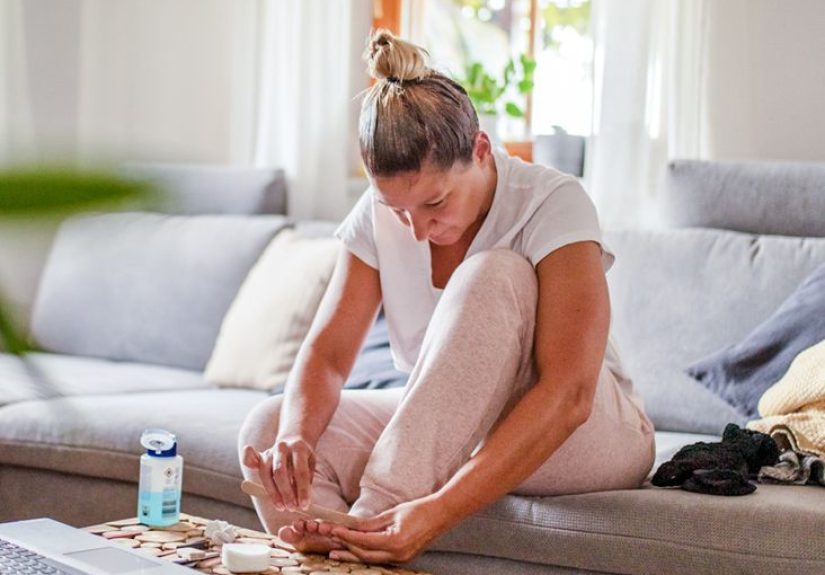
- After a shower, gently file the surface to reduce thickness.
- Use separate clippers/files for the infected nail if possible.
- Disinfect tools after use (soap + hot water, then rubbing alcohol).
Step 3: Treat the skin too (often the “source” is athlete’s foot)
Many people treat the nail and ignore the surrounding skin. That’s like mopping the floor while the bathtub is still overflowing.
If you have scaling, itching, or peeling between toes, consider an over-the-counter antifungal cream for the skin (follow label directions).
Over-the-Counter Treatments That Actually Have a Track Record
Let’s set expectations: OTC products can help, but nails are a hard target.
They tend to work best for early or mild infections, or as support alongside prescription care.
If the infection involves more than half the nail, multiple nails, significant thickening, pain, or nail lifting, you’ll likely need stronger options.
OTC antifungals for surrounding skin
These are useful if you also have athlete’s foot or irritation around the nail.
Treating the skin can reduce reinfection pressure on the nail.
Look for active ingredients commonly used for fungal skin infections and follow the package instructions exactly.
OTC “nail fungus solutions”
Many OTC liquids are marketed for nails. Some contain antifungal ingredients; others are cosmetic or pH-altering products.
They may reduce surface fungus and improve appearance, but deep nail infections often need prescription-level therapy.
If you choose an OTC nail product, pick one with clear directions, use it consistently, and take monthly photos to track progress (because your eyes will lie to you).
Home Remedies: What’s Popular, What’s Plausible, What’s Mostly Hype
Home remedies for toenail fungus have big “grandma knew everything” energyand sometimes they’re soothing and safe.
But the evidence is mixed, and some popular ideas can irritate skin or delay real treatment.
Here’s the balanced breakdown.
Tea tree oil (essential oil)
Tea tree oil has antifungal properties in lab settings, and small human studies suggest it may help in some cases.
The main issues are irritation and inconsistent results.
If you try it, never apply undiluted essential oil to sensitive skin. Patch test first, and stop if you get burning, redness, or rash.
Think of it as a “maybe helpful add-on,” not a guaranteed cure.
Vicks VapoRub (yes, really)
Vicks is a common folk remedy because ingredients like menthol and eucalyptus oil have mild antimicrobial activity, and the ointment is occlusive (it seals moisture out and softens keratin).
Some small reports suggest it may improve nail appearance over time.
The catch: it’s slow, the evidence is limited, and it’s better viewed as “supportive care” than “fungus eviction notice.”
Vinegar or apple cider vinegar soaks
Vinegar is acidic, and acidic environments may discourage fungal growth on skin.
For nails, evidence is limited, but many people find diluted soaks soothing and low-risk (unless you have open cuts, severe dryness, or neuropathy).
If you try it, keep it mild, keep it short, and moisturize afterward. If it stings, your skin is telling you “no.”
Garlic, bleach, hydrogen peroxide, “industrial-strength” anything
Garlic has compounds with antimicrobial properties, but putting raw garlic on skin can cause burns and dermatitis.
Bleach and peroxide can irritate or damage skin and nails and are not recommended as DIY toenail treatments.
If a remedy sounds like it belongs in a cleaning aisle, not a skincare routine, trust that instinct.
Oils and extracts with a “natural antifungal” reputation
You’ll see lists that include oregano oil, propolis, coconut oil, and more.
Some have antifungal effects in lab studies, but real-world nail penetration is the bottleneck.
If you enjoy using a gentle oil to moisturize and protect surrounding skin, that can be helpful.
But don’t let “natural” distract you from “effective.”
Prescription Treatments (The Heavy Hitters)
When toenail fungus is moderate to severeor just stubbornprescription therapy can significantly increase your chances of clearing it.
Clinicians often confirm fungus with a test before starting systemic medication, because the strongest treatments aren’t worth taking for the wrong diagnosis.
Prescription topical options
Prescription lacquers and solutions are applied to the nail for long periods (often close to a year).
They’re usually best for mild to moderate cases, especially when the infection hasn’t reached the nail matrix (the growth area).
Topicals can also be combined with oral medication to improve overall outcomes.
- Medicated nail lacquer (paint-on antifungal): requires daily, long-term use.
- Prescription topical solutions: newer options can penetrate better than older lacquers, but still require steady daily application for many months.
Oral antifungal medications
Oral antifungals are typically the most effective option for many cases because the medication reaches the nail bed through the bloodstream.
The trade-off is potential side effects and drug interactions.
Clinicians may order bloodwork (including liver function tests) before and during therapy, depending on your medication and risk factors.
- Terbinafine: commonly prescribed; often taken daily for around 12 weeks for toenails.
- Itraconazole: another option; may be given continuously or in pulse regimens depending on the situation.
Debridement (thinning) and nail removal
If the nail is very thick, debridement (trimming/thinning by a clinician) can reduce pressure and help medication reach the infection.
In select casesespecially when pain, severe thickening, or repeated failures occurpartial or full nail removal may be considered.
It sounds intense, but many people feel relief once the pressure is gone and treatment becomes more direct.
Laser and device-based treatments
Lasers and other in-office modalities exist and are evolving.
Results vary widely based on device, protocol, and severity of infection, and insurance coverage is inconsistent.
Some people pursue these options when they can’t take oral medication or when they want combination therapy.
If you’re considering laser, ask about realistic cure rates, number of sessions, and total cost up front.
How Long Does Treatment Take (and How to Tell It’s Working)
Toenails grow slowlyso you’re not waiting for the fungus to “change color,” you’re waiting for clean nail to grow in.
Early progress usually looks like a clearer band near the cuticle that slowly advances outward over months.
The damaged part doesn’t magically heal; it gets replaced.
Signs you may be improving
- A new, clearer nail band at the base
- Less crumbling at the edge
- Less debris under the nail
- The nail becomes easier to trim over time
Signs you should get checked
- Worsening pain, redness, swelling, warmth, or drainage
- Rapid dark streaks or pigment changes (needs evaluation)
- Infection spreading to multiple nails quickly
- No improvement after several months of consistent treatment
- You have diabetes, poor circulation, or immune compromise
Prevention: How to Stop the Fungus From Coming Back for a Reunion Tour
Recurrence is common, even after successful treatment. Prevention isn’t about perfectionit’s about making your feet a bad vacation destination for fungi.
Daily habits that help
- Keep feet clean and thoroughly dry.
- Change socks daily; choose moisture-wicking fabrics if you sweat.
- Rotate shoes; don’t wear the same pair two days in a row if they stay damp.
- Wear shower sandals in shared wet areas (gym, pool, locker room).
- Don’t share nail clippers, files, shoes, or towels.
- Disinfect nail tools and consider replacing old emery boards.
- Treat athlete’s foot promptly to reduce spread to nails.
Footwear tips
- Choose breathable shoes when possible.
- Use antifungal powder or spray if you’re prone to sweaty feet.
- Make sure shoes fit: repeated toe trauma makes nails vulnerable.
FAQs People Secretly Google at 2:00 AM
Can toenail fungus go away on its own?
Sometimes mild cases improve, but many persist or slowly worsenespecially if the environment (moisture, tight shoes, untreated athlete’s foot) stays the same.
If it’s spreading, thickening, or causing discomfort, it usually needs active treatment.
Is it okay to paint over a fungal nail?
Cosmetic polish can trap moisture and make it harder to monitor progress.
If you use polish, consider giving your nail “breathing breaks” and focus on treatment consistency.
Medicated lacquers are a different storythose are treatment, not cosmetic cover.
Why does it keep coming back?
Reinfection can happen from shoes, socks, shared surfaces, or untreated athlete’s foot.
Also, if treatment stops too early, fungus can rebound.
Think of it like weeds: you don’t stop pulling when the garden looks “better”you keep going until the roots are dealt with.
What’s the fastest way to get rid of it?
For many moderate-to-severe cases, oral antifungal medication (under medical supervision) tends to work faster and more reliably than topical-only approaches.
Combining therapy (for example, thinning the nail + topical + oral, when appropriate) can improve outcomes.
“Fast,” however, still usually means monthsnot days.
Putting It All Together: A Practical, Realistic Routine
If you want a simple plan that’s not a 47-step foot manifesto, try this:
- Daily: wash and dry feet thoroughly; change socks.
- Daily: treat any athlete’s foot on the skin with an OTC antifungal per label.
- Weekly: trim nails; gently file thick areas after bathing.
- Daily: use a nail-targeted product consistently (OTC or prescription, depending on severity).
- Always: rotate shoes and avoid barefoot time in shared wet spaces.
- After 8–12 weeks: if nothing’s improving, get evaluated and consider prescription options.
The best treatment is the one you’ll actually do. Consistency beats intensity. Your toes are not impressed by one heroic weekend of soaks followed by three months of neglect.
Experiences People Commonly Share About Toenail Fungus (and What They Learned)
Because toenail fungus is common, there’s a whole universe of “I thought it was just a weird nail” stories.
Here are patterns people frequently describecomposite experiences meant to feel familiar, not a substitute for medical advice.
If any of these sound like you, you’re in extremely good company (even if your toenail is currently auditioning for a role as a tiny fossil).
The runner who blamed the shoe (and wasn’t totally wrong)
A lot of active folks notice a thick, discolored nail after training ramps up. At first, they assume it’s traumabecause it often is.
But repeated micro-injuries can create small separations in the nail where fungus can move in like it found a rent-controlled apartment.
The lesson many runners learn: fix the shoe fit, keep nails trimmed short, and treat athlete’s foot early. When the nail doesn’t improve after the “rest and ignore it” phase, getting a proper diagnosis saves timeand toenail dignity.
The gym-goer who didn’t fear the treadmill, but should’ve feared the shower floor
Another common story starts with “I’m cleanI shower daily!” (which is great).
The surprise is that fungi don’t care about your overall hygiene; they care about warm, wet, shared surfaces.
People often report that once they started wearing shower sandals and drying between their toes like it was a competitive sport, their recurrent athlete’s foot decreasedand their nails stopped getting worse.
Prevention feels boring until you realize it’s cheaper than months of products and the emotional cost of avoiding sandals.
The person who tried every home remedy (and developed a second problem: irritated skin)
This one is especially common: someone tries a long list of “natural cures” back-to-backundiluted essential oils, aggressive vinegar soaks, mysterious paste from a friend’s cousin’s blog.
The nail looks the same, but now the surrounding skin is red, peeling, and angry.
The takeaway many people share: gentle, consistent care beats harsh experiments.
If you’re going to try a home remedy, patch test, avoid anything caustic, and don’t stack five irritants at once.
Toenail fungus is stubborn, but your skin barrier is not invincible.
The “it’s just cosmetic” mindsetuntil the nail becomes painful
Plenty of people ignore fungus because it doesn’t hurtuntil thickening creates pressure in shoes, the nail edge digs in, or trimming becomes a wrestling match.
At that point, people often wish they’d started earlier, when topical options had a better shot.
The practical wisdom here: if the infection is small and you catch it early, you can sometimes manage it with a disciplined routine.
If it’s spreading, thick, or painful, that’s your cue to level up to medical evaluation and stronger treatment choices.
The salon regular who learned to ask better questions
Pedicures aren’t the villain, but hygiene matters.
Many people report feeling more confident once they started bringing their own tools (or at least asking how tools are cleaned), avoiding cutting the cuticles, and skipping services if they had active athlete’s foot.
If you already have a fungal nail, cosmetic trimming can improve comfort, but it doesn’t replace treatment.
The story arc here is usually: “I wanted it to look better,” which turned into, “I wanted it to actually get better,” and that meant consistent antifungal care and smarter prevention.
The slow-burn reality: progress is measured in millimeters
The most universal experience is impatience.
People often say the same thing: “I used it for three weeks and nothing happened.”
Then they learn the hard truth: toenails grow slowly, and you’re watching new nail replace old nail.
The people who feel most successful tend to track progress with monthly photos, keep the routine simple enough to stick with, and accept that improvement looks like a clean band at the basetiny at first, then gradually winning ground.
It’s not a dramatic makeover; it’s a long-term renovation project.
If there’s one emotional takeaway people repeat, it’s this: toenail fungus is annoying, not a moral failing.
You didn’t “cause” it by being gross. You caught a very common organism in a very fungus-friendly environment.
The best approach is calm, consistent careand knowing when to bring in professional help so you don’t spend a year treating the wrong problem.
Conclusion
Toenail fungus can be persistent, but it’s also treatable.
Start with smart hygiene, nail thinning, and evidence-based products.
Keep expectations realistic: nails heal by growing out, not by instantly changing color.
If the infection is widespread, painful, or not improving after consistent effort, prescription therapies and professional care can dramatically improve outcomes.
And once you’re clear? Prevention becomes your secret weaponbecause the only thing worse than fungus is fungus with a comeback tour.