Table of Contents >> Show >> Hide
- What “Hey Pandas” Means (and Why This Prompt Hits So Hard)
- Why Drawing With Your Non-Dominant Hand Feels So Weird (in a Good Way)
- The Non-Dominant Hand Self-Portrait Challenge: How To Do It (Without Crying)
- How To Make Your “Bad Drawing” Look Intentionally Iconic
- What To Post (and How To Post Without Regret)
- Why People Love This Challenge (Even When the Drawing Is Terrible)
- Turn It Into a Group Event (Friends, Teams, Classrooms, Families)
- FAQ: Quick Answers Before You Grab a Pencil
- Conclusion: Do It for the Laugh, Keep It for the Reset
- Experiences From the Challenge: What It Feels Like (and Why You’ll Probably Do It Again)
There are two kinds of people on the internet: the ones who post flawless, hyper-realistic portraits… and the ones who post a potato-shaped face with eyelashes and the caption “NAILED IT.” This challenge is proudly for the second group.
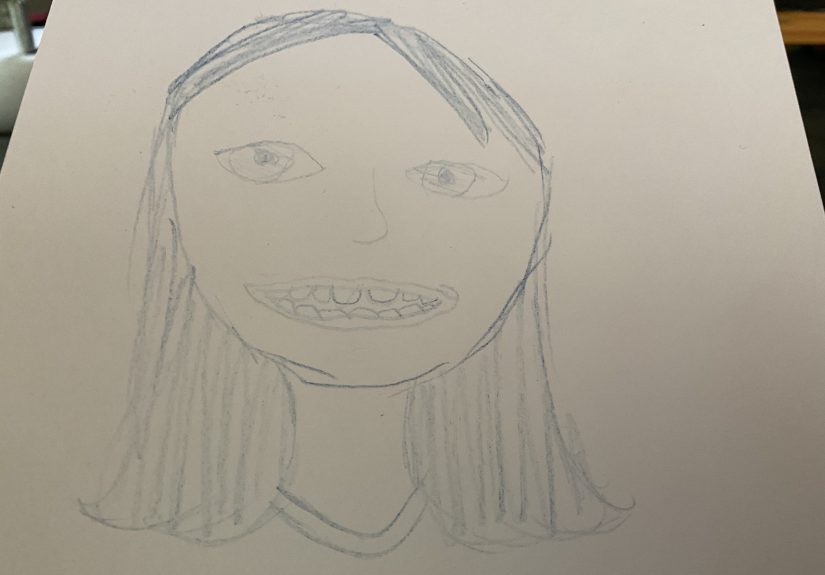
“Hey Pandas, Draw Yourself With Your Non Dominant Hand And Post The Result!” is the kind of prompt that instantly lowers the stakes and raises the fun. It’s low-cost, low-pressure, and weirdly wholesome: you attempt a self-portrait using the hand that normally just holds your phone while your dominant hand does all the work. The result is usually chaotic, occasionally adorable, and almost always hilarious.
But here’s the twist: behind the memes and the wobbly eyebrows, there’s a legit reason this exercise feels so satisfying. It forces you to slow down, pay attention, and get out of autopilot. In a world where everything is optimized, polished, and filtered, it’s refreshing to do something imperfect on purpose.
What “Hey Pandas” Means (and Why This Prompt Hits So Hard)
“Hey Pandas” is internet shorthand for “Hey everyone, weigh in!”a community-style prompt where people share stories, opinions, photos, or quick creative attempts. Think of it like a friendly town square, except the town square is global, and half the residents are holding iced coffee.
This particular prompt works because it’s a perfect combo of self-expression and built-in awkwardness. No one expects a masterpiece from your non-dominant hand. That’s the entire point. You’re allowed to be bad. Encouraged, even.
Why Drawing With Your Non-Dominant Hand Feels So Weird (in a Good Way)
1) It snaps your brain out of autopilot
When you use your dominant hand, you’re cruising on years of muscle memory. Your brain can “chunk” movements and run them efficiently. Switch hands, and suddenly everything becomes deliberate: grip, pressure, direction, speed. You’re not just drawingyou’re actively learning how to move again.
That “newness” is closely tied to neuroplasticity, the brain’s ability to adapt through experience and practice. Neuroplasticity isn’t magicit’s your nervous system responding to repeated challenge, building and refining connections over time.
2) It can improve skills… but not in the superhero way TikTok promises
You’ve probably heard claims like “Use your non-dominant hand and become smarter!” The reality is more grounded (and honestly, more useful): practicing with your non-dominant hand can improve that specific skill, and some training benefits can transfer between hands for certain tasks. But it’s not an instant IQ cheat code.
That’s actually great news for this challenge: you don’t need big promises. You’re training attention, patience, and fine motor controlwhile laughing at your own lopsided nostrils.
3) It’s a tiny workout for self-control
A sneaky perk of using your non-dominant hand is that it naturally creates friction. Simple tasks become slightly harder, which means you have to regulate frustration and stay intentional. Psychologists often describe self-control like a trainable capacity: small, repeated efforts can strengthen your ability to persist.
In other words, your non-dominant hand is a personal trainer that whispers, “One more shaky line,” and you’re like, “Please stop yelling at me.”
4) Drawing itself supports memory and learning
Separate from the “other-hand” gimmick, drawing is a powerful way to process information. Research has found that drawing can improve recall compared to writing, likely because it combines visual, semantic, and motor processing. Even simple sketches can help your brain hold onto details.
So yesyour scribbly self-portrait is still doing something valuable: it’s a multi-sensory activity that forces observation and meaning-making.
The Non-Dominant Hand Self-Portrait Challenge: How To Do It (Without Crying)
- Pick your tools: pen, pencil, marker, eyeliner pencil (if you’re brave), or a drawing app.
- Set a timer: 2–5 minutes keeps it playful and prevents overthinking.
- Look in a mirror or use your front camera: bonus points if you resist zooming in on your pores.
- Draw fast first: capture the big shapeshead, hair, glassesbefore you attempt the world’s tiniest nostril.
- Add one “signature detail”: your freckles, your eyebrow notch, your iconic bangssomething that makes it unmistakably you.
- Stop when the timer ends: the chaos is part of the charm.
- Post it: include the prompt, your time limit, and your dominant hand for context.
How To Make Your “Bad Drawing” Look Intentionally Iconic
Try a continuous line
Don’t lift your pen. Not once. It will look like a single spaghetti noodle became sentient and decided to draw a faceand that’s exactly the vibe.
Go “blind contour” for maximum comedy
Keep your eyes on your face, not your paper. This is how you get portraits that feel like they were drawn by a friendly ghost in a moving car.
Use shapes instead of details
Circle for head. Triangles for hair. Two dots and a dream for eyes. You’re not drafting an engineering blueprint; you’re making internet joy.
Add a caption that frames it as a feature
- “My non-dominant hand understood the assignment… incorrectly.”
- “Self-portrait, but my left hand is freelancing.”
- “If you know, you know. If you don’t, please still be kind.”
- “This is what confidence looks like when it’s slightly wobbly.”
What To Post (and How To Post Without Regret)
The internet is fun, but it’s still the internet. Keep it light and protect your privacy:
- Skip personal identifiers (addresses, work badges, school logos in the background).
- If you include a photo reference, crop it tightly.
- For kids: consider posting only the drawing, not the child’s face, depending on your comfort level.
- Opt into kindness: if comments get weird, delete, mute, or step away. Your art doesn’t owe anyone access.
Why People Love This Challenge (Even When the Drawing Is Terrible)
Oddly enough, non-dominant hand drawing can feel calming. You’re forced to slow down. You can’t multitask. You can’t “optimize.” It becomes a mini break from perfectionism.
There’s also a psychological permission slip embedded in the premise: you’re supposed to be clumsy. That removes ego from the room. And when ego leaves, play usually shows up.
Turn It Into a Group Event (Friends, Teams, Classrooms, Families)
In a group chat
Drop the prompt on a Friday night: “2-minute timer. Non-dominant hand. Post results. No roasting below the belt.” Watch the thread instantly become 73% laughter.
At work (yes, really)
Use it as an icebreaker in a low-stakes meeting. It works because it equalizes skill levels. Nobody is “the best” when everyone’s drawing like a penguin wearing mittens.
In classrooms
It’s a gentle way to talk about growth mindset: effort, discomfort, practice, and not defining your worth by the first attempt.
FAQ: Quick Answers Before You Grab a Pencil
Does drawing with my non-dominant hand make me smarter?
Not in a guaranteed, general way. But it does challenge attention and coordination, and practice can improve specific skills. The biggest “win” is often the mindset shift: curiosity over perfection.
What if I’m already ambidextrous?
First of all, congratulations on being a real-life cheat code. Second: choose the hand you use less, or add a twistcontinuous line, blind contour, or a 60-second timer.
How often should I do it?
Once is enough for the laugh. A few times a week can be a fun creative habit. If your hand or wrist hurts, stopawkward is fine; pain is not.
Conclusion: Do It for the Laugh, Keep It for the Reset
“Hey Pandas, Draw Yourself With Your Non Dominant Hand And Post The Result!” is the rare internet activity that’s silly, accessible, and surprisingly grounding. It invites you to be a beginner againboldly, publicly, and with zero expectation of perfection.
So grab a pen, switch hands, and draw the version of yourself that exists in the slightly panicked brain of your non-dominant hand. Then post it. The world could use more low-stakes joy.
Experiences From the Challenge: What It Feels Like (and Why You’ll Probably Do It Again)
The first experience most people report is a very specific kind of disbelief: “Wait… is this my hand?” You’re holding a pen like it’s a delicate museum artifact, your fingers are negotiating a grip they haven’t practiced since elementary school, and your brain is suddenly paying attention to every millimeter of movement. That alone can feel oddly refreshinglike you just caught yourself living on autopilot and yanked the steering wheel back (gently).
Then comes the laughter. Not always because the drawing is “bad,” but because it’s honest. Your non-dominant hand doesn’t know how to perform “cool” or “polished.” It draws what it can, the way it can, right now. Eyelashes might look like tiny forks. Your smile might drift off your face like it’s trying to catch a bus. But that’s the charm: the result is usually expressive in a way your dominant hand, with all its habits and expectations, often avoids.
A surprising experience many people share is a brief moment of tenderness. When the drawing looks childlike, it can remind you of when you created things without worrying how they’d be judged. Some people describe it as a small reunion with their “inner kid”the one who drew suns in the corner of every page and called it art. If you’re someone who’s been stuck in perfectionism (or just stressed), this exercise can feel like a gentle permission slip to be imperfect on purpose.
Another common experience: the “I can’t rush this” realization. With your dominant hand, you can speed through details. With your non-dominant hand, rushing makes everything worse. So you slow down. You focus. You notice. People often say the challenge becomes unexpectedly meditative for a few minutesespecially if you set a short timer and commit to finishing without fixing anything afterward. You’re fully in the moment because your hand demands it.
And finally, there’s the social experience: posting it and seeing others do the same. When everyone shares their wobbly portraits, the comment section becomes a tiny festival of encouragement. The vibe is: “We are all doing our best, and our best looks like a cartoon raccoon today.” That kind of collective low-stakes vulnerability is rare online. It’s why people repeat the challengebecause it’s not just about drawing. It’s about play, connection, and a quick reset that feels human.