Table of Contents >> Show >> Hide
- Why a Cryptic Message Hits Like a Freight Train
- Could the Sender Really Be Her Ex?
- How Smart Couples Investigate Without Making Everything Worse
- Signs the Bigger Problem May Be Manipulation, Not Infidelity
- What If the Message Turns Out to Be True?
- What If the Message Is False?
- The Relationship Test Hidden Inside the Drama
- Experiences Related to This Kind of Story
- Conclusion
There are few things more efficient at wrecking a peaceful afternoon than a cryptic text message. One minute you’re deciding what to eat for dinner. The next, your phone lights up with a message that basically says, “Your girlfriend is cheating on you.” No greeting. No punctuation worth trusting. No useful context. Just pure chaos, delivered with the elegance of a brick through a window.
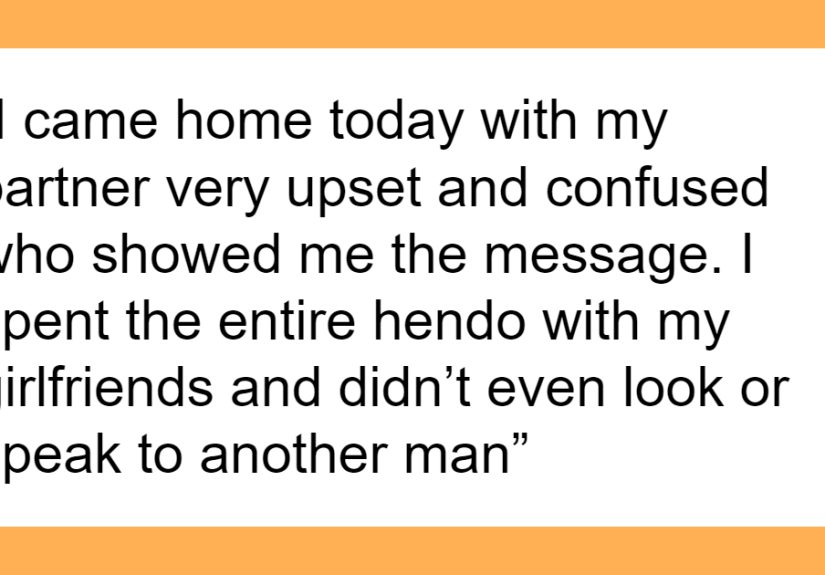
That is exactly why this kind of story grabs people so fast. It blends relationship drama, digital mystery, and the deeply modern horror of not knowing whether the truth is hiding in your phone, your partner’s past, or a stranger’s bad intentions. In this scenario, a guy receives an anonymous message accusing his girlfriend of infidelity. She looks into it and claims the sender is her ex. Suddenly, the issue is no longer just whether she cheated. It becomes a bigger question about trust, manipulation, boundaries, and how couples should handle accusations that arrive wrapped in secrecy.
This article is not written as gossip bait. It is an analysis-style feature built around a scenario that feels familiar because it mirrors real patterns in modern dating: anonymous messages, rumor campaigns, ex-partner interference, digital harassment, gaslighting, and relationship panic triggered by incomplete information. And let’s be honest, incomplete information is the favorite fuel of dramatic people everywhere.
Why a Cryptic Message Hits Like a Freight Train
An anonymous accusation is powerful because it creates a triple threat. First, it introduces doubt. Second, it demands immediate attention. Third, it offers just enough detail to be believable while withholding enough proof to keep everyone emotionally spinning like a dryer with a shoe in it.
Even healthy couples can wobble under that pressure. Trust is usually built on patterns: honesty, consistency, and behavior over time. But a cryptic message interrupts all of that by saying, in effect, “Forget what you know. Here is a secret version of reality.” That kind of interruption is brutal because the brain hates uncertainty. When people do not know what is true, they often rush to fill the gap with fear, anger, or detective work that would make a true crime podcast host blush.
That is why the first emotional reaction matters. If the boyfriend immediately accuses, shouts, checks every app, and turns the relationship into a courtroom with no judge, things go downhill fast. If the girlfriend instantly becomes defensive, dismissive, or weirdly evasive, that also raises the emotional temperature. In situations like this, the actual text may be messy, but the response tells its own story.
Could the Sender Really Be Her Ex?
Yes, absolutely. That explanation is plausible. Exes can stir up old conflict for many reasons: jealousy, revenge, boredom, control, resentment, or the deeply embarrassing inability to move on. A former partner who feels replaced may try to plant suspicion, create distance, or make themselves relevant again by becoming the world’s least welcome narrator.
But here is the key point: plausible is not the same thing as proven.
Claiming, “It’s my ex,” can be true. It can also be a convenient answer if someone wants to redirect attention away from uncomfortable facts. That does not mean the girlfriend is lying. It means the explanation must be tested against evidence, behavior, and consistency instead of being accepted or rejected on vibe alone.
There are several realistic possibilities here:
- The ex is fabricating the accusation to sabotage the relationship.
- The ex knows something real and is revealing it in the messiest way possible.
- The ex and the girlfriend still have unresolved contact, which may not equal cheating but still creates trust issues.
- The message is from someone else entirely, including a prankster, a jealous friend, or a spoofed number.
- The message contains a half-truth, which is often the most chaotic version of all.
That last one deserves attention. Sometimes the drama is not “She cheated” versus “She did nothing.” Sometimes the truth lives in the muddy middle: emotional overlap with an ex, hidden conversations, flirtation that never became physical, or behavior one partner views as harmless while the other sees as a betrayal. Welcome to modern relationships, where everyone says they value transparency until transparency becomes inconvenient.
How Smart Couples Investigate Without Making Everything Worse
1. Pause before making accusations
The first move should not be a dramatic confrontation built entirely on one anonymous message. If the boyfriend opens with rage, the conversation becomes about his delivery instead of the allegation itself. A better approach is calm, direct, and painfully adult: “I got this message. I want to talk about it honestly.” It is not flashy, but neither is paying taxes, and both are signs of maturity.
2. Preserve the evidence
Take screenshots. Save the number. Note the time, wording, and any follow-up. If the sender keeps contacting either person, documentation matters. It helps establish whether this is a one-off rumor, targeted harassment, or a pattern designed to intimidate or manipulate.
3. Verify what can actually be verified
If the girlfriend says it is her ex, what supports that claim? Has the ex contacted her before? Are there similar messages, fake accounts, blocked numbers, or a history of interference? Does the sender provide verifiable details, or just emotionally loaded hints? The more a mystery messenger avoids specifics, the more caution is warranted.
4. Compare the story to behavior
People often focus on the text and ignore the surrounding conduct. But behavior is the louder witness. Is the girlfriend open, steady, and willing to talk? Or does the explanation keep shifting? Is she transparent without being coerced? Does the boyfriend have reasons from the relationship itself to feel uneasy, or is this suspicion being built entirely from one anonymous spark?
5. Do not confuse access with honesty
A lot of couples make a terrible bargain at this stage: “If you have nothing to hide, give me every password.” That may feel satisfying for five minutes, but it does not build trust. It builds surveillance. There is a difference between transparency and turning your relationship into a low-budget spy operation.
Healthy investigation focuses on truthful conversation, corroborating facts, and boundaries. Unhealthy investigation turns into monitoring, tracking, baiting, and emotional hostage-taking. One leads to clarity. The other leads to a bigger mess and possibly a different kind of abuse.
Signs the Bigger Problem May Be Manipulation, Not Infidelity
Sometimes the accusation is not the main story. The real story is the manipulation around it.
If the girlfriend truly is being targeted by an ex, some warning signs may show up quickly. The ex may use fake numbers, new accounts, sudden reappearances, rumor-spreading, vague threats, or messages designed to trigger conflict without offering proof. The goal is not always to reveal the truth. Often, the goal is to control attention, create instability, and remain emotionally embedded in the couple’s life like glitter after a craft accident.
On the other hand, if the girlfriend is using the “crazy ex” explanation to dodge accountability, there may be a different pattern. Watch for contradictions, selective honesty, sudden blame reversal, refusal to answer direct questions, or efforts to make the boyfriend feel irrational for asking reasonable things. That is where people start using words like gaslighting, and not for dramatic seasoning. Gaslighting is not just ordinary lying. It is a pattern of making someone doubt their perception of events so the manipulator keeps the upper hand.
In short, cheating is not the only thing that can break trust. So can deception, denial, intimidation, and emotional confusion used as a strategy.
What If the Message Turns Out to Be True?
If the accusation is true, the anonymous text is still not the hero of the story. It is just the ugly envelope that delivered bad news. The real issue becomes what kind of betrayal occurred, whether there is honest accountability, and whether the relationship has enough integrity left to rebuild.
Not every act of infidelity ends a relationship, but every cover-up changes it. Recovery requires specific honesty, not vague regret. “I’m sorry you got hurt” is not accountability. “Here is what happened, here is when it began, here is what I hid, and here is what I’m willing to do next” is closer.
If physical intimacy outside the relationship may have occurred, sexual health should also be part of the conversation. That is not punishment. That is common sense in shoes. People sometimes avoid that topic because it feels accusatory, but adult relationships require adult follow-through. Emotional betrayal is painful; health risks make it more urgent.
At that point, the boyfriend has choices. Leave. Pause. Seek counseling. Rebuild with conditions. What he should not do is stay in a relationship while secretly collecting resentment like limited-edition trading cards. Suspicion can survive for a while, but it is a lousy long-term roommate.
What If the Message Is False?
If the accusation is false and the sender really is an ex trying to cause damage, that is not “just drama.” It can become harassment. Repeated contact, impersonation, surveillance, rumor campaigns, and fear-based messaging can escalate, especially when the sender is trying to maintain control after a breakup.
In that case, the couple should treat the problem as external and practical. Save messages. Block and report where appropriate. Tighten privacy settings. Be careful about location sharing, shared accounts, and mutual contacts who may be feeding information back to the ex. If the messages become threatening, persistent, or targeted across platforms, it may be time to involve law enforcement or a support resource.
False accusations can also leave behind a weird emotional bruise. Even when a couple discovers the message was a lie, the anxiety does not always disappear right away. That is normal. Trust might survive the accusation, but it still needs reassurance, patience, and honest conversation to stop the shadow of the message from hanging around like a ghost who forgot to move out.
The Relationship Test Hidden Inside the Drama
This kind of scenario is really a stress test in disguise. It reveals how both people handle uncertainty, fear, and outside pressure. Does the boyfriend ask questions or demand confessions? Does the girlfriend engage openly or hide behind indignation? Can they sit with discomfort long enough to sort fact from panic? Can they protect each other without policing each other?
Healthy couples are not couples who never face suspicion. They are couples who know how to face it without detonating every boundary in the house. They communicate clearly. They do not turn discomfort into control. They do not outsource reality to anonymous strangers with burner numbers and a flair for emotional vandalism.
That does not mean blind trust. Blind trust is just denial wearing nice clothes. Real trust is steadier than that. It pays attention. It asks questions. It respects evidence. It does not panic at the first mysterious text, but it also does not dismiss every concern just because someone rolls their eyes and says, “Ugh, that’s just my ex.”
Experiences Related to This Kind of Story
Stories like this keep resurfacing because they are painfully relatable. One common version involves a person receiving screenshots from an anonymous account that look incriminating at first glance. Later, it turns out the images were cropped, timed out of context, or sent by an ex who knew exactly which details would trigger panic. The relationship did not blow up because of cheating. It nearly blew up because two people gave a stranger the steering wheel.
Another experience people report is the “half-true ambush.” In those cases, the anonymous sender is not inventing everything. Maybe the girlfriend did answer an ex’s messages. Maybe she hid that contact because she thought it was harmless and did not want an argument. Then, when the secret surfaces, the couple ends up fighting about two things at once: the hidden behavior and the exaggerated accusation attached to it. That situation is especially messy because both people walk away feeling partly right and fully exhausted.
There is also the classic revenge-cycle version. An ex cannot accept the breakup, so they start creating confusion from the edges. A new social account appears. A strange message arrives late at night. Someone claims they “just thought you should know.” The details are always selective, always dramatic, and somehow always timed for maximum damage. The target couple spends days arguing, while the actual troublemaker sits back like a discount supervillain pleased with their work.
Some couples handle it better. In the healthier stories, the person who receives the accusation does not go full detective goblin. They show the message, ask for context, and focus on facts instead of theatrics. The other partner stays present, explains what they know, and participates in solving the issue rather than fighting the existence of the conversation. Those couples may still get rattled, but they refuse to let secrecy set the rules.
And then there are the worst experiences, where the accusation opens the door to controlling behavior. One partner starts checking phones, demanding passwords, reading every notification, tracking location, or insisting that privacy itself is proof of guilt. At that point, even if no cheating happened, the relationship has entered dangerous territory. Suspicion becomes a reason to control, and control starts dressing itself up as love. It is not love. It is fear with a badge.
The most useful lesson from these experiences is simple: anonymous messages rarely deserve immediate belief, but they do deserve careful handling. Dismissing them too fast can hide a real problem. Believing them too fast can create a new one. The healthiest path sits in the awkward middle, where evidence matters, communication stays calm, and both people remember that trust is not proven by panic.
Conclusion
When a guy receives a cryptic message accusing his girlfriend of infidelity and she says it is her ex, the truth may be simple, ugly, manipulative, or frustratingly mixed. That is why the smartest response is neither blind belief nor blind loyalty. It is disciplined curiosity.
Look at the facts. Look at the behavior. Look at whether the relationship responds to pressure with honesty or with control. If the accusation is real, deal with the betrayal directly. If it is fake, deal with the harassment directly. And if the situation reveals deeper issues with trust, secrecy, or manipulation, do not ignore that just because the original text came from an anonymous troublemaker.
In the end, the message may have been cryptic, but the lesson is not. Relationships do not survive because people avoid hard conversations. They survive because they know how to have them before the mystery text becomes the loudest voice in the room.