Table of Contents >> Show >> Hide
- The Quick Verdict
- Design: The Smart Doorbell That Actually Looks Smart
- Installation: Flexible, Friendly, and Mostly Drama-Free
- Video Quality: Good in Practice, Less Impressive on Paper
- Smart Alerts: This Is Where Google Shows Off
- Where the Software Starts Tripping Over Its Own Shoelaces
- Battery Life: Manage Expectations and Maybe Your Motion Zones
- Who Should Buy the Google Nest Doorbell (Battery)?
- Final Verdict
- Extended Experience: What It Feels Like to Live With This Doorbell Every Day
If smart doorbells were judged like movie stars, the Google Nest Doorbell (Battery) would walk the red carpet in a perfectly tailored outfit and somehow make everyone else look underdressed. It is slim, modern, politely minimal, and unmistakably “Google” in the best possible way. This is not a chunky plastic brick that screams I bought a security gadget. It is the rare video doorbell that looks like it was designed by people who have seen a front porch before.
But here is the twist: living with the Nest Doorbell (Battery) is a little like dating someone gorgeous who still cannot answer a text properly. The hardware is smart. The design is excellent. The alerts are often genuinely useful. Yet the software experience, cloud limitations, and product decisions around recording history keep this device from becoming an easy, universal recommendation.
For Google Home households, this wireless Nest doorbell can feel like a sleek front-door upgrade with real intelligence. For everyone else, it may feel like a very attractive reminder that ecosystems always want one more commitment. This review breaks down where the Google Nest Doorbell (Battery) shines, where it stumbles, and whether its futuristic appeal is enough to make you forgive its software shortcomings.
The Quick Verdict
The Nest Doorbell (Battery) is a stylish, flexible, and genuinely smart video doorbell that works best for people already invested in Google Home. Its portrait-oriented camera gives you a better head-to-toe view than many wide-but-short competitors, the hardware looks premium without being flashy, and the free intelligent alerts make it more generous than many rivals out of the box.
At the same time, this is not the doorbell for buyers who want maximum control, broader platform support, or round-the-clock recording. The battery model’s biggest compromise is simple and frustrating: even if you wire it in, it still does not become a full-time 24/7 recording machine. That decision alone will send some shoppers straight to the next tab.
- Best for: Google Home users, renters, apartment dwellers, and homeowners who want flexible installation.
- Less ideal for: power users, Apple-focused homes, and anyone who wants continuous recording or deeper app customization.
Design: The Smart Doorbell That Actually Looks Smart
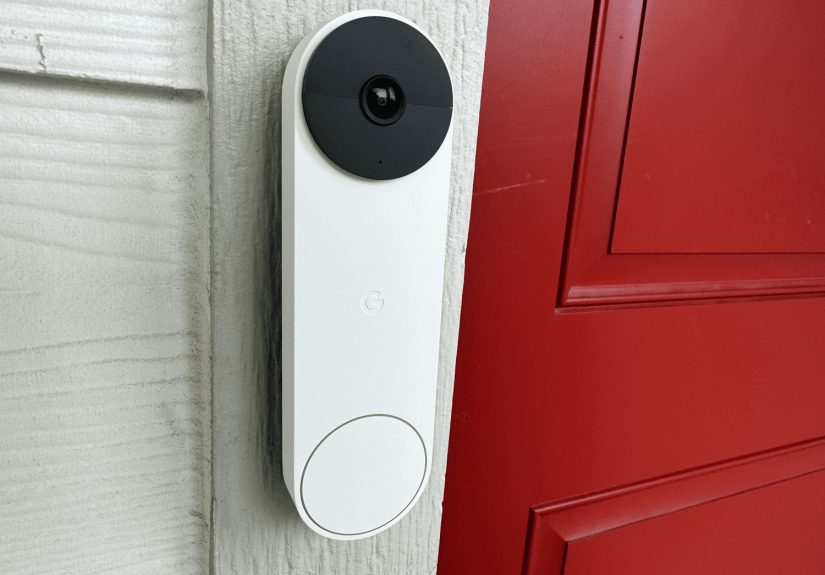
Google absolutely nailed the industrial design here. The Nest Doorbell (Battery) looks calm, clean, and modern in a category that too often treats elegance as optional. The matte finish helps it avoid fingerprints and cheap shine, while the tall shape gives it a distinctive presence without becoming obnoxious. It is larger than some older wired models, sure, but it also looks far more intentional.
This is one of those products that makes you notice how clumsy a lot of competing doorbells look. The large circular button is easy to spot, the status light is subtle but visible, and the overall face of the device feels approachable instead of militarized. In plain English: it looks like a smart home product, not a parole officer.
Google’s color choices also help. Instead of defaulting to “available in black, white, and existential sadness,” the company gave the doorbell muted finishes that blend with trim, siding, and painted entryways surprisingly well. That matters more than people think. A smart doorbell lives on your house’s face. If it looks awkward, you notice it every single day.
Installation: Flexible, Friendly, and Mostly Drama-Free
One of the best things about the Google Nest Doorbell (Battery) is right there in the name: battery. That means you can install it without existing doorbell wiring, which immediately opens the product up to renters, apartment residents, and homeowners with older houses that do not play nicely with modern smart devices.
If you do have wiring, you can also connect it that way for chime support and battery top-ups. That flexibility is a major selling point. In the real world, not everyone wants to call an electrician just to see who left a package and why your dog is now conducting an opera at the front window.
The setup process is straightforward, and the included wedge helps adjust the viewing angle. The one mildly annoying part is the release tool used when you need to remove the device for charging. It works, but it also feels like the kind of tiny accessory that can disappear into a drawer dimension from which no object ever returns.
Battery installation does come with a trade-off: if you are not wiring it in, your existing mechanical chime will not ring. For some homes that is no big deal, especially if you already have Google speakers or smart displays. For others, that missing old-school ding-dong may be more emotionally important than expected. Nostalgia is powerful. So is not missing the pizza delivery.
Video Quality: Good in Practice, Less Impressive on Paper
The Nest Doorbell (Battery) does not win the spec-sheet Olympics. Its 960 x 1280 resolution is lower than what some shoppers expect from a premium video doorbell, and it is also a step down from older wired Nest hardware in raw detail. If you are the type who zooms into every porch frame like you are solving a detective thriller, that matters.
But specs only tell half the story. In day-to-day use, the camera often performs better than its numbers suggest. HDR helps with difficult lighting, especially when your front porch shifts between bright sun and deep shadow. The 3:4 aspect ratio is also a smart decision. Instead of prioritizing a wide cinematic shot of your shrubs, the Nest doorbell shows more vertical space, which is exactly what helps with faces, bodies, and packages.
That portrait framing is one of the product’s quiet strengths. You are more likely to see a person from head to toe, which gives the footage a more useful perspective at the door. It is less glamorous than bragging about 2K, but more practical when someone drops a box, waves, or lurks awkwardly pretending not to be lost.
Night vision is solid rather than spectacular. It gets the job done, and the HDR processing usually keeps images balanced enough for identification. The footage is not the sharpest in the category, but it is competent, reliable, and more than good enough for most front-door situations.
Smart Alerts: This Is Where Google Shows Off
Google has long been better than many rivals at turning camera footage into something actually useful, and that continues here. The Nest Doorbell (Battery) can identify people and packages, and its alerting system usually feels smarter than the endless motion spam that cheaper doorbells love to fling at your phone like confetti at a bad parade.
That intelligence matters because the best video doorbell is not necessarily the one with the fanciest hardware. It is the one that tells you what matters without making you hate notifications. On that front, Google performs well. Alerts are fast, previews are helpful, and the system generally does a good job of separating meaningful activity from random porch nonsense.
Two-way audio is also here, and it works as expected. Quick responses are handy for those moments when you need to tell someone to leave a package, wait a minute, or accept that no one is coming to the door because the household is currently pretending not to exist.
If you already own Nest speakers or displays, the ecosystem gets more convenient. A visitor can trigger announcements around the house, which makes the device feel like a real part of a broader smart home rather than just a camera glued beside your front door.
Where the Software Starts Tripping Over Its Own Shoelaces
Google Home App Only
Here is where the review title earns its keep. The Nest Doorbell (Battery) is a beautiful piece of hardware attached to a software strategy that still feels slightly unfinished. This model lives in the Google Home app, not the older Nest app, and while that may sound like a simple modernization move, the transition has never felt perfectly graceful.
For longtime Nest users, that shift can be irritating. The older Nest experience had a reputation for feeling focused and camera-first. Google Home has improved over time, but it still feels like a broader smart home control center that sometimes treats cameras as one tile among many instead of the main event. If you are deeply invested in the old Nest style, this doorbell may feel like Google asking you to move apartments without letting you keep the good couch.
No 24/7 Recording, Even When Wired
This is the big one. The battery-powered Nest Doorbell does not support continuous 24/7 recording, even if you choose the optional wired installation. That is not a bug. That is the design. And it is the kind of decision that makes you squint at the product page and say, “Wait, seriously?”
For casual users, event-based clips may be enough. For security-focused buyers, continuous recording is often the line between “nice gadget” and “serious home monitoring tool.” If something happens between motion-triggered events, you may not have the full story. A wired doorbell that still behaves like an event-only product will feel limiting to people who want full timeline playback.
Subscriptions Still Lurk in the Background
To Google’s credit, the Nest Doorbell (Battery) is better than many competitors without a subscription. You get a small amount of free event history, and the base smart alerts are more useful than the paywalled scraps some rivals offer. But let us not pretend the cloud upsell has gone on vacation. If you want longer history and deeper features, you are still entering subscription territory.
That is where the experience starts to feel less futuristic and more familiar in the least exciting way possible. You buy the premium-looking device, enjoy the free sample, and then discover that the best long-term version of the product wants another monthly relationship. Classic smart home behavior. Never change. Actually, please do.
Battery Life: Manage Expectations and Maybe Your Motion Zones
Battery life with a smart doorbell is always a “your mileage may vary” situation, and the Nest Doorbell (Battery) is no exception. A quiet front porch and tuned detection settings can give you a respectable stretch between charges. A busy sidewalk, lots of motion, frequent live viewing, and winter weather can chew through that battery much faster.
In other words, the battery claims are not fake, but they are conditional. The front door of a suburban home on a sleepy street is a very different test than a condo hallway, a house by a busy road, or a place where delivery drivers appear like a parade sponsored by cardboard.
Cold weather is another practical issue. Like many battery-powered outdoor devices, charging becomes less friendly in freezing conditions. That is not unique to Google, but it is still worth remembering if you live somewhere winter turns your porch into a refrigerator with mail.
The optional wired setup helps reduce charging anxiety, but because it does not unlock 24/7 recording, it never fully transforms the device into a wired power-user doorbell. It just makes the compromises easier to live with.
Who Should Buy the Google Nest Doorbell (Battery)?
You should seriously consider it if your home already runs on Google Assistant, Nest speakers, Nest displays, and the Google Home app. In that environment, the doorbell feels coherent. It fits the aesthetic, works with the broader ecosystem, and offers genuinely useful smart alerts without making setup miserable.
It is also a strong choice for people who need flexible installation. If you cannot or do not want to rely on existing doorbell wiring, the battery model solves a real problem without feeling like a backup plan.
You should probably skip it if you want the most detailed video possible, rely on Apple HomeKit, or care deeply about continuous recording. Likewise, if you are a longtime Nest purist who still misses the older app experience, this doorbell may reopen some emotional wounds you thought had healed.
Final Verdict
The Google Wireless Nest Doorbell (Battery) is a very good smart doorbell trapped just outside greatness. Its best qualities are easy to love: polished design, flexible installation, useful portrait framing, strong smart alerts, and an experience that makes a lot of sense inside a Google-centered home.
Its weaknesses are just as clear. The software transition has never felt fully elegant, the app situation still leaves some users nostalgic for the older Nest approach, and the lack of 24/7 recording on the battery model remains a genuinely frustrating limitation. Add in variable battery life and subscription pressure, and the product starts to feel less like the future and more like a compromise wearing very nice clothes.
Still, if your priorities are style, convenience, and a smart front-door assistant that integrates cleanly with Google Home, this Nest doorbell is easy to like. It is not perfect, but it is memorable. And in the smart home world, where too many products feel either ugly, annoying, or both, that already counts for a lot.
Extended Experience: What It Feels Like to Live With This Doorbell Every Day
What makes the Nest Doorbell (Battery) interesting is not just what it does in a review checklist, but how it behaves once it becomes part of your routine. After a while, the device stops being “the new smart gadget” and starts becoming the quiet little gatekeeper of your daily chaos. That is where its personality really shows.
On a typical weekday, the experience is excellent when everything lines up. A delivery arrives, the package alert pops up quickly, and the portrait view gives you a useful look at both the person and the box. Someone rings the bell, your phone lights up, a Nest display in the kitchen announces the visitor, and you can answer from wherever you are. In those moments, the product feels exactly like the future promised in smart home commercials, minus the suspiciously perfect family and suspiciously spotless hallway.
It also changes how you think about the front door. You check less often. You worry less about missed deliveries. You become less dependent on that ancient ritual of hearing a noise, freezing in place, and whispering, “Was that the door?” If you live in a busy home, that small reduction in friction is surprisingly satisfying.
But daily life also reveals the compromise. Event-based recording is fine until it is not. Maybe someone passes partly out of frame. Maybe a package ends up at the edge of view. Maybe you want more context before or after a clip. That is when the battery model’s limits stop feeling theoretical and start feeling personal. You are not mad at the doorbell exactly. You are just mildly betrayed by how close it came to being perfect.
The Google Home app experience is similar. On good days, it is clean, approachable, and easy to understand. On frustrating days, it reminds you that elegant hardware and elegant software are not always on speaking terms. If you have used older Nest products, you may catch yourself comparing the flow of the camera experience and wishing Google had carried more of that focused simplicity forward.
There is also the charging reality. If your front door gets lots of action, the battery becomes part of your mental maintenance calendar whether you wanted that job or not. Not a huge burden, but not invisible either. It is one more thing to remember in a world already full of chargers, cables, alerts, and tiny devices that apparently all need your attention by Thursday.
And yet, despite the occasional annoyance, there is something undeniably likable about this doorbell. It looks great every time you walk up to the house. It usually gets the important stuff right. It makes your entryway feel smarter and more modern without turning it into a science project. That counts. A lot of tech products win the spec battle and lose the vibe battle. The Nest Doorbell (Battery) often does the opposite.
So the long-term experience is this: you admire it, you rely on it, you occasionally argue with its software decisions, and then you go right back to appreciating how competent and polished it feels compared with so many awkward competitors. It is not the perfect smart doorbell, but it is one of the few that feels like it was designed for a real home and not just a product comparison chart.