Table of Contents >> Show >> Hide
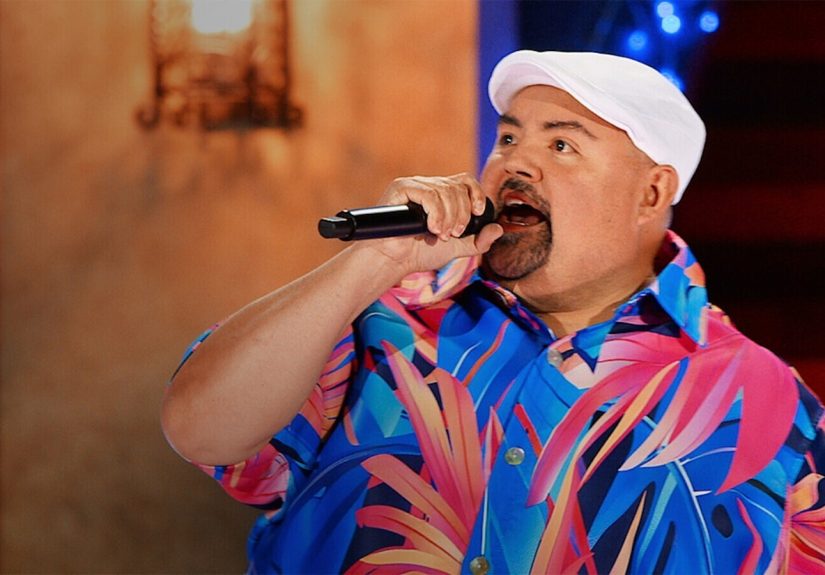
There are celebrity gestures, and then there are celebrity gestures that actually put canned beans, corn, soup, and peanut butter into a food bank warehouse. Gabriel “Fluffy” Iglesias’ San Antonio benefit show landed in that second category. Instead of selling tickets the usual way, Iglesias asked fans to bring canned food for admission, turning a comedy event into a hunger-relief push at a moment when SNAP turmoil and broader food-assistance fears were rattling families in Texas and across the country.
On the surface, it sounds like a feel-good headline with a tidy ending: beloved comedian, generous fans, food bank gets stocked, crowd laughs, everyone leaves a little warmer inside. And to be fair, a lot of that is true. The event worked. It drew a crowd. It brought real food to the San Antonio Food Bank. It also created the kind of local attention that anti-hunger groups are always begging for and rarely get unless a celebrity, a politician, or a disaster is attached to it.
But this story also comes with a wrinkle, and it is not a small one. Some critics and observers asked whether a canned-food comedy show, even a successful one, matches the scale of the hunger problem tied to SNAP disruptions and proposed cuts. That question is not cynical. It is practical. Praising a good deed and asking whether it is enough can both be reasonable at the same time. In fact, that tension is what makes this story worth talking about.
What Happened in San Antonio
Iglesias announced a special benefit performance in San Antonio with a simple entry rule: donate canned food, get a shot at seeing the show. The first version of the plan sounded modest enough. Fans who brought five cans of food could receive a wristband, and only a limited number of wristbands were available. On paper, that looked like a nice gesture and a smart publicity move, but not exactly a full-scale answer to a regional food emergency.
Then real life barged in and laughed at the math. Fans showed up in large numbers. Some reportedly camped out overnight. Others donated even if they did not make it into the show. By the time the event was over, the haul had grown into something much bigger than the early critics expected: about 16,000 pounds of food, according to local reporting and food bank officials. That is no longer symbolic. That is real inventory, real meals, and real relief for a hunger-response system under pressure.
That outcome matters because the San Antonio Food Bank was not dealing with ordinary levels of need. Local reports indicated the organization expected demand to jump sharply, with estimates that it might need roughly 50% more food in November than usual. In practical terms, that meant extra truckloads every week on top of an already heavy distribution schedule. So while a comedy show cannot solve structural hunger, a well-timed donation surge can absolutely matter in the short term.
Why This Story Hit a Nerve
To understand why Iglesias’ show resonated, you have to zoom out from the comedy club and look at SNAP itself. SNAP, the Supplemental Nutrition Assistance Program, is the nation’s largest nutrition-assistance program. USDA data shows it served an average of 41.7 million people per month in fiscal year 2024, with average monthly benefits of $187.20 per participant. That means any disruption, reduction, or threatened cut is not a small policy hiccup. It is the kind of thing that sends anxiety through grocery aisles, pantry lines, and family budgets at lightning speed.
Texas is especially vulnerable to that kind of shock. Reporting in San Antonio noted that SNAP helps feed millions of Texans, including a huge number of children. In Bexar County alone, roughly 130,000 households rely on the program. City leaders and local businesses raised more than $1.6 million to offer $150 H-E-B gift cards to some affected households, but even supporters described that effort as a bridge, not a solution. In other words: the city was doing what it could, but everyone understood the numbers did not magically stop being huge just because the community was trying hard.
That is the backdrop that turned Iglesias’ benefit show from a nice local story into a culturally bigger one. It was not just about one comedian being generous. It was about what happens when famous people step into a gap that was created by public policy, federal dysfunction, or both. Americans love stories about neighbors helping neighbors. We are a little less comfortable asking why the neighbors keep getting handed the bill.
The Case for Applauding Gabriel Iglesias
He turned fandom into action
Plenty of celebrities post a message, slap a broken-heart emoji on it, and call that community engagement. Iglesias did more than that. He used his draw, his audience, and his timing to create a physical transfer of resources to a local food bank. That is not nothing. In a media environment where attention is currency, he converted attention into food. That deserves credit.
He made hunger visible
Another thing the show accomplished was visibility. Hunger often hides in plain sight. It lives behind rent payments, utility bills, school pickup lines, and the awkward silence of adults pretending they already ate. A celebrity-backed event can drag that invisible struggle into public conversation. Suddenly, people who came for laughs are also talking about SNAP, food insecurity, and how local food banks actually work. Awareness alone does not feed anyone, but awareness paired with action can move money, food, volunteers, and political pressure.
He helped at exactly the right moment
Timing matters in hunger relief. A big donation in the abstract is good. A big donation when a food bank is bracing for a surge is better. The show did not arrive during a sleepy month when pantry shelves were comfortably stocked. It arrived when local officials, food bank leaders, and anti-hunger advocates were warning that families could be hit hard by SNAP instability and broader food-access stress. Even if the show did not fix the crisis, it hit the problem while it was hot.
The Valid Questions Critics Are Asking
Question 1: Was the gesture too small for the size of the crisis?
This is the biggest and fairest question. Early on, the event’s admission structure made some people do the math and shrug. If only a few hundred wristbands were available and entry cost just five cans, the baseline total looked modest compared with the scale of hunger in San Antonio. Even though the actual outcome blew far past that low estimate, the original criticism was not irrational. A region with tens of thousands of SNAP-dependent households is operating on a completely different level than a one-day event, no matter how beloved the headliner is.
Still, the best response to that critique is not defensiveness. It is context. A benefit show can be smaller than the problem and still be useful. A bucket does not end a flood, but you would still rather have the bucket than no bucket at all.
Question 2: Would cash have done more good than cans?
This question has real substance. Food banks often say cash is the most efficient form of support because it allows them to buy in bulk, fill nutritional gaps, manage logistics, and respond to specific community needs more flexibly than random food donations allow. So yes, it is reasonable to wonder whether a celebrity with Iglesias’ reach could have generated even more impact through direct fundraising, corporate matches, or ticket sales converted into cash relief.
That does not make the canned-food drive a mistake. It just highlights a tradeoff. Cans are visual, tangible, and easy for fans to understand. They create momentum and community participation. Cash is usually more efficient behind the scenes. One is great for mobilizing people; the other is often better for maximizing operational impact. The smartest anti-hunger strategy usually combines both.
Question 3: Did the event blur charity and branding?
Whenever a famous person does something charitable in public, skepticism follows like a backup dancer. Was this generosity, image maintenance, audience-building, or all of the above? The honest answer is that public charity almost always includes an element of public image. But that does not automatically discredit it. If shelves get stocked, families get fed, and awareness grows, the existence of positive publicity does not erase the positive outcome.
The more useful question is not whether Iglesias also benefited from the goodwill. Of course he did. The better question is whether the public benefit was real. In this case, yes, it clearly was.
Question 4: Are we letting private kindness substitute for public responsibility?
This is the question underneath all the other questions. Anti-hunger advocates have warned repeatedly that food banks, cities, and charities cannot replace SNAP. Feeding America has argued that proposed cuts put billions of meals at risk. Feeding Texas and the Center on Budget and Policy Priorities have warned that major federal proposals could take food assistance away from millions while shifting huge burdens to states and local communities. That means celebrity charity can be admirable and still fundamentally insufficient.
If anything, Iglesias’ event proves the opposite of the “charity can handle it” argument. It shows how quickly communities mobilize when they know a crisis is coming. But it also shows that communities should not be asked to replace a federal safety-net program with canned-goods heroics and good vibes. Good vibes do not scan at checkout.
What the Story Really Says About SNAP and Hunger Relief
The most honest reading of this story is neither “Gabriel Iglesias saved the day” nor “This was just a stunt.” It is more complicated and more useful than either extreme. What happened in San Antonio shows that local generosity is real, celebrities can help, and communities still have a strong instinct to show up for one another. It also shows that hunger relief in America becomes most fragile when policymakers act as if food assistance is a luxury instead of basic infrastructure.
SNAP is not a side issue. It is a primary anti-hunger system. When that system is threatened, food banks feel it, schools feel it, parents feel it, grocers feel it, and local governments feel it. Charitable efforts can soften the blow. They cannot replace the floor. That is why the most balanced response to Iglesias’ event is: applaud the action, appreciate the result, and keep asking harder questions about the larger system that made the event necessary in the first place.
And maybe that is why the story has stuck around. It contains both comfort and discomfort. Comfort, because a famous person used his platform for something decent. Discomfort, because thousands of pounds of donated food still point to a much larger truth: when people are worried about groceries, the problem is not a lack of generosity. It is a lack of stability.
Experiences This Story Brings Into Focus
One reason this story lands so hard is that it feels familiar to anyone who has watched a food pantry line form before the doors open. You can almost see the scene without trying too hard: volunteers organizing boxes, staff members moving with that practiced mix of urgency and patience, families arriving early because “first come, first served” is not just a phrase when your kitchen is running low. In San Antonio, reports described fans lining up for the show, some overnight, hauling bags and boxes of food. That image matters. It was not a red-carpet charity dinner where generosity arrives in black tie and leaves with valet parking. It was ordinary people physically carrying help.
There is also something revealing about the way comedy intersects with hardship here. A Gabriel Iglesias show is supposed to be a break from stress. People go to laugh, quote bits with friends, and forget the news for a while. But this event asked people to bring the news with them, in metal cans and cardboard trays. That is a strange, deeply American contradiction: one hand reaching for entertainment, the other carrying groceries for strangers. It is heartwarming, yes, but it also hints at how normalized food insecurity has become. We no longer just attend events. Sometimes we attend them while quietly helping patch a hole in the safety net.
For families who rely on SNAP or live one budget wobble away from needing help, these moments are not abstract policy debates. They are calendar events. They are card reload dates. They are calculations at the store about whether meat is possible this week or whether dinner is going to lean heavily on pasta, rice, and hope. They are children asking for snacks after school while parents mentally subtract the cost from what is left. When anti-hunger advocates say a funding disruption creates panic, that word is not dramatic. It is accurate. Hunger rarely arrives with theatrical music. It arrives as arithmetic.
That is why stories from San Antonio and around the country hit such a nerve when SNAP instability or proposed cuts enter the conversation. Once people fear that benefits may not arrive on time, behavior changes fast. Families start rationing. Pantries see more foot traffic. Volunteers feel the surge before policymakers finish their talking points. Food banks become both emergency room and emotional weather vane. They can tell when the pressure is rising because it shows up at the loading dock, in the waiting area, and on the faces of first-time visitors who never expected to ask for help.
Iglesias’ show tapped into all of that. For some attendees, it was probably just a chance to see Fluffy and do a good deed. For others, it may have felt more personal: a way to stand in solidarity with neighbors, relatives, or even themselves. That is what makes this story bigger than celebrity news. It captures a lived experience that anti-hunger reporting documents again and again: people will show up for each other, sometimes beautifully, sometimes urgently, and often without being asked twice. The inspiring part is that they do. The troubling part is how often they have to.
Conclusion
Gabriel Iglesias deserves credit for using his platform in a practical, generous, and high-visibility way. The San Antonio food drive benefit show produced real results, and mocking that would miss the point. At the same time, the valid questions raised around the event are not unfair nitpicks. They are reminders that private charity, even when effective, cannot replace public policy on the scale that SNAP operates.
So the smartest takeaway is not to pick a side between applause and skepticism. Keep both. Applaud Iglesias for helping. Stay skeptical of any system that needs celebrity intervention to keep pantry shelves from running bare. If this story teaches anything, it is that kindness matters, but structure matters more. And if America keeps asking comedians to help stabilize dinner, it may be time for the adults in charge to rewrite the bit.