Table of Contents >> Show >> Hide
- Why a Bomb Shelter Makes Weirdly Good Sense
- From Soil to Software
- The Big Advantages: Water, Land, and Reliability
- The Catch: Sunlight Is Free, Electricity Is Not
- Why the Bomb Shelter Metaphor Hits So Hard
- Food Security Is More Than Growing Lettuce
- What the Future Probably Looks Like
- Experience: What It Feels Like to Step Into the Farm of the Future
- Conclusion
It sounds like the setup for a sci-fi movie: humanity retreats underground, the lights glow purple, basil grows where bunk beds once stood, and someone in a lab coat whispers, “The lettuce is ready.” Yet the idea behind underground farming is not fantasy anymore. It is a serious response to some very real problems: climate volatility, shrinking water supplies, expensive land near cities, fragile supply chains, and the annoying habit weather has of not following our plans.
That is why the phrase “Farming’s Future Is In a Bomb Shelter” feels dramatic but not ridiculous. In fact, it captures one of the boldest ideas in modern agriculture: if the surface is too hot, too dry, too crowded, too stormy, or too unpredictable, then some of the smartest farming may happen indoors, underground, and under total environmental control.
No, this does not mean every cornfield in America is about to move into a bunker. You are not going to see combines driving into missile silos anytime soon. But it does mean the future of farming may look less like a postcard and more like a carefully engineered system. In that future, a bomb shelter is not just a relic of wartime fear. It becomes a symbol of resilience, adaptation, and a surprisingly productive place to grow salad greens.
Why a Bomb Shelter Makes Weirdly Good Sense
At first glance, a bomb shelter seems like a terrible place to farm. No sunlight. Concrete walls. Zero pastoral charm. Not a single red barn in sight. But when you think like a controlled-environment grower instead of a traditional farmer, the equation changes fast.
An underground structure offers something modern agriculture increasingly values: stability. Temperature swings are lower. Harsh weather does not matter. Frost cannot barge in uninvited. Wind does not flatten crops. Hail does not destroy weeks of work in ten loud minutes. Pests and pathogens can be easier to manage in enclosed spaces. And when a farm is built close to a city, produce can reach customers quickly, often with less spoilage and less transport.
That is the appeal of underground farming and other forms of controlled-environment agriculture, often called CEA. Instead of relying on sunlight, rain, and the kindness of seasonal luck, growers manage the big variables themselves: light, humidity, nutrients, air flow, carbon dioxide, temperature, and irrigation. The crop is not simply planted. It is orchestrated.
That sounds expensive because, well, it is. But it also sounds efficient because, in the right setting, it can be.
From Soil to Software
The classic image of farming is rooted in soil, and for good reason. Soil is miraculous stuff. It holds water, stores nutrients, supports biology, and generally acts like nature’s most overqualified sponge. But indoor farms often skip soil entirely. Instead, many rely on hydroponics, where plants grow in water-based nutrient solutions, sometimes with support media like coconut coir or perlite.
This shift from dirt to data changes everything. In a hydroponic system, growers can measure and adjust nutrients with precision. They can track pH, electrical conductivity, humidity, temperature, and light intensity like a pilot monitoring a cockpit. In some facilities, software can tell you more about a tray of arugula than most people know about their own sleep schedule.
That level of control is the superpower of indoor farming. When the environment is engineered, crop production becomes less dependent on local climate and more dependent on system design. If an outdoor farm has to negotiate with the weather, an underground farm gets to write the terms of the contract.
What grows best underground?
Not everything. This is where a lot of futuristic farming talk gets ahead of itself. Underground farms are not the best home for every crop. Leafy greens, herbs, microgreens, baby lettuces, basil, cilantro, arugula, and similar high-value, fast-turn crops make the most sense. They grow relatively quickly, do well in stacked systems, and can justify the cost of indoor production better than bulk commodities.
That means the future in a bomb shelter is more likely to be salad, herbs, and specialty greens than wheat, corn, soybeans, or watermelons. An underground farm can be incredibly productive, but it is not a magical replacement for every acre of open-field agriculture. It is a specialized tool, not a universal one.
The Big Advantages: Water, Land, and Reliability
One reason underground farming gets serious attention is water efficiency. Traditional agriculture can lose large amounts of water to evaporation, runoff, and uneven irrigation. In recirculating hydroponic systems, water can be used more strategically. That matters a great deal in a century shaped by drought, water restrictions, and rising competition for freshwater.
Then there is land. Urban land is expensive. Arable land near major population centers is even more precious. Indoor vertical farming addresses that problem by building upward rather than outward. Stacked growing layers turn a relatively small footprint into a surprisingly productive space. Old warehouses, containers, and underground structures can be repurposed rather than starting from scratch on untouched farmland.
And then there is reliability, the least glamorous and perhaps most valuable feature of all. A climate-controlled underground farm can grow year-round. It does not care whether outside conditions are freezing, scorching, flooding, smoky, or wildly inconvenient. For retailers, restaurants, hospitals, and food-service operations, that consistency is gold. Fresh produce delivered in January can be worth a lot when January acts like January.
This is also why controlled-environment agriculture fits neatly into conversations about local food. A city does not need to become agriculturally self-sufficient to benefit from indoor production. Even partial local production of perishable crops can reduce transportation time, improve freshness, and create a buffer when outside supply chains wobble.
The Catch: Sunlight Is Free, Electricity Is Not
Now for the part that always ruins the startup pitch deck: energy. Outdoor farming has many risks, but one enormous advantage is that the sun shows up without sending an invoice. Underground farming does not get that luxury. If crops are grown far below ground, every photon has to be manufactured by lighting systems, and every bit of extra heat and humidity has to be managed.
This is the central economic challenge of indoor agriculture. LEDs have improved the picture significantly. They are more efficient than older lighting systems, produce less waste heat, and allow growers to fine-tune light spectra for different crops. That is a big deal. Better lighting makes underground farming much more plausible than it would have been twenty years ago.
But “more plausible” is not the same as “cheap.” Lighting still costs money. Cooling still costs money. HVAC still costs money. Dehumidification still costs money. And if the underground farm is in a city with high electricity prices, the operating model has to be exceptionally sharp.
This is why some indoor farms thrive while others flame out faster than a neglected basil plant. The winners usually focus on crop selection, logistics, automation, energy management, and premium markets. They understand that a bomb shelter is not valuable because it is dramatic. It is valuable only if the math works.
Why the Bomb Shelter Metaphor Hits So Hard
The bomb shelter matters here not just as a location, but as a metaphor. It represents protection from chaos above ground. During the twentieth century, shelters were designed to defend people from conflict and catastrophe. In the twenty-first, that same underground logic is being reconsidered for food systems.
That shift says something profound about the era we live in. We are moving from agriculture designed around average conditions to agriculture designed around disruption. Extreme heat, drought, flooding, transportation bottlenecks, labor stress, and urban growth have all put pressure on the old assumption that food production should happen only where land is cheap and the weather is cooperative.
Sometimes the weather is not cooperative. Sometimes the water table is stressed. Sometimes a storm wipes out distribution routes. Sometimes a city wants fresh greens without shipping them across a continent. In those moments, underground farming stops sounding like a stunt and starts sounding like infrastructure.
Food Security Is More Than Growing Lettuce
Still, we should be honest: underground farms alone will not solve food security. They are one layer in a much bigger system. Food security depends on crop diversity, seed preservation, transportation, labor, affordability, policy, and resilience across the entire agricultural chain.
That is why the bomb-shelter idea connects so naturally with underground seed vaults and germplasm preservation. Humanity is already protecting the future of food below ground, storing seeds and genetic material in secure facilities designed to survive environmental disruption. In one underground space, we preserve tomorrow’s crop diversity. In another, we may actively grow tomorrow’s dinner. One protects agricultural possibility. The other turns possibility into production.
Seen that way, underground agriculture is not a gimmick. It is part of a larger resilience mindset. Preserve diversity. Shorten supply chains. Reduce weather exposure. Use water more efficiently. Produce high-value crops near demand. And keep building systems that do not collapse every time the outside world gets dramatic, which, lately, seems to be every other week.
What the Future Probably Looks Like
The future of farming is not one thing. It is not all robots, all regenerative ranching, all greenhouses, all AI, or all vertical towers glowing like a spaceship landed in a warehouse district. It is a portfolio. Open-field farming will remain essential. Greenhouses will keep expanding. Precision agriculture will keep improving. Breeding and seed preservation will matter even more. And indoor farms, including underground farms, will fill specific, high-value roles where their strengths justify their costs.
In that portfolio, the bomb shelter farm has a clear niche. It is useful where land is scarce, demand is close, weather is unreliable, and premium produce can support the economics of year-round controlled production. It is also useful as a design challenge that pushes agriculture toward better sensors, better lighting, better water reuse, smarter software, and more resilient food logistics.
So no, the future of farming is not literally one giant bunker full of kale. Let us all be grateful for that. But some meaningful part of farming’s future may indeed live underground, in repurposed shelters and engineered spaces where crops grow without storms, without mud, and without caring what season it is.
Experience: What It Feels Like to Step Into the Farm of the Future
Imagine walking down a long concrete stairway into a place that once existed to protect people from bombs. The air changes first. It becomes cooler, steadier, cleaner, almost strangely polite. The city noise fades. No horns, no buses, no barking dog three blocks away giving a TED Talk at midnight. Then the smell hits you, and it is not what most people expect from an underground tunnel. It is green. Peppery. Fresh. A little like cut herbs, a little like clean rain, and a little like the produce aisle if the produce aisle had a graduate degree in engineering.
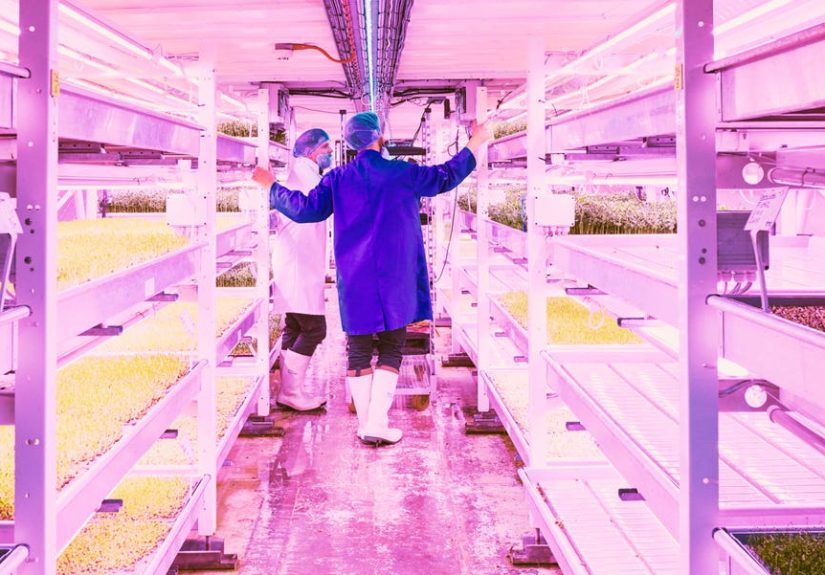
You turn a corner and suddenly the old shelter stops feeling like a shelter at all. The space glows. Rows of greens rise on metal racks under LEDs that cast pink, violet, or bright white light depending on the setup. The leaves are almost too perfect. No mud clinging to roots. No wind damage. No random bite marks from insects who clearly did not respect boundaries. Just neat channels of water, orderly trays, humming pumps, and plants acting as if this concrete cave is the most natural place in the world.
What surprises most people is how calm it feels. Traditional farms are alive with weather, soil, machinery, birds, heat, and unpredictability. An underground farm feels different. It has the rhythm of a laboratory, the discipline of a warehouse, and the softness of a greenhouse without the glare of direct sun. You notice details you would miss outdoors: tiny droplets on a leaf edge, a subtle change in aroma from one herb row to the next, the low mechanical whisper of fans moving air with the confidence of a system that knows exactly what it is doing.
Then you start noticing the strange emotional twist of the whole thing. This place was built for fear, yet it is now used for growth. It was designed around survival, and now it is designed around nourishment. That contrast lands harder in person than it does on paper. A bomb shelter says emergency. A farm says continuity. Put them together, and the result feels like a quiet argument for human adaptability.
There is also something undeniably modern about watching farming become data-rich without losing its biological wonder. You may see nutrient tanks, sensors, climate controls, irrigation lines, and digital dashboards, but at the center of the whole performance is still the same humble miracle agriculture has always relied on: a seed pushing toward life. It does not matter whether the seed sits in a field, a greenhouse, or a former wartime tunnel. Give it the right conditions, and it gets to work.
And that may be the most memorable experience of all. Underground farming does not feel like a rejection of nature. It feels like a negotiation with reality. The world above ground is becoming hotter, drier, stormier, more crowded, and more logistically fragile. So growers respond by making environments where crops can stay stable even when the outside world is not. It is practical, slightly surreal, and oddly hopeful. You leave realizing that the future of farming may not look romantic in the old-fashioned sense, but it might be one of the most creative chapters agriculture has ever written.
Conclusion
Farming’s future is in a bomb shelter because the idea captures a bigger truth: agriculture is entering an era where resilience matters as much as yield. Underground farms will not replace open fields, but they can complement them in powerful ways. They use controlled-environment systems to produce certain crops year-round, closer to consumers, with tighter control over water, pests, and climate risk. Their greatest strength is consistency. Their greatest challenge is energy. Their long-term value will depend on technology, economics, and smart crop selection.
Still, the signal is clear. When society starts turning old shelters into productive growing spaces, it means farming is no longer just about land and weather. It is about engineering, preservation, flexibility, and survival in a changing world. In that sense, the bunker farm is not bizarre at all. It is a preview.