Table of Contents >> Show >> Hide
- Why Monster Movie Fan Theories Are So Addictive
- 1. Godzilla Is Not Just a MonsterHe Is Nuclear Trauma Made Flesh
- 2. The Thing’s Ending Works Because Nobody Has to Be Infected
- 3. The Jurassic Park Dinosaurs Are Not “Real” Dinosaurs
- 4. The Cloverfield Monster Is a Terrified Baby
- 5. Weyland-Yutani Knew More Than It Admitted in Alien
- 6. The Predator Only Respects Worthy Prey
- 7. The Shark in Jaws Is Not the Real Villain
- 8. King Kong Is the Victim, Not the Beast
- 9. A Quiet Place Suggests Humanity Briefly Adapted
- 10. The Mist’s Monsters Came From Human Experimentation
- 11. Pacific Rim’s Kaiju Are Constantly Learning
- What Makes These Monster Movie Fan Theories So Convincing?
- Personal Viewing Experiences: Why These Theories Stick With Fans
- Conclusion: The Best Monster Theories Make the Movies Bigger
Monster movies are supposed to scare us, thrill us, and occasionally make us yell, “Why are you going into the basement with one flashlight and zero common sense?” But the best monster movies do something even sneakier: they leave little cracks in the story where fan theories can crawl in, build a nest, and start making disturbingly good points.
Some fan theories are pure popcorn chaos, like claiming every monster is secretly a metaphor for tax season. Others, however, fit so neatly into the movie that they feel less like wild guesses and more like deleted scenes hiding in plain sight. These theories work because they pay attention to character behavior, visual clues, franchise lore, scientific gaps, and thematic patterns. In other words, they do what horror fans do best: overthink everything beautifully.
Below are monster movie fan theories that actually make a lot of sense, from classic kaiju and giant apes to aliens, sharks, dinosaurs, and creatures that really should have come with a user manual.
Why Monster Movie Fan Theories Are So Addictive
Monster movies are designed around the unknown. The creature usually arrives with incomplete information: a footprint, a roar, a missing boat, a shredded scientist, or one terrified side character who survives just long enough to say, “You don’t understand!” That mystery creates space for viewers to fill in the blanks.
Good fan theories do not fight the movie. They listen to it. They ask why a monster acts a certain way, why a corporation makes a suspiciously terrible decision, or why a final scene refuses to give us a clean answer. When a theory explains behavior, strengthens the theme, and does not break the story’s logic, it deserves a seat at the horror nerd dinner table.
1. Godzilla Is Not Just a MonsterHe Is Nuclear Trauma Made Flesh
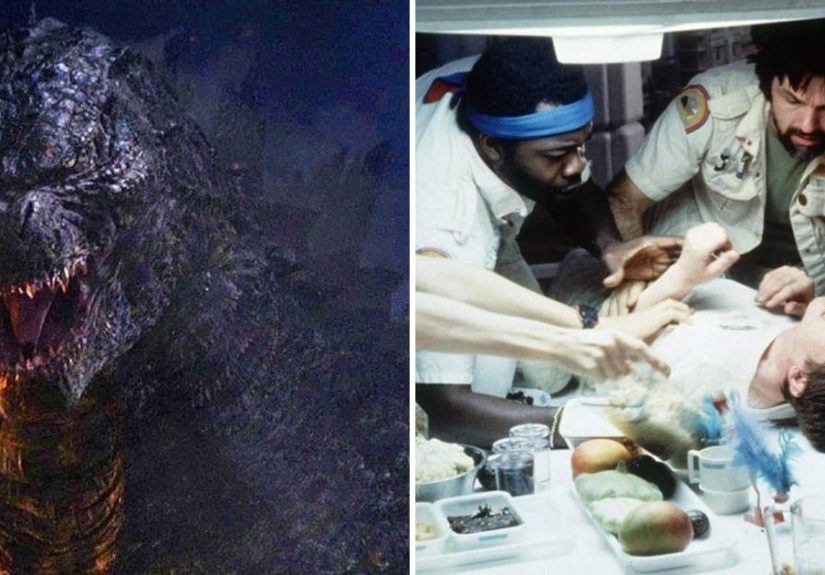
At this point, calling Godzilla a nuclear allegory is almost less of a fan theory and more of a monster-movie fact. Still, the interpretation remains one of the most powerful “theories” viewers bring to the original 1954 film. Godzilla is not simply a giant reptile having a bad day in Tokyo. He is the walking consequence of atomic power, postwar anxiety, and humanity’s ability to create disasters it cannot control.
The theory makes sense because the film’s imagery points directly to nuclear destruction. Godzilla’s radioactive body, burned texture, oceanic origin, and city-leveling fire echo anxieties surrounding nuclear testing and wartime devastation. He is ancient, but human technology awakens and mutates him. That detail matters. It turns the monster into a mirror: the terror is not only that Godzilla exists, but that humanity helped bring him into the modern world.
What makes this theory so durable is that it explains why the 1954 film feels mournful rather than merely exciting. Godzilla is terrifying, yes, but he is also tragic. He is both victim and catastrophe. That duality is why the King of the Monsters still stomps through pop culture with more emotional weight than most skyscraper-sized lizards could reasonably carry.
2. The Thing’s Ending Works Because Nobody Has to Be Infected
The ending of John Carpenter’s The Thing has produced decades of debate. Is MacReady infected? Is Childs infected? Is the bottle a test? Does visible breath matter? Did the alien win? Did the humans lose simply by not knowing?
One of the smartest fan theories says the point is not identifying who is the Thing. The point is that paranoia has already achieved the Thing’s goal. Even if both men are human, they cannot trust each other. They sit in the freezing darkness, exhausted, suspicious, and doomed to wait. That interpretation fits the film’s structure perfectly because The Thing is not only about imitation; it is about the collapse of certainty.
The creature wins by making identity unreliable. Every friendship becomes evidence. Every pause becomes suspicious. Every shadow feels biological. The final scene does not need a hidden clue because the emotional answer is already there: the monster has turned survival into an impossible math problem. That is colder than Antarctica, and honestly, Antarctica was already doing plenty.
3. The Jurassic Park Dinosaurs Are Not “Real” Dinosaurs
One fan theory argues that the dinosaurs in Jurassic Park are not true resurrected dinosaurs at all. They are engineered theme-park creatures designed to look like what people expect dinosaurs to be. That may sound like a hot take wearing a lab coat, but the movies themselves support it more than you might think.
In the original story, dinosaur DNA is incomplete, and scientists fill the gaps with DNA from modern animals, including frogs. Later films lean even harder into genetic engineering, hybrids, corporate branding, and entertainment-driven creature design. The theory suggests that John Hammond did not bring back prehistoric life so much as he built marketable biological attractions.
This makes the franchise’s scientific inaccuracies feel intentional rather than accidental. Raptors are oversized, many dinosaurs lack feathers, and the park’s animals often behave like movie monsters rather than paleontology lectures. Under this theory, that is the point. InGen did not create dinosaurs; it created the public’s fantasy of dinosaurs. The scariest monster, then, is not the T. rex. It is a focus group with a genetics budget.
4. The Cloverfield Monster Is a Terrified Baby
The Cloverfield monster looks like an apocalypse with elbows, but one theory says it is not attacking New York out of malice. It is a frightened infant separated from its mother. This idea gained serious weight because director Matt Reeves has discussed the creature as a baby experiencing fear and separation anxiety.
That changes the entire emotional shape of the movie. The monster’s rampage becomes less like a villain’s attack and more like a panic response on an unimaginable scale. It does not understand buildings, helicopters, sirens, or tiny humans screaming into handheld cameras. It is lost, overwhelmed, and powerful enough to turn confusion into mass destruction.
The theory makes sense because Cloverfield is already built around limited perspective. We see the disaster from the ground, through shaky footage and terrified human eyes. Of course the monster seems evil from that angle. But if the creature is also scared, the film becomes a double survival story: humans are trying to survive the monster, and the monster is trying to survive a world it does not understand. Unfortunately, when your toddler tantrum involves collapsing bridges, nobody is putting that on a parenting blog.
5. Weyland-Yutani Knew More Than It Admitted in Alien
In Alien, the Nostromo crew discovers the xenomorph, but fans have long suspected the company knew enough to want the creature before the crew fully understood what they had found. The infamous Special Order 937, which prioritizes returning the organism and treats the crew as expendable, gives this theory plenty of oxygen.
The theory works because the company’s behavior is too specific to be simple curiosity. Ash is not merely collecting samples like a nervous intern on his first space job. He is protecting the organism, withholding information, and following corporate instructions that place profit and weapons research above human life.
Whether Weyland-Yutani knew exactly what the xenomorph was or only suspected that something valuable waited on LV-426, the theory fits the franchise’s central theme: monsters are dangerous, but corporations that want to monetize monsters are worse. The xenomorph has acid blood and a terrifying jaw. The company has paperwork. Somehow, the paperwork is scarier.
6. The Predator Only Respects Worthy Prey
The Predator franchise has inspired a long-running theory that the Yautja are not random killers. They follow a hunter’s code, choosing targets who can fight back and avoiding prey considered helpless, sick, pregnant, or unworthy. Across the films and expanded lore, this interpretation explains why Predators often spare certain characters while obsessively pursuing armed fighters.
This theory makes the original Predator and later entries more interesting. The creature is not simply murdering people; it is evaluating them. Weapons, courage, skill, and resistance matter. Dutch becomes worthy because he adapts and fights strategically. Harrigan in Predator 2 earns respect after surviving the hunt. Naru in Prey wins because she understands both the creature and the rules of survival better than anyone expects.
The Predator’s honor code is still horrifying, obviously. “I only hunt worthy opponents” is not exactly a warm personality trait. But it gives the monster a culture, a logic, and a twisted morality. That is why the Predator remains more compelling than a generic alien slasher with dreadlocks and dental ambition.
7. The Shark in Jaws Is Not the Real Villain
One of the most sensible Jaws theories is that the shark is not the true villain. The shark is an animal. A huge, terrifying, boat-chewing animal, yes, but still an animal. The real danger comes from human denial, economic pressure, and leaders who convince themselves that reopening the beaches is worth the risk.
This theory fits because Jaws spends so much time on civic anxiety. Chief Brody wants to protect people. Mayor Vaughn wants to protect the town’s summer economy. The townspeople want normal life to continue. The shark exposes the weakness of systems built on wishful thinking. It is less “evil fish” and more “public safety crisis with fins.”
That reading also helps explain why the movie still feels modern. Communities still argue over risk, money, tourism, warnings, and expert advice. The shark may be the poster monster, but the film’s bite comes from watching people negotiate with reality and lose.
8. King Kong Is the Victim, Not the Beast
King Kong is often remembered as a giant monster movie, but one of the most convincing interpretations is that Kong is not the villain. He is a captured being exploited for spectacle, dragged from his home, displayed for profit, and destroyed when he refuses to stay contained.
The theory makes sense because Kong’s violence follows human intrusion. Carl Denham arrives on Skull Island, sees wonder, and immediately thinks like a showman. Kong becomes an attraction before anyone truly understands him. In New York, he is not treated as a living creature but as a headline, a trophy, and a business opportunity.
That interpretation turns the famous ending into tragedy rather than triumph. The airplanes do not simply defeat a monster; modern spectacle destroys what it first tried to own. Kong’s fall is unforgettable because it feels unfair. He is dangerous, but he is also displaced, confused, and used. In monster movie terms, that is basically a lawsuit with fur.
9. A Quiet Place Suggests Humanity Briefly Adapted
A popular theory about A Quiet Place argues that the Abbott family’s pregnancy, farm setup, and survival systems suggest there may have been a period when the family believed life had stabilized. On paper, having a baby in a world where monsters hunt sound seems like the worst idea since installing cymbals in a nursery. But the theory adds context.
The family has built silent routines. They use sand paths, sign language, warning lights, and careful planning. Their survival is not random luck; it is a disciplined lifestyle. The pregnancy may imply that, at some point, they believed they could manage the danger or that the worst period had passed.
This theory also deepens the film’s emotional stakes. The Abbotts are not simply trying to avoid death. They are trying to preserve family, hope, and normal human life under impossible circumstances. The baby is not a plot hole; it is a declaration that survival without a future is not enough.
10. The Mist’s Monsters Came From Human Experimentation
In The Mist, the Arrowhead Project is widely interpreted as the reason the creatures enter our world. The theory is straightforward: a secretive military experiment opened a doorway to another dimension, and the mist is what leaked through. That explanation fits the story’s cosmic horror tone and its suspicion of human arrogance.
The monsters in The Mist feel alien in the truest sense. They do not behave like familiar animals, and the mist itself creates a sense that reality has been punctured. If the Arrowhead Project caused the disaster, then the film becomes another classic monster-movie warning: do not poke holes in the universe unless you are extremely confident nothing with tentacles is waiting on the other side.
The theory also strengthens the ending’s cruelty. The horror is not random. It may be the result of human institutions playing with forces they barely understand, then leaving ordinary people to pay the bill in blood, panic, and supermarket-based extremism.
11. Pacific Rim’s Kaiju Are Constantly Learning
In Pacific Rim, the kaiju are not just giant beasts wandering in from another dimension. They are engineered weapons controlled by alien creators. A compelling theory suggests that every encounter helps the kaiju improve. When humans drift with kaiju brains, share neural connections, or reveal combat strategies, the enemy may gain information too.
This makes the war feel less like a series of monster attacks and more like an evolving arms race. The kaiju get bigger, stranger, and more specialized. The Jaegers adapt, but so do the invaders. If the Precursors can process what humans learn during the Drift, then every victory could also be a data leak.
The theory fits the movie’s central idea that connection is powerful but risky. Drifting saves humanity, but opening your mind is not exactly a password-protected operation. Sometimes teamwork saves the world. Sometimes teamwork accidentally gives the apocalypse your Wi-Fi password.
What Makes These Monster Movie Fan Theories So Convincing?
They Respect the Movie’s Themes
The best fan theories do not come out of nowhere. They grow from the movie’s own ideas. Godzilla reflects nuclear dread. Jaws explores denial and public safety. Alien criticizes corporate greed. These theories work because they amplify what the films are already saying.
They Explain Character Choices
A smart theory often makes a confusing decision feel human. Why would the Abbotts have another child? Maybe they believed they had adapted. Why does the Predator spare certain people? Maybe the hunt has rules. Why does Weyland-Yutani risk lives? Because the creature has value to them.
They Make the Monster More Interesting
A monster is scarier when it has logic. The xenomorph is a perfect organism. The Thing is paranoia in biological form. Clover is a frightened infant. Kong is exploited spectacle. These interpretations make the creatures memorable because they turn fear into meaning.
Personal Viewing Experiences: Why These Theories Stick With Fans
The funny thing about monster movies is that they rarely end when the credits roll. In fact, the best ones seem to get louder afterward. You turn off the TV, walk into the kitchen, and suddenly you are wondering whether Childs was breathing correctly in The Thing. You are brushing your teeth and thinking, “Wait, did Jurassic Park ever really have dinosaurs?” You are trying to sleep and realizing that the Cloverfield monster might have been less of a villain and more of a skyscraper-sized lost child. Congratulations: the movie has escaped containment.
Part of the fun comes from how monster movies invite group debate. Watch Jaws with friends and someone will blame the mayor, someone will defend him, and someone will announce that the shark is “just doing shark stuff” with the confidence of a marine biologist who has watched exactly one documentary. Watch Alien, and the room quickly becomes a corporate ethics seminar, except the case study has facehuggers. These conversations make the movies feel alive because every viewer brings a slightly different fear to the table.
Monster movie fan theories also stick because they make rewatches more rewarding. Once you consider that the Predator follows a code, you start watching its movements differently. It is not just stalking; it is judging. Once you accept that Kong is a victim of exploitation, the New York sequence becomes sadder and sharper. Once you see Godzilla as a symbol of nuclear trauma, the destruction stops feeling like spectacle alone and starts feeling like grief with footsteps.
There is also a comforting side to theorizing, even when the movies are terrifying. A theory gives shape to fear. It says, “Maybe the monster follows rules. Maybe the chaos has a cause. Maybe the ending is ambiguous because the movie wants us to feel uncertainty, not because we missed a clue.” Horror often works by taking away control. Fan theories give a little of that control back, even if only in the form of a wildly detailed explanation typed at 1:13 a.m. by someone named KaijuScholar97.
My favorite kind of monster theory is the one that makes the creature more sympathetic without making it harmless. Clover can be scared and still catastrophic. Kong can be exploited and still dangerous. Godzilla can be a victim and still flatten a city. That tension is what makes monster movies more than simple creature features. The monster is rarely just a monster. It is fear, grief, greed, science, war, nature, family, capitalism, or curiosity wearing claws.
That is why fans keep returning to these films. We are not only watching people run from monsters. We are watching people run from consequences, secrets, bad decisions, and truths too large to handle. Sometimes those truths have teeth. Sometimes they have tentacles. Sometimes they have a dorsal fin and a legendary theme song. Either way, the theories help us understand why the best monster movies never really stay buried.
Conclusion: The Best Monster Theories Make the Movies Bigger
Fan theories from monster movies work best when they make the original film richer, not smaller. They do not replace the story; they deepen it. A strong theory helps explain why a creature behaves the way it does, why humans make disastrous choices, and why certain images stay lodged in our brains for years.
From Godzilla’s nuclear symbolism to The Thing and its perfect paranoia, from fake dinosaurs in Jurassic Park to the tragic panic of Cloverfield, these theories prove that monster movies are smarter than they sometimes get credit for. Yes, they give us roaring beasts, exploding cities, and people making questionable flashlight decisions. But beneath all that chaos, they also ask serious questions about power, survival, exploitation, science, and fear.
That is the magic of a great monster movie. The creature may be fictional, but the ideas chasing us afterward feel very real.