Table of Contents >> Show >> Hide
- Quick Answer: Does E-Stim Work for Rheumatoid Arthritis?
- What “E-Stim” Means in RA Care
- What the Research Actually Shows
- Why Results Are So Mixed
- Where E-Stim May Be Reasonable in an RA Plan
- When to Be Cautious (or Skip It)
- How to Trial E-Stim Intelligently (Without Fooling Yourself)
- What Should Stay at the Center of RA Care
- Common Myths About E-Stim for Rheumatoid Arthritis
- 500-Word Experience Section: What Real-World Use Often Looks Like
- Conclusion
If rheumatoid arthritis (RA) pain had an off switch, we’d all be mashing it like a game controller.
Enter electrical stimulation (e-stim): those little devices with sticky pads that promise relief with a buzz, pulse, or tap-like sensation.
But does e-stim actually help RAor is it just high-tech “maybe”?
This evidence-based guide breaks down what current research says, where e-stim can fit into a real RA plan, and where expectations should stay realistic.
It synthesizes information from major U.S. medical and research organizations, rheumatology guidelines, and peer-reviewed studies.
You’ll get practical takeaways, not hype, plus a 500-word experience section at the end to show how this plays out in everyday life.
Quick Answer: Does E-Stim Work for Rheumatoid Arthritis?
Sometimes for symptom relief, no for disease control.
That’s the shortest honest answer.
Research suggests some people with RA may get short-term pain relief or temporary functional benefits from certain forms of e-stim.
But overall evidence is mixed, often low quality, and not strong enough to treat e-stim as a core RA therapy.
It does not replace disease-modifying treatment (like DMARDs/biologics), and it does not stop joint damage progression on its own.
Think of e-stim as a potential adjunct toollike a useful sidekick, not the superhero.
What “E-Stim” Means in RA Care
1) TENS (Transcutaneous Electrical Nerve Stimulation)
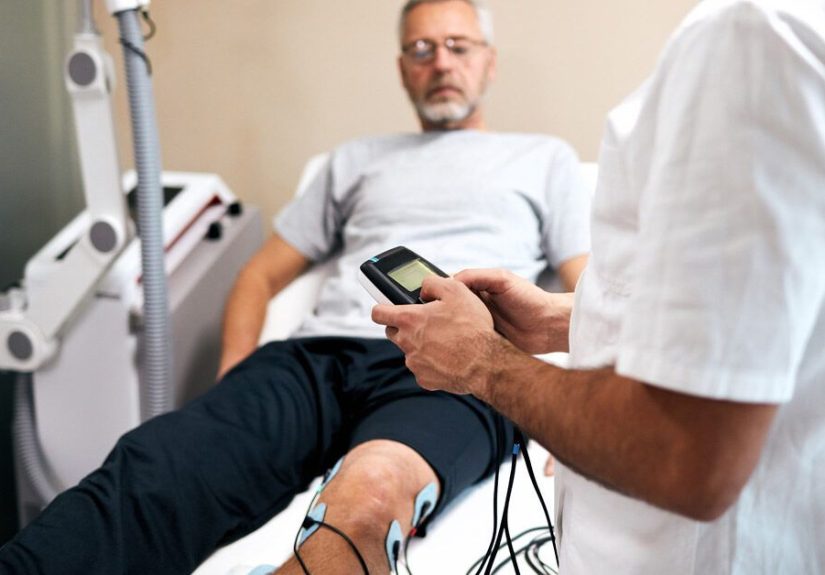
TENS uses low-voltage current through skin electrodes to modulate pain signaling.
It’s typically used for pain relief, not muscle strengthening.
Sensation can range from gentle tingling to stronger buzzing, depending on settings.
2) NMES/FES (Neuromuscular or Functional Electrical Stimulation)
These approaches target muscle contraction and performance.
In RA, they’ve been studied for hand muscle weakness and fatigue resistance in small trials.
That’s a different goal from pure pain control.
3) Clinical Electrotherapy in Rehab Settings
In physical or occupational therapy, e-stim may appear inside a broader treatment package:
exercise, joint protection, pacing, splinting, and education.
In that context, e-stim is usually one piece of a bigger strategynot the whole strategy.
What the Research Actually Shows
Older RA Trials: Some Signals, Lots of Caveats
Older randomized studies in RA showed pockets of benefit:
some patients had reduced pain and temporary grip-strength improvements.
But studies were small, often short, and used inconsistent parameters.
This makes it hard to generalize results to everyone with RA.
A classic tension in the literature is that one type of TENS setup may look promising while another looks neutral.
That inconsistency is exactly why clinicians keep saying, “It might help you, but we can’t guarantee it.”
Systematic Reviews: Mixed and Low-Certainty Evidence
Reviews focused on RA e-stim have repeatedly found conflicting outcomes and limited methodological quality.
Translation: we’re not looking at giant, flawless trials with crystal-clear conclusions.
More recent RA pain reviews still emphasize the same problem:
too few high-quality studies specifically designed around pain outcomes in RA.
We need larger, better RCTs before making bold claims.
Guideline-Level View: Cautious, Not Enthusiastic
Modern RA guidance is increasingly explicit:
active strategies (exercise, comprehensive PT/OT, education, self-management) are prioritized.
Electrotherapy, including TENS/NMES modalities, is generally not positioned as a front-line RA intervention.
In plain English: if your plan is “just e-stim,” that’s too thin.
If your plan is “meds + movement + rehab + pacing + maybe e-stim trial,” that’s much more aligned with evidence.
Why Results Are So Mixed
- RA isn’t one-size-fits-all: inflammation level, joint damage, central pain sensitization, and flare status differ by person.
- Dosing chaos: frequency, pulse width, intensity, treatment duration, and electrode placement vary widely across studies.
- Outcome mismatch: some studies measure pain at rest, others during grip, others global function or fatigue.
- Short follow-up windows: many studies capture quick responses but not durable long-term outcomes.
- Adjunct reality: e-stim is often tested alongside meds/therapy, making isolated effects harder to interpret.
So yes, your friend can swear by it while your neighbor calls it “fancy static.”
Both can be telling the truth for their own bodies.
Where E-Stim May Be Reasonable in an RA Plan
Consider a supervised e-stim trial when:
- You have persistent pain despite stable, guideline-based RA medication.
- You need symptom relief to participate better in exercise or hand therapy.
- You have localized pain patterns (for example, hand/wrist overuse pain layered on RA).
- You prefer reducing reliance on additional analgesics when appropriate.
- Your clinician and therapist can help optimize settings and monitor response.
Practical goal: improve function (opening jars, typing longer, walking farther, sleeping better), not just chase a lower pain number.
When to Be Cautious (or Skip It)
E-stim isn’t for every body or every situation.
Safety guidance varies by device and patient profile, but caution is commonly advised with:
- implanted electrical devices (for example pacemakers/defibrillators),
- damaged or infected skin at pad sites,
- areas with reduced sensation,
- certain pregnancy scenarios depending on treatment location/device guidance,
- placement near eyes, front of neck, or other contraindicated zones.
Also important: over-the-counter TENS products are generally cleared for temporary pain relief indications.
That is very different from “disease modification in autoimmune arthritis.”
How to Trial E-Stim Intelligently (Without Fooling Yourself)
A 4-Week Practical Framework
-
Set one functional goal.
Example: “Type 45 minutes with pain no higher than 4/10,” or “Open two jars/week without rescue meds.” -
Keep everything else stable.
Avoid changing five variables at once (new brace, new meds, new workout, new mattress, moon phase). -
Track before/after each session.
Pain score, stiffness duration, grip confidence, sleep, and next-day soreness. -
Use consistent dosing.
Same placement, session length, and frequency unless your therapist adjusts intentionally. -
Review at week 4.
Continue only if there’s meaningful improvement in function or quality of lifenot just novelty buzz.
If benefits are real, keep it as part of a broader RA program.
If benefits are minimal, drop it without guilt.
Not every tool has to work for every person.
What Should Stay at the Center of RA Care
Even if e-stim helps, the foundation remains:
- Treat-to-target medication strategy directed by rheumatology.
- Regular physical activity tailored to disease activity and joint status.
- PT/OT support for joint protection, pacing, hand function, and movement confidence.
- Flare planning so temporary setbacks don’t become long-term deconditioning.
- Shared decision-making that balances benefit, burden, cost, and preferences.
If e-stim makes it easier to do the high-value stuff above, it can earn its spot.
If it distracts from those essentials, it’s probably not worth the charger cable.
Common Myths About E-Stim for Rheumatoid Arthritis
Myth 1: “If it reduces pain, it must be treating the disease.”
Not necessarily. Pain modulation and immune disease control are different biological targets.
Myth 2: “More intensity equals better outcomes.”
Not reliably. Comfort, tolerability, and proper dosing matter. “Hero mode” can backfire.
Myth 3: “If one study is positive, the case is closed.”
No. RA evidence for e-stim has been inconsistent for decades, and quality is a recurring issue.
Myth 4: “Guidelines hate all non-drug therapy.”
False. Modern guidelines often support exercise, rehab, and selected integrative optionswhile being more cautious about electrotherapy specifically for RA outcomes.
500-Word Experience Section: What Real-World Use Often Looks Like
Note: The scenarios below are composite, de-identified patterns commonly reported in clinical practice and patient education settings.
Experience 1: “It Didn’t Cure Anything, But It Got Me Moving Again”
A 42-year-old graphic designer with hand-heavy work had well-controlled inflammation on DMARDs but still felt stubborn wrist pain by late afternoon.
She tried TENS after occupational therapy recommended it as a bridge toolnot a miracle.
The first week felt underwhelming. Week two was different: she noticed less “guarding” and could finish design edits without stopping every 20 minutes.
Her pain score only dropped modestly, but her productivity improved and evening irritability went down.
Her big win wasn’t “zero pain”; it was fewer interruptions, more confidence, and better consistency with hand exercises.
She kept TENS three days a week and stopped expecting fireworks.
Experience 2: “Amazing During Sessions, Gone by Dinner”
A 57-year-old teacher loved how TENS felt in the clinic.
During treatment, pain eased quickly, grip felt stronger, and everything seemed promising.
But relief faded within hours.
At first, this felt like failure. After discussion with his therapist, he reframed the goal:
use e-stim before activity blocks that matter most (class prep, shopping, meal prep), then pair with pacing and short movement breaks.
Result: not a longer-lasting analgesic effect, but better timing and better function.
He described it as “a tactical tool, not an all-day shield.”
That mindset shift prevented abandonment of useful therapy and reduced frustration.
Experience 3: “I Thought Higher Intensity Meant Better Results”
A 35-year-old parent increased home-unit intensity aggressively, assuming stronger sensation would equal stronger benefit.
Instead, she developed skin irritation and disliked sessions enough to stop after a week.
On follow-up, she restarted with lower intensity, better electrode rotation, shorter sessions, and clear placement coaching.
Tolerability improved dramatically.
Her outcome was moderate pain relief but a substantial increase in adherence to her full planespecially home exercise and sleep routines.
The lesson she now shares with other patients:
comfort and consistency beat “going hard” with e-stim settings.
In her words, “I needed less bravado, more strategy.”
Experience 4: “No BenefitAnd That’s Useful Information”
A 63-year-old retiree completed a structured four-week trial with symptom logs.
No meaningful gains in pain, sleep, morning stiffness, or walking tolerance were found.
Instead of viewing this as wasted effort, her rheumatology team used the data to pivot:
medication timing was optimized, aquatic exercise was added, and fatigue management improved.
Three months later, quality of life rose despite dropping e-stim completely.
Her takeaway: testing an option and ruling it out quickly is still progress.
Objective tracking prevented months of “maybe it’s helping?” confusion and kept care focused on what actually worked for her.
Experience 5: “Best as a Team Sport”
A 49-year-old warehouse coordinator used e-stim alone for months with little effect.
Once integrated into coordinated carerheumatologist, PT, and occupational therapistthe picture changed.
E-stim was timed before strengthening sessions and high-demand tasks; joint protection techniques reduced overload; flare rules were clarified.
Pain still fluctuated, but recovery after hard days improved and absenteeism dropped.
He called it “the difference between random gadgets and an actual game plan.”
His story reflects a common pattern:
e-stim may underperform in isolation yet become useful when embedded in comprehensive RA management focused on function, pacing, and adherence.
Conclusion
So, what does the research show on e-stim for rheumatoid arthritis?
It shows potential for symptom relief in some people, uncertainty at the population level, and no evidence that e-stim replaces disease-modifying RA therapy.
The smartest use is targeted, measurable, and integrated:
trial it with your care team, judge by function, keep what works, and ditch what doesn’t.
RA care is rarely about one magic tool.
It’s about building a system you can live withon good days, flare days, and regular Tuesday afternoons when your hands have opinions.