Table of Contents >> Show >> Hide
- The D.B. Cooper Hijacking: A Quick Trip Into America’s Strangest Cold Case
- Why the Case Refuses to Die
- The Richard McCoy Theory: Why This Suspect Keeps Coming Back
- The New Confession Claim: What Rick McCoy Says Happened
- The Parachute Discovery: Potential Breakthrough or Another Cooper Rabbit Hole?
- Why a Confession Alone Cannot Solve the D.B. Cooper Mystery
- The Evidence That Still Matters Most
- Why the McCoy Theory Is So Tempting
- Could DNA Finally Identify D.B. Cooper?
- What Would “D.B. Cooper Identified” Actually Require?
- Why America Still Cares About D.B. Cooper
- The Human Side of a Family Confession
- Experience and Reflections: What the D.B. Cooper Mystery Teaches Us About Cold Cases
- Conclusion: Has the Real D.B. Cooper Been Revealed?
Editor’s note: The D.B. Cooper case remains officially unsolved. Recent claims involving Richard Floyd McCoy Jr. and a family confession have renewed interest, but no public law-enforcement confirmation has identified Cooper conclusively.
Few American mysteries wear a suit and tie quite like D.B. Cooper. On Thanksgiving Eve in 1971, a calm passenger using the name Dan Cooper boarded Northwest Orient Flight 305 from Portland to Seattle, made a ransom demand, collected $200,000, and vanished into the rainy darkness of the Pacific Northwest. No dramatic courtroom confession followed. No treasure map arrived. No neatly labeled parachute dropped onto an FBI desk with a handwritten “case closed” note. Instead, Cooper became the rare criminal legend who disappeared so completely that even his nickname was born from a mistake.
Now, more than five decades later, the case is buzzing again. A new wave of attention centers on Richard Floyd McCoy Jr., a convicted skyjacker long considered one of the most intriguing D.B. Cooper suspects. His children have claimed that their late mother, Karen McCoy, confessed that Richard McCoy Jr. was Cooper and that she helped him. Add in a parachute reportedly found on property connected to the McCoy family, and suddenly America’s favorite airborne cold case has pulled up a chair at the internet dinner table again.
So, has D.B. Cooper finally been identified? Not quite. But the new confession claim is interesting enough to deserve a serious lookpreferably with one eyebrow raised and the other one doing detective work.
The D.B. Cooper Hijacking: A Quick Trip Into America’s Strangest Cold Case
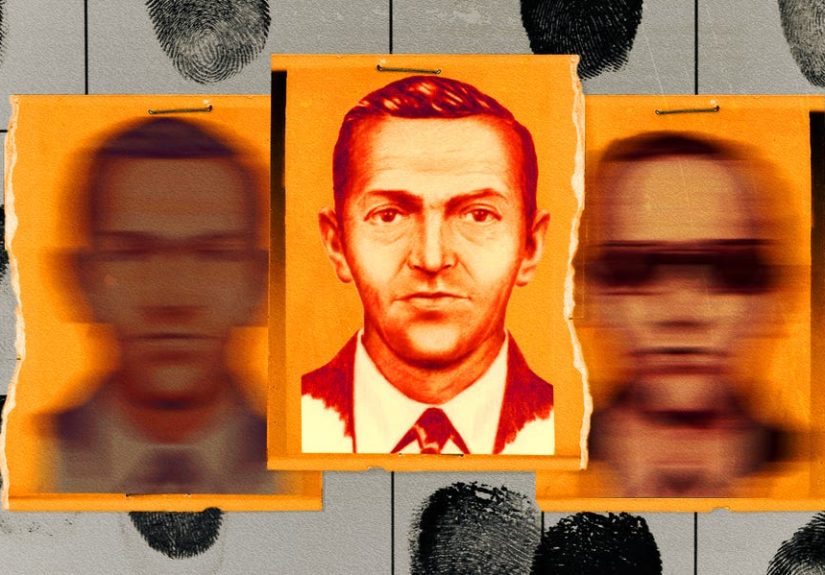
On November 24, 1971, a man calling himself Dan Cooper bought a one-way ticket from Portland, Oregon, to Seattle, Washington. He looked ordinary: business suit, dark tie, sunglasses, composed manners. In other words, he looked like someone who might complain politely about airline coffee, not become the subject of a half-century manhunt.
During the short flight, Cooper passed a note to a flight attendant and indicated that he had an explosive device. He demanded $200,000 in cash and four parachutes. After the plane landed in Seattle, passengers were released, the money and parachutes were delivered, and the aircraft took off again with only Cooper and a small crew aboard. Somewhere over the Pacific Northwest, Cooper lowered the rear stairs of the Boeing 727 and jumped into the night with the ransom money.
That was the last confirmed sighting of him.
The FBI called the case NORJAK, short for Northwest Hijacking. Investigators pursued hundreds of suspects, searched rough terrain, examined physical evidence, and followed leads for decades. Yet Cooper’s identity remained unknown. In 2016, the FBI announced it would no longer actively investigate the case, though it said credible physical evidenceespecially related to the parachutes or ransom moneycould still be submitted.
Why the Case Refuses to Die
D.B. Cooper has stayed famous because the case has almost everything: mystery, aviation history, wilderness, ransom money, a vanished suspect, and just enough evidence to keep people arguing at 2 a.m. The man was not caught. Most of the money was never found. His body never turned up. And unlike many crime stories, the Cooper case ends with a literal leap into the unknown.
The strongest physical clue appeared in 1980, when a young boy found deteriorating $20 bills along the Columbia River. The serial numbers matched the ransom money. That discovery proved at least some of the cash made it out of the plane, but it did not prove whether Cooper survived, drowned, hid, lost the money, or accidentally became the world’s most overdressed fertilizer.
Other evidence included a clip-on tie left behind on the plane, cigarette butts, witness descriptions, and parachute-related materials. The tie later became especially interesting because researchers examined tiny particles on it, leading some theorists to wonder whether Cooper worked in a technical or manufacturing field. Still, none of that has publicly produced a confirmed name.
The Richard McCoy Theory: Why This Suspect Keeps Coming Back
Richard Floyd McCoy Jr. has long stood near the center of D.B. Cooper speculation because his own criminal history sounds uncomfortably familiar. In 1972, less than five months after the Cooper hijacking, McCoy hijacked a United Airlines flight, demanded ransom money, and parachuted from the aircraft over Utah. He was arrested, convicted, and sentenced to prison. He later escaped custody and was killed in a confrontation with FBI agents in 1974.
That timeline alone makes people lean forward. A man with military experience, parachuting knowledge, and a similar crime committed shortly after Cooper? For amateur sleuths, that is not a clue; it is a neon sign flashing “please discuss me endlessly.”
But there is a major complication: the FBI previously ruled McCoy out. According to the bureau’s historical summary, witnesses did not believe McCoy matched the Cooper they saw. Physical descriptions mattered. Investigators also had other reasons for excluding him. That does not stop the theory, but it does force serious readers to separate “interesting suspect” from “confirmed skyjacker.”
The New Confession Claim: What Rick McCoy Says Happened
The latest attention comes from Richard “Rick” McCoy III, son of Richard Floyd McCoy Jr. Rick has claimed that his mother, Karen McCoy, confessed before her death that his father was D.B. Cooper. According to recent reporting, Rick says Karen McCoy was not merely aware of the crime but helped plan or support it.
This claim matters because family confessions can be powerfulbut they can also be messy. Memories shift. Family myths grow. Silence can harden into certainty. A confession made decades later, especially without immediate public documentation, needs physical evidence to carry real weight.
That is where the parachute comes in.
The Parachute Discovery: Potential Breakthrough or Another Cooper Rabbit Hole?
Aviation investigator and YouTuber Dan Gryder has said he found a military-style parachute rig on property connected to McCoy’s family. Reports say Gryder and Rick McCoy turned over a parachute, harness, and logbook to the FBI. Some Cooper researchers believe the equipment could be significant. Others are cautious, noting that the Cooper case has generated many dramatic claims that later failed to solve the mystery.
That cautious approach is important. A parachute found decades later is not automatically Cooper’s parachute. Investigators would need to establish provenance: where it came from, who owned it, whether it matches known Cooper evidence, and whether it contains usable biological or trace evidence. Without that, a parachute is fascinatingbut fascination is not proof.
Why a Confession Alone Cannot Solve the D.B. Cooper Mystery
Over the years, several people have been proposed as D.B. Cooper. Some allegedly confessed. Some had suspicious backgrounds. Some fit parts of the description. Some fit the legend better than the evidence. That is exactly why Cooper research can feel like a crowded airport terminal where every suspect is holding a boarding pass marked “maybe.”
A confession can reopen curiosity, but it cannot close a case by itself. To identify D.B. Cooper convincingly, investigators would need a combination of reliable witness comparison, physical evidence, DNA, documented timelines, and a clear explanation of how the suspect committed the crime and disappeared afterward. The McCoy theory has intriguing similarities, but it also has obstacles, especially the earlier witness-based rejection by the FBI.
In other words, the question is not “Could Richard McCoy have been Cooper?” The stronger question is: “Can the new evidence overcome the reasons investigators previously ruled him out?”
The Evidence That Still Matters Most
1. The Ransom Money
The Columbia River money remains one of the most important pieces of physical evidence. It confirms that a portion of the ransom left the plane and eventually reached a riverbank. But it does not tell us who Cooper was. It also does not fully explain whether the money was carried there by Cooper, water, erosion, human activity, or some combination of bad luck and geology.
2. The Tie
The clip-on tie Cooper left behind has fascinated investigators because it may contain trace evidence. Particles found on it have fueled theories about Cooper’s job or background. If DNA or trace analysis ever produces a strong match, the tie could become far more important than it looked when it was just an abandoned accessory from the world’s worst business trip.
3. Witness Descriptions
Flight attendants and passengers gave descriptions that helped create the famous Cooper sketches. Eyewitness evidence can be imperfect, especially under stress, but in this case the witnesses spent time near the hijacker. Their impressions were one reason the FBI previously rejected some suspects, including McCoy.
4. Parachute Evidence
The FBI has long said that specific physical evidence related to parachutes could matter. That is why the reported McCoy-family parachute is interesting. Still, it must be authenticated carefully before anyone can declare victory.
Why the McCoy Theory Is So Tempting
The McCoy theory feels tempting because it is narratively tidy. He had parachuting experience. He committed a similar hijacking soon after Cooper. He had the nerve, the method, and the aviation-adjacent skill set. If you were casting a movie called “The Man Who Might Be D.B. Cooper,” McCoy would at least get a callback.
But real investigations are not movie casting. They are slower, duller, and much less impressed by dramatic coincidence. Similar crimes can suggest copycat behavior. Military or parachuting experience does not automatically make someone Cooper. A family confession may be sincere and still wrong. A hidden parachute may be suspicious and still unrelated.
That is the strange beauty of the Cooper case: every answer arrives wearing a question mark.
Could DNA Finally Identify D.B. Cooper?
Modern forensic testing has transformed many cold cases. DNA analysis, genetic genealogy, and advanced trace testing can do today what investigators in the 1970s could barely imagine. If biological material linked clearly to Cooper exists and can be compared with a suspect’s family DNA, the case could move from folklore to evidence.
However, there are challenges. Old evidence may be degraded or contaminated. Items handled by multiple people can produce mixed results. A partial DNA profile may exclude a suspect without identifying the real one. Even a promising match would need careful validation.
That is why the latest McCoy claim sits in an uncomfortable middle zone: exciting enough to discuss, but not confirmed enough to announce that the mystery is over.
What Would “D.B. Cooper Identified” Actually Require?
For the public to accept a final identification, several things would likely need to happen. First, law enforcement or credible forensic experts would need to connect a suspect to Cooper’s physical evidence. Second, that evidence would need to be strong enough to survive scrutiny. Third, the timeline would need to make sense. Fourth, the explanation would need to account for known contradictions, including witness descriptions.
In McCoy’s case, supporters point to his later hijacking, alleged family knowledge, and the reported parachute discovery. Skeptics point to the FBI’s earlier rejection, differences noted by witnesses, and the lack of public confirmation. Both sides have enough material to keep the debate alive, which is exactly how the Cooper mystery has survived this long.
Why America Still Cares About D.B. Cooper
America loves a mystery, but the Cooper case has a special flavor. It happened during a different era of aviation, before today’s security systems. It involved a calm suspect, a strange plan, and a disappearance so complete it feels almost fictional. Cooper is not admired by serious historians as a hero; he endangered lives and committed a major crime. But as a cultural mystery, he occupies the same dusty shelf as lost treasure, vanished ships, and cold-case riddles that refuse to behave.
The story also attracts people because it contains unanswered emotional questions. Did Cooper survive? Did he plan brilliantly or recklessly? Was he a desperate man, a skilled operator, or simply lucky for one impossible night? Did someone know the truth and take it to the grave? The new McCoy confession claim lands directly on that last question.
The Human Side of a Family Confession
When a child says a parent carried a famous secret, the story becomes more than a cold case. It becomes a family burden. Rick McCoy’s claim suggests years of silence, suspicion, and delayed disclosure. Whether the claim proves true or not, it reflects how famous mysteries can pull private families into public scrutiny.
There is also a moral tension. If Karen McCoy truly confessed, why wait? If the family suspected the truth earlier, what kept them quiet? Fear, loyalty, uncertainty, shame, and legal concerns could all play a role. Families often protect their own stories until time, death, or pressure changes the calculation.
That does not prove the claim. But it explains why a confession story can feel emotionally persuasive even before the evidence catches up.
Experience and Reflections: What the D.B. Cooper Mystery Teaches Us About Cold Cases
Following the D.B. Cooper case is a little like walking through a museum where every exhibit whispers, “Wait, there’s more.” You start with the famous sketch, then the ransom money, then the tie, then McCoy, then another suspect, then a letter, then a documentary, then a researcher with a theory strong enough to power a small city. Before long, you are reading about parachute rigs at midnight and wondering whether your browser history now qualifies you as an amateur investigator.
One useful lesson from the Cooper mystery is that cold cases demand patience. The internet rewards instant conclusions, but old investigations rarely work that way. Evidence has to be tested. Claims must be checked. Timelines need to be compared. A dramatic quote from a family member can be meaningful, but it cannot replace physical proof. The best Cooper researchers tend to balance curiosity with discipline. They enjoy the puzzle, but they do not confuse a good story with a solved case.
Another experience the case offers is a reminder that legends simplify people. “D.B. Cooper” has become almost a character: sunglasses, suit, parachute, rainstorm, vanished cash. But the real event involved frightened passengers, endangered crew members, and a massive law-enforcement response. When writing or reading about Cooper, it is worth keeping that human reality in view. The mystery is fascinating, but the crime was not a magic trick performed for entertainment.
The McCoy confession claim also shows how family stories can become evidence-adjacent without becoming evidence. Many families have secrets. Some are true. Some are exaggerated. Some are misunderstood. In a famous case, a private memory can suddenly become national news. That is exciting, but also risky. Public attention can turn grief and uncertainty into spectacle. Responsible coverage should say what is known, what is claimed, and what remains unverified.
For readers, the best way to approach the new D.B. Cooper claims is with open-minded skepticism. Open-minded, because old cases can be solved by overlooked objects, family DNA, or one late confession. Skeptical, because the Cooper case has survived dozens of “breakthroughs” that did not break through. The truth, if it ever arrives, will probably come not as a thunderclap but as a careful chain of evidence.
That is why the latest McCoy angle is worth watching. If forensic testing links the parachute, DNA, or other material evidence to Cooper, the story changes dramatically. If not, the case remains what it has been for decades: an American mystery with a raincoat, a briefcase, and a talent for slipping out the back door.
Conclusion: Has the Real D.B. Cooper Been Revealed?
The new confession claim involving Richard Floyd McCoy Jr. may be one of the most compelling recent developments in the D.B. Cooper mystery, but it is not yet a confirmed solution. McCoy remains a fascinating suspect because of his later skyjacking, parachuting background, and the claims now made by his children. The reported parachute discovery adds another layer of intrigue. But official confirmation has not been made public, and earlier FBI analysis raised doubts about McCoy as Cooper.
For now, the smartest answer is this: D.B. Cooper may be closer to identification than he has been in years, but the case is not closed in the public record. The confession may reveal the real skyjackeror it may become another dramatic chapter in a mystery famous for refusing to land.