Table of Contents >> Show >> Hide
- What “Crabification” Actually Means (and What It Doesn’t)
- True Crabs, “False” Crabs, and Why Names Are Trying to Start Fights
- How Many Times Has Crabification Happened?
- So Why Does the Crab Body Plan Keep Winning the Tryouts?
- Famous “Crabification” Case Files
- Crabification Isn’t Just “Becoming a Crab”It’s Becoming Crab-Shaped for a Reason
- The Meme vs. The Science: “Everything Becomes Crab” (Not Exactly)
- Extra: “Crabification” in Real LifeExperiences, Encounters, and Crab-Spotting Aha Moments (500+ Words)
- Conclusion
Evolution has a sense of humor. It spends millions of years experimenting with sleek swimmers, lanky walkers, and gloriously weird deep-sea noodles… and then, with suspicious frequency, it looks at its own work and goes: “You know what would really tie this ecosystem together? A crab.”
That running joke has a real scientific backbone. Biologists call it carcinizationpopularly nicknamed “crabification”and it describes a pattern where different crustacean lineages independently evolve a crab-like body plan. Not “everything becomes a crab” (calm down, mammals), but enough separate “crab-like” arrivals that it’s worth asking: Why does nature keep hitting the crab button?
The short version: crabs are a remarkably effective design for life on the seafloor (and around it), especially for animals that need armor, agility, and a body that can squeeze into tight spaces without giving predators a convenient handle. The longer version is where things get funbecause crabification is part physics, part ecology, part genetics, and part “nature is constrained by what it already has in the toolbox.”
What “Crabification” Actually Means (and What It Doesn’t)
Carcinization is a type of convergent evolution: unrelated (or not-very-closely-related) organisms evolve similar traits because they face similar challenges. Wings evolved more than once. Streamlined bodies show up in dolphins and fish. Eyes have evolved in multiple ways. Crabs are just the meme-worthy version because they’re so instantly recognizableand because the pattern repeats within a big group of animals that already share a lot of genetic and anatomical building blocks.
Crabification usually involves a suite of changes, not a single “poof, crab!” moment:
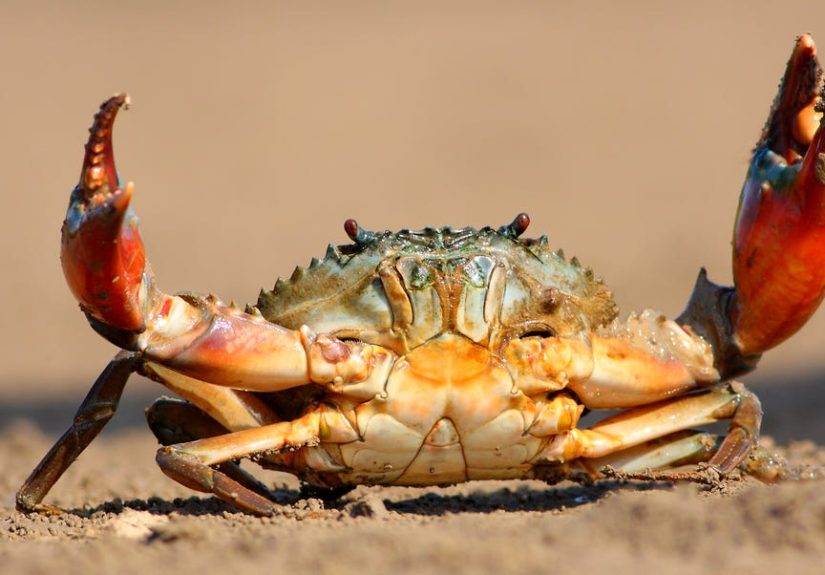
- A broader, flatter body (a wide carapace that’s less “lobster tube,” more “armored pancake”).
- A reduced abdomen (the “tail” folds under the body instead of trailing behind).
- Rearranged posture and legs that support scuttling, bracing, digging, and climbing.
- More compact protection for vulnerable organsless exposed real estate for predators to grab.
What it doesn’t mean: that every animal is destined to become a crab, that evolution has a goal, or that crabs are “perfect.” Nature isn’t ranking body plans like a reality show judge with a tiny clipboard. Crab-like forms are simply one of several successful solutions that can repeatedly appear when conditions favor them.
True Crabs, “False” Crabs, and Why Names Are Trying to Start Fights
The crab universe has a plot twist: not all “crabs” are true crabs. True crabs belong to a group called Brachyura. Many other crustaceans look crabby but belong to a different branch, including Anomurahome to hermit crabs, king crabs, porcelain crabs, squat lobsters, and other creatures that are basically evolution’s “close enough” audition tapes.
This is where crabification becomes especially interesting. If a lobster-like ancestor repeatedly “folds into” a crab-like form across different lineages, we’re seeing evolution replay a similar body makeover under similar pressures. Think of it less like copying someone’s homework and more like multiple students independently realizing that the same study guide works.
How Many Times Has Crabification Happened?
Depending on how you define “crab-like,” researchers often talk about crabification happening at least five separate times among decapod crustaceans. And just to keep everyone humble, evolution has also “undone” crab-like forms in some lineagesa reverse trend sometimes called decarcinization. Translation: crabbiness can evolve, fade, and reappear, like a fashion trend with very durable shoulder pads.
That back-and-forth matters because it tells us crabification isn’t a one-way staircase toward a “final form.” It’s more like a set of doors that open when the environment makes that body layout pay offand close when a different layout becomes the better bargain.
So Why Does the Crab Body Plan Keep Winning the Tryouts?
1) A Compact, Armored Body Is Great for Not Getting Eaten
Life on the seafloor is a constant audition for the role of “lunch.” A broad, flat carapace can act like a shield, and tucking the abdomen under the body reduces exposed soft tissue. It’s harder for predators to snag a big, dangling tail if there isn’t one dangling in the first place.
This doesn’t make crabs invincibleplenty of predators specialize in cracking shellsbut it does shift the survival math. If you’re a crustacean trying to live in busy, predator-rich habitats, a compact armored form can be a strong defensive move.
2) Crabs Are Built for Crevices, Reefs, and “Under That Rock” Living
Crab-like bodies are excellent for squeezing into tight spaces. A flatter profile lets them wedge into cracks, duck under ledges, and hang out in the kind of real estate predators can’t easily access. This is especially helpful in complex habitats like rocky shores, coral reefs, kelp forests, and rubble-strewn seafloors where hiding spots are everywhere.
Sideways scuttling (and quick directional changes) can also be useful in cluttered environments. When you’re navigating a maze of rocks and algae, being able to “shuffle” laterally and pivot fast can be more valuable than being a straight-line sprinter.
3) Strong Claws + Stable Stance = Versatility
A crab-like stance is great for bracing and leverage. If you’re going to carry heavy claws, wrestle with prey, pry open shells, scrape algae, dig burrows, or defend territory, a low, stable platform helps. Crabs can be omnivorous opportunists: scavengers, predators, grazers, and burglars of tidepool snacks.
In evolutionary terms, versatility is a superpower. A body plan that can support many lifestyles can spread across habitats, survive changing conditions, and exploit new niches.
4) Developmental “Constraints” Might Funnel Crustaceans Toward Crab Shapes
Here’s the less meme-y, more mind-bending angle: crabification may not be only about “the crab shape is best.” It may also be partly about what’s easy to evolve given the underlying developmental wiring of certain crustacean groups.
If related animals share genetic pathways that control body segmentation, limb placement, and shell formation, they may have a limited menu of viable redesigns. Under similar environmental pressures, multiple lineages might repeatedly land on a crab-like configuration because it’s one of the accessible “good solutions” that their biology can reach without breaking everything else.
Think of it like remodeling a house. You can change a lot, but you can’t casually move the load-bearing walls without consequences. Crustaceans have load-bearing walls toojust made of genes, development, and anatomy.
Famous “Crabification” Case Files
King Crabs: The Hermit Crab Glow-Up
King crabs are the celebrity example because they look like textbook crabsbig, armored, dramatic clawsyet evidence indicates they evolved from hermit crab ancestors. Hermit crabs are known for borrowing snail shells, which makes them look like living moving-day renters. But in some lineages, selection favored building more protection into the body itself, reducing reliance on a shell and shifting toward a crab-like form.
This transition is also a reminder that evolution doesn’t “plan” ahead. If shells are scarce, heavy, risky to find, or limit movement in certain habitats, then investing in a sturdier body can pay off. Over long timescales, that can transform a creature from “shell-dependent” to “shell optional” to “shell who?”
Porcelain Crabs: Tiny, Crab-Looking, Not Quite Crabs
Porcelain crabs are another classic: crab-shaped enough to fool casual observers, yet belonging to the anomuran side of the family. Many are small, flattened, and adapted to living under rocks or in reef crevices, where a crabby build is a practical fit.
If king crabs are the blockbuster movie version of crabification, porcelain crabs are the indie film: quieter, smaller budget, still a masterpiece of design choices that work.
Squat Lobsters and Other Almost-Crabs
Squat lobsters (also anomurans) show how evolutionary experiments can hover near crab-like shapes without fully committing. Some have partial crab-like traits, suggesting there are multiple routes and endpointsmore like a web than a ladder.
The broader lesson: “crab-like” isn’t one exact blueprint. It’s a neighborhood of body plans that share certain features (flattening, tucking, compactness) while still differing in leg count, abdomen shape, and life history.
Crabification Isn’t Just “Becoming a Crab”It’s Becoming Crab-Shaped for a Reason
One reason crabification captivates scientists is that it lets them test big evolutionary ideas on a repeated pattern. If the same general shape evolves multiple times, you can ask:
- Are the same genes and developmental pathways involved each time?
- Do similar habitats reliably predict crab-like evolution?
- Are there trade-offsthings crabs give up to become crabby?
- Why do some lineages “de-crabify” when others double down?
These questions matter beyond crabs. They touch the core of evolutionary biology: how predictable evolution is, how much it’s shaped by environment versus constraint, and how often life finds the same answers to the same problems.
The Meme vs. The Science: “Everything Becomes Crab” (Not Exactly)
The internet loves a tidy slogan. “Everything becomes crab” is tidy, funny, and profoundly unbothered by nuance. The science is a little messierin a good way.
Crabification isn’t a universal destiny; it’s a pattern observed within certain crustacean groups. The repeated evolution happens because the starting materials are similar (they’re already decapods), the environments often rhyme (seafloor living, crevices, predation pressure), and the body plan offers advantages (compact armor, leverage, versatility).
In other words: evolution doesn’t have a crab obsession. It has a habit of reusing effective solutions when the problem set repeats.
Extra: “Crabification” in Real LifeExperiences, Encounters, and Crab-Spotting Aha Moments (500+ Words)
If you’ve ever walked a rocky shoreline and lifted a stone (gently, and then put it back like a polite guest), you’ve probably had a mini crabification epiphany without realizing it. Under that rock is usually a bustling neighborhood: small crab-like bodies wedged into damp creases, legs braced against the stone like tiny suspension bridges, claws ready to defend a patch of algae like it’s beachfront property.
That’s the crab body plan doing what it does best: making the most of tight spaces. The flatter the creature, the better it can occupy the thin “gap habitat” where moisture lingers and predators have a harder time reaching. When you see a crab vanish into a crack that looks two-dimensional, you’re watching a design feature, not a magic trick.
Tidepools are another place where crabification suddenly stops being a vocabulary word and starts being a lived observation. Tidepools are chaotic: waves, temperature swings, oxygen changes, hungry fish at high tide, hungry birds at low tide. In that kind of world, it’s easy to appreciate why compact armor and a low center of gravity matter. A long-bodied crustacean might get leverage-flipped by waves or exposed in open water. A crab-shaped creature can cling, crouch, and tuck itself into the rough architecture of the rocks.
Aquariums are basically crabification theaters. Stand in front of a tank with “crabs” and “not-quite-crabs” and you can play a surprisingly entertaining game: Which of these are true crabs, and which are imposters? Many visitors discover that “king crab” isn’t automatically a true crab in the strict evolutionary sense. Meanwhile, porcelain crabs look like they belong on a crab calendar, but their lineage tells a different story. That momentwhen appearance and ancestry don’t match is one of the best real-world lessons in convergent evolution you can get without signing up for a semester-long course.
Even seafood markets can spark crabification curiosity (purely educational curiosityno one is asking you to interrogate the crabs). You’ll see a spread of crab-like formssome broad and flat, some spindly, some heavily spiked, some smooth. It’s a reminder that “crab-shaped” isn’t a single cookie cutter. It’s a set of variations on a theme, each tuned to a different habitat and lifestyle. When you compare shapesthick shells, tucked abdomens, heavy clawsyou’re essentially comparing solutions to the same survival questions: How do I protect myself? How do I move here? How do I eat without getting eaten?
And then there are the “wait, that’s not a crab?” moments that happen when people go snorkeling or diving. A crab-like silhouette scoots across the sand, and your brain labels it “crab” instantly. Later you learn it might be a squat lobster or another anomuran relative that evolved the crab look independently. That little whiplashbetween what it looks like and what it is is exactly why crabification is such a sticky concept. It turns casual observation into deeper questions about how evolution shapes form, and how often it repeats itself when the world keeps asking similar things of living bodies.
The big takeaway from all these experiences is surprisingly comforting: nature is both inventive and practical. It experiments, it improvises, and then it reuses what works. When you see crab-like bodies in different places and different lineages, you’re not watching evolution “aim” for crabsyou’re watching it discover, again and again, that for certain crustaceans living in certain environments, crab-shaped is a really good way to be.
Conclusion
“Crabification” is funny because it’s true-ish, and it’s true-ish because evolution often repeats successful strategies. Carcinization shows how similar environments can sculpt similar forms, especially when lineages share underlying developmental pathways that make certain body plans easier to reach. The crab shape isn’t destinybut for many crustaceans facing life on the seafloor, it’s a practical, versatile, armor-first solution that keeps showing up.
So the next time you see a crabor a suspiciously crab-shaped “not-crab”you can appreciate the real story behind the meme: not that everything becomes a crab, but that evolution loves a body plan that can hide, hustle, and hold its ground.