Table of Contents >> Show >> Hide
- Why Washing Machines Get Smelly in the First Place
- How Baking Soda Deodorizes a Washer (And What It Can’t Do)
- The “Instant Deodorize” Method: Baking Soda + One Hot Cycle
- Front-Loader Bonus: Deodorize the Gasket Without Destroying It
- When Baking Soda Alone Isn’t Enough: The Deep-Clean Game Plan
- Important Safety Notes (Because We’re Not Making Toxic Gas Today)
- How to Keep Your Washer From Smelling Again
- Troubleshooting: If the Smell Won’t Quit
- Real-Life Experiences and Scenarios (500+ Words)
- Conclusion
If your washing machine has started smelling like a damp basement, a forgotten gym bag, or (worst of all) “mystery soup,” you’re not imagining itand you’re not alone. Washers are designed to clean, but they can also trap the exact combo that creates stink: moisture + residue + time. The good news? Baking soda can make a smelly washer smell better fast, and it’s one of the safest, cheapest fixes you can try without turning your laundry room into a high school chemistry lab.
This guide will show you how to use baking soda to deodorize a washer (front-load or top-load), when it works instantly, when you need a deeper clean, and how to keep odors from creeping back. We’ll keep it practical, a little funny, and very focused on resultsbecause your clothes deserve better than coming out “clean” with a side of swamp.
Why Washing Machines Get Smelly in the First Place
Washer odor usually isn’t “dirty laundry” (ironic, right?). It’s typically a buildup problem. Here’s what’s going on inside that innocent-looking drum:
1) Detergent and fabric softener residue builds up
Modern high-efficiency washers use less water, which is great for your utility billbut less water can also mean more leftover residue. Too much detergent (or extra-softener “for good measure”) can create a slick film that clings to the drum, gasket, hoses, and dispenser.
2) Moisture gets trappedespecially in front-loaders
Front-load washers seal tightly to prevent leaks. That gasket is a moisture magnet. Tiny puddles hide in folds, lint sticks around, and mildew throws a party you didn’t RSVP to.
3) Cold and quick cycles don’t always dissolve grime
Cold water washes are fantastic for colors and energy savings, but they can be less effective at breaking down oily residue, especially over time. If most of your loads are cold/quick, your washer may never get a true “steam-clean” moment.
4) The overlooked zones get funky
The drum might look clean, but the smell often lives in the shadows: the detergent drawer, the rubber door seal, the drain filter/coin trap, and even the drain hose.
How Baking Soda Deodorizes a Washer (And What It Can’t Do)
Baking soda (sodium bicarbonate) is a mild alkali that helps neutralize odors and loosen grime. Think of it like the chill friend who shows up and quietly makes everything less dramatic. It’s especially good at:
- Neutralizing acidic odors and “musty” smells
- Freshening the drum and reducing lingering funk
- Softening water slightly, which can help cleaning performance in some situations
But here’s the honest truth: baking soda is a deodorizer, not a hospital-grade disinfectant. If your washer smell is caused by heavy mold/mildew growth or thick biofilm, baking soda can improve the smell quicklybut you may need a deeper clean to fix the cause, not just the vibes.
The “Instant Deodorize” Method: Baking Soda + One Hot Cycle
This is the fastest, lowest-effort approach when your washer smells stale, sour, or generally “off,” but you’re not dealing with visible mold chunks or a horror-movie gasket.
What you’ll need
- 1/2 cup baking soda (plain, unscented)
- A microfiber cloth or soft rag
- Hot water setting (or a Clean Washer/Tub Clean cycle)
Step-by-step
- Start with an empty washer. No clothes, no towels, no “maybe this will clean itself.”
- Add baking soda directly to the drum. Sprinkle 1/2 cup into the bottom of the drum. (If you have a top-loader, sprinkle it across the bottom before the fill finishes.)
- Run the hottest cycle you have. Use Clean Washer/Tub Clean if your machine offers it. If not, choose a long, hot cycle with the highest water level available.
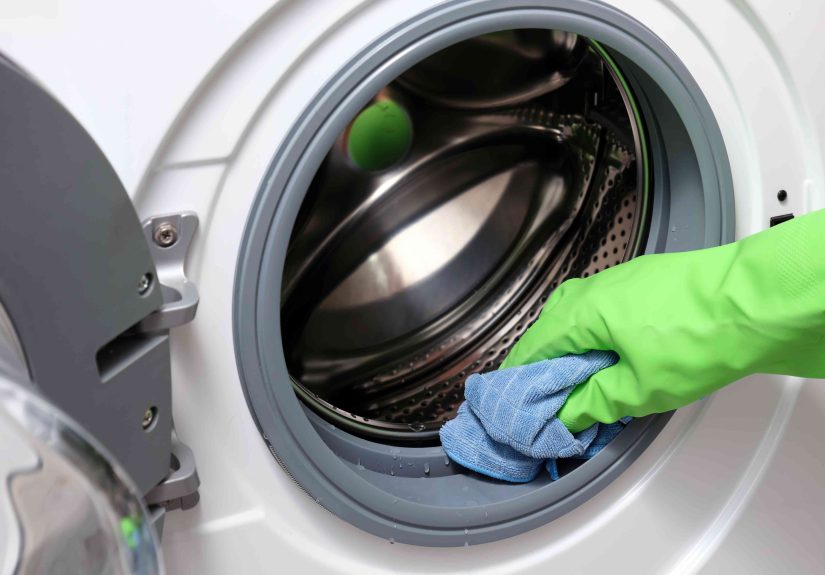
- Wipe the easy-to-forget areas. While the cycle runs (or right after), wipe:
- Front-load gasket folds (pull them back gently and check for trapped lint/slime)
- Door glass and rim
- Top-load lid underside and rim
- Air it out. Leave the door (and detergent drawer, if you have one) slightly open after the cycle so the interior dries fully.
What “instant” looks like: Many people notice the smell improves right away after that hot cycleespecially if the odor was mostly stale moisture + light residue. If the stink comes back within a day or two, that’s your clue to escalate to the deep-clean plan below.
Front-Loader Bonus: Deodorize the Gasket Without Destroying It
The gasket (rubber door seal) is the #1 stink source in many front-load washers. Baking soda helps here, toojust use it gently.
Quick gasket freshen (5 minutes)
- Mix 2 tablespoons baking soda with enough water to form a soft paste (think toothpaste, not concrete).
- Using a cloth, apply the paste to the gasket folds and the inner lip where residue builds up.
- Let it sit 5 minutes, then wipe thoroughly with a damp cloth.
- Dry the gasket with a clean towel so it’s not left wet (because that’s basically inviting mildew to move back in).
Be gentle: Baking soda is mildly abrasive. Don’t scrub like you’re sanding a deckespecially on rubber or delicate finishes.
When Baking Soda Alone Isn’t Enough: The Deep-Clean Game Plan
If your washer smells like mildew, your clothes come out musty, or you see black spots in the gasket or dispenser area, you’ll want to do more than deodorize. The goal is to remove residue and address the microorganisms causing the smell.
Step 1: Clean the detergent drawer/dispenser
Remove the drawer if possible. Soak it in warm, soapy water, scrub corners with an old toothbrush, rinse, and dry. This alone can dramatically improve odor because standing water and detergent goo love to hide there.
Step 2: Check the drain filter/coin trap (if your washer has one)
Many front-load washers have a drain filter panel near the bottom front. Lint, hair, and small items can collect there and smell awful. Follow your manual, place a towel down, drain carefully, remove debris, and rinse the filter. If you’ve never done this, brace yourself: it can be grossbut it’s also incredibly satisfying once it’s clean.
Step 3: Run a manufacturer-approved cleaning cycle
Most brands recommend running a monthly cleaning cycle using either a washing machine cleaner or, for some models, a measured amount of chlorine bleach (only if your manual approves it). This step targets the stuff baking soda can’t always reach: hidden residue and biofilm deeper in the system.
Step 4: Use baking soda as the “finishing rinse” for freshness
After the deep-clean cycle, run one more hot empty cycle and sprinkle 1/2 cup baking soda into the drum. This helps knock out lingering odors and leaves the interior smelling neutral (not “perfume clean,” just actually clean).
Important Safety Notes (Because We’re Not Making Toxic Gas Today)
- Never mix bleach and vinegar. Not in a cycle, not in a bucket, not “just a splash.” Keep them separate and follow label directions.
- Don’t combine a bunch of cleaners at once. More products doesn’t mean more cleanit often means more residue (or more regret).
- If you use vinegar occasionally, don’t make it your washer’s entire personality. Some cleaning pros and manufacturers caution that frequent acidic cleaning can wear rubber components over time, especially in high-efficiency machines.
- Always check your owner’s manual for approved cleaning methods and cycles.
How to Keep Your Washer From Smelling Again
Once your washer is fresh, staying fresh is mostly about drying and dosage. Here are the habits that make the biggest difference:
1) Leave the door (or lid) open between loads
This simple habit lets moisture evaporate instead of fermenting into funk. For front-loaders, also leave the detergent drawer slightly open so the dispenser area can dry.
2) Use the right amount of detergent
Too much detergent is one of the most common causes of washer odor because it never fully rinses away. If your clothes feel filmy or your washer smells “soapy-sour,” try cutting your detergent dose back (especially with HE detergent).
3) Skip fabric softener sometimes
Fabric softener can leave a waxy residue that builds up over time. If you love it, use it sparingly and make sure you’re doing periodic cleaning cycles.
4) Run a hot maintenance cycle monthly
Once a month (or about every 30 loads), run an empty hot cycle using either a washer cleaner or a method approved by your manufacturer. Add a baking soda deodorizing cycle as neededespecially in humid climates or busy households.
5) Don’t let wet laundry sit
Leaving clothes sitting in a closed drum is basically an invitation for mildew to start developing. Move laundry promptly to the dryer or hang it up to dry.
Troubleshooting: If the Smell Won’t Quit
If you’ve deodorized and deep-cleaned and your washer still smells bad, consider these common culprits:
- Drain issues: A slow drain or partial clog can leave dirty water behind.
- Detergent buildup: Especially if you’ve used too much for a long time.
- Gasket mold: Some mold stains don’t disappear even after cleaning, but the odor should improve.
- Home plumbing smells: Sometimes the standpipe or nearby drain is the real source.
If odor persists after multiple cleaning cycles and basic maintenance, it may be time to consult a technicianespecially if you notice drainage problems, leaks, or recurring mold growth.
Real-Life Experiences and Scenarios (500+ Words)
Washer odor is one of those annoyances that sneaks up on people. It’s rarely dramatic at firstit starts as a faint “off” smell that you chalk up to a damp towel, then suddenly you’re sniff-testing clean laundry like a sommelier. Here are a few common real-world scenarios that show how baking soda can help quickly, and what people typically learn along the way.
Scenario 1: The “We Swear We’re Clean” Gym Household
In homes with lots of workout gearsynthetic tees, leggings, sports brasodors build fast. Those fabrics trap body oils, and if they sit in a hamper for a day (or three), the smell transfers to the washer over time. People in this situation often find that a hot empty cycle with 1/2 cup baking soda makes the washer smell noticeably better immediately. The bigger “aha” moment, though, is usually detergent dosage: cutting back on detergent and skipping softener can prevent the sour film that traps odor molecules. Many also start leaving the washer door open and notice the “gym funk” stops haunting the drum.
Scenario 2: The Front-Loader Gasket “Hidden Snack Drawer”
Front-loaders are great at cleaning, but their gaskets can hide lint, hair, and occasional… surprises. People often discover the source of the smell when they pull back the gasket folds and find damp debris tucked inside. Baking soda paste is a favorite for this because it’s gentle and deodorizing, and it doesn’t leave a strong fragrance behind. The most common experience is: the smell improves right away after wiping the gasket and running a baking soda cyclebut it comes back unless the gasket is dried regularly. Once someone builds the habit of quickly wiping the gasket every few loads (or just drying it after the last load of the day), odors usually drop dramatically.
Scenario 3: The “Too Much Detergent = Extra Clean” Myth
A lot of people were taught that more suds means cleaner laundry. In modern HE machines, that backfires. When someone switches from “a generous pour” to the recommended amount, they often notice two things: the washer smells better, and clothes feel less filmy. Baking soda becomes the quick reset buttonrun a hot cycle with baking soda, then keep detergent measured correctly. In many households, this is the tipping point where the washer stops smelling musty every time the door closes.
Scenario 4: The Vacation Effect
There’s a classic pattern: someone runs a last-minute load, closes the washer, leaves for a trip, and comes home to a washer that smells like a closed swimming pool locker room. In that case, baking soda truly feels “instant.” A single hot cycle with baking soda can knock down the stale odor fast because the problem is mostly trapped moisture, not months of buildup. People usually add a new rule after this: never shut the washer fully when it’s not in useleave it cracked open so air can circulate.
Scenario 5: The Pet Blanket and Towel Rotation
Homes with pets often wash bulky, absorbent itemsblankets, towels, beddingthat hold onto moisture. If laundry sits wet in the drum after the cycle, odor can set in quickly. Baking soda helps deodorize the washer and can also be used as a boost in smelly loads (when fabric care allows). What people typically learn here is timing: moving loads promptly matters as much as what cleaner you use. Combine that with a monthly hot maintenance wash, and the “pet smell” stops lingering in the machine itself.
The common thread across these experiences is simple: baking soda helps fast, but the long-term win comes from drying the washer out, using the right amount of detergent, cleaning the gasket/dispenser, and running a monthly maintenance cycle. In other words, baking soda is the herobut good habits are the sidekick that keeps the villain from returning in the sequel.
Conclusion
A smelly washer doesn’t mean your machine is doomedit usually means it’s holding onto moisture and residue. Baking soda can instantly deodorize a washer by neutralizing odors and freshening the drum, especially when used with a hot empty cycle. For tougher mildew smells, pair baking soda with a deeper clean: tackle the gasket, dispenser, and filter, then run a manufacturer-approved cleaning cycle. Finally, keep your washer fresh with small habitsleave the door open, measure detergent correctly, and do monthly maintenance. Your laundry should smell like “clean,” not like a science experiment that learned to sweat.