Table of Contents >> Show >> Hide
- The Dress Was the Spark, Not the Story
- Why the Reactions Felt So Cruel
- Millie Bobby Brown Has Been Warning People About This for a While
- Why Fans Defended Her So Quickly
- This Was Never Really About Modesty
- The Beauty Standard Behind the Backlash
- Why This Moment Matters Beyond One Celebrity
- Experiences Behind the Headline: Why So Many Women Instantly Understood This Story
- Conclusion
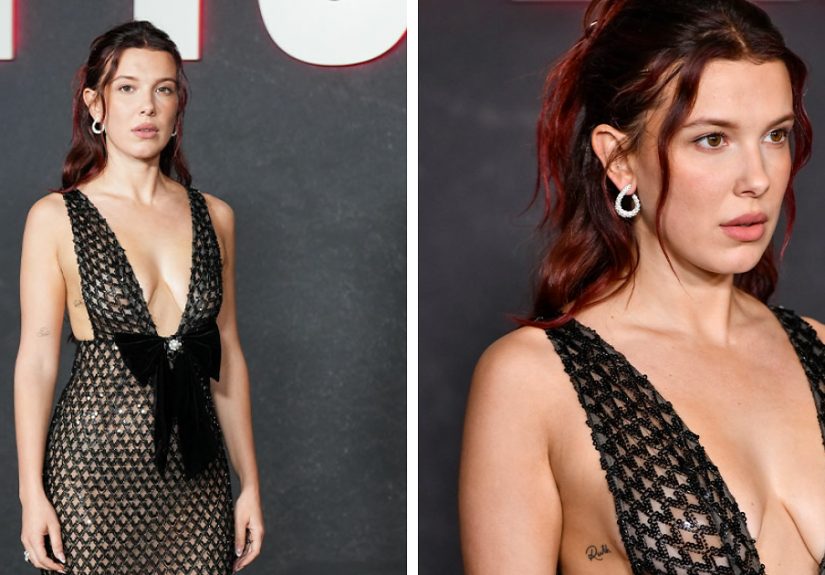
Sometimes the internet sees a woman in a dress and reacts as though it has just encountered a completely new scientific phenomenon. That, in a nutshell, is what happened when Millie Bobby Brown wore a low-cut black gown and online critics began picking apart her body with the kind of confidence usually reserved for people who have somehow mistaken rudeness for expertise.
The backlash was fast, mean, and painfully familiar. Some commenters mocked how Brown’s chest looked in the dress. Others treated a perfectly normal body as if it had violated an unwritten dress code invented by the algorithm and enforced by strangers with Wi-Fi. In response, fans rushed to defend her, arguing that what many trolls were reacting to was not scandal, bad taste, or some red-carpet disaster. It was simply the sight of a natural body in a form-fitting dress. And apparently that was enough to send the comment section into a tailspin.
But this story is not really about one gown, one event, or one celebrity. It is about what happens when a young woman grows up in public, refuses to shrink herself to make other people comfortable, and ends up serving as a screen onto which the internet projects its weirdest anxieties. Brown did not “spark” cruelty by getting dressed. Cruel people simply found a new excuse to be cruel. There is a difference, and it matters.
The Dress Was the Spark, Not the Story
Yes, the dress became the immediate flashpoint. It was low-cut. It was glamorous. It was the sort of look meant to make a statement on a red carpet, not spark a graduate seminar in body policing. Yet the commentary quickly drifted away from fashion and into something far uglier: public dissection of a woman’s body, specifically her breasts, as though they existed for public approval.
That shift is telling. Real fashion criticism talks about tailoring, silhouette, styling, proportion, theme, and whether the look works as an overall visual statement. What happened here was not that. This was body commentary dressed up in the cheap wig of “just giving my opinion.” And the wig was slipping.
Brown’s defenders were quick to point out what should have been obvious from the start: structured dresses, plunging necklines, sheer fabrics, mesh construction, lighting, posture, camera angles, and movement can all change how a body appears in photos. Anyone who has ever taken 37 pictures to get one decent vacation photo already understands this. Red carpets are not reality; they are a high-glam circus of fabric engineering, flash photography, and frozen split-second frames.
In other words, the internet was not analyzing anatomy. It was reacting to a combination of styling and its own warped expectations.
Why the Reactions Felt So Cruel
The comments landed the way they did because they were not just shallow. They were revealing. Many of them exposed how distorted online beauty standards have become. After years of filters, cosmetic tweaks, edited selfies, and algorithm-friendly versions of “perfection,” some people now seem genuinely startled by what an unscripted human body looks like when it is not arranged to resemble a mannequin.
That is the strange cultural tension underneath this story. A lot of online spaces claim to celebrate “natural beauty,” but only when that beauty has already passed through a dozen invisible checkpoints: symmetrical, lifted, smooth, supported, camera-ready, and somehow untouched by gravity, fabric, or being a living person. The result is a standard that asks women to be natural in theory and hyper-curated in practice. It is a rigged game with terrible lighting.
Brown’s dress controversy hit a nerve because it highlighted that contradiction in a way no think piece ever could. The backlash was so over-the-top that fans immediately recognized it for what it was: not honest reaction, but body shame disguised as commentary.
Millie Bobby Brown Has Been Warning People About This for a While
What makes this episode especially frustrating is that it did not happen in a vacuum. Brown has already spoken publicly about the relentless criticism aimed at her appearance. She has called out the way headlines and online chatter dissect her face, body, age, and clothing, often treating her normal взрослениеsorry, adulthood happened and even autocorrect seems dramatic about itas though it were a public betrayal.
That is the trap of growing up famous. Audiences say they want authenticity, then panic the second a child star starts looking, dressing, and speaking like an adult. Brown became famous very young, and for some viewers, she is still mentally frozen in the first chapter of Stranger Things. When she appears on a red carpet looking older, bolder, or more self-possessed, some people react as if she has broken character.
She has pushed back against that expectation before, and forcefully. Her message has been consistent: she will not apologize for growing up, for experimenting with style, or for refusing to make herself smaller to satisfy people who seem uncomfortable with seeing a girl become a woman. That point is central to understanding this latest controversy. The dress was only the newest excuse. The deeper issue is that too many people still believe women owe the public a version of themselves that feels nonthreatening, familiar, and conveniently frozen in time.
The Child-Star Nostalgia Problem
One reason criticism of Brown keeps taking on this oddly personal tone is that audiences often confuse nostalgia with ownership. They remember the child actor they first met on screen and then feel entitled to object when that person matures. It is an especially ugly pattern for young actresses, who are often judged more harshly the moment they move from “adorable” to “adult.”
And let’s be honest: the internet has always handled that transition with the grace of a folding chair in a hurricane.
There is a particular cruelty in telling a woman she must remain recognizable to your memory of her. It erases her agency. It also treats female adulthood as suspicious, performative, or somehow less acceptable than the innocence people attached to her earlier image. That is not admiration. That is control with a fan account.
Why Fans Defended Her So Quickly
The defense of Brown was not just celebrity fandom doing what celebrity fandom does. Yes, there was support because people like her. But there was also something more immediate and more universal at play. Many women recognized the comments instantly because they have heard versions of them before.
Maybe not on a global stage. Maybe not with their photos circulating to millions. But enough to know the script by heart. The “What happened to her?” comments. The “She looked better before” nonsense. The fake concern. The suggestion that a woman’s body is somehow public property once she wears a fitted dress. The implication that any choice to dress boldly is an invitation for analysis. For many readers, the details were celebrity-sized, but the emotional logic was painfully ordinary.
That is why the defense was so strong. Brown’s supporters were not only defending one actress against a nasty pile-on. They were also pushing back against a culture that keeps treating women’s bodies as discussion boards.
This Was Never Really About Modesty
Whenever public backlash centers on a revealing dress, someone eventually tries to rebrand the conversation as a debate about taste, class, or modesty. Conveniently, this framing allows critics to avoid admitting that what they are actually doing is body surveillance.
But if this were truly about style preference, the response would have sounded different. It would have been, “That cut is not for me,” or “I prefer another silhouette.” Instead, the language quickly became deeply personal. The comments focused on what her body should look like, how it should sit in the dress, and what people believed a woman’s chest is supposed to do when photographed. That is not a style critique. That is an inspection.
And inspections are rarely neutral when directed at women in public. They often carry familiar sexist assumptions: that a woman who shows cleavage is asking for feedback, that her body exists to be evaluated, or that failing to meet a fantasy standard deserves ridicule. The ugliness of those assumptions is exactly why so many people found the backlash disturbing rather than merely rude.
The Beauty Standard Behind the Backlash
The controversy also says something broader about beauty culture in 2025 and beyond. Online aesthetics have become so polished, so filtered, and so shaped by cosmetic sameness that anything less than sculpted perfection can look “wrong” to viewers who have forgotten what normal variation looks like.
That does not mean cosmetic work is bad or that women who choose it are responsible for internet cruelty. The problem is not individual choices. The problem is the collective conditioning that turns one type of body into the default fantasy and then punishes women whose bodies do not perform in exactly that way under every outfit, angle, and flash. When that happens, a natural body stops being seen as natural. It starts being treated as a mistake.
That is what made the phrase around Brown’s defense so pointed. People were, in effect, asking: have some viewers become so disconnected from reality that a normal chest in a low-cut dress now confuses them? Judging from the discourse, the answer seems to be an unfortunate yes.
Why This Moment Matters Beyond One Celebrity
It would be easy to dismiss this as just another day in the celebrity-news machine. Another red carpet. Another pile-on. Another round of outrage, defenses, takes, counter-takes, and quote tweets attempting to win the internet for six minutes. But that would miss the point.
These moments matter because they shape what ordinary people absorb about bodies, aging, beauty, and permission. When a famous woman is mocked for looking like a real woman, everyone watching gets a message. Teen girls get a message. Young women get a message. Mothers, sisters, coworkers, classmates, and anyone who has ever stood in front of a mirror adjusting a neckline and wondering whether the world will interpret “I like this” as “please evaluate me” get a message too.
That is why Brown’s pushback resonated. It was not just a celebrity clapback. It was a refusal to cooperate with a system that thrives on making women feel visually incorrect.
Experiences Behind the Headline: Why So Many Women Instantly Understood This Story
If the reaction to Brown’s dress felt familiar, that is because countless women have lived some smaller-scale version of it. Not on a red carpet, maybe, but in offices, group chats, dressing rooms, weddings, college parties, family holidays, and social media comment sections where “just being honest” has become the national anthem of people who should frankly try being quiet.
There is the experience of putting on a top you love, only to realize other people have decided it says more about your body than your taste. There is the awkwardness of being told an outfit is “a lot” when the real issue is that your body fills it differently than someone else’s. There is the special exhaustion of hearing comments framed as concern when they are really control. “Are you sure that’s flattering?” “I just think that cut is tricky.” “Maybe it would look better with more support.” The language changes, but the message stays the same: your body is being reviewed.
For women with fuller chests, the double standard is especially familiar. The exact same neckline that reads as sleek or fashion-forward on one body can be labeled inappropriate, attention-seeking, or messy on another. A dress is suddenly not just a dress; it becomes a referendum on how much space a woman is “allowed” to take up without inviting commentary. That is why so many people looked at the Brown backlash and thought, yes, I know this script, and no, it is not harmless.
There is also the camera effect, which any non-celebrity with a phone has already learned the hard way. Bodies do not look the same in every photo. Fabric shifts. Lighting flattens. Angles exaggerate. One shot makes you look incredible; the next makes you wonder whether the lens has a personal problem with you. Most people understand this from their own lives. Yet somehow that common sense evaporates the moment a famous woman appears in a high-resolution image online, and viewers start talking as if one frozen frame is a permanent medical record.
Then comes the emotional residue. Even when comments are brushed off publicly, they linger. Women learn early that presenting themselves is rarely just about self-expression. It can also mean anticipating reaction, calculating risk, choosing whether comfort is worth commentary, deciding whether you want to spend the evening having fun or managing other people’s projections. That mental load is invisible, but it is very real.
What made this story connect so widely is that Brown’s experience felt like an amplified version of a daily social reality. She was not being criticized for doing something outrageous. She was being judged for existing in a body that refused to match a fantasy. That is a deeply recognizable experience. It is why the defense of her did not feel like empty celebrity worship. It felt personal, almost protective, because for many women, defending her also meant defending themselves, their friends, their daughters, and every ordinary moment when getting dressed somehow turns into public debate.
And maybe that is the clearest takeaway of all. The outrage over Brown’s dress was never proof that she had done something wrong. It was proof that too many people still think women owe the world visual comfort. They do not. Not on a red carpet, not in a mirror selfie, not at brunch, not at work, not anywhere. Clothes are not consent to commentary. A neckline is not an invitation to inspection. And a natural body should not be treated like breaking news.
Conclusion
The story behind the reaction to Millie Bobby Brown’s low-cut dress is bigger than one celebrity and much uglier than one bad comment thread. It exposes the stubborn power of body shaming, the discomfort some audiences still have with young women growing up in public, and the absurdly distorted beauty expectations that now shape online discourse. Brown’s defenders were right to push back. What people saw was not a scandal. It was a woman wearing a dress, a normal body existing in public, and a digital culture still struggling to behave normally about either one.
If there is any hopeful note here, it is this: more people are recognizing the pattern in real time. They are getting better at spotting when “fashion criticism” is actually misogyny with better lighting. They are less willing to laugh along. And they are increasingly prepared to say the obvious part out loud: the problem is not Millie Bobby Brown’s body. The problem is a culture that keeps mistaking cruelty for commentary and entitlement for opinion.