Table of Contents >> Show >> Hide
- What Is an AI Pet Door?
- Why Cats Bring Dead Mice Home
- How an AI Pet Door Rejects Dead Mice
- Flappie, OnlyCat, and Pawly: The Smart Cat Flap Era
- Why This Is More Than a Funny Gadget
- The Wildlife Problem AI Doors Cannot Fully Solve
- What to Consider Before Buying an AI Pet Door
- How to Help a Hunting Cat Without Declaring War
- Specific Example: The Midnight Mouse Delivery Problem
- Is an AI Pet Door Worth It?
- Conclusion: A Tiny Door With a Surprisingly Big Job
- Experience Notes: Living With an AI Pet Door That Rejects Dead Mice
The future has arrived, and it is standing between your cat and the unfortunate mouse it proudly planned to deposit on your pillow. An AI pet door that rejects dead mice sounds like something invented during a late-night brainstorming session fueled by coffee, cat hair, and emotional damage. Yet the idea is very real. Smart cat flaps now use cameras, motion sensors, microchip access, app controls, and artificial intelligence to decide whether your pet is returning home aloneor attempting to smuggle in a tiny crime scene.
For cat owners, this is not a minor issue. Cats are charming, mysterious, and occasionally committed to turning the living room into a wildlife documentary. One minute they are curled on the couch like a cinnamon roll; the next, they are presenting a mouse with the confidence of a tiny Renaissance hunter. An AI pet door promises a simple deal: your cat may enter, but the mouse must stay outside. Finally, technology has tackled one of civilization’s stickiest questions: “Why is there a rodent under the dining table?”
This article explores how AI pet doors work, why cats bring dead mice home, what smart cat flaps can and cannot solve, and whether this odd little invention is actually useful. Spoiler: it is funny, slightly futuristic, and surprisingly practical.
What Is an AI Pet Door?
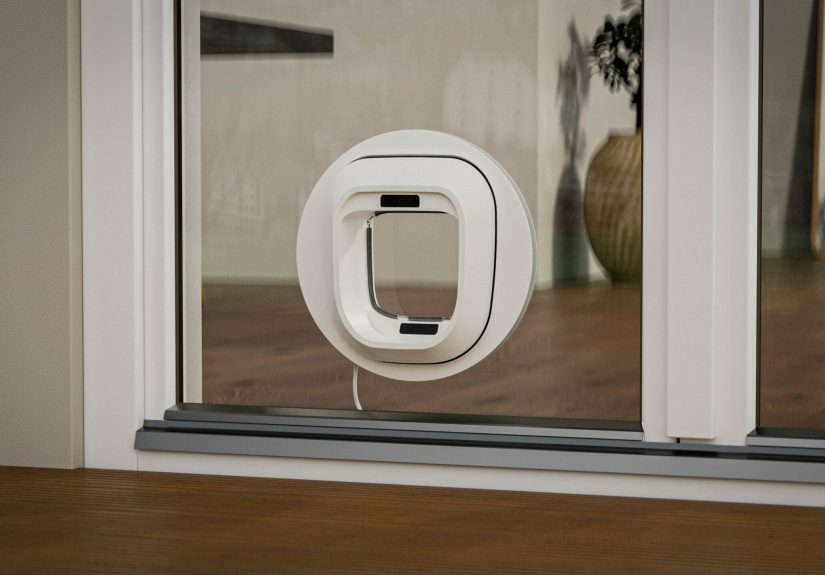
An AI pet door is a smart cat flap or pet entrance that uses artificial intelligence to control access. Traditional pet doors are simple: a flap opens, an animal walks through, and everyone hopes for the best. Microchip pet doors improved the concept by allowing only registered pets to enter. AI pet doors go one step further by asking a more specific question: “Is the cat carrying something in its mouth?”
That “something” could be a mouse, bird, lizard, frog, or other unwanted surprise. Using a camera and detection software, the door analyzes the cat as it approaches. If the system sees prey, the flap stays locked. If the cat appears empty-mouthed and authorized, the door opens. In other words, the pet door becomes a tiny bouncer with night vision and no patience for rodent-based gifts.
The best-known example is Flappie, a Swiss-developed AI cat door that attracted attention at CES 2024. Its system combines a motion sensor, night-vision camera, prey detection, microchip recognition, app features, and manual controls. Similar products and concepts, including OnlyCat and Pawly, show that this category is expanding beyond a one-off novelty. The market is clearly telling us something: humans love cats, but humans do not love stepping barefoot on mouse-related evidence at 6:12 a.m.
Why Cats Bring Dead Mice Home
Before blaming the cat, it helps to remember that hunting is not a moral failure. It is programming. Cats are natural predators with deeply rooted instincts to stalk, chase, pounce, and capture. Even well-fed cats may hunt because the behavior is not purely about hunger. It is exercise, mental stimulation, territory behavior, and instinct all rolled into one furry package with whiskers.
Your Cat Is Not Trying to Ruin Breakfast
Many people call dead mice “gifts,” which sounds sweet until the gift is on the rug. Cat behavior experts generally explain this behavior in several ways. A cat may be bringing prey back to a safe territory. It may be sharing the catch with its social group. It may be following a learned pattern similar to how mother cats teach kittens. Or it may simply be returning to the most secure place it knows: your home, where the food is predictable and nobody questions its artistic choices.
The important point is that punishment rarely helps. Your cat is not thinking, “I shall now violate the household sanitation policy.” It is thinking something closer to, “Excellent hunt. Must relocate snack.” An AI pet door does not shame the cat or try to train away a natural instinct. It simply adds a boundary at the door: hunter may enter; hunted may not.
How an AI Pet Door Rejects Dead Mice
The basic workflow is elegant. First, a motion sensor detects that a cat is approaching. Then a camera captures images or video, often with night vision for evening and early morning activity. AI software analyzes the cat’s face and mouth area. If the system identifies a shape that looks like prey, it keeps the flap locked. If no prey is detected and the cat’s microchip or identity is approved, entry is allowed.
Some systems also provide app notifications, photo or video clips, access schedules, and activity statistics. That means owners can see when a cat comes and goes, set blocking times, and sometimes review the attempted “delivery.” This may be useful for households with cats that are most active at dawn, dusk, or during that mysterious hour when humans are finally asleep and cats decide the world needs more chaos.
AI Detection Is Smart, Not Magical
AI prey detection is impressive, but it is not flawless. A door with more than 90 percent accuracy can still miss some mice. It can also make false-positive mistakes, especially if a cat approaches at an odd angle, has unusual coloring, carries a toy, or looks suspicious because cats naturally look suspicious. Buyers should expect improvement over time, not perfection from day one.
This is why manual controls matter. A good smart cat flap should allow the owner to override settings, lock or unlock the door, adjust schedules, and turn features on or off. The best version of this technology does not remove human control. It gives humans a better chance of sleeping through the night without waking to the sound of “squeak, squeak, absolutely not.”
Flappie, OnlyCat, and Pawly: The Smart Cat Flap Era
Flappie brought the AI mouse-rejecting pet door into mainstream gadget conversation by showing how computer vision could solve a very specific household problem. Its pitch is simple and memorable: dead mice belong outside, not in your bed. That line works because it is both funny and painfully accurate.
OnlyCat takes a similar direction with AI vision technology, microchip access, app control, video notifications, and entry policies for specific cats. Pawly also focuses on prey detection, microchip scanning, night vision, app features, and even missing-cat recognition. These products suggest a broader shift in pet technology. Smart pet gadgets are moving from convenience tools into behavior-aware home systems.
Older smart pet doors mostly answered, “Is this my cat?” New AI pet doors ask, “Is this my cat, and is my cat currently carrying an unauthorized mammal?” That second question is where things get interesting.
Why This Is More Than a Funny Gadget
It is easy to laugh at an AI pet door rejecting dead mice, because the concept is undeniably ridiculous in the best possible way. But the practical benefits are real.
A Cleaner Home
The most obvious benefit is hygiene. A dead mouse in the house is unpleasant, smelly, and sometimes difficult to find until the odor files a formal complaint. A live mouse is worse because then your home becomes an escape room, except the mouse is winning. By blocking prey at the point of entry, an AI cat flap reduces mess, stress, and frantic midnight furniture relocation.
Less Contact With Rodents
Rodents can carry fleas, ticks, mites, parasites, and germs. A mouse does not need to look sick to create a health concern. If a cat routinely brings rodents indoors, the owner may need to dispose of carcasses, clean surfaces, monitor the cat, and worry about bites, scratches, or exposure to rodenticide. Keeping prey outside is not just about squeamishness; it is basic household safety.
Better Awareness of Cat Behavior
Smart pet doors with app logs and video clips can help owners understand patterns. Does the cat hunt mostly after sunset? Does it attempt to bring prey inside during rainy weather? Is one cat innocent while the other is running an unofficial rodent import business? Data will not make the cat less cat-like, but it can help owners adjust routines, play schedules, and outdoor access.
The Wildlife Problem AI Doors Cannot Fully Solve
Here is the honest part: an AI pet door can reject dead mice, but it cannot stop hunting that happens outside. If a cat catches wildlife and leaves it in the yard, the door has still kept the house cleaner, but the ecological impact remains. Free-roaming cats are effective hunters, and research has connected outdoor cats with major wildlife mortality, especially among birds and small mammals.
For wildlife protection, the strongest solutions are still indoor living, supervised outdoor time, catios, leash training, and carefully managed outdoor access. An AI pet door is best understood as a household management tool, not a complete conservation strategy. It solves the “please do not bring that inside” problem. It does not fully solve the “please do not catch that at all” problem.
What to Consider Before Buying an AI Pet Door
Accuracy and False Alarms
No AI system is perfect. Ask how the product handles uncertain detections. Does it rescan? Does it temporarily lock? Can you adjust sensitivity? A door that blocks too aggressively may frustrate your cat. A door that blocks too loosely may welcome the occasional mouse guest with tragic hospitality.
Microchip Compatibility
If you have multiple cats, microchip support is essential. It helps prevent neighborhood cats, raccoons, and other unauthorized visitors from treating your kitchen like a 24-hour diner. Individual access controls are especially useful if one cat is allowed outside and another is not.
Power, Wi-Fi, and Offline Use
A smart door should still behave sensibly if the internet goes down. App features are nice, but basic access should not collapse because the router is having feelings. Check whether the door continues to recognize cats offline, how it is powered, and what happens during an outage.
Installation and Fit
Pet doors may be installed in doors, walls, windows, or garages, depending on the model. Measure carefully. A “standard size” opening is wonderful only if your actual door agrees. Also consider weather sealing, insulation, and whether your cat is within the recommended weight or size range.
Privacy and Data
Some smart doors capture video or photos. That can be useful, adorable, and occasionally hilarious. It also means buyers should review how media is stored, whether clips are uploaded, and what privacy controls are available. Your cat may not care about cloud storage, but you probably should.
How to Help a Hunting Cat Without Declaring War
If your cat has a strong prey drive, the goal is not to erase that instinct. The goal is to redirect it safely. Interactive play is one of the best tools. Wand toys, feather teasers, moving toys, puzzle feeders, climbing spaces, scratching posts, and scheduled play sessions can give cats a legal outlet for their tiny-panther ambitions.
Timing also matters. Cats and their prey are often active around dawn and dusk, so limiting outdoor access during those hours can reduce hunting opportunities. A catio is another strong option because it provides fresh air, sunshine, smells, and bird-watching without allowing the cat to hunt. For some households, a combination works best: indoor enrichment, supervised outdoor time, and a smart pet door for controlled access.
Collar bells may help in some situations, but results vary and safety is important. Any collar used outdoors should be breakaway-style so the cat can escape if caught. Bells are not a magic shield for wildlife, but they may be one small part of a broader plan.
Specific Example: The Midnight Mouse Delivery Problem
Imagine a cat named Luna. Luna is affectionate, glossy, and convinced she is the household’s chief protein officer. Every few weeks, she brings a mouse through the pet flap and leaves it somewhere dramatic: under a shoe, beside the laundry basket, or in the hallway where someone will discover it using only a bare foot and a scream.
With a basic flap, Luna wins every time. With a microchip flap, Luna still wins because the door confirms she is Luna, not whether Luna is carrying cargo. With an AI pet door, the camera checks her approach. If her mouth is empty, she enters. If she is carrying a mouse, the flap stays locked until she drops it. Luna may be offended. The human may sleep peacefully. The mouse, depending on its status, remains an outdoor issue.
This example shows the real value of the technology. It does not require the owner to monitor the door all night. It does not require scolding the cat. It simply automates a boundary that many cat owners have wished for since the first time they found a “gift” where no gift should ever be.
Is an AI Pet Door Worth It?
An AI pet door is worth considering if your cat regularly brings prey indoors, you want controlled outdoor access, and you are comfortable paying for a premium smart-home device. It is especially useful for multi-cat households, rural or suburban homes, and owners who already use microchip feeders, smart cameras, or app-connected pet products.
It may be less useful if your cat is indoor-only, rarely hunts, or lives in a place where outdoor roaming is unsafe or discouraged. In those cases, money may be better spent on enrichment, climbing furniture, puzzle feeders, or a secure catio.
The ideal buyer is not someone who expects AI to transform a hunter into a polite vegetarian. The ideal buyer is someone who says, “I understand my cat is a cat. I would simply prefer the mouse not attend breakfast.”
Conclusion: A Tiny Door With a Surprisingly Big Job
The AI pet door that rejects dead mice is funny because it is so specific. It is useful because the problem is so real. For years, cat owners have accepted prey deliveries as one of the stranger costs of feline friendship. Now, computer vision and smart access control are stepping in to say, very politely, “Not today, Whiskers.”
These doors are not perfect, and they are not a complete solution for outdoor cat safety or wildlife protection. Responsible cat care still includes enrichment, veterinary care, safe outdoor planning, and realistic expectations. But as a household tool, an AI cat flap offers a clever way to reduce mess, improve hygiene, and keep unwanted “gifts” outside where they belong.
In the grand history of artificial intelligence, rejecting dead mice may not sound as glamorous as self-driving cars or medical diagnostics. But ask anyone who has stepped on a surprise rodent before coffee, and they will tell you: this is innovation with purpose.
Experience Notes: Living With an AI Pet Door That Rejects Dead Mice
The experience of using an AI pet door begins with a very human emotion: suspicion. You install the device, pair the app, register the cat’s microchip, and then stare at the flap like it is about to negotiate a peace treaty. The cat, of course, stares back with the expression of a creature who has never read a manual and never intends to. The first few days are mostly about adjustment. Some cats walk through immediately. Others inspect the door, sniff it, tap it once, and file a complaint with the household management department.
Once the cat accepts the new entrance, the owner’s experience becomes surprisingly calm. Instead of waking up to mystery thuds or finding a mouse in the hallway, you may receive an app notification or see that the door blocked an attempted entry. That small moment can feel oddly triumphant. It is not that you are happy your cat caught something; it is that the situation did not become an indoor emergency. There is no overturned laundry basket, no flashlight search under the couch, and no dramatic family meeting titled “Where Did the Mouse Go?”
The most useful part is pattern recognition. After a few weeks, many owners would likely notice when hunting attempts happen. Maybe the cat is most active between 4 a.m. and 6 a.m. Maybe rainy nights produce more ambitious deliveries. Maybe one cat is a soft loaf who only wants snacks, while another is secretly auditioning for a nature channel. This information helps owners make smarter decisions, such as setting nighttime restrictions, increasing evening play, or giving the cat more indoor stimulation before peak hunting hours.
There can also be funny moments. A cat denied entry may sit outside the flap wearing an expression of profound betrayal. Some cats may drop the prey and try again. Others may look directly into the camera as if appealing the verdict. The door does not care. It has one job, and unlike humans at 5 a.m., it does not get emotionally manipulated by whiskers.
Still, expectations should remain realistic. An AI pet door reduces unwanted prey indoors; it does not make the cat stop hunting. Owners still need to think about wildlife, health, safe outdoor access, and enrichment. The best experience comes when the door is part of a broader routine: regular play sessions, puzzle feeders, safe climbing spaces, clean litter boxes, veterinary care, and thoughtful outdoor limits.
In daily life, the biggest benefit may be peace of mind. The home feels less vulnerable to surprise wildlife incidents. The cat keeps some freedom. The owner keeps the bedroom rodent-free. That is a surprisingly elegant compromise. The AI pet door does not turn your cat into a saint. It simply turns the doorway into a smarter boundary. For many cat owners, that is enough to make the whole gadget feel less like a novelty and more like a small miracle with hinges.