Table of Contents >> Show >> Hide
Human beings have been making bad calls since the invention of decision-making. We forget birthdays, misread maps, and confidently tell people, “I know a shortcut,” right before driving into a cornfield. But AI mistakes are not just ordinary human errors with shinier packaging. They are different in structure, different in scale, and different in how people react to them. That difference matters more than many companies, users, and policymakers want to admit.
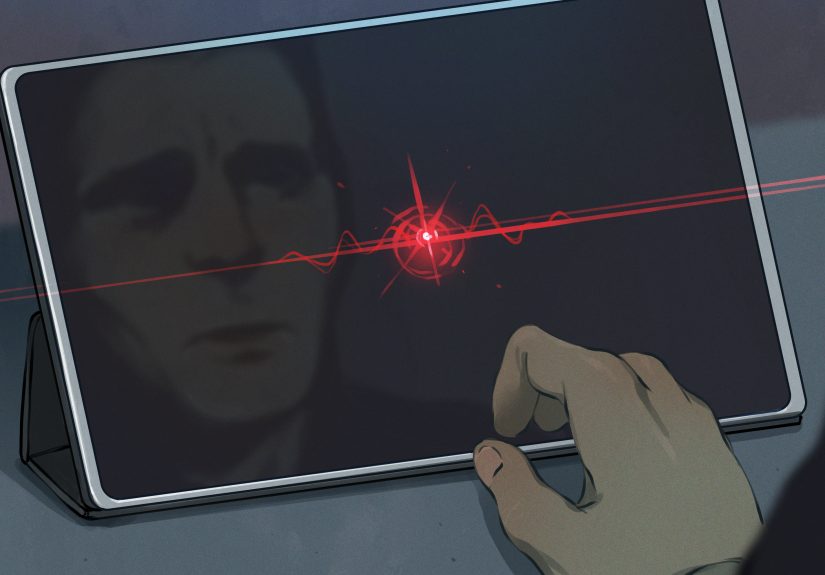
When a person gets something wrong, we usually get context with the error. We can hear hesitation in their voice. We can ask follow-up questions. We can judge whether they are tired, guessing, joking, or out of their depth. AI often strips away those signals. Instead, it delivers mistakes in polished prose, with calm confidence, neat formatting, and a tone that says, “Absolutely, I have this covered,” even when it absolutely does not.
That is why the conversation about AI safety cannot stop at accuracy percentages or marketing promises. The real issue is not simply that AI makes mistakes. It is that AI makes different kinds of mistakes in ways that are unusually easy to trust and unusually hard to catch. And when those errors spread across medicine, law, education, customer service, and search, the damage multiplies fast.
What Makes AI Mistakes Different?
They are fluent before they are factual
Generative AI systems are built to produce plausible language, not to “know” things the way humans do. In plain English, they are designed to generate what sounds right next, not to pause and ask, “Wait, is this actually true?” That distinction is not academic nitpicking. It is the whole game.
A human expert can be wrong, but their mistake often reflects a gap in memory, knowledge, or judgment. An AI system can produce a completely fabricated answer that looks cleaner, faster, and more authoritative than a real expert’s careful response. It may invent a statistic, misstate a law, or produce fake citations that look perfectly respectable at a glance. The result is not a clumsy error. It is a slick error, dressed for success.
This is why AI hallucinations are so dangerous. They are not random keyboard-smashing nonsense. They are polished falsehoods. They sound helpful. They often sound more helpful than a human because they skip uncertainty, caveats, and ego-protecting phrases like, “I’m not sure.” AI is the coworker who always raises a hand, answers immediately, and occasionally cites a source from an alternate universe.
They scale instantly
One person’s mistake usually stays small unless it gets repeated. AI can make the same class of mistake again and again across thousands or millions of interactions in a day. A flawed response template, a weak retrieval setup, or a model tendency toward overconfident guessing can affect legal research, medical summaries, hiring workflows, customer support, and school assignments all at once.
That scale changes the stakes. A mistaken human employee can inconvenience one customer. A mistaken chatbot can mislead ten thousand customers before lunch. A human editor can miss one bad paragraph. An AI tool embedded into search or productivity software can quietly push inaccurate information into millions of workflows. Machine-speed error is not just “more error.” It is a new operational problem.
They borrow the look of authority
AI outputs often arrive in the visual language people associate with trust: bullet points, citations, summaries, structured steps, polished grammar, and a soothing “here’s the answer” tone. Even when the underlying content is weak, the presentation can feel strong. That matters because people do not judge credibility purely by truth. They also judge by style, confidence, and convenience.
In other words, AI mistakes wear a tie. They look organized. They sound measured. They can include references that seem real until someone checks them closely. That visual and rhetorical polish creates what might be called authority drag: users are gently pulled toward belief because the answer looks finished, tidy, and professional.
They invite overreliance
AI systems do not operate in a vacuum. They shape human behavior. If a tool is fast, smooth, and usually helpful, users begin to lean on it. That is rational right up to the moment it is not. Then the problem becomes overreliance: people accept incorrect outputs because the system makes errors hard to notice and verification feels like extra work.
This is one of the biggest differences between AI mistakes and ordinary human mistakes. AI does not just produce a wrong answer. It can also change the human checking process around that answer. Users may lower their guard because the tool sounds competent, because the workflow rewards speed, or because they assume someone else already validated the system. Suddenly the human is not doing the task anymore; the human is supervising the machine. And supervision, it turns out, is not always easier than doing the work in the first place.
Why This Becomes a Real-World Problem
Law: fake cases, real consequences
The legal world has already provided one of the clearest examples. Attorneys have submitted filings containing invented case citations generated by AI tools. That is not a minor typo. It is the kind of error that can distort legal arguments, waste court time, embarrass firms, and trigger sanctions. The problem is not merely that the model was wrong. The problem is that it was wrong in a way that looked official enough to slip into real legal documents.
That should make everyone pause. Law depends on traceability, precedent, and careful sourcing. An AI system that fabricates authorities while sounding confident is not just “a little inaccurate.” It is epistemic chaos in a suit jacket.
Health: plausible misinformation can feel helpful
Health care raises the stakes even higher because people often use AI when they are anxious, pressed for time, or trying to understand something intimidating. In that setting, a calm but inaccurate response can be emotionally persuasive. Research has already warned that large language models used in medical contexts can produce erroneous medical references and unsupported claims. That is especially troubling because patients and even professionals may treat polished medical language as a sign of reliability.
Now add behavior to the mix. Large numbers of adults already say they use AI chatbots for physical or mental health information. That means AI errors are not happening in a laboratory or a product demo. They are happening inside highly personal decisions about symptoms, treatment questions, privacy, and trust. A confident but flawed answer in that environment can delay care, reinforce misinformation, or send someone down the wrong rabbit hole with remarkable efficiency.
Customer service: bad advice with a corporate logo
Customer-facing chatbots create another unusual risk. When a customer speaks to a chatbot on a company website, most people reasonably assume they are receiving the company’s guidance. They do not think they are entering a philosophical debate about whether the bot is a “separate legal entity.” They think they are asking the airline, the bank, the retailer, or the city a question.
That is why chatbot mistakes in customer service feel different from old-fashioned FAQ errors. They are interactive. They feel personalized. They adapt to the user’s question. When they give bad guidance, the user can walk away feeling reassured precisely because the answer felt conversational and tailored. That combination of specificity and false confidence is far more persuasive than a vague webpage ever was.
Search and public information: mistakes with built-in reach
AI-generated summaries in search create a separate headache. People often trust search engines as infrastructure. If a search result is wrong, users can still compare sources. But when an AI summary appears above the links and states an answer directly, it changes the flow of attention. The machine is no longer pointing; it is pronouncing.
That is how bizarre outputs can become more than internet comedy. Wrong answers about health, history, law, or everyday tasks can spread quickly because the interface presents them before users click elsewhere. The format itself encourages acceptance. It is less “here are some places to investigate” and more “the machine has spoken.”
Why “Humans Make Mistakes Too” Misses the Point
Whenever AI criticism appears, someone inevitably shrugs and says, “Well, humans make mistakes too.” True. Also, humans get sunburned and so do lobsters, but those are not identical management problems.
The phrase misses several key differences. Human mistakes usually come with social cues. Human experts can explain their reasoning in context, admit uncertainty, and be held accountable within professional norms. Human errors do not replicate at platform scale in seconds. Most importantly, people do not usually assume a single human response has been optimized, trained, tested, and productized by a major company.
AI mistakes carry a strange double aura: they feel both personal and industrial. Personal because the chatbot is talking directly to you. Industrial because the system is backed by a powerful brand, advanced engineering, and the cultural hype surrounding artificial intelligence. That combination can make bad outputs seem more trustworthy than they deserve.
There is another wrinkle: users often anthropomorphize AI. If a system sounds warm, conversational, or self-aware, people may over-attribute understanding to it. But language fluency is not wisdom, and sympathy in sentence form is not judgment. The more human-like the system feels, the easier it becomes to forget that it may still be guessing, stitching patterns together, or producing an answer that has the emotional texture of help without the substance of truth.
The Hidden Cost: Verification Becomes the Job
Much of the AI productivity story sounds exciting until you notice the small print. Yes, the tool can draft, summarize, suggest, and answer. But now someone has to verify the output. In many fields, that verification is not a side quest. It is the hard part.
A sloppy first draft from a junior colleague is one thing because you know it is a draft. A polished AI draft is trickier because it can be 80% right, 15% questionable, and 5% fabricated. Those are dangerous proportions. They create just enough trust to reduce scrutiny and just enough error to cause trouble later.
This is why many knowledge workers report a shift from doing work to auditing work. Instead of creating from scratch, they spend time checking citations, confirming claims, reviewing tone, and asking whether the model smuggled in nonsense between two perfectly fine paragraphs. That is not zero value, but it is also not the effortless efficiency fantasy often promised in keynote speeches.
What Responsible AI Use Should Look Like
If AI mistakes are different, then the response has to be different too. Telling users to “be careful” is not enough. Organizations need systems designed for verification, not just generation.
That means a few practical shifts:
- Show uncertainty clearly. Not every answer deserves the same confidence level. AI should be able to say when it is unsure instead of bluffing like an intern who fears disappointing the boss.
- Make source checking easy. If a system cites material, users should be able to inspect it quickly and see whether the source actually supports the claim.
- Limit high-risk use cases. Law, medicine, finance, and public guidance need stronger safeguards than brainstorming a birthday caption.
- Train users, not just models. AI literacy matters. People need realistic mental models of what these systems can and cannot do.
- Design for human override. Good systems make it easy to pause, escalate, review, and correct. Bad systems make it easy to click “accept” and move on.
In short, responsible AI is not merely smarter AI. It is AI embedded in workflows that assume error will happen and plan for it. That is not pessimism. That is adulthood.
Experiences That Show Why AI Mistakes Feel Different
To understand the issue on a human level, consider how these failures actually feel in everyday use. Imagine a small-business owner asking a city chatbot whether a certain hiring practice is legal. The answer comes back fast, neatly worded, and confident. It sounds official because it appears on a government site. The owner is not reading it as “a statistical next-word prediction.” They are reading it as guidance. If that answer is wrong, the damage is not just factual. It is behavioral. The user may act on it.
Now picture a stressed traveler using an airline chatbot after a death in the family. They are tired, emotional, and trying to book quickly. The bot gives a specific policy answer that seems tailored to the exact situation. In that moment, the conversational format matters. A static page might feel generic, but a chatbot answer feels direct and responsive. The user experiences it almost like reassurance. If the information is false, the sense of betrayal is sharper because the system felt interactive and personal.
Or think about a lawyer under deadline who asks AI to help identify cases. The tool returns a smooth summary, clean citations, and a structure that resembles competent legal work. The attorney may tell themselves they will double-check everything, but deadlines shrink intentions. If even one fake citation survives into a filing, the consequences are very real. What makes this experience so unsettling is that the error does not look like a mistake until someone investigates. It looks like finished work.
The same pattern appears in health questions. A patient types symptoms into a chatbot because the doctor’s office is closed and anxiety is loud. The response sounds calm and informed. It may even use the language of care: possible causes, next steps, things to watch. That tone can lower panic, which sounds good, except tone can also lower skepticism. If the answer includes unsupported claims, invented references, or an overconfident summary of something complex, the user may leave not only misinformed but comforted by misinformation. That is a uniquely modern problem.
Students and office workers see a softer version of the same trap. The AI draft looks good, so they spend less time thinking through the material themselves. The summary seems complete, so they stop reading the underlying source. The suggested answer sounds polished, so they overlook the subtle factual wobble hiding inside it. Later, when the mistake surfaces, the person often says some version of the same sentence: “It looked right.” That phrase captures the heart of the issue better than a dozen technical papers.
Even casual users experience this. Someone asks a search engine an everyday question and receives an AI-generated answer above the links. Because it is first, concise, and formatted like a conclusion, it carries extra weight. The user may never open the source material. In earlier internet habits, people scanned several pages and pieced together an answer. In the AI era, one fluent paragraph can short-circuit that process. Convenience becomes compliance.
These experiences reveal why AI mistakes are not merely about incorrect output. They are about misplaced trust, compressed judgment, and the emotional effect of confidence without understanding. The danger is not only that the machine is wrong. The danger is that the machine is wrong in a way that fits perfectly into how busy, stressed, rushed humans already make decisions. That is why this problem will not be solved by better branding or a bigger model alone. It requires better systems, better interfaces, and a much healthier respect for uncertainty.
Conclusion
AI mistakes are different because AI is different. It can be fast, fluent, scalable, and deeply persuasive even when it is wrong. That combination creates a special kind of risk: not just incorrect information, but incorrect information that feels trustworthy enough to use. In low-stakes settings, that can be annoying. In high-stakes settings, it can be expensive, unlawful, harmful, or dangerous.
The answer is not panic and it is not blind optimism. It is discipline. We need AI tools that reveal uncertainty instead of hiding it, workflows that reward verification instead of speed alone, and users who understand that polished language is not proof. Until then, the most important thing to remember about AI mistakes is this: the problem is not just that they happen. The problem is how easily they can pass for help.