Table of Contents >> Show >> Hide
- Why Turkey Keeps Showing Up In Plastic Surgery Conversations
- The Before-And-After Photo Economy
- Why “Cheaper” Can Be True And Misleading At The Same Time
- What The Risks Actually Look Like
- Why The Internet Keeps Falling For The Same Story
- Turkey Is Not The Villain, But Marketing Can Be
- How To Think More Clearly Before Booking Cosmetic Surgery Abroad
- The Real Meaning Of Those Activist Photos
- Experiences People Share Again And Again About “Cheap” Surgery Trips
- Conclusion
Scroll through social media long enough and you will eventually meet the modern internet fairy tale: a passport, a package deal, a glossy clinic video, and a before-and-after photo that promises a brand-new face for the price of a decent used car. Turkey often appears in that story, especially when the conversation turns to rhinoplasty, hair transplants, veneers, and other cosmetic procedures that are heavily marketed to international patients. Add a few dramatic “before and after” images from activists, consumer advocates, or patients warning others about bad outcomes, and suddenly the comment section becomes a live-action wrestling match between bargain hunters and horrified onlookers.
But beneath the viral photos and spicy captions, there is a real topic worth unpacking: why so many people travel to Turkey for plastic surgery, why the prices can be dramatically lower than in the United States, and why those savings can look brilliant in one post and terrifying in the next. This is not a hit piece on Turkey, nor is it a cheerleading brochure for surgery tourism. It is a grounded look at the economics, the social-media fuel, the patient psychology, the legitimate success stories, and the very real risks that can turn a “beauty trip” into a long recovery saga featuring antibiotics, drains, scar revisions, and one deeply regretful airport selfie.
Why Turkey Keeps Showing Up In Plastic Surgery Conversations
Turkey did not become a cosmetic surgery hotspot by accident. It has built a strong reputation in medical tourism, especially in procedures that are easy to market visually. Rhinoplasty is a huge draw. Hair transplants are practically their own travel category. Cosmetic dentistry and body procedures also appear in all-inclusive packages that appeal to international patients who are looking for a lower bill and a faster booking window.
That matters because price is often the loudest voice in the room. In the United States, elective cosmetic surgery can cost enough to make your wallet develop trust issues. In Turkey, lower labor costs, currency differences, high-volume clinics, and bundled packages can make the same type of procedure look far more accessible. For many patients, it is not just “I want a nose job.” It is “I want a nose job, hotel, airport transfer, translator, and aftercare support for less than I was quoted at home.” That is a powerful sales pitch.
And to be fair, not every low-cost procedure abroad ends badly. Some patients return thrilled with the results. Some clinics in Turkey have modern facilities, experienced surgeons, and streamlined processes designed for international visitors. That is exactly why the country remains so popular. The market is not fueled only by desperation; it is also fueled by real demand, polished branding, and thousands of online success stories.
The Before-And-After Photo Economy
Before-and-after photos are the fuel source of cosmetic surgery marketing. They are the internet’s version of “trust me, bro,” except with better lighting. A single set of photos can do more emotional work than twenty paragraphs of clinical explanation. It can promise confidence, symmetry, youth, refinement, or simply the feeling of becoming the version of yourself you have been editing in your head for years.
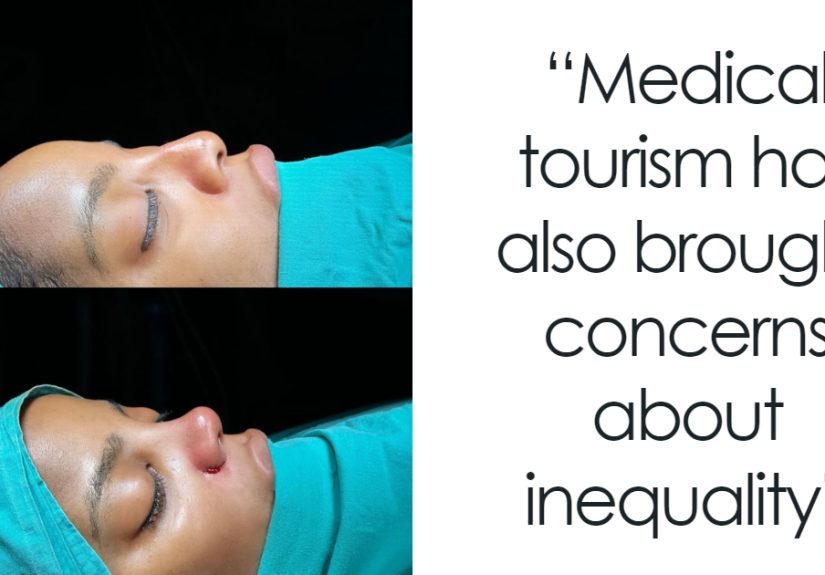
That is one reason activists and consumer advocates use the exact same format when they want to warn people. A before-and-after image can celebrate transformation, but it can also expose swelling, asymmetry, poor healing, scarring, infection, and revision nightmares. In other words, the same visual language that sells the dream can also blow a whistle on the downside.
Social media makes this especially intense. Platforms reward dramatic visual content, quick emotional judgments, and personal testimony. If one creator posts a glowing video about getting a “snatched” nose in Istanbul for a fraction of the U.S. price, another may answer with stitched footage of a bad outcome and a caption that basically screams, “This is why cheap can get expensive fast.” Both posts spread because both are emotional. Neither one, on its own, gives the full picture.
Why “Cheaper” Can Be True And Misleading At The Same Time
Here is where things get tricky. The surgery itself may absolutely be cheaper. But the total cost of a cosmetic procedure is never just the operating-room invoice. The real price includes pre-op evaluation, anesthesia, recovery time, follow-up care, medications, compression garments, time off work, and what happens if your body decides it would like to file a complaint.
If everything goes smoothly, a lower-cost surgery abroad may remain lower-cost. That is the best-case scenario, and it is the one most advertisements quietly assume. But if a patient develops an infection, delayed wound healing, wound separation, fluid collections, blood clots, or dissatisfaction requiring revision, the math changes fast. Suddenly, the “deal” can involve emergency room visits, repeat imaging, wound care, antibiotics, local surgeons who did not perform the original operation, and additional procedures that no bargain package brochure mentioned.
This is why experts keep repeating the same not-very-glamorous questions: Who will handle complications? Who will follow you after you go home? Is the surgeon properly trained and certified? Is the facility accredited? What happens if you do not like the result? Can you safely delay travel after surgery? These questions do not trend well on TikTok, but they matter far more than the clinic’s chandelier count.
What The Risks Actually Look Like
Cosmetic surgery risks do not magically appear only because a person crossed a border. Surgery is surgery. Complications can happen anywhere. But traveling for surgery adds another layer of difficulty, and that is where many patients underestimate the challenge.
1. Infection And Delayed Healing
Infection is one of the most commonly reported problems in cosmetic tourism literature. That can range from relatively manageable wound infections to more stubborn problems involving resistant organisms, drainage, tissue damage, and lengthy treatment. Delayed wound healing and wound breakdown can be especially distressing in body procedures like tummy tucks, breast surgery, and combined operations.
2. Blood Clots And Travel Timing
Flying soon after surgery is not just uncomfortable. It can increase risk. Long flights mean prolonged sitting, swelling, dehydration, and the same miserable truth all travelers know: your body does not love being folded into seat 27B when it is already trying to recover from trauma. Add recent surgery, and the concern about blood clots becomes much more serious.
3. Limited Follow-Up Care
The surgeon who knows your case best may be in another country by the time a complication shows up. If you are back home with redness, drainage, fever, fluid buildup, or a result that does not look right, you might need local care from doctors who did not create the treatment plan and may not have access to complete records.
4. Communication And Expectation Gaps
Even when clinics provide translators or coordinators, misunderstandings can happen. The patient may think they are getting one technique, one implant style, or one realistic outcome, while the surgical team may be discussing a more limited goal. Cosmetic surgery is full of nuance, and nuance does not always travel well in sales language.
5. Package-Deal Psychology
Bundled travel packages can make surgery feel weirdly similar to buying a vacation upgrade. That can lower a patient’s sense of caution. When a medical decision is wrapped in airport pickups and hotel discounts, it can start to feel frictionless. Unfortunately, human tissue does not care how tidy the package looked in the ad.
Why The Internet Keeps Falling For The Same Story
Because the story is seductive. A lower price, a visible transformation, a foreign city with aspirational appeal, and the promise of becoming “your best self” is an almost perfect social-media narrative. It combines beauty culture, consumer logic, and travel fantasy in one neat little content box.
There is also a deeper reason: cosmetic procedures live at the intersection of identity and affordability. People are not buying toaster ovens. They are buying hope, confidence, relief from insecurity, and sometimes the chance to fix something they have been thinking about for years. When someone feels priced out at home, a lower-cost international option can seem not reckless, but rational.
That is why activist posts showing bad results hit so hard. They interrupt the fantasy. They remind viewers that a cheaper surgical journey can still demand expensive consequences. They also push back against an online culture that often treats bodies like renovation projects with flight confirmations.
Turkey Is Not The Villain, But Marketing Can Be
It is important to say this clearly: the real issue is not “Turkey bad, America good.” That would be lazy, inaccurate, and frankly not very useful. High-quality surgeons and modern facilities exist in Turkey, just as weak marketing and questionable decision-making can exist anywhere. The deeper problem is what happens when aggressive marketing, selective before-and-after images, influencer-style testimonials, and bargain framing overwhelm careful patient evaluation.
When patients shop for surgery primarily by price, they may ignore signals that matter more: surgeon qualifications, scope of training, hospital privileges, facility accreditation, emergency support, revision policies, and the logistics of follow-up once they return home. Good care is not only about the operation itself. It is about the system around the operation.
How To Think More Clearly Before Booking Cosmetic Surgery Abroad
If someone is seriously considering surgery in Turkey, the smartest move is not panic and it is not blind trust. It is disciplined research. Ask exactly who the surgeon is, what board certifications or equivalent credentials they hold, where the procedure will be performed, and whether that facility is accredited. Ask how complications are handled and who will provide care after you return home. Ask to see realistic before-and-after photos from the specific procedure you want, not a greatest-hits reel designed to make everyone look like they emerged from a Photoshop cocoon.
Also ask the deeply unsexy questions about recovery. How long should you stay locally before flying? What symptoms would require urgent care? Will you have a direct line to the surgeon or only to a coordinator? What is the plan if you are unhappy with the outcome? What additional costs are not included? A trustworthy clinic should not become mysterious when you stop asking cute questions and start asking expensive ones.
And perhaps most importantly, do not let the internet rush you. A dramatic before-and-after picture is not proof of quality. A viral testimonial is not a credential. A low quote is not a safety measure. If a clinic’s content feels built to trigger urgency rather than informed consent, step back.
The Real Meaning Of Those Activist Photos
When activists, patient advocates, or former customers post before-and-after photos of their “cheaper” plastic surgeries in Turkey, the photos are rarely just about appearance. They are about power. They are about who gets to shape the narrative: the clinic that sold the fantasy, or the patient living with the consequences. These images often function as a correction to an online marketplace that prefers glowing reveal videos over complicated recovery stories.
At their best, such posts are not anti-surgery. They are anti-simplification. They remind viewers that cosmetic procedures are still medical procedures, not travel hacks. They challenge the idea that affordability alone should lead the decision. And they force a more mature question into the conversation: not “How cheap is it?” but “What am I really buying, and what am I risking?”
That is a much better question. Less glamorous, sure. Much less likely to go viral, absolutely. But when your face, body, health, and future revision bills are involved, boring questions are usually the smart ones.
Experiences People Share Again And Again About “Cheap” Surgery Trips
Talk to enough people who have gone abroad for cosmetic work, or read enough detailed accounts from forums, watchdog posts, and patient advocacy spaces, and a pattern appears. The first part of the story often sounds almost magical. A coordinator replies quickly. The package seems organized. The clinic photos are spotless. The surgeon’s page is full of dramatic transformations. The airport transfer is on time. Everyone is kind. At that point, the patient feels reassured, maybe even triumphant, as if they have outsmarted the brutally expensive U.S. market.
Then reality begins doing what reality does best: adding footnotes. Some people describe a smooth, professional experience and a result they genuinely love. They say the clinic was efficient, the staff attentive, and the recovery exactly as promised. For them, Turkey becomes a place they recommend without hesitation. These stories matter, because they explain why the industry keeps growing. Positive experiences are not fake by default. Many are real and sincerely felt.
But negative accounts also sound strikingly similar to each other. Patients describe feeling rushed through consultations, especially when language barriers or tight scheduling leave little room for nuanced discussion. Others say the pre-op conversation felt thorough enough until they realized they had agreed to something without fully understanding the likely scar placement, swelling timeline, or limits of the result. Some mention a strange emotional whiplash: they were treated like premium clients before surgery and like a logistics problem once the procedure was over.
Recovery is where a lot of the emotional tone changes. Swelling, bruising, drains, pain, and mobility limits are normal parts of healing, but many people are not psychologically prepared for how vulnerable they will feel while recovering in a hotel or short-term apartment far from home. Even basic things like showering, changing dressings, or getting comfortable in bed can feel overwhelming after surgery. Add fear, fatigue, and the pressure of a return flight, and the “medical getaway” vibe disappears very quickly.
Some patients say the hardest moment came after they got home. That is when uncertainty creeps in. Is the redness normal? Is the incision opening? Is this swelling expected, or is something wrong? If follow-up is mostly through messaging apps and photos sent across time zones, reassurance can feel thin. Several stories from advocates and patients share the same haunting theme: they did not realize how valuable local, in-person aftercare was until they no longer had it.
And then there is the money twist. Many people book surgery abroad because they are trying to be financially practical. Yet the most painful stories often involve patients who saved thousands up front only to spend heavily on revisions, wound care, missed work, prescriptions, travel changes, or emergency treatment later. That does not happen to everyone, but when it happens, it can completely change how a person sees the original “deal.”
In the end, the shared experiences around cheaper plastic surgery in Turkey tend to land on one big lesson: price is never the whole story. Some people come back thrilled. Some come back wiser. Some come back with scars that are emotional as well as physical. The difference usually is not luck alone. It is the quality of the surgeon, the honesty of the consultation, the safety of the system, and whether the patient treated the trip like a medical decision instead of a shopping victory.
Conclusion
Turkey’s cosmetic surgery industry sits at the center of one of the internet’s most compelling beauty narratives: major transformation for a much smaller price. That promise is not entirely fiction. Lower prices are real, and many patients report good outcomes. But activist posts, cautionary before-and-after photos, and medical research all point to the same uncomfortable truth: a lower sticker price does not cancel medical risk. When surgery is marketed like a travel bargain, patients can forget that what they are buying is not just a result, but also the quality of the evaluation, the skill of the surgeon, the safety of the facility, and the strength of the follow-up plan. The smartest way to read those dramatic online photos is not as proof that all surgery abroad is reckless or that all bargain clinics are disasters. It is to see them as a reminder to ask better questions before booking anything that involves anesthesia, a scalpel, and a return flight.