Table of Contents >> Show >> Hide
- Who Was Nefertiti?
- Fact 1: Nefertiti Was Not Just a QueenShe Was a Co-Ruler
- Fact 2: Nefertiti and Akhenaten Launched a Religious Revolution
- Fact 3: Her Iconic Bust Is One of the Most Famous Artifacts on Earth
- Fact 4: Her Parentage Is Still Unknown
- Fact 5: She and Akhenaten Had Six Daughters
- Fact 6: Nefertiti May Have Ruled Egypt as Pharaoh
- Fact 7: Her Tomb Has Never Been Found
- Fact 8: Her Image Was Purposefully Erased
- The Legacy of Queen Nefertiti
- of Reflective Experiences and Insights About Nefertiti
- Conclusion
If you’ve ever seen a picture of the famous bust of Nefertiti and thought, “No way someone looked that flawless 3,300 years ago,” you are absolutely not alone. Queen Nefertiti is one of history’s most captivating figuresbeautiful, mysterious, politically influential, and surprisingly modern in her approach to power. But who was she really? Why has her story endured for millennia? And what facts about her life still leave historians scratching their heads like confused archaeologists brushing sand off yet another “mysterious object” that turns out to be a rock?
In this deep-dive, we’ll explore the most fascinating, research-backed facts about Queen Nefertitipulling insights from archaeology, Egyptology, anthropology, and the collective obsession of every museum-loving person in America. Consider this your friendly, humor-infused, SEO-optimized crash course into one of the most iconic women in world history.
Who Was Nefertiti?
Nefertiti was the Great Royal Wife of Pharaoh Akhenaten, a ruler of Egypt’s 18th dynasty (circa 1353–1336 BCE). Her name translates to “The Beautiful One Has Come,” which historians consider both a clever linguistic choice and maybe the ancient Egyptian equivalent of an Instagram bio written by someone extremely confident.
She rose to prominence during a turbulent period in Egyptian historyone defined by religious reform, artistic experimentation, and one of the most dramatic cultural pivots ever attempted by a single royal family. Nefertiti wasn’t just standing beside Akhenaten during these changes; she was helping lead them.
Fact 1: Nefertiti Was Not Just a QueenShe Was a Co-Ruler
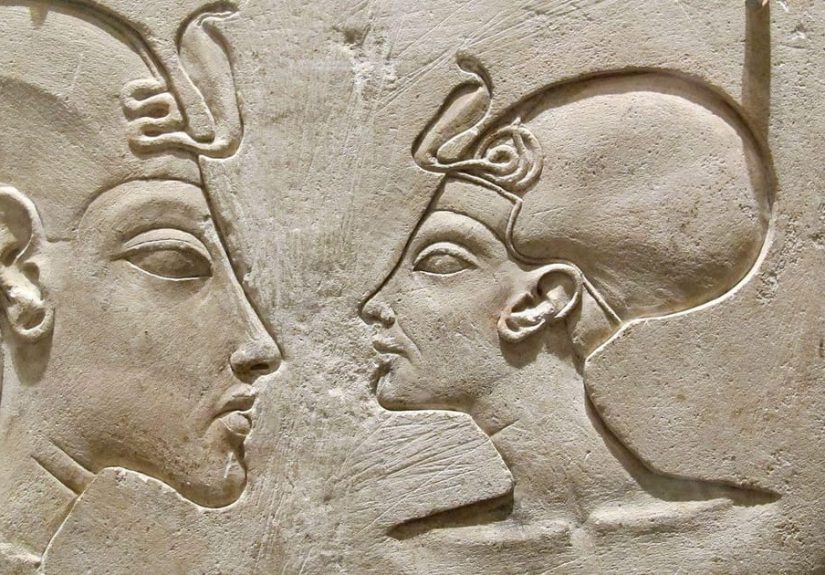
Many queens in ancient Egypt held influence, but Nefertiti reached a level typically reserved for pharaohs. Reliefs and inscriptions show her performing rituals, smiting enemies, and appearing nearly equal in size and stature to Akhenatensomething extremely unusual in Egyptian royal art.
Several Egyptologists believe she may have even ruled Egypt as pharaoh after Akhenaten’s death, under the name “Neferneferuaten.” Others argue she passed away earlier, leaving the throne to young Tutankhaten (later King Tut). The debate is ongoing and heated enough to make you grateful for modern historical documentation, even if yours involves old emails titled “per my last message.”
Fact 2: Nefertiti and Akhenaten Launched a Religious Revolution
One of the most shocking changes in Nefertiti’s lifetime was the royal couple’s devotion to Atenthe sun disk deity. Under Akhenaten’s rule, Egypt shifted from its long-standing polytheistic tradition to a near-monotheistic worship system centered on Aten.
This transformation wasn’t subtle. Temples were closed, religious power structures were rearranged, and new art styles emerged that emphasized family intimacy, naturalism, and sunlight. Nefertiti played a central role in these rituals, often shown worshiping Aten alongside Akhenaten and their daughters.
Think of it as the ancient Egyptian version of a massive political rebrand. New logo. New doctrine. New public message. And Nefertiti was the face of the campaignliterally, considering her image appeared everywhere.
Fact 3: Her Iconic Bust Is One of the Most Famous Artifacts on Earth
The 1912 discovery of Nefertiti’s limestone bust in Amarna turned her into a global sensation. Created by the sculptor Thutmose, the bust features elegant facial symmetry, a graceful neck, and the signature blue crown that has since become shorthand for ancient Egyptian royalty.
Scientists have scanned the bust repeatedly (MRI, CT, 3D modelingyou name it), revealing that the artist built up layers of plaster over a more naturalistic stone carving beneath. The base carving shows subtle facial irregularities that were smoothed out in the final version. In other words, ancient Egyptians may have created the world’s first airbrushed portrait.
Fact 4: Her Parentage Is Still Unknown
Historians have debated Nefertiti’s origins for more than a century. Some theories suggest she was the daughter of Ay, a high-ranking court official who later became pharaoh. Others propose she came from a foreign landpossibly Syriareinforcing the idea that her name (“The Beautiful One Has Come”) signifies her arrival from elsewhere.
What’s certain is that she wasn’t born into royalty but ascended through marriage and political skill. She wasn’t just beautifulshe was influential, diplomatic, and extremely well-connected.
Fact 5: She and Akhenaten Had Six Daughters
Nefertiti and Akhenaten had no surviving sonsbut they did have six daughters: Meritaten, Meketaten, Ankhesenpaaten (who later married King Tut), Neferneferuaten Tasherit, Neferneferure, and Setepenre.
The family appears frequently in Amarna art, giving us rare glimpses of royal childhood affectionkisses, hand-holding, and playful gesturesdepicted with a warmth not often seen in earlier Egyptian representations. It’s one of the reasons scholars love studying this era: the art feels intensely personal, almost like the ancient world’s version of candid family photography.
Fact 6: Nefertiti May Have Ruled Egypt as Pharaoh
After Akhenaten’s death, a mysterious ruler named Neferneferuaten appears in the historical record. Some scholars argue this was Nefertiti adopting a king’s throne name. Others believe the ruler was one of her daughters. Still others say the title belonged to Smenkhkare, a short-lived co-regent.
What experts agree on is that Nefertiti remained powerful until the very end of Akhenaten’s reign and possibly beyond. If she did rule Egypt, she would have joined a very small group of female pharaohsincluding Hatshepsut and later Cleopatrawho wielded unquestioned sovereign authority.
Fact 7: Her Tomb Has Never Been Found
Nefertiti’s burial place is one of archaeology’s greatest unsolved mysteries. Some theories suggest she was buried in Amarna, the capital city Akhenaten built. Others propose she was interred in the Valley of the Kings, possibly in a hidden chamber connected to Tutankhamun’s tomb.
Ground-penetrating radar surveys have yielded intriguing results but no confirmed discoveries. For now, Nefertiti’s final resting place remains a royal-level cliffhanger worthy of a Netflix documentary.
Fact 8: Her Image Was Purposefully Erased
After Akhenaten’s death and the return to traditional Egyptian religious practices, the government systematically dismantled Amarna art, temples, and inscriptions. Nefertiti’s images were targeted along with Akhenaten’s. The motive? Likely an attempt to erase the Aten-focused era from memory and restore Egypt’s traditional pantheon.
But the erasure wasn’t complete. Enough images, statues, and inscriptions survived to keep her story alivea testament to her profound cultural impact.
The Legacy of Queen Nefertiti
Nefertiti’s legacy is a blend of historical fact, artistic mythmaking, archaeological discovery, and modern fascination. She represents beauty, power, religious innovation, and the unresolved mysteries that make ancient Egypt so endlessly compelling.
Whether she ruled as pharaoh, died young, or outlived Akhenaten remains unsettled. But what we do know is this: Nefertiti was extraordinary. She shaped Egyptian history during one of its most dramatic transformations and continues to shape our cultural imagination today.
of Reflective Experiences and Insights About Nefertiti
Researching Nefertiti is an experience that blends wonder, detective work, and the occasional existential crisis about how someone could look that good in 1330 BCE with zero access to highlighter palettes. But the deeper you explore her world, the more you realize that her story is about far more than beautyit’s about influence, identity, power, and the fragile nature of historical memory.
One of the most striking experiences in studying Nefertiti is recognizing just how modern she feels. Her active participation in religious, political, and ceremonial life mirrors the roles of contemporary female leaders who operate alongside or above their male counterparts. She wasn’t a passive figure in Akhenaten’s revolutionshe was a co-architect. That distinction changes everything. Instead of a queen defined by her marriage, she becomes a strategist, a cultural visionary, and someone who understood the power of public image long before Instagram discovered filters.
There’s also the emotional experience of encountering her bust in photographs, museum archives, or documentaries. Even through a screen, it’s hard not to feel struck by the elegance of her features. It’s not just beautyit’s presence. Her expression is serene yet knowing, like someone who understands exactly how she’ll be remembered and is quietly confident future generations will be obsessed with her. Spoiler: she was right.
Another powerful experience is exploring the contrast between what we know and what we don’t. Nefertiti’s life is filled with tantalizing gapsmoments where the historical record abruptly goes silent. Her sudden disappearance from inscriptions. The unknown location of her tomb. The mystery of her parentage. The debate over her potential reign as pharaoh. These gaps invite curiosity and imagination. Every Egyptologist who has ever carefully brushed sand from a pottery shard or stared at hieroglyphs under museum lighting has felt that electric thrill of possibility: “What if the next discovery is the one that answers everything?”
Then there’s the Amarna period itselfa fascinating, controversial chapter in ancient Egyptian history. Imagine witnessing a complete religious overhaul, a new capital city rising from the desert, and a royal family that openly showed affection in public art. Studying this era feels like stepping into a parallel version of Egypt where the rules changed overnight. And through it all, Nefertiti is there, front and center, one of the few women in ancient history shown driving reform instead of merely responding to it.
Finally, engaging with Nefertiti’s story offers a humbling lesson in historical resilience. The attempt to erase her legacy failed. Instead, she became one of the most recognized women in ancient history. Her bust is instantly identifiable around the world. Her name appears in documentaries, museum exhibitions, books, and global pop culture. For someone whose story almost vanished, she may now be the most famous queen of ancient Egyptperhaps even more recognizable than Cleopatra.
In the end, the experience of exploring Nefertiti’s life is a reminder that history isn’t fixed. It’s a living puzzle. New discoveries can reshape narratives overnight. And Nefertiti’s story, unfinished as it is, continues to evolvejust waiting for the next archaeologist, researcher, or curious reader to uncover the missing pieces.
Conclusion
Nefertiti was more than a queenshe was a revolutionary, a cultural icon, a political force, and a symbol of enduring mystery. Her life intersects beauty, power, artistry, and theological transformation in ways that continue to inspire fascination across the world.
Whether her tomb is ever found or her full story fully uncovered, Nefertiti’s impact is permanent. She remains one of ancient Egypt’s brightest starsa queen whose influence transcends time itself.