Table of Contents >> Show >> Hide
- What Does the Moon Represent in Astrology?
- 14 Ways to Improve Your Moon Planet in Astrology
- 1. Understand Your Moon Sign First
- 2. Create a Peaceful Home Environment
- 3. Respect Your Sleep Schedule
- 4. Practice Emotional Honesty
- 5. Improve Your Relationship With Your Mother or Mother Energy
- 6. Spend Time Near Water
- 7. Observe Moon Phases
- 8. Chant or Meditate on Moon Mantras
- 9. Practice Monday Mindfulness
- 10. Donate Moon-Related Items
- 11. Strengthen Emotional Boundaries
- 12. Eat and Cook With More Awareness
- 13. Wear Soothing Colors and Materials
- 14. Build a Daily Self-Nurturing Ritual
- Signs Your Moon Energy May Be Improving
- Common Mistakes When Trying to Strengthen the Moon
- Personal Experiences and Reflections on Improving Moon Energy
- Conclusion
In astrology, the Moon is not just that glowing nightlight in the sky making oceans dramatic and poets busier than usual. It represents emotions, instincts, memories, comfort, home life, intuition, and the private version of you that appears when nobody is watchingexcept maybe your cat, who is judging silently.
When people say they want to “improve the Moon planet in astrology,” they usually mean they want to strengthen lunar qualities: emotional balance, peaceful sleep, better relationships with family, a calmer mind, stronger intuition, and a deeper sense of inner security. In Vedic astrology, the Moon is often linked with the mind, motherly energy, nourishment, water, memory, and daily moods. In Western astrology, your Moon sign describes emotional needs, habits, and what helps you feel safe.
Before we begin, one important note: astrology is a spiritual and symbolic practice, not a medical science. Use these suggestions as self-reflection tools, not as replacements for professional care, financial decisions, or common sense. The Moon may rule feelings, but it should not rule your entire debit card.
What Does the Moon Represent in Astrology?
The Moon is one of the most personal placements in a birth chart. While the Sun often describes identity and life force, the Moon describes your emotional weather. It answers questions like: What comforts you? How do you react under stress? What kind of home environment helps you feel safe? What old memories still whisper from the emotional basement?
A strong Moon is traditionally associated with calmness, empathy, emotional intelligence, healthy attachment, imagination, and the ability to nurture yourself and others. A weak or afflicted Moon may symbolically show moodiness, insecurity, overthinking, emotional dependence, sleep disturbance, family tension, or difficulty trusting your inner voice.
The good news? In astrology, “improving” the Moon does not mean changing the sky. It means changing your relationship with your inner world. Below are 14 thoughtful, practical, and traditional ways to support lunar energy in daily life.
14 Ways to Improve Your Moon Planet in Astrology
1. Understand Your Moon Sign First
You cannot improve what you have not met. Start by finding your Moon sign using your birth date, exact birth time, and birthplace. The Moon moves quickly through the zodiac, spending roughly two and a half days in each sign, so guessing is risky. Astrology without an accurate Moon sign is like making soup and forgetting the spoon, the pot, and possibly the soup.
Once you know your Moon sign, study its emotional language. A Taurus Moon may need stability, comfort, and physical calm. A Gemini Moon may need conversation and mental variety. A Cancer Moon may need closeness, home, and emotional safety. A Capricorn Moon may need structure and reliability before it opens up.
Improving your Moon begins with respecting your actual needs instead of copying someone else’s self-care routine. Your friend may heal through a silent retreat. You may heal through snacks, journaling, and leaving one group chat on mute. Both can be sacred.
2. Create a Peaceful Home Environment
The Moon is strongly connected with home, family, roots, and emotional shelter. If your living space feels chaotic, your Moon may feel like it is trying to meditate inside a blender.
You do not need a luxury renovation. Start with small lunar upgrades: clean your sleeping area, soften harsh lighting, keep fresh water nearby, use calming scents if you enjoy them, and create one corner that feels emotionally safe. A peaceful home supports a peaceful nervous system, and in astrological language, that supports the Moon.
If you live with others, focus on what you can control. A tidy drawer, a favorite blanket, a clean desk, or a bedtime ritual can become your personal Moon sanctuary.
3. Respect Your Sleep Schedule
The Moon is traditionally linked with rest, cycles, dreams, and the subconscious. One of the simplest ways to strengthen Moon energy is to protect your sleep like it is a tiny royal baby wearing a crown.
Try going to bed and waking up at consistent times. Reduce screen time before sleep, avoid emotionally intense conversations late at night when possible, and create a wind-down routine. Your Moon does not appreciate being forced to process life’s deepest questions at 1:17 a.m. while your phone brightness is set to “interrogate.”
Dream journaling can also be helpful. Keep a notebook beside your bed and write down images, feelings, or symbols when you wake up. Even if your dream was just “I lost my shoes in a grocery store,” your subconscious may still be waving a tiny flag.
4. Practice Emotional Honesty
A healthy Moon is not emotionless. It is emotionally honest. Many people try to “improve” the Moon by suppressing feelings, but that usually makes the Moon louder. Ignored feelings do not disappear; they put on tap shoes.
Give yourself permission to name what you feel: sad, jealous, tired, peaceful, confused, excited, disappointed, or overwhelmed. Naming emotions helps create distance between you and the emotional wave. Instead of saying, “I am a disaster,” try, “I am feeling anxious right now.”
This small shift is powerful. The Moon becomes stronger when feelings are acknowledged without being allowed to drive the entire bus.
5. Improve Your Relationship With Your Mother or Mother Energy
In many astrology traditions, the Moon is associated with the mother, caregiving, nourishment, and early emotional bonds. Improving the Moon may involve healing how you receive care, give care, or remember care.
This does not always mean forcing a relationship with a parent. Sometimes it means building healthier boundaries. Sometimes it means appreciating a caregiver. Sometimes it means becoming the nurturing presence you needed earlier in life.
Ask yourself: How do I comfort myself? Do I allow others to support me? Do I confuse care with control? Do I give so much emotional energy that my own Moon is running on 2% battery?
Healing mother energy can be quiet and practical: therapy, journaling, forgiveness when appropriate, boundaries when necessary, and learning to speak kindly to yourself.
6. Spend Time Near Water
The Moon is famously associated with tides, and astrologically it is linked with water, feeling, flow, and receptivity. Spending time near water can be a beautiful symbolic remedy for lunar imbalance.
You might walk near a lake, sit by the ocean, listen to rain, take a mindful bath, or simply drink water slowly with intention. The point is not to perform a dramatic movie scene on a cliff. The point is to reconnect with calm movement.
If you feel emotionally stuck, water rituals can help you visualize release. Wash your hands and imagine stress leaving. Take a shower and picture old tension rinsing away. Simple? Yes. Effective as a reflective practice? Also yes.
7. Observe Moon Phases
The Moon goes through a visible cycle from new Moon to full Moon and back again. Astronomically, a full cycle from one new Moon to the next takes about 29.5 days. Astrologically, many people use this cycle for reflection, intention-setting, release, and renewal.
Use the new Moon to set quiet intentions. Use the waxing Moon to build habits. Use the full Moon to reflect on what is visible or emotionally intense. Use the waning Moon to let go, declutter, forgive, or finish unfinished tasks.
You do not need candles, crystals, or a robe that makes you look like a mysterious librarian. A notebook and honest attention are enough.
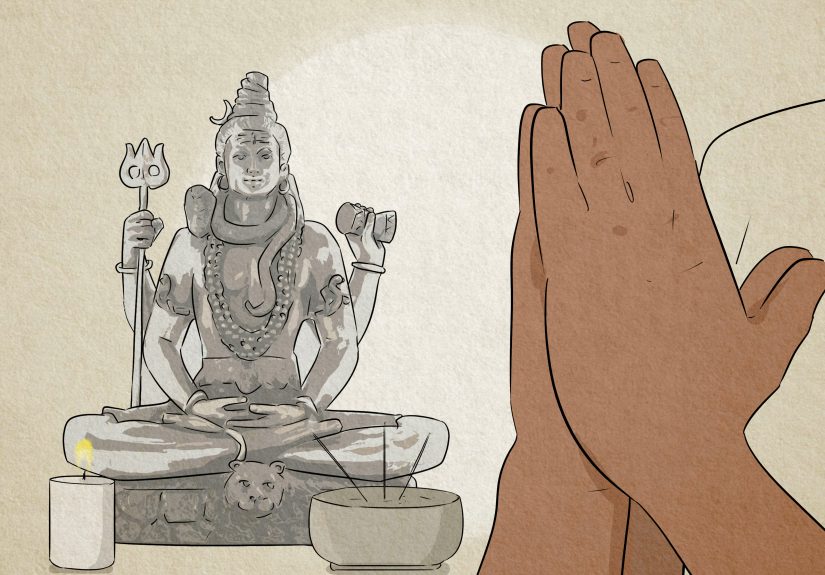
8. Chant or Meditate on Moon Mantras
In Vedic astrology, mantras are often used as remedies for planetary energy. For the Moon, traditional mantras may include phrases dedicated to Chandra, the lunar deity. A common simple mantra is “Om Chandraya Namah.”
You can chant softly on Mondays, during the evening, or when you feel emotionally unsettled. Repeat the mantra 11, 27, or 108 times depending on your practice. If chanting is not your style, silent meditation with slow breathing can offer similar emotional grounding.
The purpose is not magic on demand. The purpose is rhythm. The Moon loves rhythm: breath, repetition, cycles, and quiet devotion.
9. Practice Monday Mindfulness
Monday is traditionally associated with the Moon in many astrological systems. Instead of treating Monday like a weekly villain with Wi-Fi access, turn it into a Moon-care day.
Keep Mondays gentle when possible. Wear soft or light colors, prepare nourishing food, call someone you love, organize your week calmly, and avoid beginning the day in panic mode. A mindful Monday can set the emotional tone for the week.
Consider creating a Monday ritual: ten minutes of journaling, a clean breakfast, a short walk, or a gratitude list. Consistency strengthens lunar energy because the Moon is deeply connected to habit.
10. Donate Moon-Related Items
Traditional Vedic remedies often recommend charity connected with a planet’s symbolic items. For the Moon, these may include rice, milk, white clothing, silver-colored items, or nourishing food offered to someone in need.
Charity works best when it is sincere, ethical, and useful. Do not donate expired food or random objects you secretly wanted out of your closet anyway. That is not a remedy; that is emotional outsourcing.
A simple Moon donation could be giving rice to a food pantry, helping a mother and child support organization, or offering a meal to someone who needs comfort. The deeper principle is nourishment.
11. Strengthen Emotional Boundaries
A sensitive Moon can absorb everyone’s feelings like a sponge at a soup festival. Compassion is beautiful, but emotional over-absorption can lead to resentment, exhaustion, or confusion.
Practice saying, “I care about you, but I need time to rest.” Practice noticing which feelings are yours and which belong to other people. Practice leaving conversations that turn into emotional dumping with no respect for your limits.
Boundaries do not weaken the Moon. They protect it. A river needs banks to flow; without them, everything becomes a swamp and someone loses a shoe.
12. Eat and Cook With More Awareness
The Moon is linked with nourishment, food, memory, and comfort. Improving Moon energy can be as ordinary as learning to feed yourself with care.
Cook simple meals. Eat without rushing when possible. Notice whether you use food only to avoid feelings, or whether you forget to eat when stressed. The goal is not perfection or restriction. The goal is a kinder relationship with nourishment.
Lunar foods in traditional symbolism often include milk, rice, coconut, cucumber, and cooling foods. You do not have to follow this literally. The broader idea is to choose meals that help you feel calm, cared for, and steady.
13. Wear Soothing Colors and Materials
The Moon is associated with white, silver, cream, pearl tones, and soft textures. Wearing these colors on Mondays or during emotional periods can act as a symbolic reminder to stay calm and receptive.
This is not about fashion rules. If you hate white clothing because you spill coffee like it is your spiritual calling, choose soft gray, pale blue, or comfortable fabrics instead. The Moon cares more about feeling than impressing strangers at the grocery store.
Some traditions recommend pearls or silver for Moon energy, but gemstones should be approached carefully. If you are considering a gemstone remedy, consult a qualified astrologer and avoid spending money you cannot comfortably afford.
14. Build a Daily Self-Nurturing Ritual
The Moon improves through repetition. One grand ritual once a year is nice, but daily care is stronger. Think of the Moon as your emotional garden. You cannot water it in January and expect roses in August.
Choose one small daily practice: five minutes of breathing, writing three feelings in a journal, stretching before bed, drinking water in the morning, making your bed, or sending a kind message to someone.
Self-nurturing teaches your Moon that safety is not only something you wait for from others. It is something you can create, one small habit at a time.
Signs Your Moon Energy May Be Improving
You may notice that you react less dramatically to small problems. You may sleep better, feel more comfortable asking for help, or stop mistaking intensity for intimacy. You may become less dependent on external validation and more aware of what truly comforts you.
Another sign is emotional recovery. A strong Moon does not mean you never feel hurt. It means you can return to center more gracefully. You still have feelings, but they no longer behave like raccoons breaking into the pantry at midnight.
Common Mistakes When Trying to Strengthen the Moon
Expecting Instant Results
Moon remedies work best as reflective routines, not quick fixes. Emotional patterns are built over time, so they usually soften over time too.
Ignoring the Rest of the Birth Chart
Your Moon sign matters, but aspects, house placement, and the condition of other planets also shape emotional life. A full chart reading can provide deeper context.
Using Astrology to Avoid Responsibility
Saying “my Moon made me do it” may be funny once. After that, it becomes suspicious. Astrology should increase self-awareness, not become a permission slip for chaos.
Personal Experiences and Reflections on Improving Moon Energy
People often discover their Moon placement during a moment of emotional confusion. They know their Sun sign, they read a few personality descriptions, and then one day they find the Moon sign and think, “Oh no, this explains my entire private operating system.” That moment can feel oddly comforting. Suddenly, emotional habits that seemed random begin to form a pattern.
A common experience is realizing that comfort is personal. One person may feel emotionally restored by a full calendar, friends, and lively conversation. Another may need quiet, soup, and three hours without anyone asking, “Are you busy?” Neither person is wrong. Their Moons simply speak different dialects.
Many people also notice that Moon work begins at home. Not necessarily the physical home, although cleaning the room can produce suspiciously magical results. It begins with the inner home: the way you speak to yourself when you fail, the way you soothe disappointment, the way you respond to loneliness, and the way you allow yourself to need things without shame.
One helpful practice is the “emotional weather report.” Each evening, write one sentence: “Today my emotional weather was…” Maybe it was cloudy with mild sarcasm. Maybe it was sunny with a chance of overthinking. Maybe it was a thunderstorm wearing headphones. This playful method makes feelings easier to observe without turning them into an identity.
Another experience people describe is that Moon remedies feel ordinary at first. Drinking water mindfully, donating rice, lighting a candle, chanting a mantra, or taking a walk near water may not feel dramatic. But the Moon is not always dramatic. It is rhythmic. It teaches through repetition, softness, and return.
Over time, these small rituals can change your emotional baseline. You may pause before reacting. You may realize that a boundary is not rejection. You may learn that rest is productive when your mind is exhausted. You may stop chasing people who make your Moon feel unsafe and start choosing relationships that feel nourishing, steady, and honest.
The most meaningful Moon improvement is not becoming perfectly calm forever. That would be less like enlightenment and more like becoming a decorative lamp. The real goal is emotional fluency. You learn to feel, name, process, and release. You learn when to open up and when to protect your peace. You learn that sensitivity is not weakness when it is guided by wisdom.
Working with the Moon can also make spirituality feel more practical. Instead of treating astrology as something floating far away in the sky, you bring it into your kitchen, bedroom, calendar, conversations, and habits. You notice the Moon outside, then notice the Moon inside: your moods, needs, memories, fears, and tenderness.
In the end, improving your Moon planet in astrology is less about controlling fate and more about becoming a better caretaker of your inner life. The Moon asks a simple question again and again: “What do you need to feel safe enough to be real?” Answer that honestly, and your lunar energy is already getting stronger.
Conclusion
Improving the Moon in astrology is a gentle process of emotional awareness, nurturing habits, symbolic remedies, and honest self-care. Whether you follow Vedic astrology, Western astrology, or a blend of both, the Moon invites you to understand your inner needs and create a life that supports emotional balance.
Start small. Learn your Moon sign. Sleep better. Clean your space. Drink water with intention. Practice boundaries. Donate with sincerity. Journal under the Moon. The sky may be vast, but lunar healing often begins with one quiet, caring choice made today.