Table of Contents >> Show >> Hide
- What Is the Air Force Actually Building?
- Why the Air Force Wants Drone Fighters
- Fighter, Bomber, Wingman: What Role Will It Play?
- How These Drones Will Team With Human Pilots
- The YFQ-42A Dark Merlin
- The YFQ-44A Fury
- Where the Next-Generation Fighter Fits In
- Why “Affordable Mass” Is the Magic Phrase
- Autonomy Does Not Mean No Humans
- What Challenges Still Remain?
- Experience-Based Perspective: What This Development Feels Like From the Outside
- Conclusion
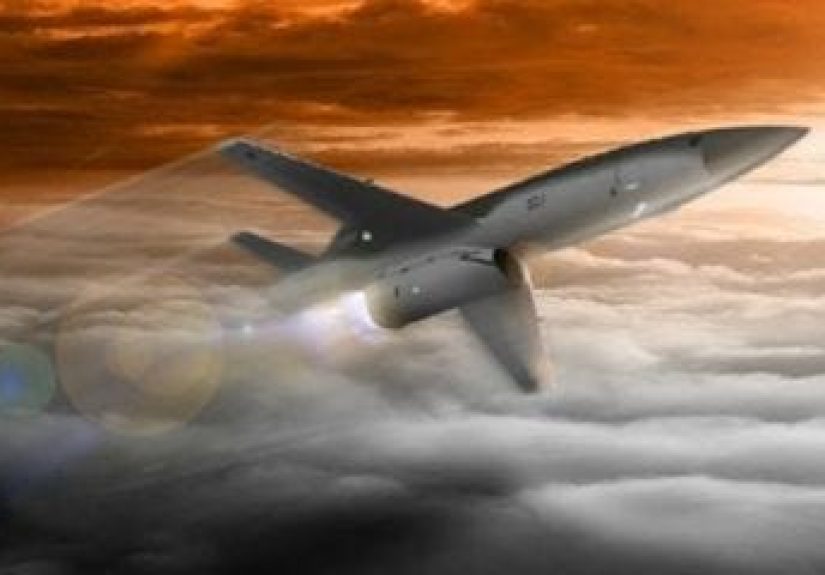
The future of air combat is starting to look less like a lone pilot in a heroic cockpit and more like a high-speed team sport with artificial intelligence, uncrewed jets, and enough acronyms to make a Pentagon whiteboard beg for mercy. At the center of that shift is the U.S. Air Force’s Collaborative Combat Aircraft program, often shortened to CCA. In plain English, the Air Force is developing semi-autonomous drone fighters designed to fly alongside crewed aircraft, extend their reach, carry weapons, scout dangerous airspace, and absorb risk that would otherwise fall on human pilots.
The phrase “drone fighter bomber” may sound like science fiction, but the concept is very real. These aircraft are not hobby drones with missiles duct-taped to them, and they are not traditional remotely piloted systems like the MQ-9 Reaper. They are jet-powered, combat-focused, uncrewed aircraft built to operate with advanced fighters such as the F-35, F-22, and the future F-47. Their job is not to replace pilots overnight. Their job is to make human pilots harder to find, harder to target, and far more dangerous to oppose.
What Is the Air Force Actually Building?
The Air Force’s drone fighter effort is officially known as the Collaborative Combat Aircraft program. The word “collaborative” matters. These drones are meant to work as teammates, not as independent robot warriors roaming the sky with a bad attitude and a playlist of dramatic movie soundtracks.
In 2024, the Air Force selected General Atomics and Anduril Industries to continue developing production-representative prototypes for the first increment of the CCA program. In 2025, the service gave those aircraft official fighter-style designations: General Atomics’ YFQ-42A and Anduril’s YFQ-44A. The “Y” means prototype, “F” means fighter, and “Q” indicates an uncrewed aircraft. That naming decision was more than paperwork. It signaled that the Air Force views these aircraft as part of the fighter force, not as side projects parked in the technological broom closet.
The YFQ-42A, later named Dark Merlin by General Atomics, became one of the first major CCA prototypes to enter flight testing. Anduril’s YFQ-44A Fury followed with its own flight-test milestones, including semi-autonomous operations and weapon-carrying tests using inert munitions. Northrop Grumman’s YFQ-48A Talon Blue has also emerged as a strong candidate for later CCA development, showing that the Air Force wants a competitive ecosystem instead of a single golden goose that lays very expensive eggs.
Why the Air Force Wants Drone Fighters
The short answer is simple: modern air combat is getting more dangerous and more expensive. The long answer involves China, long-range missiles, electronic warfare, advanced air defenses, and the uncomfortable fact that even the best fighter jet cannot be everywhere at once.
For decades, the United States relied on stealth, superior training, and advanced aircraft to dominate the skies. Those advantages still matter, but potential adversaries are building dense networks of sensors, surface-to-air missiles, fighters, cyber tools, and electronic jammers. Sending only crewed jets into that environment is like asking a quarterback to play offense, defense, special teams, and sell popcorn during halftime.
Collaborative Combat Aircraft are designed to add “affordable mass.” That means the Air Force wants more combat power in the sky without buying only ultra-expensive crewed fighters. A drone fighter can carry sensors, jammers, missiles, or decoys. It can fly ahead of a crewed aircraft to probe defenses. It can extend the weapons capacity of a small fighter formation. It can help confuse enemy targeting systems. Most importantly, it can take on missions where losing an aircraft would be painful but losing a pilot would be unacceptable.
Fighter, Bomber, Wingman: What Role Will It Play?
The title “drone fighter bomber” captures the public imagination, but the more accurate description is “uncrewed collaborative combat aircraft.” These systems are being built first as fighter-like teammates, especially for air-to-air missions and crewed-uncrewed teaming. However, their future roles could stretch into strike operations, reconnaissance, electronic warfare, battle management, and decoy missions.
Think of a CCA as a modular combat aircraft. On one mission, it might carry air-to-air missiles to increase a crewed fighter’s magazine depth. On another, it might carry sensors to look for threats. On a third, it might carry electronic warfare equipment to jam enemy radars. In future increments, more advanced versions may support air-to-ground strike missions, which is where the “bomber” part of the public shorthand becomes easier to understand.
The Air Force has already moved into weapons-integration testing. Anduril’s YFQ-44A has been seen in captive-carry testing with inert AIM-120 AMRAAM missiles, a step used to evaluate how an aircraft handles external stores before any operational weapon employment. That does not mean autonomous drones are being turned loose to make their own lethal decisions. Public Air Force statements emphasize that human authority remains central to weapons release decisions.
How These Drones Will Team With Human Pilots
The most important idea behind CCA is human-machine teaming. A pilot in a crewed fighter may act as a mission commander while several uncrewed aircraft perform supporting tasks. The pilot does not need to joystick every movement. Instead, the drone uses onboard autonomy to navigate, maintain formation, respond to commands, and execute assigned mission behaviors.
That is a huge difference from traditional remote-control aircraft. Older remotely piloted systems often depend heavily on continuous human control and long communication links. A future drone fighter may need to keep operating even when GPS is degraded, communications are jammed, or the battlespace changes quickly. Autonomy helps the aircraft keep flying, adapt within mission limits, and reduce workload for the human operator.
Software is therefore just as important as engines, wings, and weapons. The Air Force is using open architecture standards so mission autonomy can be integrated across different aircraft and vendors. This approach is intended to prevent vendor lock and allow faster upgrades. In normal-person language: the Air Force does not want to buy a drone and then discover that updating it requires a sacred ritual, three contractors, and a six-year meeting schedule.
The YFQ-42A Dark Merlin
General Atomics’ YFQ-42A Dark Merlin is one of the most visible aircraft in the program. General Atomics has decades of experience with uncrewed aircraft, including the Predator, Reaper, Avenger, and other systems. The YFQ-42A builds on that background but moves into a faster, more fighter-like category.
The Dark Merlin is being developed as a purpose-built Collaborative Combat Aircraft with modular systems and autonomy integration. General Atomics has described the aircraft as a platform designed for human-machine teaming in complex combat scenarios. Its development path also benefits from earlier work with the MQ-20 Avenger and the XQ-67A Off-Board Sensing Station, both of which helped mature ideas about uncrewed jets, autonomous flight, and collaborative sensing.
The name “Dark Merlin” is wonderfully dramatic, and frankly, defense programs could use the occasional bird-of-prey flourish. But behind the branding is a practical goal: create a jet-powered uncrewed fighter that can be produced, upgraded, and operated at scale.
The YFQ-44A Fury
Anduril’s YFQ-44A Fury represents another path into the same future. Anduril is known for software-heavy defense technology, autonomous systems, and its Lattice command-and-control platform. Fury is designed as a near-fighter-speed autonomous air vehicle with modular payload options and the ability to support air dominance missions.
The YFQ-44A has moved quickly through development, flight testing, and operational experimentation. Air Force and industry updates have described semi-autonomous flights, mission autonomy software integration, and work with the Air Force’s Experimental Operations Unit. That unit is helping develop the tactics, techniques, procedures, maintenance concepts, and deployment playbook needed to turn CCAs from promising prototypes into actual operational aircraft.
This operational piece is easy to overlook. Building a futuristic drone is hard. Making it usable by real Airmen, maintainable at forward locations, compatible with weapons loading procedures, and reliable under pressure is even harder. The future does not arrive just because a prototype looks cool on a runway. It arrives when maintainers can service it, operators can trust it, and commanders know how to employ it.
Where the Next-Generation Fighter Fits In
The CCA program is part of a larger Air Force modernization effort often associated with Next Generation Air Dominance, or NGAD. The crewed centerpiece of that effort is the future F-47 fighter, while CCAs are expected to expand the combat power of that aircraft and other advanced fighters.
The idea is not simply to build one exquisite jet and call it a day. The Air Force wants a family of systems: crewed fighters, uncrewed teammates, sensors, weapons, networks, and software working together. In a future conflict, a crewed fighter may not need to personally expose itself to every threat. It could send CCAs forward, use them as sensors, assign them to carry weapons, or employ them as decoys to complicate enemy planning.
This is why the drone fighter bomber concept is so important. It changes the math of airpower. Instead of every combat aircraft requiring a pilot, a cockpit, life-support systems, and years of training pipeline investment, the Air Force can distribute some missions across uncrewed aircraft. That does not make pilots obsolete. It may make them more powerful.
Why “Affordable Mass” Is the Magic Phrase
Modern fighters are stunning machines, but they are also expensive enough to make budget officers develop a nervous twitch. A single advanced crewed fighter can cost tens or even hundreds of millions of dollars when development, sustainment, and lifecycle costs are included. The Air Force cannot simply buy unlimited numbers of them.
CCAs are meant to be cheaper than crewed fighters while still capable enough to matter in high-end combat. They are not necessarily disposable, and Air Force leaders have been careful about avoiding the idea that these aircraft are throwaway toys. The better term is “attritable” or “affordable enough to take more risk.” In other words, commanders may be willing to send a CCA into dangerous airspace where they would hesitate to send a pilot.
This matters because numbers still count. Stealth and precision are powerful, but a small force can be overwhelmed, delayed, or forced to conserve weapons. Drone fighters can add sensors, missiles, jammers, and confusion. In combat, confusion is not a bug. It is a feature, preferably delivered to the other side in bulk.
Autonomy Does Not Mean No Humans
One of the biggest misconceptions about military AI is that autonomy automatically means machines making every decision by themselves. The Air Force’s public CCA vision is different. Human operators remain in command, especially when lethal force is involved. The autonomy is there to reduce workload, handle fast aircraft-control tasks, and allow the drone to function in contested environments.
A useful comparison is the difference between a calculator and a financial advisor. A calculator can do math very quickly, but it does not decide whether you should buy a house, launch a company, or invest in collectible spoons. Similarly, a CCA may navigate, hold formation, process sensor data, or follow mission commands, but human commanders define the mission and control weapons employment under established rules.
What Challenges Still Remain?
The Air Force’s drone fighter bomber effort is moving quickly, but quick does not mean easy. The first challenge is trust. Pilots must trust that uncrewed teammates will behave predictably, respond correctly, and not create more workload than they remove. A robot wingman that constantly needs babysitting is not a teammate; it is a flying group project.
The second challenge is communications. Future air combat will involve jamming, cyber threats, degraded GPS, and limited bandwidth. CCAs must be able to operate when connections are imperfect. That requires robust autonomy, secure networking, and careful mission planning.
The third challenge is cost control. If CCAs become too expensive, the affordable-mass argument weakens. If they are too cheap and underpowered, they may not survive or contribute enough. The Air Force must find the sweet spot between capability and quantity.
The fourth challenge is logistics. Hundreds or even thousands of uncrewed combat aircraft would require maintenance crews, spare parts, training pipelines, software updates, secure data systems, and basing plans. The glamorous part is the drone streaking across the sky. The decisive part may be whether someone can replace a component quickly at 2 a.m. while drinking bad coffee near a flight line.
Experience-Based Perspective: What This Development Feels Like From the Outside
Watching the Air Force develop a drone fighter bomber feels like watching aviation history turn a page while everyone argues about the font. There is excitement, skepticism, and a healthy amount of “let’s see it work outside the test range.” That mix is normal. Every major leap in airpower has arrived with both bold promises and practical headaches.
The most striking experience in following this topic is how quickly the language has changed. A few years ago, “loyal wingman” sounded like a futuristic nickname from a defense conference slide deck. Now the Air Force is assigning fighter-style designations, flying prototypes, integrating autonomy software, testing weapons carriage, and discussing operational units. The conversation has moved from “Could this happen?” to “How fast can this be fielded, and what will it actually do?”
Another lesson is that autonomy is not the whole story. Many people focus on artificial intelligence because it sounds flashy, and yes, the software is critical. But the real breakthrough is integration. A CCA must combine airframe design, propulsion, sensors, weapons, data links, autonomy, maintenance systems, training concepts, and legal command structures. Any one of those pieces can slow the program down. Successful airpower is not just invention; it is orchestration.
There is also a cultural shift underway. Fighter aviation has long celebrated the individual pilot, and for good reason. Air combat demands judgment, courage, and skill. The CCA concept does not erase that tradition, but it changes the pilot’s role. The future fighter pilot may be less like a solo duelist and more like a quarterback, directing multiple robotic teammates while managing sensors, threats, and weapons across a wider battlespace.
From a public-policy perspective, the development raises important questions. How much autonomy is appropriate? How should testing prove safety and reliability? What happens if communications fail? How will allies integrate similar systems? How will Congress measure progress without drowning the program in reporting requirements? These are not side issues. They are central to whether drone fighters become a durable military advantage or just another expensive science project with excellent renderings.
The most practical takeaway is that the Air Force is not building a single magic drone. It is building a new model of air combat. The first CCAs may be relatively limited compared with later versions. They may start with specific roles such as sensing, missile carriage, or electronic support. Over time, as autonomy matures and operators gain experience, the aircraft could become more flexible. That incremental approach is wise. In military technology, trying to build the perfect system on the first try is a reliable way to build nothing useful for a very long time.
For readers, the key is to separate hype from direction. No, robot jets are not about to replace every fighter pilot next Tuesday. Yes, uncrewed combat aircraft are becoming a serious part of U.S. airpower planning. The Air Force’s drone fighter bomber effort reflects a broader reality: future wars will reward forces that can combine human judgment with machine speed, distributed mass, and rapid adaptation.
Conclusion
The Air Force is developing a drone fighter bomber because the future battlespace demands more reach, more mass, more survivability, and faster adaptation. The Collaborative Combat Aircraft program is the clearest public example of that shift. With aircraft such as the YFQ-42A Dark Merlin and YFQ-44A Fury, the service is testing a new generation of uncrewed fighter-like aircraft designed to team with human pilots, carry sensors and weapons, and expand the power of crewed fighters.
This is not a simple story about robots replacing people. It is a story about people using smarter machines to survive and win in more dangerous skies. If the Air Force succeeds, tomorrow’s fighter formation may include one human pilot, several semi-autonomous teammates, and a level of tactical flexibility that today’s aircraft can only hint at. The drone fighter bomber is not just another aircraft. It is a preview of how air combat itself is being redesigned.
Note: This article synthesizes public information from official U.S. Air Force updates, DARPA program material, aerospace industry announcements, and reputable U.S. defense reporting. It avoids classified, restricted, or operationally sensitive details.