Table of Contents >> Show >> Hide
Halloween is the rare holiday that can make a five-year-old, a teenager, and a candy-loving grandparent equally excited about the same plastic pumpkin bucket. One minute it is spooky folklore, the next it is neighborhood fun, and somewhere in the middle it becomes a serious debate over whether candy corn is a treat or a social experiment. If you are looking for fun Halloween facts, real Halloween history, and kid-friendly trivia adults will secretly enjoy too, you have come to the right haunted house.
This guide explores where Halloween came from, how it changed over time, and why it still has such a strong grip on our imaginations. You will get 42 fun Halloween facts and trivia nuggets, plus a deeper look at the traditions behind costumes, jack-o’-lanterns, trick-or-treating, and all things delightfully creepy. So grab a snack-sized candy bar, turn on the porch light, and let us stroll through the spookiest history lesson of the year.
A Brief History of Halloween
Modern Halloween did not appear overnight like a ghost in a hallway. Its roots go back to the ancient Celtic festival of Samhain, which marked the end of harvest and the beginning of winter. Over time, older seasonal customs blended with Christian observances tied to All Saints’ Day and All Souls’ Day. The evening before All Hallows’ Day became known as All Hallows’ Eve, and that name eventually morphed into Halloween.
As traditions traveled through Ireland, Scotland, England, and later the United States, they kept evolving. Customs like disguises, lantern carving, door-to-door visits, seasonal games, and telling ghost stories all mixed together. By the nineteenth and twentieth centuries, Halloween in America was shifting away from rough pranks and toward neighborhood parties, costumes, and trick-or-treating. In other words, it went from “hide your wagon” to “where did you get that inflatable skeleton?”
42 Fun Halloween Facts, History and Trivia for Kids and Adults
Ancient Origins and Early Traditions
- Halloween has ancient roots. The holiday is widely linked to Samhain, a Celtic festival that marked the end of summer and the start of the darker half of the year.
- Samhain was tied to the seasonal calendar. It was not just spooky for fun. It also marked a practical turning point when communities prepared for winter.
- People once believed the boundary between worlds was thinner on this night. That idea helped shape many ghostly Halloween traditions.
- The word “Halloween” comes from “All Hallows’ Eve.” “Hallow” is an old word for “saint,” so the name reflects the evening before All Saints’ Day.
- Christian observances influenced the holiday too. As church holidays spread, older seasonal customs blended with All Saints’ Day and All Souls’ Day traditions.
- Costumes began as more than partywear. In older traditions, disguises could help people avoid wandering spirits or blend in with them.
- Bonfires were a major part of early celebrations. Fire played an important role in seasonal festivals and symbolized protection, light, and community.
- Ghost stories fit Halloween for a reason. The holiday grew from traditions centered on the dead, the supernatural, and the mysteries of the dark season.
- Medieval “souling” helped shape later customs. People went door to door asking for soul cakes and promising prayers for the dead in return.
- “Guising” sounds exactly as fun as it is. In Ireland and Scotland, children dressed in costume and often performed a song, poem, or joke to earn a treat.
- Halloween used to be a lot rowdier in America. In the nineteenth and early twentieth centuries, pranks and mischief were a huge part of the night.
- Community parties helped tame the chaos. Towns and neighborhoods promoted organized celebrations to make Halloween friendlier and less destructive.
Trick-or-Treating, Candy, and Costumes
- Trick-or-treating became especially popular in the 1950s. That was when it took off as a mainstream family tradition in the United States.
- Early trick-or-treaters did not always get candy. Kids were often handed fruit, nuts, coins, and small toys too.
- Individually wrapped candy became a Halloween hero. As trick-or-treating grew, candy companies leaned into smaller, shareable treats that were easy to hand out.
- Halloween is now a serious shopping season. Costumes, candy, decorations, and party supplies turn October into a major retail event every year.
- Americans were expected to spend about $13.1 billion on Halloween in 2025. That is a lot of fake spiderwebs and peanut butter cups.
- Halloween candy has a huge audience. Surveys from the candy industry have found that 94% of Americans mark the season with chocolate and candy.
- Many people do not wait until October 31 to eat the candy. More than half of Americans start enjoying Halloween sweets before the big night arrives.
- The U.S. has thousands of candy-related businesses. Census data counted more than 3,400 confectionery and nut stores in 2023.
- Costumes are no longer just scary. Today, Halloween outfits can be creepy, cute, funny, nostalgic, or wonderfully ridiculous.
- Homemade costumes have deep roots. Before Halloween became highly commercialized, many celebrations relied on creativity, simple materials, and homemade fun.
- Adults love Halloween too. The holiday is one of the few times grown-ups willingly wear wigs in public and call it seasonal joy.
- Trunk-or-treat is a newer twist on the tradition. It offers a more organized, supervised version of trick-or-treating, often in parking lots or community spaces.
Pumpkins, Lanterns, and Fall Icons
- Jack-o’-lanterns were not originally pumpkins. In Ireland and Scotland, people carved turnips and other root vegetables first.
- The name “jack-o’-lantern” comes from folklore. It is commonly connected to the Irish tale of Stingy Jack, a man doomed to wander with a glowing coal.
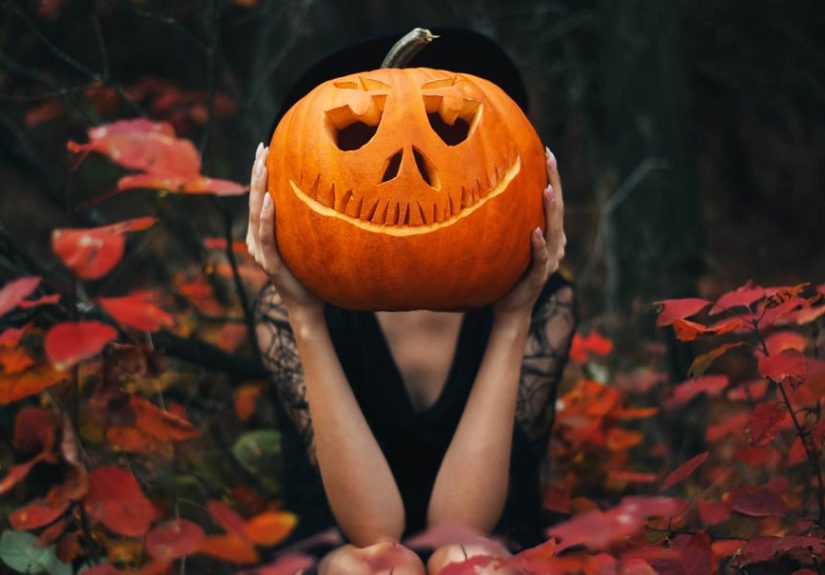
- Pumpkins took over after the tradition came to America. They were bigger, easier to carve, and basically begging to become porch celebrities.
- Pumpkin carving became a North American signature. It remains one of the most recognizable Halloween traditions in the United States.
- Illinois is a pumpkin powerhouse. USDA data shows the state led major pumpkin production measures and produced about 485 million pounds in 2024.
- U.S. pumpkin production is enormous. USDA data estimated 1.44 billion pounds of pumpkins in 2024.
- Not every pumpkin becomes pie. Many are grown for decoration, while others are processed for purée and food products.
- Porch pumpkins are basically the unofficial badge of October. One carved face and suddenly the whole house looks ready for trick-or-treat traffic.
Animals, Myths, and Spooky Symbols
- Black cats became Halloween symbols because of old superstition, not science. Their spooky reputation says more about human imagination than about actual cats.
- Bats got pulled into Halloween because they are nocturnal. Creatures active in the dark have long been surrounded by mystery.
- Owls also earned a spooky reputation. Their eerie calls, silent flight, and nighttime habits made them natural Halloween symbols.
- Not every scary Halloween legend is true. Many popular fears around black cats, bats, and toads are myths, not facts.
- The myth of random poisoned Halloween candy has been widely exaggerated. It became a powerful urban legend, even though evidence for stranger-to-stranger attacks is extremely limited.
- That said, basic caution still matters. The safest approach is to inspect wrappers and avoid anything damaged or unsealed.
- Food allergies are part of modern Halloween planning. Reading labels matters, especially for kids with allergies or sensitivities.
- Safety can be part of the costume. Reflective tape, flashlights, and group trick-or-treating make the night safer without ruining the fun.
Modern Meaning and Global Neighbors
- Halloween is a mash-up holiday. It blends ancient seasonal ritual, religious history, immigrant traditions, local community customs, and modern pop culture.
- Halloween and Día de los Muertos are not the same holiday. They share calendar proximity and themes of remembrance, but they come from different traditions and meanings.
Why Halloween Still Fascinates Kids and Adults
One reason Halloween stays so popular is that it works on multiple levels at once. For kids, it is playful and magical. You get to become someone else for a night, stay out after dark, and collect candy like a tiny goblin tax collector. For adults, Halloween offers nostalgia, creativity, and a socially acceptable excuse to put a skeleton on the lawn in broad daylight.
It is also one of the most flexible holidays on the calendar. You can celebrate with a classroom party, a scary movie marathon, a haunted house, a pumpkin patch, a costume contest, a baking night, a neighborhood walk, or a giant bowl of candy you pretend is “for the trick-or-treaters.” Halloween can be spooky without being grim, funny without being silly, and meaningful without feeling heavy-handed.
From a cultural perspective, Halloween is fascinating because it shows how traditions evolve. Ancient beliefs about seasons and spirits became church-calendar observances, then folk customs, then American neighborhood rituals, then a giant modern celebration shaped by media, commerce, and creativity. It is history wearing vampire fangs.
Halloween Experiences: What the Holiday Feels Like in Real Life
Halloween is not just a set of facts. It is an experience, and that experience begins long before October 31. It starts when stores quietly roll out pumpkins, candy, and decorations while the weather still cannot decide whether it is summer or fall. Kids begin thinking about costumes weeks in advance, changing their minds every three days. Adults start making optimistic plans for homemade decorations, then eventually buy one more bag of fake cobwebs and hope for the best.
For children, Halloween often feels like pure adventure. The excitement builds all day. School might include orange cupcakes, paper bats, or a parade of costumes that range from adorable to gloriously confusing. By evening, the neighborhood transforms. Front porches glow. Leaves crunch underfoot. Every house with a porch light on feels like a tiny stage set. Even familiar streets seem different after dark, especially when everyone is dressed as superheroes, witches, astronauts, skeletons, and at least one dinosaur who can barely climb the steps.
There is also something wonderfully democratic about trick-or-treating. For one evening, the neighborhood becomes a place of exchange. Doors open. Neighbors wave. People who normally nod politely from the driveway suddenly become enthusiastic distributors of mini chocolate bars. Kids learn which houses give out the good stuff, which ones offer stickers, and which house has gone all in with music, fog, and a giant animatronic monster that scares the adults more than the children.
For teens and adults, the Halloween experience changes, but it does not lose its charm. It becomes less about the candy haul and more about atmosphere, humor, and memory. Carving pumpkins turns messy and funny. Costume planning becomes half creativity, half panic. Parties invite everyone to be slightly more dramatic than usual, which, frankly, can be refreshing. A person who would never wear sequins in March may suddenly appear in full glitter as a space witch and receive universal approval.
Parents often experience Halloween in layers. There is the practical side, making sure costumes fit, flashlights work, and no one eats candy before dinner unless that battle has already been lost. But there is also the emotional side: watching a child race up a sidewalk in costume, hearing the first shy “trick or treat,” and realizing that Halloween creates memories with a very specific texture. It smells like candlelit pumpkin, cool air, and chocolate. It sounds like laughter, rustling leaves, and plastic buckets knocking against winter boots.
Even people who do not love scary things can love Halloween because it invites participation rather than perfection. You do not need a flawless costume or a movie-set porch. A carved pumpkin, a handful of candy, and a willingness to join in are enough. That may be why the holiday stays with us. Halloween is playful, communal, and just a little mysterious. It reminds us that imagination still matters, that neighborhoods can still feel connected, and that sometimes the best nights are the ones lit by porch lamps and jack-o’-lantern grins.
Conclusion
Halloween has survived for centuries because it keeps reinventing itself without losing its spooky soul. Ancient seasonal beliefs, church traditions, Irish and Scottish customs, American neighborhood celebrations, and modern candy-fueled creativity have all shaped the holiday we know today. Whether you love the history, the costumes, the pumpkins, the trivia, or the excuse to eat fun-size chocolate as if it were a personal calling, Halloween offers something for every age.
So the next time someone says Halloween is just about candy, you can gently inform them that it is actually a layered cultural mash-up with roots in ancient festivals, folklore, religion, immigration, community building, and seasonal spectacle. Then you can absolutely take their candy if they seem overwhelmed by that information.