Table of Contents >> Show >> Hide
- Way #1: Build a “Boring” Foundation (Sleep, Move, Eat, Repeat)
- Way #2: Choose Your People on Purpose (Friends, Family, Mentors)
- Way #3: Design Your Days (Goals, Skills, and a Tiny Bit of Discipline)
- Quick Reality Check: Your Life Can Be Great Without Being “Perfect”
- Teen Experiences: 3 True-to-Life “Perfect Life” Moments (500+ Words)
- Final Thoughts
Let’s get one thing straight: “perfect” is not a real setting on a human being. (If it were, teenagers would have found it, hacked it, and turned it into a TikTok trend.) What is real is building a life that feels stable, fun, meaningful, and yourseven when your schedule is packed, your emotions are loud, and your group chat won’t stop arguing about where to eat.
This guide breaks “a perfect life as a teenager” into three practical moves you can actually do. They’re not magic. They’re better: they’re repeatable. Think of them like the cheat codes nobody told you about because adults are still figuring them out too.
Way #1: Build a “Boring” Foundation (Sleep, Move, Eat, Repeat)
Most teen problems don’t start with “I’m a terrible person.” They start with “I’m exhausted,” “I’m stressed,” or “I’ve eaten three toaster pastries and vibes.” A solid foundation won’t solve everythingbut it makes everything easier.
1) Sleep like it’s your secret superpower
Teen brains are doing major construction work: learning faster, feeling deeper, and trying to remember where you put your charger. Sleep is when your brain files memories, regulates mood, and basically does the behind-the-scenes updates.
- Aim for 8–10 hours most nights. Not “when life calms down.” Now.
- Protect the last hour before bed: dim lights, lower screen brightness, and ideally get off screens completely.
- Keep a “same-ish” schedule: a consistent bedtime/wake time (even on weekends) reduces the Monday-morning misery.
- Create a tiny wind-down routine: shower, brush teeth, stretch, read a few pagesyour brain learns the cue: “Oh, we’re powering down.”
Real-life example: If you’re up late “studying” but actually re-reading the same paragraph 11 times, you’re not studyingyou’re cosplaying as a student. Sleep first, then study with a brain that’s actually online.
2) Move every day (not because of aestheticsbecause of chemistry)
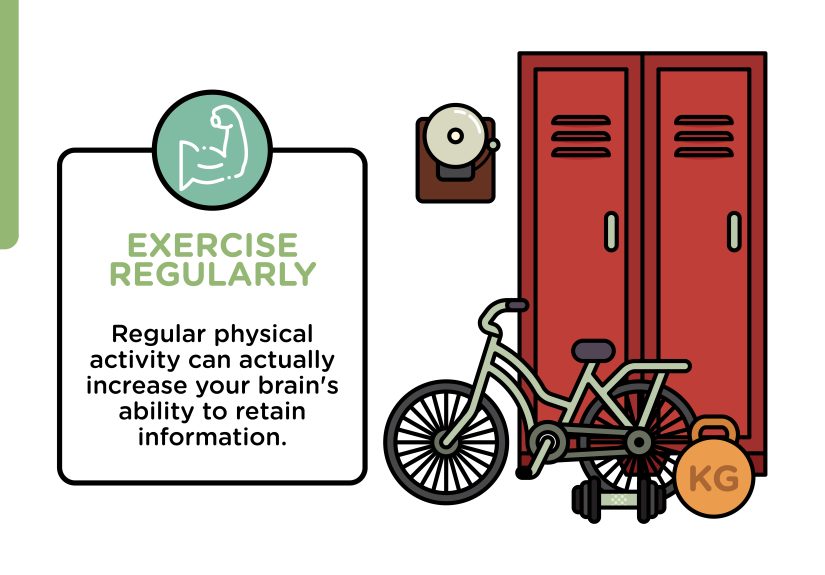
Exercise isn’t punishment for eating pizza. It’s fuel for your mental health: movement helps with stress, focus, energy, and sleep quality. You don’t need a fancy gym routine. You need consistency.
- Target about 60 minutes a day of moderate-to-vigorous activity (sports, brisk walking, dancing, cycling, anything that gets your heart going).
- Add strength + bone-building a few times per week (climbing, push-ups, squats, jumping, running).
- Make it social: walk with a friend, join a team, learn a choreography together. Habit + fun = unstoppable.
Teen-friendly options that count: shooting hoops, skateboarding, a long walk while venting to your best friend, a YouTube workout, swimming, martial arts, hiking, or “aggressive cleaning” when your room becomes a museum exhibit called Artifacts of Semester One.
3) Eat for energy (your mood is not immune to your lunch)
Food won’t fix every emotionbut it absolutely influences how steady you feel. When you eat a variety of foods (not just “snack dust”), you get more consistent energy, stronger bones, and better concentration.
- Use a simple plate rule: make half your meal fruits and veggies, then add whole grains and lean protein.
- Don’t fear carbschoose better carbs: whole grains keep you full longer than ultra-processed stuff.
- Be “drink-smart”: sugary drinks are a sneaky way to crash your energy. Water wins. (So does milk or fortified soy alternatives, depending on you.)
- Keep added sugars in check: more sugar often means more swingsenergy spikes, mood dips, rinse and repeat.
Real-life example: If you have a big test after lunch, try protein + fiber (like a turkey sandwich on whole grain with fruit) instead of only candy or a giant sugary drink. You want “steady brain,” not “sugar fireworks.”
4) Set screen boundaries that protect your life (not just your battery)
Phones are tools. They’re also tiny slot machines. The goal isn’t “never use social media.” The goal is use it on purpose.
- Make your bedroom a sleep zone (or at least keep your phone away from your pillow).
- Use “Do Not Disturb” like a grown-up: set it for homework blocks and bedtime.
- Curate your feed: unfollow accounts that make you feel worse. Your brain lives heredecorate accordingly.
- Try the 10-minute reset: when you notice doomscrolling, pause and do one small physical thing (water, stretch, step outside). You’re interrupting the spiral.
Way #2: Choose Your People on Purpose (Friends, Family, Mentors)
Here’s a weird truth: the “perfect teen life” isn’t mostly about what you do. It’s about who you do it withand who you can lean on when things go sideways.
1) Build friendships that pass the “afterward” test
Ask yourself: after I hang out with them, do I feel more like myself… or less? Friends don’t need to be perfect. But healthy friendships usually include:
- Respect (they don’t roast your insecurities for sport)
- Safety (you can say “no” without punishment)
- Trust (your private stuff stays private)
- Growth (they don’t drag you into drama like it’s a hobby)
Try this boundary script: “I’m not doing that. I’m down for something else, though.” If someone acts like your boundary is a personal attack, that’s valuable information. Congratulationsyou just saved future-you a headache.
2) Get connected at school (yes, even if school is annoying)
You don’t have to love school to benefit from connection. Joining a club, team, arts program, volunteer group, or even helping with events can create a sense of belonging. Feeling connected to your school community is linked to better long-term well-being and fewer risky behaviors over time.
Low-pressure ideas: debate, robotics, yearbook, theater, band, esports, community service clubs, language clubs, tutoring younger students, or being the person who actually shows up and makes the group better.
3) Have at least one adult you can talk to (future-you will thank you)
A “perfect life” isn’t a life where nothing goes wrong. It’s a life where you’re not alone when things go wrong.
- Pick one trusted adult: a parent, older sibling, coach, counselor, teacher, family friend.
- Start small: ask for advice on something minor so it’s not weird later.
- If you feel persistently down, hopeless, or unable to enjoy things for weeks, talk to someone. That’s not “being dramatic.” That’s taking care of yourself.
Important: If you or someone you know is in immediate danger or thinking about self-harm, reach out for urgent help. In the U.S., you can call or text 988 for the Suicide & Crisis Lifeline, or call 911 in an emergency.
Way #3: Design Your Days (Goals, Skills, and a Tiny Bit of Discipline)
Teen life gets better when you stop living like everything is an emergency. You can’t control every assignment, friendship twist, or family issuebut you can control your systems.
1) Pick “future-you” goals (and make them stupidly doable)
Big dreams are great. Big dreams with no plan are just expensive daydreams. Use the 90-day approach:
- Choose one focus: grades, fitness, a skill (guitar, coding, art), mental health, saving money.
- Define the smallest daily action: 20 minutes of practice, one page of notes, 15-minute walk, journaling 5 lines.
- Track it with a simple checklist. Motivation is unreliable; checklists are loyal.
Example: Want better grades? Don’t start with “become a new person.” Start with “every weekday, I review notes for 10 minutes after class.” It’s boring. It works.
2) Learn time management like it’s a life skill (because it is)
Time management isn’t about being busy. It’s about being intentionalso you can have homework and sleep and a social life.
- Use a calendar for deadlines, practices, and plans.
- Break assignments into micro-steps: outline, research, first draft, revise. Your brain panics less when it sees steps.
- Try the “focus sprint”: 25 minutes focused, 5 minutes break. Repeat 2–4 times.
- Protect a nightly reset: pack your bag, lay out clothes, check tomorrow. That’s 10 minutes that saves 30.
Pro tip: If you always “work better under pressure,” you don’t work betteryou just finally start. Let’s make “starting” easier, not your stress higher.
3) Build real-world skills now (so adulthood doesn’t jump-scare you)
A strong teen life includes learning things that don’t show up on tests but absolutely show up in life:
- Communication: ask for help, say no, apologize properly, negotiate
- Basic money habits: track spending, save a little, understand needs vs. wants
- Health skills: cooking a few meals, basic hygiene routines, knowing when to see a doctor
- Flexibility: plans change; you adapt without melting into the carpet
Real-life example: If you get a part-time job or volunteer role, you’re not “wasting teen years.” You’re learning reliability, teamwork, and how to deal with humans who reply-all unnecessarily. That’s advanced training.
Quick Reality Check: Your Life Can Be Great Without Being “Perfect”
A “perfect life as a teenager” is really a life where you feel supported, you take care of your body and mind, and you’re building skills that make you proud. Some days you’ll crush it. Other days you’ll eat cereal for dinner and forget there’s a math quiz. Both can be part of a great life.
If you remember nothing else, remember this: foundation + people + systems. That’s the formula.
Teen Experiences: 3 True-to-Life “Perfect Life” Moments (500+ Words)
These are composite stories based on common teen experiencesno names, no doxxing, just the kind of situations that happen everywhere.
Experience #1: The Sleep Upgrade That Didn’t Ruin Grades
“Maya” was convinced that sleep was optional and that coffee was a personality trait. She stayed up past midnight most nightspartly for homework, partly for “just one more video,” and partly because her brain refused to shut up. Her grades were fine… but her mood was a coin toss. Some mornings she woke up anxious for no clear reason. Other mornings she felt like crying because someone looked at her “weird.” She assumed that was just teenage life.
Then she tried one change: a hard screen cutoff an hour before bed and a consistent bedtime on school nights. Not perfect, not magicaljust consistent. The first week was rough (her brain acted like it was being punished). By week two, she noticed she finished homework faster because she wasn’t re-reading the same sentence like it was written in ancient code. By week three, she stopped needing a full pep talk to get out of bed. Her “perfect life” didn’t come from doing more. It came from recovering more.
Experience #2: Finding “My People” Through One Awkward Club Meeting
“Jordan” thought everyone else had friend groups delivered at birth. He had friends, sure, but he didn’t feel truly known. Lunch felt like musical chairs. He spent a lot of time online because it was easier than walking up to people in real life and doing the terrifying thing known as “talking.”
One day he joined a club meetingmostly because a teacher bribed the class with extra credit. It was awkward. He almost left. But the club had a small job to do for an event, and he offered to help because having a task is the best social hack. Over a few weeks, people started greeting him first. They joked about their shared stress. They traded study tips. Jordan realized belonging isn’t always a lightning boltit’s usually a slow build of showing up, contributing, and being around people enough that “stranger” turns into “familiar,” and then into “friend.” His teen life became better not because drama disappeared, but because he finally had a place where he felt steady.
Experience #3: Tiny Goals That Beat Big Motivation
“Alyssa” wanted the whole package: better grades, better confidence, better everything. But she tried to change her entire life on Monday and gave up by Wednesday, which is a schedule many people know intimately. The turning point was deciding to focus on one thing for 90 days: getting organized.
She started with a daily 10-minute reset: check tomorrow’s schedule, pack her bag, write the top three tasks, and set a bedtime alarm. That’s it. No dramatic reinvention. Over time, that tiny habit changed her week. She missed fewer deadlines. She felt less “behind.” And because she wasn’t constantly putting out fires, she had energy for things she actually likedmusic, a weekend job, hanging out without the guilt cloud overhead. Her “perfect life” wasn’t about being flawless. It was about being less overwhelmed, more prepared, and proud that she kept a promise to herself.
Final Thoughts
You don’t need a perfect personality, perfect body, perfect grades, or perfect friend group. You need repeatable habits, good connections, and systems that make your life feel less chaotic.
Start with one change today. Your future self is already clapping like a proud seal.