Table of Contents >> Show >> Hide
- Before You Freeze: The No-Blanch Rules That Matter
- Method 1: Flash-Freeze Raw Carrot Pieces (Dry Pack)
- Method 2: Freeze Shredded or Grated Carrots (The “Zero Regrets” Option)
- Method 3: Freeze Carrots as Purée (or Fully Cooked Mash) for Smooth Results
- Storage, Food Safety, and “Why Does This Taste Weird?” Troubleshooting
- FAQ: Freezing Carrots Without Blanching
- Real-World Experiences: What You’ll Notice When You Skip Blanching (About )
- Conclusion
Somewhere in the world, a pot of water is boiling… and you don’t want it to be yours. Maybe you’re short on time.
Maybe you hate washing one more dish. Maybe the idea of “blanching” sounds like something you’d pay extra for at a salon.
Whatever the reason: yes, you can freeze carrots without blanching.
Here’s the honest truth, though: blanching usually gives the best long-term quality. Without it, carrots can lose color,
get a little funky in flavor, and turn softer over time. But if your goal is quick preservationespecially for
soups, stews, casseroles, stir-fries, and bakingfreezing carrots raw can be totally worth it.
This guide gives you three practical, no-blanch methods that actually work in real kitchens, plus
storage tricks to avoid freezer burn and that mysterious “why does my freezer smell like 2019?” vibe.
Before You Freeze: The No-Blanch Rules That Matter
1) Start with great carrots
Young, firm carrots freeze better than older ones. Limp carrots aren’t doomed, but they’ll thaw even softer.
If your carrots have greens attached, remove them before storinggreens pull moisture from the root and speed up wilting.
2) Cold, dry, and fast is the goal
Freezing doesn’t “improve” vegetables. It mostly locks in whatever you started with. The best no-blanch strategy is:
prep quickly, dry thoroughly, freeze promptly, and keep air out.
3) Know what no-blanch carrots are best for
If you’re hoping for crisp, snackable carrots after thawing… I have to gently tell you that’s not how physics works.
No-blanch frozen carrots shine in cooked dishes. Plan to toss them into heat, not a crudité platter.
Method 1: Flash-Freeze Raw Carrot Pieces (Dry Pack)
This is the classic “cookie-sheet first” method that prevents one mega carrot brick. It’s the best option when you want
grab-and-go portions of raw sliced carrots, sticks, coins, or diced carrots.
Best for
- Soups, stews, pot pies
- Roasts and sheet-pan meals
- Stir-fries (expect softer texture)
- Meal prep where you’ll cook from frozen
Step-by-step
- Wash and peel (optional): Peel if you prefer smoother texture. Scrub well if you don’t peel.
- Cut for even freezing: Slice into coins, dice into 1/4–1/2 inch pieces, or cut into thin sticks.
- Dry like you mean it: Pat carrots very dry with a clean towel. Water on the surface = icy coating + freezer burn risk.
- Flash-freeze: Spread in a single layer on a parchment-lined baking sheet. Freeze until hard (about 1–2 hours).
- Pack airtight: Transfer to freezer bags or containers. Press out as much air as possible (or vacuum seal).
- Label: Write the date and cut size (“diced,” “coins,” etc.). Your future self deserves clarity.
Pro tips for better texture
- Smaller pieces freeze faster and usually taste better later. Big chunks can get watery and uneven.
- Cook from frozen when possible. Thawing can make carrots weep moisture and feel mushier.
- Use sooner rather than later: No-blanch carrots are best within a few months for top flavor and color.
Quick example
Making chili on a Tuesday? Toss frozen diced carrots straight into the pot with onions and peppers. They’ll soften,
blend into the background, and quietly add sweetness like the helpful friend who never talks about how helpful they are.
Method 2: Freeze Shredded or Grated Carrots (The “Zero Regrets” Option)
If you want the easiest no-blanch method with the least drama, shredded carrots are it. Because they’re thin,
they freeze quickly, thaw quickly, and the texture change is much less noticeableespecially in baked goods and mixed dishes.
Best for
- Carrot cake, muffins, quick breads
- Meatloaf, meatballs, burgers (sneaky veggie boost)
- Soups and sauces
- Stir-fries when you don’t care about crunch
Step-by-step
- Wash and peel (recommended): Peeling helps avoid bitter flecks and keeps shreds prettier.
- Grate: Use a box grater or food processor.
- Remove excess moisture: If the shreds are wet, gently squeeze in a clean towel or press between paper towels.
- Portion smart: Measure into recipe-friendly amounts (like 1/2 cup or 1 cup). This makes baking way easier later.
- Flash-freeze (optional but great): Spread portions on a tray to firm up before bagging.
- Pack tight: Use freezer bags, push out air, and freeze flat for easy stacking.
Pro tips
- Freeze flat: A thin “carrot sheet” in a bag breaks apart faster than a carrot boulder.
- Label with portion size: “1 cup shredded” is the kind of freezer label that feels like winning at life.
- Use directly in batters: For baking, you can often add frozen shreds straight into the mix (they thaw fast).
Quick example
Want to make oatmeal muffins on Saturday? Grab a labeled “1 cup shredded carrots” bag, toss it into the bowl, and
suddenly you’re the person who “just happens” to have prepped ingredients. Very mysterious. Very impressive.
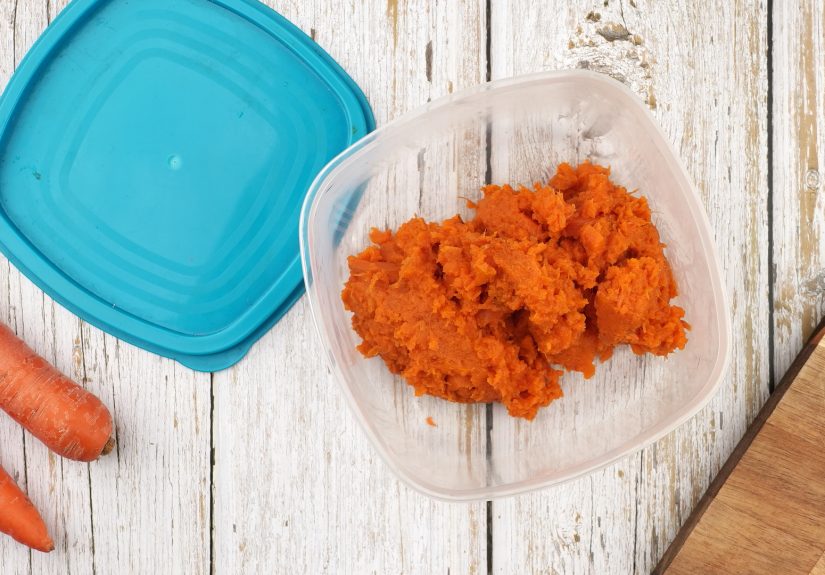
Method 3: Freeze Carrots as Purée (or Fully Cooked Mash) for Smooth Results
This method is the secret weapon for anyone who wants carrots ready to disappear into mealsno blanching required.
Instead of freezing raw carrots, you cook them fully (steam, boil, roast), then purée or mash and freeze in portions.
The texture stays consistent because you’ve already crossed the “soft carrot” finish line on purpose.
Best for
- Soups (carrot-ginger, butternut-carrot, etc.)
- Sauces (adds body and natural sweetness)
- Baby food (when prepared and stored safely)
- Mac and cheese “hidden veggie” upgrades
Step-by-step
- Cook the carrots until very tender: Steam, simmer, or roast. Roasting adds deeper flavor.
- Cool quickly: Let steam escape and cool to room temp (don’t leave out for long).
- Purée or mash: Blend smooth with a splash of water/broth if needed, or mash chunky for rustic texture.
- Portion: Freeze in ice cube trays, silicone molds, muffin tins, or small containers.
- Seal and label: Move frozen portions to bags/containers, remove air, label with date and portion size.
Flavor upgrades (optional, but delightful)
- Add a pinch of salt and a drizzle of olive oil before puréeing for savory meals.
- Blend with a little ginger or garlic for soup-ready cubes.
- For kid-friendly uses, keep it plain and mix into sauces later.
Quick example
Drop two frozen purée cubes into a simmering tomato sauce. Stir. Suddenly it’s thicker, a little sweeter, and quietly
more nutritiouslike your sauce started taking vitamins and didn’t tell anyone.
Storage, Food Safety, and “Why Does This Taste Weird?” Troubleshooting
How long do no-blanch frozen carrots last?
In a deep-freeze at 0°F, frozen food remains safe, but quality changes over time. Because you’re skipping blanching,
aim to use raw-frozen carrots within a few months for best flavor and color. Carrot purée can usually keep quality longer,
especially when sealed well.
How to avoid freezer burn
- Remove air: Press out air from bags or vacuum seal.
- Freeze fast: Spread items thinly at first (flash-freeze) so ice crystals stay smaller.
- Store flat: Flat bags freeze quicker and stack neatly.
- Double protection: For long storage, bag + container can help prevent odor transfer.
What to do if carrots thaw watery or mushy
- Use them in soups, stews, casseroles, fried rice, or blended sauces.
- Cook from frozen and add near the end if you want them to keep some shape.
- If they’re really soft, blend into soup or purée into a sauce base.
Can you refreeze thawed carrots?
For best quality, avoid repeated thaw/freeze cycles. If carrots thawed in the fridge and still smell and look fine,
you can generally cook them promptly and then freeze the cooked dish if needed. When in doubt, prioritize safety and
common sense: if it smells off, don’t “brave it.”
FAQ: Freezing Carrots Without Blanching
Do I need to peel carrots before freezing?
Not strictly, but peeling improves texture and reduces bitterness from older skins. If you’re freezing shredded carrots,
peeling is usually worth it.
Can I freeze baby carrots without blanching?
You can, but smaller pieces freeze more evenly than whole ones. If you want better results, slice baby carrots into coins
and use the flash-freeze dry-pack method.
Should I thaw frozen carrots before cooking?
Usually, no. Cooking from frozen often gives better texture and less water loss. Toss them straight into hot dishes.
Real-World Experiences: What You’ll Notice When You Skip Blanching (About )
People who freeze carrots without blanching tend to have the same series of “aha” momentsusually in this order:
confidence, curiosity, a brief period of freezer pride, and then an honest conversation with a slightly softer carrot.
None of this is bad. It’s just the reality of how carrots behave when frozen raw.
First, the texture shift is real. Raw-frozen carrot coins that look perfect in the bag can thaw into
something that feels less like “crunchy salad topping” and more like “I belong in a soup.” The good news is that this
isn’t a failureit’s a routing issue. When you send those carrots to the right destination (broths, sauces,
casseroles), they perform beautifully. Many home cooks eventually stop judging no-blanch carrots by “snap” and start
judging them by “how much easier dinner got.”
Second, you’ll notice that dryness matters more than you thought. If carrots go into the freezer damp,
you’re more likely to get a frosty coating, icy clumps, and freezer burn creeping in earlier. Kitchens that get the best
no-blanch results usually have one habit in common: they pat carrots dry like they’re about to pose for a photo shoot.
Not glamorous, but effective.
Third, cut size becomes a personality trait. People who dice small tend to love their results: faster
freezing, easier portioning, better integration into dishes. People who freeze big chunks often discover that chunks
thaw unevenly and can go limp faster. Once you’ve tried both, you start cutting carrots based on the future meal:
tiny dice for soup, thin sticks for roasting, shreds for baking, purée cubes for sauces.
Fourth, you’ll learn that air is the enemy. The carrots that taste the “most like carrots” later are
usually the ones packed with minimal air exposure. Many cooks who swear by no-blanch freezing also swear by freezing
bags flat, pushing out air, and labeling clearly. The label part seems small until you’re staring at a frozen bag in
month three wondering if it’s carrots, sweet potatoes, or “mystery orange.” (It’s always mystery orange.)
Fifth, real kitchens discover a “best use” pattern: shredded carrots are the least fussy and feel the
most consistent across recipes; flash-frozen diced carrots are the most flexible for weeknight cooking;
and carrot purée is the most underrated freezer upgrade because it turns into soups and sauces with almost
no effort. Once people try purée cubes, they often keep a stash permanentlylike edible pantry insurance.
Lastly, there’s the surprise benefit: no-blanch carrot freezing tends to reduce food waste because it removes the
biggest barriertime and extra steps. When freezing becomes easy, you do it more often, and those “I’ll use them soon”
carrots stop turning into compost guilt. If your goal is to save carrots quickly and make future meals easier, skipping
blanching can be a totally practical choiceas long as you freeze smart and cook them where they shine.
Conclusion
If you want maximum long-term quality, blanching is still the gold standard. But if you want speed, simplicity, and a freezer
that actually supports weeknight cooking, freezing carrots without blanching is a legitimate move.
Remember the winning strategy: dry them well, freeze them fast, remove air, and use them in cooked dishes.
Choose flash-frozen pieces for everyday flexibility, shredded carrots for baking and mixing, and purée cubes for effortless
soups and sauces. Your future self will thank youprobably while holding a ladle.