Table of Contents >> Show >> Hide
- Why kids get excited like it’s their full-time job
- Excitement is a “good stress” (and that matters)
- Serve-and-return: the secret sauce behind kids’ joy
- Excitement vs. overstimulation: how to tell the difference
- How to respond when a kid is joy-exploding in real time
- Turn excitement into learning without killing the vibe
- When excitement becomes a struggle
- What #280 quietly teaches adults: let kids “lend” you their wonder
- Bonus: of experiences that feel exactly like #280
There are plenty of big, serious things happening in the world. And then there’s the moment a small child spots a
garbage truck and reacts like they just discovered a new planet. That’s the magic behind 1000 Awesome Things:
paying attention to tiny joys that are everywhereespecially when little kids are around to point at them with both
arms, their whole face, and the volume setting of a fire alarm.
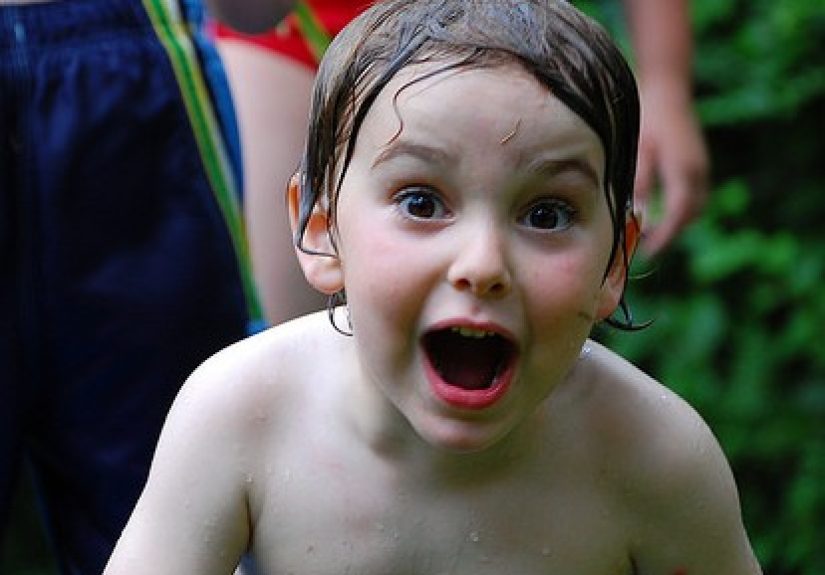
Entry #280 (“When little kids get really, really excited”) is basically a reminder that joy can be loud, unfiltered,
and hilariously earnest. Kids don’t “kinda like” something. They LOVE it. They don’t “notice” a balloon. They are
emotionally adopted by it. And whether you’re a parent, caregiver, teacher, aunt/uncle, older sibling, or just a
person trying to survive a grocery store line, watching a kid get genuinely excited can reboot your brain in the best
way.
Why kids get excited like it’s their full-time job
Adults have a lot of emotional dampeners: deadlines, group chats, back pain, and the knowledge that “new kitchen
sponge smell” doesn’t solve anything. Little kids don’t have those filters yet. Their excitement is not a personality
quirkit’s a developmental feature.
1) Their brains are built to chase novelty
Young children are learning at warp speed. New sights, sounds, textures, and routines aren’t background noise; they’re
data. When something feels new or surprisingbubbles, a puppy, the first snow, a parade sirenthey
experience it as a major event because it is major to their still-growing understanding of the world.
2) Big feelings in a small body
Kids have intense emotions and a limited toolkit for managing them. They’re still developing self-regulation, which
is why excitement can spill over into jumping, squealing, running in circles, or shouting the same sentence nine
times in a row like they’re practicing for the Olympics of enthusiasm.
In early childhood, adults often provide “borrowed calm” through co-regulationstaying close, using a
steady voice, and helping a child label feelings until they can do it on their own. That same idea applies to
excitement too: kids sometimes need help staying safe and grounded when the happy dial is turned all the way up.
3) Language is still catching up to emotion
A lot of kids don’t have the words to match what they feel. When the inside sensation is “THIS IS AMAZING,” the
outside expression may be a sound that can be heard from space. They’re not being dramatic; they’re being literal.
Their body is doing the talking.
Excitement is a “good stress” (and that matters)
We tend to think of stress as negative, but child development research often talks about different kinds of stress
responses. Some stress is short-lived and manageablelike meeting a new friend, trying a new slide at the playground,
or walking into a birthday party full of music and cake. In supportive relationships, that burst of arousal settles
back down and helps build resilience.
In other words: excitement is not “too much.” It’s often a sign a child is engaged, curious, and connected. The goal
isn’t to shut it down. The goal is to shape it so it stays joyful instead of tipping into
overwhelm.
Serve-and-return: the secret sauce behind kids’ joy
If you’ve ever heard a child yell “LOOK!” like it’s an emergencycongrats, you’ve witnessed a “serve.” In early
development, kids constantly “serve” bids for connection (a sound, a point, a question, a show-and-tell object that is
absolutely a rock). When adults respondsmiling, talking back, asking a question, sharing attentionthat’s the
“return.”
Those back-and-forth interactions don’t just feel good; they help build strong foundations for learning and
relationships. The child’s excitement becomes a bridge: from their inner world to yours.
Excitement vs. overstimulation: how to tell the difference
Sometimes what looks like joy is actually the beginning of “too much.” Kids can flip from thrilled to frazzled
quickly, especially when there’s noise, crowds, sugar, screen time, late bedtime energy, or all four at once (also
known as “the birthday party buffet of chaos”).
Signs it’s healthy excitement
- They can come back down with gentle guidance (a drink of water, a cuddle, a quick break).
- They’re still flexible: they can shift attention or follow a simple direction.
- They’re connecting: sharing the moment, making eye contact, inviting you in.
Signs they’re getting overstimulated
- Meltdowns start to appear: crying, yelling, hitting, or “I can’t handle my own feelings” behavior.
- They can’t process directions, even easy ones.
- They become frantic or impulsive (running off, grabbing, climbing unsafely).
- They look “wired,” not just happylike their nervous system is stuck on high.
Overstimulation doesn’t mean your child is “bad” or you did something wrong. It means their system needs fewer
inputs and more support. Think of it like a phone with 30 apps open: eventually it freezes and you have to close a few
tabs.
How to respond when a kid is joy-exploding in real time
Watching kid excitement is fun. Managing kid excitement is… also fun, if you enjoy cardio and surprise screams. Here
are strategies that keep the moment positive without turning you into the “No Fun Police.”
1) Match the feeling, not the volume
You can acknowledge excitement without yelling back at full blast. Try:
“You are SO excited!” in a steady voice with a big face. Kids read your energy more than your decibel
level.
2) Name it to tame it (even when it’s happy)
Labeling emotions helps kids organize what’s happening inside. Use simple words:
excited, happy, surprised, proud.
You’re giving them emotional vocabulary that they’ll later use instead of defaulting to squeals.
(Not that squeals don’t have their place. They do. Nature intended them.)
3) Add a “body rule” that keeps everyone safe
Rules work better when they tell kids what to do, not just what not to do. Examples:
- “Feet stay on the floor in the store.”
- “You can jump on the rug, not on the couch.”
- “We use an inside voice, but your face can be as excited as it wants.”
4) Offer a quick reset
When excitement is tipping into chaos, a short “regulation break” helps:
- Take three slow breaths together (make it silly: “Smell the pizza… blow out the candles”).
- Get a sip of water or a crunchy snack.
- Change the environment for 60 seconds: hallway, porch, quiet corner, or a lap.
5) Use choices to give them control
Excitement can feel out of control to kids. Small choices help them regain footing:
“Do you want to walk next to me or hold my hand?”
“Do you want to tell me about it now or in the car?”
Turn excitement into learning without killing the vibe
The trick is to ride the wave instead of lecturing from the shore. When a kid is excited, their attention is locked
in. That’s your best moment for gentle learning.
Mini ways to “build brain” in the moment
- Ask a prediction: “What do you think will happen next?”
- Count together: “How many bubbles do you see?”
- Make a story: “If that truck had a name, what would it be?”
- Connect it to life: “That’s the sound of a sirenpeople use it when they need to move fast and stay safe.”
- Reflect after: “What was your favorite part?” (This strengthens memory and emotional awareness.)
You’re not turning childhood into a classroom. You’re doing something more natural: using wonder as the doorway to
language, thinking, and connection.
When excitement becomes a struggle
Most big excitement is normal. But if a child regularly can’t calm down, can’t sleep, becomes unsafe, or their intense
behavior is interfering with daily life (school, family routines, friendships), it’s reasonable to talk with a
pediatrician or a child development professional for guidance. Support can make a huge differenceand it’s not a
judgment. It’s a toolkit upgrade.
What #280 quietly teaches adults: let kids “lend” you their wonder
A lot of adulthood is training yourself to be impressed by spreadsheets. Kids pull your attention back to things that
are genuinely wild: a stick that looks like a sword, a puddle that reflects the sky, a dog that exists (still a
miracle), the fact that bananas come in their own packaging.
If you want a practical takeaway from #280, it’s this:
When a child shares excitement, treat it like an invitationnot an interruption.
Even 20 seconds of “Yes, I see it too!” can turn a routine day into a memory.
You don’t need to be endlessly energetic or perfectly patient. You just need to be present often enough that a child
learns: “My joy is welcome here.” That’s not just cute. That’s foundational.
Bonus: of experiences that feel exactly like #280
There’s a special kind of electricity in the room when a little kid is excitedlike the air itself is clapping. You
see it at the window on trash day, when the garbage truck turns the corner and a child presses their forehead to the
glass as if they’re watching a celebrity arrival. The truck isn’t just a truck. It’s loud, enormous, and full of
buttons, and the fact that it exists feels personal, like the universe built it specifically to make Tuesdays
interesting.
Or take the classic “unexpected balloon” moment. A balloon at a birthday party is fun, sure. A balloon in a grocery
store parking lot is basically a plot twist. A child spots it, gasps, and suddenly you’re participating in a high-stakes
mission to protect the balloon from the wind, the car door, and the unfair laws of physics. The balloon becomes a
companion. A teammate. A fragile symbol of hope. Adults might call this “overreacting.” Kids call it “having a heart.”
Then there’s the excitement of being “allowed” to do something small. Pressing the crosswalk button. Choosing the
cereal box. Holding the library card like it’s a VIP pass. When little kids are excited, they treat ordinary power as
extraordinary power. Their face says, “I have been entrusted with important duties,” even if the duty is placing a
single avocado into a bag.
Some excitement is pure sound. The squeal when they see a dog. The sudden volume spike when a favorite song starts.
The delighted shout when sprinklers come on in the summer and the world turns into a glittery water park for three
minutes. You can watch them do the math in real time: “Water is falling from the sky… but it’s not rain… and I’m
allowed to run through it?!” That’s a full-body yes.
And sometimes it’s the excitement of connectionthe moment they run to show you something they made, holding it out
like a trophy. It might be a drawing that looks like a purple tornado eating a house. It might be a tower of blocks
that is absolutely going to collapse in the next six seconds. But their excitement is really about this: “Will you see
what I see? Will you be proud with me?” When you lean in, smile, and say, “Tell me about it,” you can almost watch
their confidence inflate like a balloon (the safe kind, not the parking lot kind).
These moments are small. They don’t show up on calendars. But they stack up into a childhoodand they quietly teach
adults how to be impressed again. That’s why #280 lands. It’s not just about kids being cute. It’s about the way their
excitement keeps pointing to the same truth: life is still full of awesome, if you’re willing to look.