Table of Contents >> Show >> Hide
- Why these stories hit such a nerve
- 28 ridiculous boss requests that absolutely earned public shaming
- 1. “Your broken foot is unfortunate, but can you still clock in?”
- 2. “We fired you. Also, can you help us log into our company accounts?”
- 3. “Please schedule your heat-related illness outside work hours.”
- 4. “You should always keep the hour after work open. You know, ethically.”
- 5. “Why can’t you come in on your day off? I would.”
- 6. “Take lunch, sure, but eat it at your desk when the CEO visits.”
- 7. “Can you create custom art for the workplace? No, we don’t mean for money.”
- 8. “Use your degree to manage a whole team as an unpaid volunteer.”
- 9. “We need an experienced finance expert. Compensation: zero dollars.”
- 10. “We haven’t paid you in months, but here’s a new project.”
- 11. “How about a two-year unpaid internship, followed by more unpaid work?”
- 12. “We can’t pay in cash, but we can pay in experience.”
- 13. “We need a nanny with education, experience, and saint-level patience. Budget: $15.”
- 14. “Be a receptionist, office manager, social media lead, and crisis sponge for one tiny wage.”
- 15. “Please thank us for the interview we barely prepared for.”
- 16. “Let’s celebrate the company’s success. Everyone pay for your own dinner.”
- 17. “Beg customers for reviews or risk getting fired.”
- 18. “No talking when there are no customers. Also enjoy this insulting sign.”
- 19. “Please cast my wife in your film project.”
- 20. “Great review. You’re doing the work of two people. Keep doing that. No raise.”
- 21. “The pay is low, but the boss is friendly.”
- 22. “Please become a full-time assistant to an adult who cannot organize their own suitcase.”
- 23. “We want years of content experience. The monthly pay is basically lunch money.”
- 24. “Weekend and holiday availability required, obviously.”
- 25. “We’re also going to comment on your body or appearance, thanks.”
- 26. “Your chest size is a business matter now, apparently.”
- 27. “Be blindly loyal to the company, even when the company is ridiculous.”
- 28. “Smile through all of it, because we’re a family.”
- What these posts really say about modern work
- Experiences people have with bosses like this in real life
- Conclusion
There are bad bosses, there are clueless bosses, and then there are the managers who behave like the employee handbook was written by a raccoon with a power trip. The internet has become a museum for these people. Screenshots, job ads, passive-aggressive memos, and absolutely wild texts now live forever online, where workers post them for the public to collectively say, “Nope. That is not normal.”
That is exactly why stories about ridiculous boss requests spread so fast. They are funny in the way a kitchen fire is funny when it is happening in someone else’s apartment. But underneath the jokes is something much more serious: disrespect, boundary stomping, cheapness, and the all-too-common belief that “leadership” means asking one person to do the work of four while smiling like it is a growth opportunity.
In the viral posts behind this trend, employees did not shame their bosses online because they were bored. They did it because some requests were absurd, some were insulting, and some were so detached from reality they practically deserved their own sitcom. Below are 28 of the most outrageous examples, rewritten and organized into the kinds of workplace nonsense that push ordinary people from polite professionalism into full-screen-shot mode.
Why these stories hit such a nerve
People do not usually run to the internet over one awkward email. They do it when a pattern becomes impossible to ignore. Ridiculous boss behavior often follows a familiar script: demand more, pay less, offer guilt instead of support, and act shocked when employees stop pretending this is fine. The joke lands because the truth underneath it is painfully recognizable. Workers are tired of being told that basic human needs, like rest, fair pay, grief, safety, and boundaries, are somehow optional extras.
28 ridiculous boss requests that absolutely earned public shaming
1. “Your broken foot is unfortunate, but can you still clock in?”
One viral story featured the classic management strategy of ignoring pain and hoping productivity wins. The employee was injured, the boss still expected business as usual, and the internet responded with the professional equivalent of a spit take. Nothing says “we value our team” like treating a medical issue as a scheduling inconvenience.
2. “We fired you. Also, can you help us log into our company accounts?”
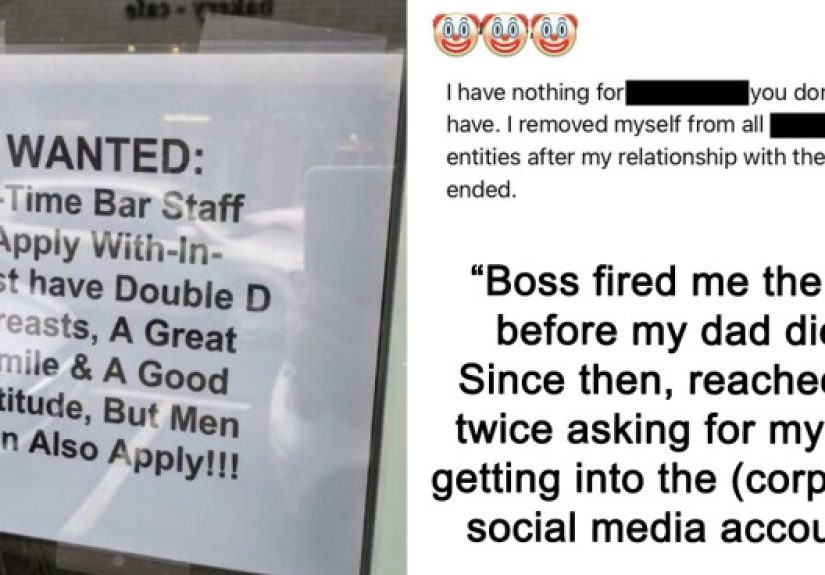
Another boss terminated an employee right before a major family loss, then came back asking for help accessing company social media. That is not management. That is walking into your own bad decision and asking the former employee to rescue you from it for free.
3. “Please schedule your heat-related illness outside work hours.”
This one sounds fake until you remember the internet is full of receipts. A message suggesting workers should plan sudden illness more conveniently became viral for a reason: it managed to be callous, stupid, and weirdly confident all at once.
4. “You should always keep the hour after work open. You know, ethically.”
Some bosses do not ask for overtime. They just try to emotionally blackmail it into existence. One employee was told it was somehow wrong to make plans after work because they might be needed. Translation: your personal life is acceptable only when it does not interfere with our inability to plan.
5. “Why can’t you come in on your day off? I would.”
Few management clichés are more annoying than the martyr flex. In one viral exchange, a manager dragged out their own dramatic life story to shame an employee into working on a day off. Congratulations, sir. You have confused poor boundaries with moral greatness.
6. “Take lunch, sure, but eat it at your desk when the CEO visits.”
Lunch breaks are apparently fine until optics enter the chat. One manager asked employees to stay visible during their unpaid break so leadership would not be “embarrassed.” That is a stunning amount of corporate theater for a sandwich.
7. “Can you create custom art for the workplace? No, we don’t mean for money.”
One artist was asked to paint major wall pieces for a boss who then acted offended when payment was mentioned. Ah yes, the oldest scam in the creative-industry playbook: exposure, appreciation, and the magical belief that talent runs on vibes instead of invoices.
8. “Use your degree to manage a whole team as an unpaid volunteer.”
Some job listings are less “career opportunity” and more “free labor with branding.” Asking a qualified professional to supervise people and carry a full workload for no pay is not noble. It is just unpaid work wearing a nicer hat.
9. “We need an experienced finance expert. Compensation: zero dollars.”
If a business needs skilled labor but offers no salary, that is not entrepreneurial spirit. That is wishful thinking in a blazer. The internet tends to react badly when employers expect expertise while paying in gratitude and delusion.
10. “We haven’t paid you in months, but here’s a new project.”
Nothing captures managerial chaos quite like unpaid staff being asked to stay enthusiastic. If payroll has vanished, the next message should not be about exciting new deliverables. It should be an apology, a payment plan, and maybe a paper bag for the employer to breathe into.
11. “How about a two-year unpaid internship, followed by more unpaid work?”
Some listings read like parody but were posted with full sincerity. Long-term unpaid arrangements packaged as prestigious stepping stones reveal a certain kind of boss logic: if we call exploitation an opportunity, maybe nobody will notice.
12. “We can’t pay in cash, but we can pay in experience.”
Experience is wonderful. It builds skills, confidence, and sometimes a deep suspicion of job ads written by people who think rent is covered by personal growth. Workers shamed these posts because “experience” is not a legal tender, no matter how inspirational the caption sounds.
13. “We need a nanny with education, experience, and saint-level patience. Budget: $15.”
Childcare posts are frequent offenders in the ridiculous-request Olympics. Families want degrees, references, flexible hours, educational enrichment, meal prep, light housekeeping, and emotional magic, all for a rate that suggests they think Mary Poppins works for pocket change.
14. “Be a receptionist, office manager, social media lead, and crisis sponge for one tiny wage.”
Why hire three people when one exhausted person can do all three jobs and get blamed for the printer? Many viral listings collapse multiple roles into one underpaid position, then add “must thrive under pressure,” which is code for “our staffing model is a cry for help.”
15. “Please thank us for the interview we barely prepared for.”
One manager publicly complained that strong candidates had not sent thank-you emails after interviews. That is a bold complaint in a job market where applicants are already ghosted, lowballed, and asked to complete personality quizzes that feel like horoscopes with HR lighting.
16. “Let’s celebrate the company’s success. Everyone pay for your own dinner.”
A boss invited staff to a company dinner and then revealed everyone was covering their own meal. That is not a celebration. That is a surprise bill with balloons. It went viral because it perfectly captured a certain kind of cheap, self-congratulatory leadership style.
17. “Beg customers for reviews or risk getting fired.”
Some managers take desperation and turn it into policy. Forcing workers to chase reviews under threat of termination says less about employee effort and more about leadership’s inability to build a decent customer experience without intimidation.
18. “No talking when there are no customers. Also enjoy this insulting sign.”
Nothing kills morale faster than being treated like a problem when you are simply existing like a human. Viral anti-employee signage often combines control, condescension, and cartoonishly bad tone. It is management by laminated nonsense.
19. “Please cast my wife in your film project.”
Some bosses cannot separate professional authority from personal vanity. When employees refuse these weird side quests, the boss acts betrayed. Apparently, saying “no” to nepotism-by-hobby is now workplace insubordination.
20. “Great review. You’re doing the work of two people. Keep doing that. No raise.”
This might be the most recognizable entry on the list. Employees get praised, overloaded, and denied extra compensation in the same breath. It is the workplace version of being handed a gold star after carrying a refrigerator up three flights of stairs.
21. “The pay is low, but the boss is friendly.”
Employers love using vibes as currency. A “friendly” boss is nice. It is not a substitute for fair wages, safe conditions, and a role description that does not require bite marks, bodily fluids, and emotional triage before noon.
22. “Please become a full-time assistant to an adult who cannot organize their own suitcase.”
One listing for a personal assistant was so all-consuming it basically translated to “become my substitute parent.” The internet enjoys mocking these posts because they expose how often “executive support” quietly morphs into “manage my life because I refuse to.”
23. “We want years of content experience. The monthly pay is basically lunch money.”
Content jobs, sadly, are frequent victims of impossible expectations. Employers demand strategy, writing, editing, SEO, analytics, ideation, publishing, and social media fluency, then offer compensation that would struggle to support a houseplant.
24. “Weekend and holiday availability required, obviously.”
Availability creep is a classic. A role that could be ordinary suddenly expects evenings, weekends, holidays, immediate replies, and emotional loyalty. Somewhere along the way, a normal job becomes an unpaid on-call identity.
25. “We’re also going to comment on your body or appearance, thanks.”
Some online-shamed boss stories crossed from rude into deeply inappropriate, especially when managers began policing employees’ bodies, clothes, or physical presentation in creepy or sexist ways. The public reaction was swift because by that point the boss was not just unreasonable. They were a walking HR seminar.
26. “Your chest size is a business matter now, apparently.”
Yes, one viral thread involved an employer asking invasive questions about fit and appearance that had absolutely no business being discussed that way. Managers who think their authority includes personal comments are often one screenshot away from internet infamy.
27. “Be blindly loyal to the company, even when the company is ridiculous.”
Some bosses post signs and memos that sound less like workplace communication and more like cult audition material. If the message boils down to “sacrifice more, question less, gratitude always,” workers tend to notice that loyalty is being demanded in one direction only.
28. “Smile through all of it, because we’re a family.”
And there it is: the grand finale. The “we’re a family” line is often used right before someone is asked to take on unpaid labor, tolerate disrespect, or accept a boundary violation with a cheerful face. Healthy workplaces do not need emotional manipulation to keep people committed. Dysfunctional ones practically trademark it.
What these posts really say about modern work
The reason these screenshots spread is not just because people love drama. It is because workers are tired of pretending nonsense is leadership. A boss asking for unpaid labor, medical sacrifice, after-hours availability, fake gratitude, or impossible output is not being “old-school” or “demanding excellence.” They are exposing a management style built on imbalance. The worker gives time, flexibility, emotional labor, and sometimes health. The boss gives pressure, guilt, and maybe a pizza party if the quarter went well.
Online shaming becomes the release valve. It is part warning label, part group therapy, part public service announcement. One screenshot tells thousands of workers, “You are not crazy. That email was as bad as you thought.” In a strange way, these posts create a shared language for employees who have been told for years that disrespect is just part of being professional.
There is also a practical lesson for employers. Workers are more informed, more connected, and much more willing to compare notes than they used to be. A manipulative text, a creepy dress-code comment, a laughable job ad, or a ridiculous meeting policy can travel far beyond the office in minutes. That does not mean every boss who gets criticized online is automatically evil. But it does mean arrogance is now easier to document.
Experiences people have with bosses like this in real life
If you have ever worked under a boss like the ones above, you already know the experience is not just “annoying.” It is draining in a thousand tiny ways. It starts with one request that seems off. Stay late tonight. Skip lunch this once. Answer your phone on Saturday. Cover for us until we can “figure things out.” Then the weird request becomes the norm, and suddenly you are reorganizing your life around somebody else’s poor planning.
Many workers describe the same emotional cycle. First comes confusion. You wonder if maybe you are overreacting. Maybe every workplace is like this. Maybe this is just hustle culture. Then comes the self-editing stage, where you rewrite your own reality to make the boss sound reasonable. “They are under pressure.” “They didn’t mean it like that.” “It’s probably temporary.” Meanwhile, the requests keep escalating like a villain in a sequel that nobody asked for.
What makes the experience especially miserable is that ridiculous bosses often pair bad demands with guilt. They do not simply ask for more. They frame your refusal as a character flaw. If you want a real lunch break, you are not a team player. If you will not answer messages at night, you are not committed. If you ask for fair pay, you are difficult. If you object to creepy comments or invasive rules, you are “too sensitive.” It is management by emotional fog machine.
Workers living through this often become hyper-aware, not just of their tasks, but of the boss’s moods, timing, tone, and favorite manipulations. That kind of constant monitoring is exhausting. You are not just doing your job anymore. You are trying to predict the next absurd request before it lands in your inbox wearing a smiley face and pretending to be reasonable.
And then there is the social side. Coworkers swap looks in meetings. People vent quietly in parking lots, group chats, and bathroom stalls. Someone saves the email. Someone else takes the screenshot. Nobody says much in the moment because everyone is trying to keep the peace, keep the paycheck, or keep health insurance. But the resentment builds. When the post finally hits Reddit, TikTok, or a roundup article, it is rarely because one moment was outrageous in isolation. It is because it was the last straw in a pile tall enough to need zoning approval.
That is why these stories matter. They are funny, yes, but they also reveal something workers recognize immediately: ridiculous bosses do not just make bad requests. They distort what normal work is supposed to feel like. Good managers make expectations clearer, workloads fairer, and hard days easier to navigate. Bad ones turn every ordinary week into a loyalty test nobody agreed to take.
Conclusion
The internet did not invent terrible bosses. It just finally gave employees a giant, searchable bulletin board where absurd requests can be pinned up for the world to see. And honestly, good. If a boss wants respect, the old method still works beautifully: pay people fairly, respect their time, stop confusing panic with leadership, and never, under any circumstances, ask someone with a broken foot to “just power through.”