Table of Contents >> Show >> Hide
- Quick Answer: Is Your Car On The List?
- What Exactly Is The Dangerous Glitch?
- Why Honda Issued The Recall
- How Serious Is It?
- What Symptoms Might Owners Notice?
- How To Check If Your Honda Is Included
- What’s The Fix?
- What Owners Should Do Right Now
- Why Software Recalls Are Becoming More Common
- Owner Experience: What This Kind Of Recall Actually Feels Like
- Final Takeaway
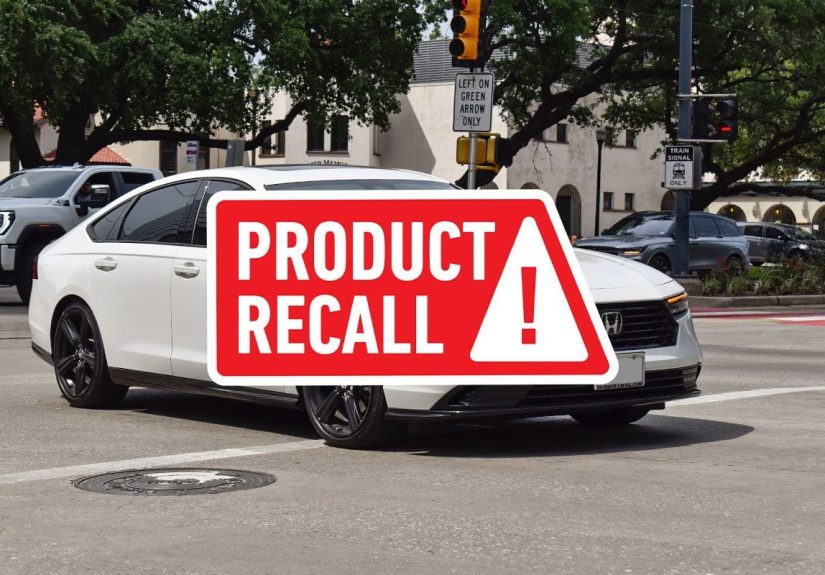
If your Honda is usually the calm, sensible adult in your life, this recall news may feel like a plot twist nobody asked for. Honda has recalled more than 256,000 vehicles in the United States over a software problem serious enough to raise crash concerns. The headline sounds broad, dramatic, and just vague enough to make half the neighborhood check the driveway in a panic. But here’s the good news: the list is much narrower than the phrase “250,000+ Hondas” makes it sound.
This recall centers on certain 2023, 2024, and 2025 Honda Accord Hybrid models. Not every Accord. Not every Honda. Not every hybrid wearing an “H” badge. The issue involves software in the vehicle’s Integrated Control Module, and if that system resets while the car is in operation, the vehicle can lose drive power. That is the kind of wording that turns a routine owner update into a “maybe I should check my VIN before lunch” situation.
Below, we’ll break down what happened, which cars are affected, why this recall matters, how to check whether your vehicle is included, and what owners should do next. We’ll also talk about the very human side of recalls: the confusion, the annoyance, the dealership scheduling shuffle, and the weirdly personal feeling of reading a letter that essentially says, “Your car needs a software timeout.”
Quick Answer: Is Your Car On The List?
If you own a 2023–2025 Honda Accord Hybrid, your vehicle may be part of this recall. If you drive a gas-only Accord, a CR-V, Pilot, Odyssey, Civic, or another Honda model, this specific recall is not the one you’re looking for.
The affected vehicles were built during the following production window:
- Model years affected: 2023, 2024, and 2025
- Model affected: Honda Accord Hybrid
- Approximate total recalled: 256,603 vehicles in the U.S.
- Production dates: Nov. 11, 2022, through Oct. 24, 2025
So yes, the recall is large. But it is also very specific. If you don’t drive an Accord Hybrid from those years, you can lower your blood pressure at least one notch.
What Exactly Is The Dangerous Glitch?
The problem is not a loose bolt, a cracked hose, or a part falling off and announcing its resignation on the highway. This recall is about software programming. According to the safety recall report, the Accord Hybrid’s Integrated Control Module (ICM) can experience a CPU reset while the vehicle is being driven.
In plain English, the car’s control software may incorrectly interpret internal communication issues as a CPU problem. That false detection can trigger an unintended reset. And when the ICM resets during operation, the vehicle may lose drive power. That means the car can suddenly stop delivering the power you expect while you’re moving, which is exactly the sort of surprise nobody wants during a left turn, a merge, or a busy stretch of freeway traffic.
This is why the recall matters. Software glitches are sometimes treated like tech annoyances, as if your car is just having a smartphone-style bad day. But in a vehicle, software controls real-world behavior. When the wrong module resets at the wrong time, the result is not a frozen playlist. It can be a serious safety risk.
Why Honda Issued The Recall
Honda traced the issue to improper software programming by a supplier. During development, the supplier reportedly did not fully understand the ICM’s component specifications. As a result, the software was set up in a way that could misidentify internal communication errors as CPU abnormalities.
There was another twist, because modern vehicles never miss a chance to be complicated. Honda said the addition of new ICM-controlled functions increased electrical load and associated electrical noise. That extra noise contributed to communication errors, false abnormality detection, and unintended resets.
That combination created the perfect storm: a system programmed to overreact, plus conditions more likely to trigger that overreaction. It’s the automotive version of a smoke alarm that mistakes a slice of toast for a five-alarm kitchen disaster, except with higher stakes and more horsepower.
Honda began investigating after receiving an initial report in March 2024. The company and supplier later identified a potential cause in June 2025, continued analyzing the problem through the fall, and determined in November 2025 that a safety-related defect existed.
How Serious Is It?
Any defect that can cause a vehicle to lose drive power deserves to be taken seriously. That does not automatically mean every recalled car will fail. In fact, Honda estimated that only a small percentage of the recalled population is likely to have the defect. But recalls are not judged only by how often a problem happens. They’re also judged by what could happen if the problem occurs.
Here, the risk is clear: a reset while driving can increase the likelihood of a crash or injury. Even a brief power interruption can create danger if it happens in traffic, at speed, or while crossing an intersection. The issue is especially concerning because it may show up in situations where the driver has little time to react.
Honda reported hundreds of warranty claims connected to the issue before the recall was announced, although the company said it had no reports of injury or death related to this defect at that point. That is reassuring, but it is not a reason to ignore the recall. Safety campaigns exist precisely to prevent the story from getting worse.
What Symptoms Might Owners Notice?
Because this is a software-related issue, symptoms may not look as dramatic as a mechanical failure. Owners could experience a sudden loss of drive power, warning messages, or dashboard alerts tied to the control system resetting. In some cases, the car may seem to behave normally until the fault appears under the right conditions.
That uncertainty is what makes recalls like this so frustrating. A vehicle can feel perfectly fine during your daily errands and still qualify for a recall because the safety risk exists. Think of it less as proof your car is doomed and more as proof that the manufacturer wants to fix a risk before it becomes a roadside story you retell with too much hand gesturing.
How To Check If Your Honda Is Included
1. Check your VIN
The fastest way to find out whether your specific vehicle is affected is to use your Vehicle Identification Number (VIN). You can run that number through Honda’s recall lookup tool or the National Highway Traffic Safety Administration recall search.
2. Confirm your model and year
If your car is a 2023, 2024, or 2025 Honda Accord Hybrid, you should absolutely check. If it is not an Accord Hybrid, this particular recall likely does not apply.
3. Watch for owner notices
Honda said owner notification letters were scheduled to begin going out in early January 2026. Even if you never saw a letter, don’t assume you’re in the clear. Mail gets lost. People move. Envelopes disappear into the same mysterious place where charger cables and matching socks go.
4. Call a Honda dealer if you’re unsure
An authorized Honda dealer can confirm whether your VIN is part of the recall and tell you whether the repair has already been completed.
What’s The Fix?
The remedy is straightforward on paper: Honda dealers will reprogram the ICM CPU with improved software, free of charge. That means owners are not being asked to pay for the repair, and the solution does not involve a major hardware replacement in most cases.
That is the silver lining here. While the defect is serious, the fix is more convenient than a full component swap or a long-term parts shortage scenario. Software repairs can still be inconvenient, of course. You still have to schedule the visit, rearrange your day, and possibly drink dealership coffee that tastes like it was brewed during a previous administration. But a reprogramming fix is generally better news than a major mechanical teardown.
Honda also said the improved software was implemented in production in late October 2025, which should reduce the chance of the same issue affecting newly built vehicles after that point.
What Owners Should Do Right Now
- Check your VIN today if you own a 2023–2025 Accord Hybrid.
- Schedule the recall repair promptly if your vehicle is affected.
- Pay attention to warning messages or unusual loss-of-power behavior.
- Keep documentation of the recall visit and completed repair.
- If buying used, ask whether recall work has already been performed.
If you are currently shopping for a used Accord Hybrid, this recall should not necessarily scare you away from the model. But it should encourage you to verify whether recall work has been completed before signing anything. A good deal stops being a good deal very quickly when “I got a bargain” turns into “I inherited someone else’s unfinished service appointment.”
Why Software Recalls Are Becoming More Common
This Honda recall is also a reminder of where the auto industry is headed. Modern cars are rolling networks of sensors, processors, modules, and code. They are quieter, smarter, safer, and more efficient than many older vehicles. They are also more dependent on software behaving exactly as intended.
That means the nature of recalls is changing. Not every major defect comes from metal fatigue or bad welds. Sometimes the weak link is logic, programming, or communication between systems. A modern car can have flawless paint, a smooth ride, and excellent fuel economy while still hiding a software problem buried deep in a control module.
For drivers, the lesson is simple: don’t dismiss a software recall as “just an update.” In today’s vehicles, software can affect propulsion, braking, steering assistance, safety displays, and more. When the software is wrong, the consequences are very real.
Owner Experience: What This Kind Of Recall Actually Feels Like
Let’s talk about the human side of this story, because recalls are never just about numbers on a government filing. They are also about the moment an owner reads a headline, squints at it, and mutters, “Please do not be my car.” For many people, the experience starts with confusion. The recall headline says “250,000+ Hondas,” and suddenly every Honda owner is mentally inventorying their driveway, their commute, and their next oil change.
Then comes the second phase: detective mode. Owners start checking the model year, trim, VIN, service history, and every saved email from the dealership. A person who has not thought about their VIN in three years suddenly becomes a part-time archivist. They are outside by the windshield, inside the driver door, back at the insurance card, then online, then on hold, then online again because being on hold inspires a special kind of multitasking panic.
For drivers whose vehicles are included, the emotional reaction is usually a mix of relief and irritation. Relief, because there is finally an explanation and a fix. Irritation, because even a free repair still costs time. You have to work it into your schedule, figure out whether the dealer has appointments, and possibly decide whether to wait in the lounge or ask for a ride. Nobody wakes up hoping to spend part of Tuesday discussing control-module software with a service advisor.
There is also the trust factor. Most people buy Honda products expecting reliability, and generally for good reason. So when a recall hits, it can feel strangely personal. Not catastrophic, exactly, but disappointing. Drivers tend to think, “I bought this car so I would avoid drama.” And now the car has become a news item.
At the dealership, the experience is often less dramatic than the headline. A recall appointment for a software reprogram can be routine. The service team confirms the VIN, performs the update, documents the repair, and sends the owner on their way. Sometimes it is quick. Sometimes it takes longer than expected because modern life apparently runs on two universal truths: software updates take time, and service departments are busiest when you are not in the mood.
For used-car shoppers, the experience is different but just as relevant. A recall like this turns into one more item on the checklist. Along with price, mileage, tires, accident history, and whether the previous owner believed in routine maintenance or pure vibes, now there is recall status. Smart shoppers will verify that the fix has been completed before buying. That extra step may feel tedious, but it is much easier than discovering an open safety recall after the paperwork is signed.
In the end, most owners will likely remember this as an inconvenience rather than a disaster. That is exactly how recalls are supposed to work. The best recall story is the one where the issue is identified, the owner gets the repair, and life returns to normal. No crash, no breakdown, no roadside nightmare. Just a quick fix, a little annoyance, and a very strong opinion about checking your VIN sooner next time.
Final Takeaway
The big headline is true: more than 250,000 Hondas were recalled over a dangerous glitch. But the finer point matters even more: this recall is focused on certain 2023–2025 Honda Accord Hybrid vehicles. If that is what you drive, don’t shrug this off as tech drama. Check your VIN, confirm your status, and get the repair completed if your car is included.
The fix is free, the risk is real, and the path forward is refreshingly clear. In the age of software-defined vehicles, staying safe sometimes means doing the least glamorous thing imaginable: reading the recall notice, making the appointment, and letting someone update your car’s brain before it has another bad idea.