Table of Contents >> Show >> Hide
- Quick Map of the 24 Traditions
- Everyday Greetings & Manners
- Little Superstitions We Do Anyway
- Wedding Traditions (Pre-Vows)
- Wedding Traditions (Reception Edition)
- Holidays That Borrowed From Somewhere Else
- Wishes & Milestones
- Conclusion: Old Habits, New Meanings
- 500-Word Add-On: What It’s Like to Live Inside These Traditions
- SEO Tags
Humans are adorable: we’ll argue about pineapple on pizza, but we’ll also agreewithout a meeting, a vote, or a group chat
that blowing out candles is the proper way to end a birthday meal. Customs and traditions are basically society’s “default settings”:
tiny scripts we follow because they feel normal, even when their backstories are anything but.
Some everyday rituals started as safety checks (hello, handshake). Others began as superstition, marketing, or a clever way to keep
guests from literally grabbing the bride’s outfit. Over time, the original reasons faded, but the behaviors stuckbecause they create
comfort, belonging, and a sense that we’re all playing the same game, even if nobody remembers who wrote the rules.
Quick Map of the 24 Traditions
- Everyday Greetings & Manners: 1–4
- Little Superstitions We Do Anyway: 5–8
- Wedding Traditions (Pre-Vows): 9–12
- Wedding Traditions (Reception Edition): 13–16
- Holidays That Borrowed From Somewhere Else: 17–20
- Wishes & Milestones: 21–24
Everyday Greetings & Manners
1) The Handshake: “See? No dagger.”
One popular explanation for the handshake is wonderfully practical: offering an open hand showed you weren’t holding a weapon, and
the shake helped prove you weren’t hiding anything up your sleeve. Ancient art also shows hand-clasping as a sign of agreement and
good faithbasically a silent “we’re cool.” Today, it seals job interviews, apologies, and awkward first meetings with one move.
2) Taking Off Your Hat Indoors: From Armor to Etiquette
Hat etiquette has a long “respect” résumé. In medieval Europe, removing headgear could signal courtesyespecially in places like churches.
Over time, the habit became a social shorthand: take the hat off to show you’re not hiding, not posturing, and not treating the room like
your personal racetrack. Modern life is looser, but the gesture still reads as “I’m being polite on purpose.”
3) Tipping: A Tradition with a Complicated Past
Tipping traveled to the U.S. from Europe and spread after the Civil Warthen quickly became entangled with low wages in service work.
It has survived waves of backlash, laws, and complaints (“Why am I doing payroll with a calculator at the end of dinner?”). Even today,
tipping works as both a social expectation and a pay structure, which is why it stays emotionally charged and strangely hard to replace.
4) Saying “Cheers” and Clinking Glasses: Folklore Meets Friendship
Toasting goes back to ancient celebrations and public pledges, and the word “toast” itself connects to the old practice of putting toasted,
spiced bread in drinks. As for clinking glasses, you’ve probably heard the poison storyclink hard enough to splash drinks together, proving
nobody got “special” wine. Fun tale, but it’s more legend than lab-tested safety protocol. Either way, the ritual still says: “We’re together.”
Little Superstitions We Do Anyway
5) Saying “Bless You” After a Sneeze: A Tiny Ritual of Care
People have offered protective phrases after sneezes for centuries. One reason: during plagues and outbreaks, sneezing looked like a scary
early symptom, so a blessing was part prayer, part social comfort. Another old belief claimed the soul might be vulnerable during a sneeze.
Modern takeaway: you made a human noise, and other humans responded, “We acknowledge your continued existence.”
6) Knocking on Wood: Borrowed Luck from the Trees
“Knock on wood” is the verbal equivalent of crossing your fingers with extra sound effects. Many explanations trace it to older beliefs that
trees held protective spirits (or that wood itself had sacred associations). You say something hopefulthen tap wood to avoid tempting fate.
Today, it’s mostly playful, but it still gives your optimism a little ceremonial seatbelt.
7) Throwing Salt Over Your Left Shoulder: Don’t Feed the Bad Luck
Salt used to be valuablespilling it felt like wasting money and inviting misfortune. A popular superstition says trouble lurks on your left side,
so tossing a pinch over the left shoulder “blinds” or repels bad luck. Is it scientifically necessary? No. Is it satisfying? Absolutely. It’s like
hitting “undo” on a cosmic typo.
8) Crossing Your Fingers: A Pocket-Sized Hope Symbol
Crossing fingers is often linked to the cross as a protective symbolused to ward off harm or invite good outcomes. Some accounts connect it
to early Christian traditions, while others point to older folk beliefs about “crossed” shapes having special power. Whatever its origin route,
the gesture still works as a compact way of saying, “Please let this go well,” without making it a whole speech.
Wedding Traditions (Pre-Vows)
9) The Ring Finger: The “Vena Amoris” That Probably Isn’t
The idea that the fourth finger has a direct “vein of love” running to the heart is romanticand likely more myth than anatomy. Still,
the ring finger became a symbolic home for commitment across many cultures. The bigger truth: wearing a ring on a consistent finger makes
the message instantly readable. No translation required. Just one glance and everyone knows the plot.
10) Diamond Engagement Rings: Part Romance, Part Brilliant Marketing
Engagement rings have existed for a long time, but the modern “diamond is the default” expectation surged in the 20th centurythanks in large part
to aggressive advertising that linked diamonds with forever-love status. The custom didn’t just happen; it was curated. Today, couples choose all
kinds of stones and styles, but the diamond tradition remains a powerful example of how culture can be shaped by a very persuasive slogan.
11) White Wedding Dresses: Not Always About Purity
White wedding dresses weren’t always the standard. The trend is often tied to Queen Victoria’s 1840 wedding, after which white became fashionable
among people who could afford a dress that wasn’t practical for everyday life. In other words: white screamed “special occasion” (and “dry cleaning
is not my problem”). Later, meanings expanded, and now it’s simply one popular style among many.
12) The Bridal Veil: A Shield, a Symbol, and a Dramatic Reveal
Veils show up in wedding history for multiple reasonsmodesty, status, and even protection. Ancient traditions sometimes treated veils as a way to
confuse evil spirits or protect the bride from bad luck and jealous forces. Modern weddings keep the veil mostly for aesthetics and symbolism:
it frames the moment, signals ceremony, and turns a walk down the aisle into instant cinema.
Wedding Traditions (Reception Edition)
13) Bridesmaids & Groomsmen: Decoys and Backup
Wedding parties weren’t always just best friends in coordinated outfits. Some older explanations say bridesmaids dressed similarly to the bride
to confuse evil spiritsor less mystical threatsso the “real target” couldn’t be singled out. Groomsmen, meanwhile, acted as witnesses and helpers.
Today, the job is mostly emotional support and logistical rescue: “Yes, the rings are in my pocket. No, I will not lose them.”
14) Throwing Rice (or Confetti): A Fertility Wish with Better Branding
Tossing things at newlyweds sounds rude until you realize it’s basically a blessing in snack form. Grains like rice, wheat, or other seeds symbolized
fertility, prosperity, and abundance. Over time, it evolved into confetti, petals, bubbles, and anything that photographs well and doesn’t anger venue staff.
The core idea stayed the same: “May your life together be full.”
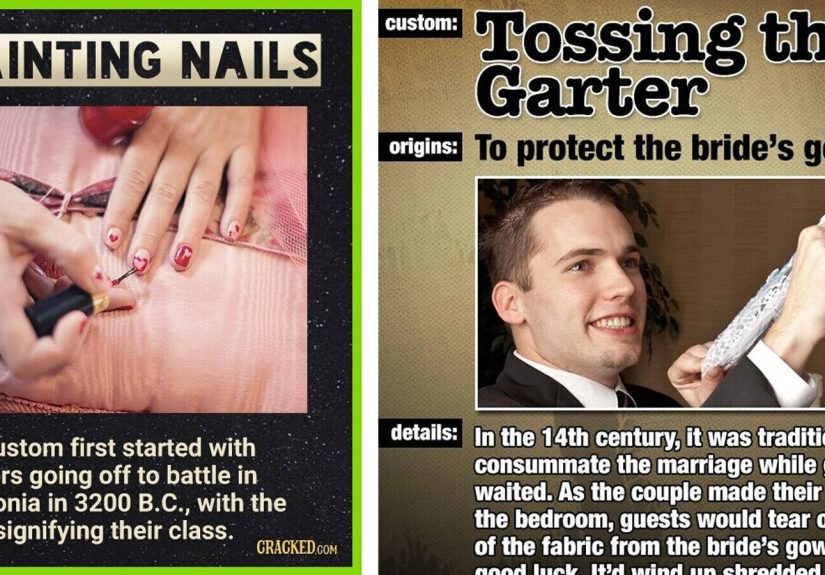
15) The Bouquet (and Garter) Toss: Escaping the Crowd
Believe it or not, some wedding guests used to chase the bride for a piece of her outfit as a good-luck souvenir. Understandably, brides looked for
safer alternativeslike tossing something else. The bouquet toss turned into a playful way to pass “luck” along, while the garter tradition became
a separate reception ritual in some places. Modern couples often tweak or skip these entirely, depending on comfort and vibe.
16) Cutting the Wedding Cake: Sharing the First Task
Cake traditions have shifted a lot, but the symbolism is consistent: sharing food equals sharing life. Earlier wedding customs included breaking bread
or cakes as a sign of fertility and good fortune. Today’s cake cutting is more cooperative than mysticaltwo people, one knife, and a silent agreement
not to start a frosting war unless you’ve both signed the treaty in advance.
Holidays That Borrowed From Somewhere Else
17) Christmas Trees: Evergreens as a “Life Keeps Going” Symbol
Decorating evergreen trees became popular in parts of Europe and spread widely over time, with evergreens symbolizing endurance through winter.
Traditions blendedreligious celebrations, seasonal folklore, and the simple human need to make dark months feel less dark. Add lights and ornaments,
and suddenly your living room looks like hope with a power cord.
18) Kissing Under Mistletoe: Mythology Meets Party Games
Mistletoe carries a long trail of folklore, including associations with protection and peace. In some Norse-linked stories, mistletoe becomes a symbol
tied to life and reconciliation. Later traditions turned it into a holiday excuse for flirtationand for friends to yell, “They’re under it!” from across
the room. Like many customs, it shifted from sacred plant to social spotlight.
19) Easter Eggs and Egg Hunts: Ancient Symbols, New Candy Wrappers
Eggs have symbolized new life across many cultureslong before chocolate companies got involved. As spring festivals and religious observances developed,
eggs fit naturally into themes of renewal. Decorating and hiding eggs added playfulness and community participation. Today, you can buy pre-filled plastic
eggs, which is basically modern society saying, “Yes, we love tradition, but we also love convenience.”
20) Trick-or-Treating: From “Souling” to Costume-Candy Economics
Trick-or-treat has roots in older practices like “souling” (going door to door for small cakes in exchange for prayers) and “guising” (costumed visits
for food or coins). Over timeespecially in the U.S.it became a kid-centered neighborhood ritual with costumes, treats, and the friendliest form of
extortion ever invented: “Candy, please, or mild mischief.”
Wishes & Milestones
21) Tossing Coins into Fountains: Votive Offerings Turned Vacation Ritual
Tossing coins into water connects to old ideas about sacred springs and offerings to unseen powerspart gratitude, part request. Modern “wish fountains”
keep the spirit without requiring you to know any mythology. Big tourist sites made it famous (hello, Trevi Fountain), and today it’s a small moment of
optimism you can do with spare change and a dramatic over-the-shoulder toss.
22) The Thanksgiving Wishbone: Ancient Luck in Two Pieces
The wishbone tradition is often traced back to the Etruscans, who viewed birds as prophetic and treated certain bones as lucky. The Romans spread versions
of the practice through Europe, and it eventually landed in American holiday culture. Now it’s a Thanksgiving mini-competition: two people pull, one gets
the bigger piece, and everyone pretends their wish is totally reasonable and not “a year of perfect Wi-Fi.”
23) Birthday Candles and Making a Wish: Smoke-Mail for Your Hopes
One well-known origin story points to ancient Greeks making round cakes for Artemis and lighting them to mimic the moon’s glow. The idea that rising smoke
carries prayers or wishes shows up in many traditions. Today, we keep the ritual for the moment it creates: the room pauses, people sing, and you get a
tiny spotlight to imagine something goodthen extinguish it in one heroic breath.
24) New Year’s Resolutions: Ancient Promises in Modern Gym Clothes
New Year’s promises are older than most calendars on your phone. Ancient Babylonians reportedly made vows at the start of the year, and later traditions
tied new-year reflection to moral and social renewal. Modern resolutions often focus on health, habits, and personal goalssame idea, new packaging.
It’s the annual ritual of saying, “I can improve,” and then negotiating with your future self.
Conclusion: Old Habits, New Meanings
The strangest thing about traditions isn’t their originsit’s their durability. A custom can start as superstition, a safety check, a social control tactic,
or a marketing masterstroke, and still end up feeling warm and meaningful generations later. That’s because traditions do real work: they organize time,
reduce uncertainty, and give us shared moments we can recognize instantly.
You don’t have to believe in spirits in trees to knock on wood. You don’t have to think a fountain grants wishes to toss a coin. The modern magic is simpler:
these rituals remind us we belong to a larger storyone handshake, one candle, one holiday gathering at a time.
500-Word Add-On: What It’s Like to Live Inside These Traditions
If you want to see how traditions really work, don’t start in a museumstart at a crowded doorway. Someone holds it open, someone says “thanks,” and a tiny
script plays out so smoothly you barely notice you’re participating in a social ritual older than most of your apps. That’s the secret superpower of everyday
customs: they make strangers temporarily cooperative. The handshake used to be a safety check; now it’s a trust shortcut. Even when people skip it (hello,
fist bumps and waves), the goal stays the same: “I come in peace, and I’m not here to make this weird.”
Weddings are where ancient traditions go to get HD lighting. You can watch a whole room coordinate around symbolic actions: the dress, the veil, the rings,
the procession, the shower of rice or petals, the cake cutting. Most guests aren’t thinking, “Ah yes, a fertility ritual!” They’re thinking, “This is the part
where we cheer.” But the experience still functions like an emotional group project. It gives everyone a shared timelinewhen to stand, when to clap, when to
cry, when to take the photo that proves they were there. And because each couple tweaks the script (no bouquet toss, non-white dress, different rings), you can
feel traditions evolving in real time.
Holidays work the same wayespecially the ones with costumes, candy, or trees involved. Halloween turns neighborhoods into temporary communities: porch lights
become invitations, doorbells become a language, and candy becomes a friendly currency. The tradition is partly history, partly logistics, and partly the joy of
telling kids, “Yes, you may approach strangers for sugar, but only tonight, and only if you say the magic words.” Meanwhile, Christmas trees and mistletoe turn
indoor spaces into “seasonal sets,” changing how rooms feel and how people behave inside them. Even if you don’t know the folklore, you feel the shift.
The wish-based traditionscoins in fountains, wishbones, birthday candlesare where you can practically see the psychology. People love moments that allow hope
without requiring a plan. A wish is a goal with training wheels: you get to name what you want in a socially acceptable way, then symbolically “send it out.”
And because everyone plays along, the experience becomes less about magical outcomes and more about permission to be optimistic in public.
New Year’s resolutions are the same impulse on a calendar schedule. The experience isn’t just “I will change”; it’s “We all agree this is the time for a reset.”
That collective timing matters. It’s easier to start something hard when the culture is also saying “fresh start,” whether that means a new habit, a better
relationship with your time, or simply the decision to stop treating sleep like an optional feature.
The best part of learning strange origins is that it doesn’t ruin the traditionsit upgrades them. When you know these customs survived wars, migrations,
religious shifts, and the invention of the internet, they feel less like random habits and more like living artifacts. You can keep what still feels good,
edit what doesn’t, and still enjoy the main point: shared rituals make life feel connected.