Table of Contents >> Show >> Hide
- 2022 Hyundai Ioniq 5 Overview: What Is It?
- Exterior Design: Retro, Futuristic, and Weird in the Best Way
- Interior Review: A Living Room With Seatbelts
- Performance: Calm When You Want, Quick When You Need
- Range and Efficiency: The Sweet Spot Is Long Range RWD
- Charging: The Ioniq 5’s Superpower
- Vehicle-to-Load: A Clever Bonus Feature
- Safety and Driver Assistance
- Trim Levels: Which 2022 Ioniq 5 Should You Buy?
- Reliability and Ownership Considerations
- 2022 Hyundai Ioniq 5 vs. Key Rivals
- Pros and Cons of the 2022 Hyundai Ioniq 5
- Final Verdict: Is the 2022 Hyundai Ioniq 5 Still Worth It?
- Real-World Experience Notes: Living With the 2022 Hyundai Ioniq 5
The 2022 Hyundai Ioniq 5 arrived like an electric car that had accidentally time-traveled from a clean, pixel-lit future and landed in a suburban grocery store parking lot. It looked like a concept car, drove like a relaxed family crossover, charged like it had somewhere important to be, and somehow offered more interior space than its compact footprint suggested. In a market crowded with Tesla comparisons, compliance EVs, and “coming soon” promises, the Ioniq 5 felt refreshingly real.
This 2022 Hyundai Ioniq 5 review takes a close look at performance, range, charging, interior quality, comfort, technology, safety, ownership considerations, and everyday usability. The short version: Hyundai did not just build a good electric vehicle. It built one of the most interesting mainstream EVs of its era, and in several ways, it still feels modern today.
2022 Hyundai Ioniq 5 Overview: What Is It?
The 2022 Hyundai Ioniq 5 is an all-electric crossover built on Hyundai Motor Group’s E-GMP platform, a dedicated EV architecture also related to the Kia EV6 and Genesis GV60. Unlike earlier electric cars that felt adapted from gasoline models, the Ioniq 5 was designed around batteries, motors, flat-floor packaging, and ultra-fast charging from the start.
Hyundai offered the 2022 Ioniq 5 in several configurations. The SE Standard Range used a 58.0-kWh battery, rear-wheel drive, and a single electric motor producing 168 horsepower and 258 lb-ft of torque. Long Range rear-wheel-drive models used a 77.4-kWh battery and raised output to 225 horsepower. The dual-motor all-wheel-drive version also used the 77.4-kWh battery but increased output to 320 horsepower and a strong 446 lb-ft of torque.
That range of choices gave buyers a simple decision tree: choose the Standard Range model if price mattered most, the Long Range RWD model if maximum efficiency and driving distance were priorities, or the AWD model if quick acceleration and all-weather traction sounded irresistible. Spoiler alert: the AWD version is the one that makes passengers say, “Wait, this is a Hyundai?”
Exterior Design: Retro, Futuristic, and Weird in the Best Way
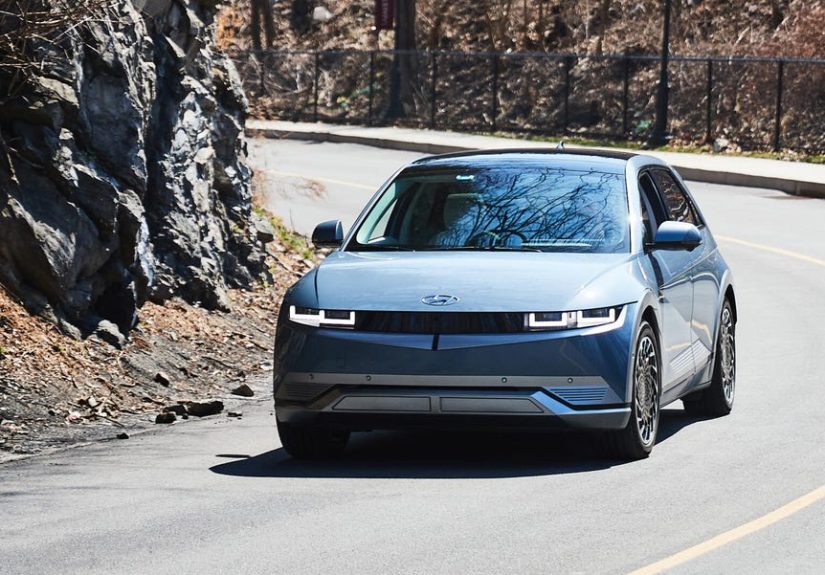
The Ioniq 5’s design is one of its strongest selling points. It does not look like a melted bar of soap, nor does it try to fake the shape of a traditional SUV. Instead, it blends sharp creases, flat surfaces, pixel-style lighting, and an almost hatchback-like profile. The proportions are deceptive: in photos, it can look like a compact hatchback, but in person, it is much larger and wider than many people expect.
The long wheelbase is the secret ingredient. At 118.1 inches, the wheelbase is longer than many midsize SUVs, giving the Ioniq 5 its stretched stance and generous cabin space. The short overhangs and squared-off body help it look tidy rather than bulky. The design recalls 1980s rally hatchbacks, digital watches, arcade graphics, and high-end appliance minimalism. Somehow, it all works.
There are practical benefits too. The wide hatch opening, upright rear shape, and low load floor make the cargo area useful. The Ioniq 5 offers about 27.2 cubic feet of cargo space behind the second row and up to roughly 59.3 cubic feet with the rear seats folded. The front trunk is small in U.S. models, so do not expect to store a week’s worth of groceries under the hood. It is better suited for a charging cable, emergency kit, or the world’s loneliest sandwich.
Interior Review: A Living Room With Seatbelts
Inside, the 2022 Hyundai Ioniq 5 is spacious, airy, and more lounge-like than most compact crossovers. The flat floor helps create a relaxed environment, especially for rear passengers. The front seats are comfortable, visibility is good, and the dashboard design avoids the cluttered “button explosion” look found in many older vehicles.
Dual 12.3-inch screens dominate the dashboard, one for the digital gauge cluster and one for infotainment. The display layout is clean, bright, and easy to understand. Hyundai wisely kept several physical controls for climate and common functions, which is good news for drivers who prefer not to tap through three menus just to change fan speed.
Materials vary by trim, but the cabin generally feels modern and thoughtfully assembled. It is not luxury-car plush in every corner, but the design and roominess make it feel special. Higher trims add desirable features such as a panoramic glass roof, ventilated front seats, a head-up display with augmented-reality-style guidance, premium audio, and Hyundai’s sliding “Universal Island” center console.
Rear Seat Comfort
The rear seat is one of the Ioniq 5’s biggest wins. Adults can sit comfortably without feeling like knees and elbows are participating in a wrestling match. The rear seats slide and recline, which helps balance passenger comfort and cargo space. Families, rideshare drivers, and road-trip passengers will appreciate the generous legroom.
Technology and Infotainment
The infotainment system supports Apple CarPlay and Android Auto, though wireless smartphone projection was not included on the 2022 model. That omission is mildly annoying in a vehicle that otherwise feels like it was designed by people who understand the future. Still, the wired connection is stable, the interface is responsive, and the built-in navigation can help plan charging stops.
Performance: Calm When You Want, Quick When You Need
The 2022 Hyundai Ioniq 5 is not trying to be a sports car, but the AWD model is properly quick. With 320 horsepower and 446 lb-ft of torque, it delivers the instant shove that makes electric vehicles feel so addictive. Independent testing found the AWD Ioniq 5 capable of sprinting from 0 to 60 mph in under five seconds, depending on conditions and trim. That is quick enough to embarrass many gasoline crossovers and make your coffee reconsider its life choices.
The Long Range RWD model is slower but still pleasant. Its 225 horsepower is more than enough for commuting, merging, and relaxed highway driving. The Standard Range model, with 168 horsepower, is the least exciting version but remains perfectly usable for city and suburban driving.
Where the Ioniq 5 shines most is smoothness. Acceleration is linear, quiet, and easy to control. The ride is tuned more for comfort than corner-carving, which fits the vehicle’s personality. It glides over most roads with a soft, composed feel, though rough pavement and large wheels can introduce some firmness. Steering is light and accurate, but not especially emotional. If you want razor-sharp handling, look elsewhere. If you want a calm EV that makes daily driving feel easier, the Ioniq 5 gets it right.
Range and Efficiency: The Sweet Spot Is Long Range RWD
Range depends on configuration. The 2022 Ioniq 5 SE Standard Range is EPA-rated at about 220 miles. Long Range rear-wheel-drive versions are rated up to 303 miles, making them the best choice for drivers who want maximum distance between charging stops. Long Range all-wheel-drive models are rated around 256 miles, trading some efficiency for much stronger performance and traction.
In real-world use, range can vary significantly. Highway speeds, cold weather, elevation, tires, climate-control use, and driving style all matter. Like most EVs, the Ioniq 5 is more efficient around town than at sustained high freeway speeds. Drivers expecting the full EPA number on a freezing winter road trip at 75 mph may be disappointed. Drivers using the car for commuting, errands, school runs, and mixed suburban driving are more likely to see satisfying results.
The Ioniq 5 also offers adjustable regenerative braking, including an aggressive i-Pedal mode that allows near one-pedal driving. Some drivers love it because it makes city driving feel smooth and efficient. Others prefer lighter regen for a more natural coasting feel. Hyundai gives you options, which is always better than being told there is only one correct way to drive an EV.
Charging: The Ioniq 5’s Superpower
Charging speed is one of the biggest reasons the 2022 Hyundai Ioniq 5 stood out when it launched. Thanks to its 800-volt electrical architecture, the Ioniq 5 can charge from 10% to 80% in about 18 minutes when connected to a powerful 350-kW DC fast charger under ideal conditions. That is genuinely fast and remains impressive even by newer EV standards.
On a road trip, this can change the entire ownership experience. Instead of waiting an hour, a well-planned stop can be short enough for a restroom break, coffee, and a snack negotiation with yourself that you will definitely lose. However, the key phrase is “under ideal conditions.” Charger availability, battery temperature, station reliability, and charge-curve behavior all affect the result.
At home, Level 2 charging is the most practical solution. Using a 240-volt charger, the Ioniq 5 can recharge overnight for most daily needs. Owners who can charge at home will have the easiest experience. Owners who rely only on public charging should carefully check local infrastructure before buying any EV, not just this one.
Vehicle-to-Load: A Clever Bonus Feature
One of the Ioniq 5’s coolest tricks is Vehicle-to-Load capability, often shortened to V2L. This allows the car to power certain external devices, turning the battery into a mobile energy source for camping, tailgating, laptops, small appliances, and emergency use. It is not a replacement for a whole-home generator, but it is genuinely useful.
For outdoor activities, V2L makes the Ioniq 5 feel more adventurous than its smooth, quiet driving personality suggests. It can power lights, charge e-bikes, run small cooking equipment, or keep devices alive during a long day away from outlets. It is one of those features that sounds gimmicky until you use it once and suddenly start looking for excuses to plug things into your car.
Safety and Driver Assistance
The 2022 Hyundai Ioniq 5 performed well in safety evaluations and earned strong recognition from major U.S. safety organizations. Standard and available safety features include forward collision-avoidance assist, lane keeping assist, blind-spot monitoring, rear cross-traffic assistance, adaptive cruise control, and Hyundai’s Highway Driving Assist system on equipped trims.
Highway Driving Assist can reduce fatigue on long drives by helping maintain distance, speed, and lane position. It is not a self-driving system, and the driver must remain attentive. Used properly, though, it makes highway travel feel less tiring. The system’s behavior is generally smooth, though drivers should always be ready to take over in construction zones, bad weather, or unclear lane markings.
Trim Levels: Which 2022 Ioniq 5 Should You Buy?
The 2022 Ioniq 5 lineup included SE, SEL, and Limited trims, with Standard Range available at the entry point and Long Range models offering more range and power. The SE gives buyers the core EV experience at the lowest cost. The SEL adds comfort and convenience features that many shoppers will appreciate. The Limited is the showcase trim, bringing the flashiest technology and premium touches.
For most buyers, the best value is likely the SEL Long Range RWD or SEL Long Range AWD, depending on climate and driving needs. RWD offers the best range and efficiency. AWD adds serious acceleration and better traction in snow or wet conditions. The Limited is excellent, but used prices and feature priorities should guide the decision.
Best Pick for Range
Choose the Long Range RWD model. With up to 303 miles of EPA-rated range, it is the efficiency champion of the 2022 lineup.
Best Pick for Performance
Choose the Long Range AWD model. The dual-motor setup transforms the Ioniq 5 from calm commuter to quick family spaceship.
Best Pick for Features
Choose the Limited trim if you want the most premium cabin experience, advanced display features, and extra comfort equipment.
Reliability and Ownership Considerations
The 2022 Hyundai Ioniq 5 benefits from Hyundai’s strong warranty coverage, including a long high-voltage battery warranty in the U.S. That matters because EV battery replacement costs can be intimidating. For used shoppers, warranty transfer details, vehicle history, and service records are worth checking carefully.
There have also been recall and service campaign concerns involving the Integrated Charging Control Unit, or ICCU, which can affect 12-volt battery charging and potentially lead to reduced drive power. Anyone shopping for a used 2022 Ioniq 5 should verify that all open recalls and software updates have been completed by a Hyundai dealer. This is not a reason to panic, but it is absolutely a reason to check the VIN before buying.
Tire wear is another ownership factor. The AWD model’s instant torque is fun, but heavy EVs can wear tires faster than lighter gasoline vehicles, especially if driven enthusiastically. Insurance costs, local electricity rates, public charging costs, and available home charging should also be part of the buying calculation.
2022 Hyundai Ioniq 5 vs. Key Rivals
The Ioniq 5 competes with the Tesla Model Y, Ford Mustang Mach-E, Volkswagen ID.4, Kia EV6, Nissan Ariya, and other electric crossovers. Compared with the Model Y, the Hyundai generally offers a more comfortable ride, a more traditional control layout, and ultra-fast charging capability on compatible stations. Tesla still has advantages in software integration and charging-network convenience, especially in areas where public CCS charging is inconsistent.
Compared with the Ford Mustang Mach-E, the Ioniq 5 feels more relaxed and spacious, while the Ford leans sportier in personality. Against the Volkswagen ID.4, the Hyundai feels quicker, more distinctive, and more technologically advanced, though the VW’s softer demeanor may appeal to some buyers. The Kia EV6 shares similar hardware but has a sportier shape and tighter cabin feel. Choosing between the Ioniq 5 and EV6 often comes down to design taste and seating comfort.
Pros and Cons of the 2022 Hyundai Ioniq 5
Pros
- Distinctive design that still looks fresh
- Excellent interior space thanks to a long wheelbase
- Very fast DC charging capability under ideal conditions
- Strong range in Long Range RWD form
- Quick acceleration with AWD
- Comfortable ride and quiet cabin
- Useful Vehicle-to-Load power feature
Cons
- Real-world highway range can drop in cold weather or at high speeds
- Public fast-charging experience depends on local station reliability
- No wireless Apple CarPlay or Android Auto on the 2022 model
- Small front trunk
- Some used models may need recall or software-update verification
- Limited trim pricing can overlap with premium EV territory
Final Verdict: Is the 2022 Hyundai Ioniq 5 Still Worth It?
Yes, the 2022 Hyundai Ioniq 5 remains one of the most compelling used electric vehicles to consider, especially for buyers who want style, space, comfort, and fast charging without choosing the most obvious badge. Its design has aged well, its cabin is genuinely practical, and its E-GMP platform gives it charging performance that still feels competitive.
The best version for most shoppers is the Long Range model. RWD is ideal for maximum range and efficiency, while AWD is the fun choice for drivers who want quick acceleration and added traction. The Limited trim is the nicest, but the SEL often lands in the sweet spot between features and value.
The biggest buying advice is simple: check the vehicle’s recall status, confirm charging needs, inspect tire condition, and make sure your local charging situation fits your lifestyle. If those boxes are checked, the 2022 Ioniq 5 is not just a good EV. It is a reminder that practical family cars do not have to be boring appliances with wheels.
Real-World Experience Notes: Living With the 2022 Hyundai Ioniq 5
Living with the 2022 Hyundai Ioniq 5 is where the car’s personality becomes clearer. On paper, it is a collection of numbers: battery size, horsepower, charging speed, cargo volume, and EPA range. In daily life, it becomes something more relatable. It is the car that makes silent morning commutes calmer. It is the car that lets rear passengers stretch out instead of negotiating knee space like diplomats at a tense summit. It is also the car that turns ordinary parking-lot conversations into mini auto shows because someone will eventually ask, “What is that?”
For commuting, the Ioniq 5 feels almost perfectly suited. The quiet cabin reduces stress, the seating position is comfortable, and the regenerative braking system lets you tailor the driving feel. In heavy traffic, i-Pedal mode can make stop-and-go driving smoother because you can control much of the motion with one pedal. The instant torque helps when merging, but the throttle is easy to manage, so the car does not feel jumpy unless you ask it to.
On errands, the wide-opening hatch and flexible rear seat are genuinely useful. A week’s worth of groceries, school bags, sports gear, or flat-pack furniture can fit without drama. The cabin’s open layout also makes the car feel less cramped when waiting in a parking lot, charging station, or school pickup line. The sliding console on upper trims is one of those features that sounds minor but can make the interior feel more adaptable.
Road trips are a more mixed but still positive experience. When a high-power charger is available and working properly, the Ioniq 5 is excellent. A short stop can add a meaningful amount of range, and the car’s comfort makes long drives pleasant. The challenge is not the vehicle itself as much as the public charging ecosystem. Some stations are fast and reliable; others behave like they were assembled during a thunderstorm by raccoons. Planning matters. Apps, backup stations, and realistic expectations are part of modern EV travel.
Cold weather is another real-world factor. Like most electric vehicles, the Ioniq 5 uses more energy in winter, especially at highway speeds. Cabin heat, battery temperature, and dense cold air all affect efficiency. Owners in colder states should expect seasonal range drops and should prioritize home charging if possible. Preconditioning and smart route planning can help, but winter EV ownership works best when drivers understand the trade-offs before the first snowstorm arrives.
As a family car, the Ioniq 5 makes a strong case for itself. Rear-seat space is generous, the floor is flat, and the doors open wide enough to make child seats easier to manage. Teen passengers will appreciate the room, while adults will appreciate not hearing complaints every eight minutes. The quietness also helps conversations feel normal instead of shouted over engine noise.
The ownership experience is best for someone who can charge at home, drives predictable daily distances, and occasionally uses public fast charging for longer trips. For apartment dwellers without reliable charging access, it can still work, but it requires more planning. That is not a Hyundai-specific problem; it is an EV lifestyle problem.
Overall, the 2022 Hyundai Ioniq 5 feels like a car designed by people who understood that EVs should not merely replace gasoline vehicles. They should improve the daily routine. The Ioniq 5 does that with comfort, space, speed, style, and just enough weirdness to keep things interesting. It is practical, but not plain. Efficient, but not joyless. Futuristic, but not confusing. That balance is why it remains one of the standout electric crossovers of its generation.
Note: This article is an original publish-ready synthesis based on publicly available U.S. specifications, professional review consensus, safety information, recall data, and real-world EV ownership considerations. Source links are intentionally omitted for clean web publication formatting.