Table of Contents >> Show >> Hide
- Fact #1: It’s About 13,171 Miles Long… But That Number Comes With a Plot Twist
- Fact #2: The Great Wall Isn’t One WallIt’s Many Walls From Many Dynasties
- Fact #3: The Most Famous, Best-Preserved Wall Is Largely Ming Dynasty (14th–17th Centuries)
- Fact #4: It Was Built With Whatever Was HandyIncluding Sticky Rice “Super-Glue”
- Fact #5: It Was a High-Speed Ancient Messaging SystemWith Smoke, Fire, and Towers
- Fact #6: The Great Wall Wasn’t an Impenetrable “Keep Out” Sign (And That’s the Point)
- Fact #7: No, You Can’t See It From the Moonand Seeing It From Orbit Is Tricky
- Fact #8: The Human Cost Was Enormousand the Workforce Wasn’t Just “Builders”
- Fact #9: The Wall May Be Hundreds of Years Older Than We ThoughtThanks to New Discoveries
- Fact #10: Large Portions Are Crumblingand Sometimes People Literally Drive Through It
- Conclusion: The Great Wall Is Less a “Wall” and More a Time Machine
- Experiences: What It Feels Like to Visit the Great Wall (And Why Photos Don’t Warn Your Calves)
- SEO Tags
The Great Wall of China has the kind of resume that makes other landmarks quietly close their laptops.
It’s ancient, massive, dramatic, and somehow still inspiring even after a few thousand “Is it visible from space?” jokes.
But the Wall’s real story is wilder than the myths: it’s not a single wall, it wasn’t built in one go, and it functioned
less like a medieval “No Trespassing” sign and more like an enormous border system with logistics, surveillance, and
communication built in.
Below are 10 truly unbelievable (but very real) facts about the Great Wallplus a “what it actually feels like” experience
section at the end, so you can picture the wind-in-your-face, legs-on-fire reality of walking across history.
Fact #1: It’s About 13,171 Miles Long… But That Number Comes With a Plot Twist
You’ll often see the Great Wall described as “over 13,000 miles,” and that’s not marketing hypeit’s a modern estimate
that totals all known Great Wall sections ever built across different eras, including overlapping and rebuilt stretches.
The headline figure commonly cited is roughly 21,196 kilometers (13,171 miles).
Why the “length” is complicated
The Great Wall isn’t one continuous ribbon you can follow like a highway. Think of it as a giant historical patchwork:
walls, trenches, fortifications, passes, and defensive segments that were built, abandoned, repaired, and rebuilt across centuries.
So when someone says, “It’s 13,171 miles long,” what they really mean is: “If you collected every verified segment across history
and added them up, you’d get a number that makes your step counter panic.”
Fact #2: The Great Wall Isn’t One WallIt’s Many Walls From Many Dynasties
The phrase “the Great Wall” is a convenient label for a huge collection of fortifications that different Chinese states and dynasties
built for different reasons. Some parts were designed to repel raids; others controlled movement, protected trade routes, or marked borders.
In other words: it’s less a single construction project and more an evolving national infrastructure programexcept the “construction schedule”
was “several centuries,” and the “materials delivery” was mostly “carry it up that mountain.”
What this means for visitors
When you visit the Great Wall near Beijing, you’re usually seeing a specific era’s work (mostly Ming-era construction and restoration),
not a uniform structure stretching unbroken across the country.
Fact #3: The Most Famous, Best-Preserved Wall Is Largely Ming Dynasty (14th–17th Centuries)
The postcard-perfect Great Wallthe one with dramatic brickwork snaking across ridgelinesis most strongly associated with
the Ming Dynasty. Earlier fortifications often used different materials and designs, and many of those older segments
have eroded or vanished over time.
Why the Ming version stands out
The Ming built and upgraded major sections with stronger materials (including brick and stone in many areas), added more elaborate defenses,
and emphasized garrisons and watchtowers. Their work is a big reason the Wall became the symbol we recognize today.
Fact #4: It Was Built With Whatever Was HandyIncluding Sticky Rice “Super-Glue”
The Great Wall’s construction materials depended heavily on local geography. In some regions, builders used tamped earth. In others,
stone was abundant. In many Ming-era sections, bricks and stone were used for durability.
The sticky rice mortar surprise
One of the most surprising claims about Chinese historic construction turns out to be true: in some Ming-era building projects,
builders used a mortar that included sticky rice mixed with lime, creating a remarkably strong binder.
It’s the kind of detail that feels like folklore until you realize it’s essentially ancient materials science.
And while we’re here: popular legends about the Wall containing human remains “mixed into” the structure are part of the Wall’s mythology,
not a standard construction practice. The real story is already intense enough without turning it into a horror movie.
Fact #5: It Was a High-Speed Ancient Messaging SystemWith Smoke, Fire, and Towers
The Great Wall wasn’t just a barrier; it was a communication network. Watchtowers and beacon towers allowed defenders to send signals
across long distancesoften using smoke by day and fire by night.
More than “standing guard”
Towers and fortified passes supported troops, stored supplies, and created a chain of surveillance. The Wall’s power wasn’t only in its height
but in what it enabled: early warning, coordination, and the ability to mobilize quickly along critical routes.
Fact #6: The Great Wall Wasn’t an Impenetrable “Keep Out” Sign (And That’s the Point)
Movies love the idea of a wall that stops everything. Reality is more nuancedand more interesting.
The Great Wall could slow raids, channel movement, and protect key corridors, but it wasn’t a magical force field.
Historically, determined enemies could breach it, bypass it, or negotiate around it.
So what did it actually do?
It helped defenders monitor borders, manage access points, protect settlements, and support troops. In many eras,
the Wall worked best as part of a larger strategy: diplomacy, military campaigns, trade controls, and regional fortifications.
The “unbelievable” part is that a structure can be both iconic and imperfectand still be strategically valuable for centuries.
Fact #7: No, You Can’t See It From the Moonand Seeing It From Orbit Is Tricky
The “visible from space” myth refuses to retire. In reality, the Great Wall is not visible from the Moon with the naked eye,
and it’s often difficult to spot from low Earth orbit without the right conditions (lighting, angle, and knowing exactly where to look).
Why the myth persists
The Wall is long, so people assume it must be obvious. But it’s also narrow relative to the scale of Earth, and it blends into
the landscape’s colors and textures. Human-made visibility from orbit is a “depends” game, not a guaranteed flex.
Fact #8: The Human Cost Was Enormousand the Workforce Wasn’t Just “Builders”
The Great Wall was built by huge labor forces over long periodsoften including soldiers, peasants, prisoners, and conscripted workers.
Conditions could be brutal: harsh weather, dangerous terrain, heavy loads, and punishing deadlines (because imperial timelines do not care
about your lower back).
Separating fact from exaggeration
Popular culture sometimes throws around precise death tolls, but the reality is hard to quantify across centuries and multiple dynasties.
What is clear: building and maintaining long defensive systems in remote regions demanded immense human effort, and many suffered in the process.
Fact #9: The Wall May Be Hundreds of Years Older Than We ThoughtThanks to New Discoveries
Archaeology keeps rewriting the Great Wall’s early timeline. Recent excavations and research in Shandong Province,
associated with the ancient Great Wall of Qi, have suggested that some fortifications may date
back earlier than previously confirmedpotentially pushing parts of the Wall’s origins back by roughly 300 years.
Why this matters
It strengthens the idea that “the Great Wall” is really a long-running evolution of regional defenses that existed before China was unified.
Each new find doesn’t just add a dateit adds context about how early states defended territory, managed borders, and built large-scale infrastructure.
Fact #10: Large Portions Are Crumblingand Sometimes People Literally Drive Through It
Here’s the heartbreak fact: not all of the Great Wall is the scenic, restored version you see in travel brochures.
Many sections are unprotected, eroding, or damaged by weather, theft of materials, nearby development, and wear from human activity.
Yes, there have been modern damage incidents
Headlines have documented cases where individuals damaged parts of the Wallsometimes for something as mundane as creating a shortcut.
The Wall has survived centuries of conflict and climate; it deserves better than becoming someone’s “oops, my GPS told me to go this way.”
The good news is that preservation efforts are ongoing, and awareness is growing. But the scale is daunting:
protecting an ancient structure spread across vast terrain is a conservation challenge on the same scale as the Wall itself.
Conclusion: The Great Wall Is Less a “Wall” and More a Time Machine
The Great Wall of China isn’t just an oversized pile of bricks with great publicity. It’s a layered record of political ambition,
engineering improvisation, strategic thinking, and human endurance. It’s also a reminder that history isn’t a straight lineespecially when
that history is built across mountain ridges and deserts by multiple dynasties over thousands of years.
If you remember nothing else, remember this: the Great Wall wasn’t built to be a perfect barrier. It was built to be usefulagain and again,
in different forms, for different eras. And that’s exactly why it’s still one of the most astonishing human-made places on Earth.
Experiences: What It Feels Like to Visit the Great Wall (And Why Photos Don’t Warn Your Calves)
Reading facts about the Great Wall is one thing. Standing on it is anotherbecause the Wall has a sneaky talent for turning “casual sightseeing”
into “surprise athletic event.” A typical visit near Beijing often starts with you feeling confident. You’ve got water, a phone, and a plan.
Then you see the stairs. They are not stairs so much as they are a philosophical question: “How badly do you want this view?”
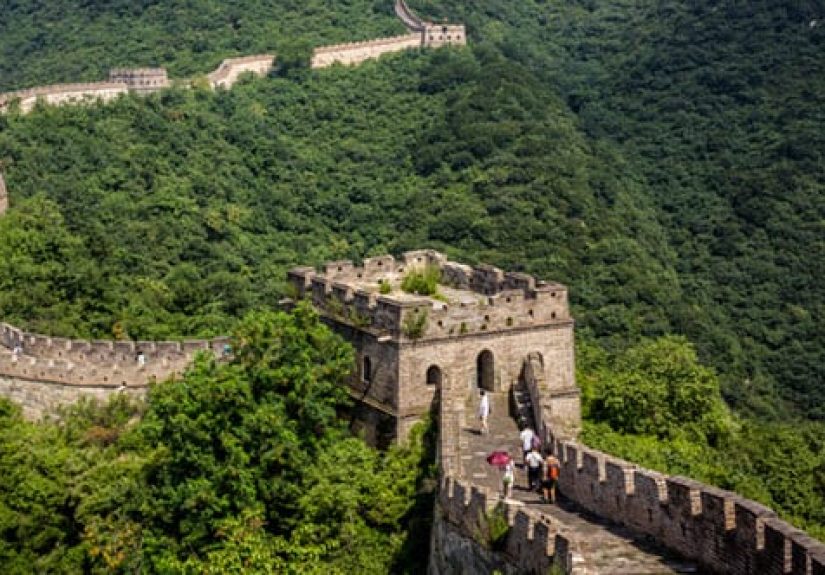
On popular, restored sections like Badaling and Mutianyu, the experience can feel like walking through a living museumstone underfoot,
crenellations on both sides, towers spaced along the ridgeline like punctuation marks in a sentence written across the mountains.
The first tower you enter often smells faintly of stone and wind (and sometimes sunscreen). The moment you step inside and look out through
the openings, you understand what watchtowers were really for: the view is commanding, and the terrain is dramatic enough to make you whisper,
“Okay, I get it,” even if you didn’t think you were the whispering type.
The Wall’s most unforgettable feature is how it follows the landscape instead of flattening it. In some stretches, it climbs steeply,
drops sharply, and climbs again, as if the engineers were personally offended by the idea of gentle slopes. That’s why your pace changes:
you start by strolling, then you start counting steps, then you start bargaining with yourself (“Just to the next tower, then I’ll rest”),
and finally you realize you’ve become the kind of person who gets emotionally attached to handrails.
Timing changes everything. Arrive early and the Wall can feel serenemist in the valleys, long quiet stretches, a soft hush broken by the occasional
camera click. Arrive later and you’ll hear a steady soundtrack of excited conversations in multiple languages, plus the universal sound of people
discovering that the next incline is steeper than the last. In autumn, the scenery adds a layer of drama: the ridgelines can look like they’re
painted in gold and rust. In winter, the wind can be sharp, but the crowds thin out, and the Wall feels more ancientmore like a frontier line
than a tourist destination.
If you want the “I’m on an epic hike” version of the Great Wall, travelers often seek less-restored or more rugged sections farther out,
where the Wall looks older and wilder. There, you can see the difference between heavily restored stonework and sections where time has softened
edges, loosened bricks, and made the Wall feel like it’s returning to the mountains. It’s beautifulbut it’s also where you should be realistic
about footwear, weather, and safety. (Flip-flops are a choice. Not a good choice, but a choice.)
And then there’s the emotional part: the moment you stop trying to “do” the Wall and simply stand still. You look along the ridgeline and realize
you’re seeing a man-made structure that seems to argue with geographyand somehow wins. You think about the labor it took, the centuries it spanned,
and the lives lived around it. It’s humbling in a way that doesn’t need a speech. The Wall doesn’t ask you to be poetic. It just quietly makes you
poetic anyway.