Table of Contents >> Show >> Hide
- Myth 1: World War I started because one man was assassinated
- Myth 2: Everyone knew the war would become a four-year industrial nightmare
- Myth 3: World War I was fought only in trenches on the Western Front
- Myth 4: Trench warfare meant soldiers just sat around waiting to go “over the top”
- Myth 5: Poison gas was the deadliest weapon of the war
- Myth 6: All World War I generals were hopeless idiots
- Myth 7: The Christmas Truce was a giant anti-war moment that spread everywhere
- Myth 8: The United States won the war almost single-handedly
- Myth 9: World War I affected only soldiers on battlefields
- Myth 10: The Treaty of Versailles alone caused World War II, so World War I was basically pointless
- Conclusion: Why these World War I misconceptions still matter
- Experiences That Bring These WWI Myths Into Focus
World War I has a branding problem. For many readers, it shows up in the imagination as one long muddy trench, one unlucky archduke, one stubborn generation of mustached generals, and one very depressing poetry anthology assigned in school. That version is not exactly wrong, but it is wildly incomplete. The First World War was bigger, stranger, more global, and more modern than its popular stereotype. It was a conflict that began with a crisis in the Balkans and rippled across Europe, Africa, the Middle East, Asia, and the world’s oceans. It toppled empires, accelerated technology, transformed politics, and left a legacy that shaped nearly every major event of the twentieth century.
That is why World War I myths are so persistent. The war was chaotic, traumatic, and difficult to summarize in a neat little history-book paragraph. So people simplify it. They reduce it to a single cause, a single front, a single villain, or a single lesson. History, meanwhile, rolls its eyes and asks for a stronger cup of coffee.
Below are 10 myths and misconceptions about World War I that deserve retirement. Some are flat-out wrong. Others contain a grain of truth wrapped in a thick layer of historical fast food. Either way, they blur what the Great War really was and why it still matters.
Myth 1: World War I started because one man was assassinated
This is the classic shortcut: Archduke Franz Ferdinand was shot in Sarajevo, Europe lost its mind, and boom, world war. It makes for a clean timeline, but real history is rarely that tidy. The assassination was the spark, not the whole fire.
The reality
Europe in 1914 was already packed with combustible material. Great-power rivalries, militarism, nationalism, imperial competition, arms races, and rigid alliance systems had created a continent that behaved like a room full of dry fireworks and people pretending not to smell smoke. Austria-Hungary wanted to punish Serbia. Germany backed Austria-Hungary. Russia supported Serbia. France was tied to Russia. Britain was drawn in after Germany invaded Belgium. Mobilization schedules turned diplomacy into a race against the clock. By late summer, the crisis had escalated far beyond the original crime.
So yes, Gavrilo Princip helped trigger the catastrophe. But the deeper causes of World War I had been building for years. Saying one bullet caused the war is like saying a falling leaf caused an avalanche. Technically, maybe it helped. Practically, the mountain was already ready to go.
Myth 2: Everyone knew the war would become a four-year industrial nightmare
Because we know how the story ends, it is easy to assume people in 1914 understood what they were stepping into. They did not. In fact, many leaders, soldiers, and civilians expected a short war.
The reality
Early war planning reflected nineteenth-century assumptions colliding with twentieth-century weapons. Many governments believed mobilization speed and offensive spirit would produce a quick decision. There was even widespread talk that troops would be “home by Christmas.” That phrase has become so famous it nearly sounds sarcastic now, but at the time it captured a genuine expectation.
Instead, modern firepower shredded those assumptions. Machine guns, rapid-fire artillery, rail transport, barbed wire, and massive armies made decisive breakthroughs far harder than planners imagined. The result was not a swift campaign but a grinding contest of attrition. The war became long because old ideas met new technology and refused to get along. History has a dark sense of humor, and this was one of its grimmest jokes.
Myth 3: World War I was fought only in trenches on the Western Front
If your entire mental picture of World War I involves mud in France and Belgium, you are not alone. Popular memory heavily favors the Western Front. It was central, but it was not the whole war.
The reality
World War I was a global conflict. The Western Front became the best-known theater because of its scale and stalemate, but major fighting also took place on the Eastern Front, where armies maneuvered over enormous distances. The Ottomans fought in the Middle East and the Caucasus. There were campaigns at Gallipoli, in Mesopotamia, in Palestine, and across parts of Africa. Naval warfare reached the Atlantic and beyond. Colonies supplied labor, resources, and troops. The war pulled in people from India, Africa, Australia, New Zealand, Canada, the Caribbean, and the United States.
This matters because one of the biggest misconceptions about WWI is that it was a purely European family feud. It was not. It was a world war in the most literal sense, with consequences that reached far outside Europe and helped redraw political realities from the Middle East to colonial empires.
Myth 4: Trench warfare meant soldiers just sat around waiting to go “over the top”
Trenches are often remembered as static, passive, and frozen in time, as if soldiers spent four years crouching in the mud, occasionally climbing ladders for dramatic reasons. That image misses the relentless labor and danger of trench life.
The reality
Trench warfare was brutally active. Troops repaired parapets, pumped out water, laid barbed wire, carried ammunition, ran messages, endured artillery bombardments, conducted patrols, and mounted raids. Night work was constant. Snipers, shellfire, disease, lice, rats, and psychological strain made survival uncertain even during so-called quiet periods. Front-line service also rotated; many soldiers spent time in reserve positions, hospitals, transport units, and support services rather than in nonstop close combat.
The trenches were not a pause button. They were an entire industrial ecosystem of survival. Mud was part of the story, yes, but so were logistics, engineering, exhaustion, and constant attrition. The phrase “life in the trenches” sounds almost quaint until you remember that life there could involve carrying duckboards through darkness while artillery turned the landscape into soup.
Myth 5: Poison gas was the deadliest weapon of the war
Gas looms large in public memory because it was terrifying, visually haunting, and morally shocking. Gas masks, yellow clouds, and burned lungs do not fade easily from cultural memory. But the deadliest weapon of World War I was not gas.
The reality
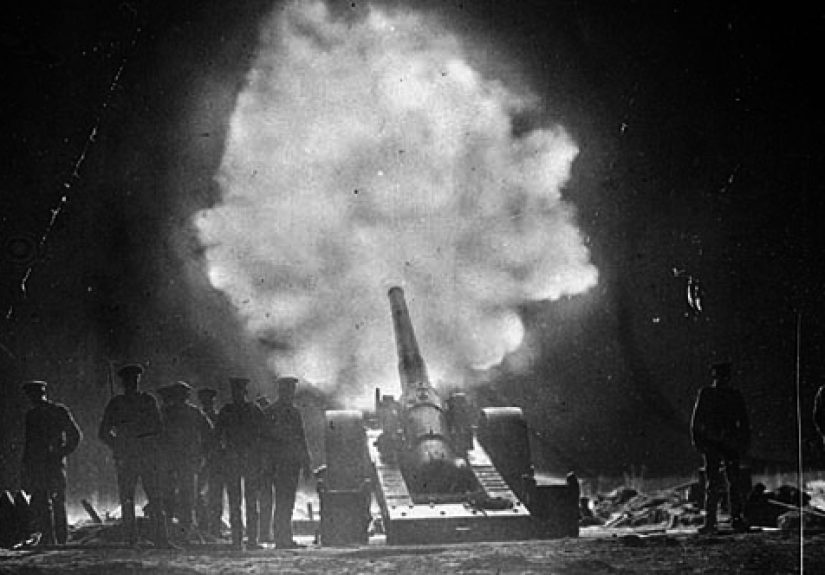
Poison gas caused fear, injury, and lasting trauma, but artillery did far more damage overall. Artillery shells produced the majority of battlefield casualties, while gas killed a much smaller share than many people assume. Gas was horrifying partly because it felt especially inhuman and unpredictable. It forced soldiers to live in constant readiness, fumbling for masks and dreading unseen danger. But if you were trying to identify the war’s most efficient killer, the answer was usually high explosive, not drifting chemical clouds.
That distinction matters because World War I technology is often remembered through its most cinematic horrors rather than its statistical ones. Gas became iconic. Artillery did the larger share of the killing. History, once again, is ruder than symbolism.
Myth 6: All World War I generals were hopeless idiots
This is one of the most popular and emotionally satisfying myths: brave soldiers, clueless commanders, and a war run by men with maps, mustaches, and no common sense. There is truth here. Some generals absolutely made catastrophic decisions. But the blanket version is too simple.
The reality
World War I commanders often struggled to adapt, especially early in the war. They underestimated defensive firepower, overestimated offensive momentum, and accepted appalling losses in major offensives. Criticism is deserved. But it is also true that armies learned, however painfully, over time. Tactics evolved. Artillery coordination improved. Creeping barrages, infiltration tactics, better staff work, tanks, aircraft reconnaissance, and more effective combined-arms operations all reflected adaptation.
By 1918, the war looked different from 1915. Commanders had not magically become geniuses, but many were no longer fighting the same war with the same assumptions. The “lions led by donkeys” image survives because it captures real anger about mass slaughter. Yet it becomes misleading when it suggests all military leadership was uniformly stupid and permanently frozen in incompetence. The truth is uglier and more interesting: there was learning, but it came at a horrifying human price.
Myth 7: The Christmas Truce was a giant anti-war moment that spread everywhere
The Christmas Truce of 1914 is one of the most beloved stories of the war. Enemies sang carols, exchanged gifts, buried the dead, and in some sectors even played football. It sounds like the plot of a movie because, frankly, it sort of is. But it was not universal, and it did not end the war’s momentum.
The reality
The truce was real, but it was local, spontaneous, and uneven. It occurred along parts of the Western Front and to a much smaller extent elsewhere. Some units experienced remarkable moments of fraternization. Others did not. High command generally disapproved and worked to prevent repeats in later years. The war resumed, and the conflict became even more brutal after 1914.
So the Christmas Truce was not a continent-wide peace outbreak proving soldiers could simply opt out. It was a fleeting human interruption inside a system built to continue killing. That is precisely what makes it powerful. Its importance lies not in its size, but in its contrast: ordinary men briefly remembered each other’s humanity in the middle of a machine designed to erase it.
Myth 8: The United States won the war almost single-handedly
American memory sometimes tells the story this way: exhausted Europeans were stuck, then the United States arrived like the final boss in reverse and settled the matter. That version gives the U.S. a leading role, but not an exclusive one.
The reality
American entry in 1917 mattered enormously. U.S. troops, industrial capacity, finance, and morale gave the Allies a decisive boost at a critical moment. The American Expeditionary Forces played a major role in 1918, including in the Meuse-Argonne Offensive. Fresh American manpower helped convince German leaders that the strategic balance was worsening fast.
But the Allies had been fighting since 1914. Britain, France, Russia, Italy, and many others had already borne staggering losses and tied down Central Power resources for years. The U.S. did not save Europe in a vacuum. It joined an existing coalition and helped tip the balance within a war already shaped by countless sacrifices from many nations. America was decisive, not solitary.
Myth 9: World War I affected only soldiers on battlefields
Because combat dominates most WWI storytelling, it is easy to forget how much of the war happened away from the front lines. But this was a total war, meaning societies were mobilized far beyond the battlefield.
The reality
Governments expanded propaganda, censorship, surveillance, rationing, and industrial control. Women entered war work on a larger scale in factories, offices, transport, and nursing. Colonial subjects were recruited, taxed, and drawn into imperial struggles that were not merely “over there” but deeply entangled with their own futures. Medical services transformed under pressure, even as the 1918 influenza pandemic spread through camps, ships, and crowded populations. In the United States, the war also intensified debates over civil liberties, dissent, immigration, and national identity.
World War I changed home fronts as much as battlefronts. If you only study the trenches, you miss the war’s other engines: labor, medicine, race, gender, propaganda, and public health. In that sense, the war did not stay at the front. It moved into daily life, into politics, and into the very idea of what modern states could demand from ordinary people.
Myth 10: The Treaty of Versailles alone caused World War II, so World War I was basically pointless
This is the grand simplified ending: the peace was vindictive, Germany got angry, Hitler arrived, sequel achieved. The Versailles Treaty absolutely mattered, but treating it as the single cause of World War II flattens a much more complicated story.
The reality
Versailles imposed punitive terms on Germany, redrew borders, and left many people bitter, dissatisfied, or newly vulnerable. It helped destabilize postwar politics and became a powerful grievance in German nationalist rhetoric. But it was not the only factor behind the next war. Economic collapse, the Great Depression, political extremism, weak enforcement, the failures of the League of Nations, aggressive revisionist states, and choices made by leaders in the 1920s and 1930s all contributed.
And World War I was not “pointless” simply because its peace failed. That word can express despair, but it can also hide consequences. The war destroyed old empires, accelerated the rise of the United States, reshaped the Middle East, fueled revolutionary movements, altered social expectations, and transformed warfare. A tragedy can be meaningful without being justified. That is part of what makes WWI so hard to process: it was catastrophic, world-changing, and still incapable of fitting into a comforting lesson.
Conclusion: Why these World War I misconceptions still matter
Debunking World War I myths is not about being clever at parties or correcting somebody’s documentary voice-over. It matters because the way we remember the war shapes how we think about nationalism, military planning, propaganda, diplomacy, technology, and political failure. When we reduce WWI to one murder, one trench, one weapon, or one treaty, we lose sight of how complex disasters actually happen.
The First World War was not a simple morality play. It was a collision of old empires and modern systems, human courage and bureaucratic failure, tactical innovation and unimaginable suffering. The myths are tempting because they make the conflict easier to digest. The truth is harder, but far more useful. And if history offers any recurring lesson, it is this: when people insist a crisis will be quick, local, rational, and under control, that is often when you should start worrying the most.
Experiences That Bring These WWI Myths Into Focus
One of the most striking experiences related to the topic of World War I myths is visiting a memorial or museum after years of thinking you already “know” the war. You walk in expecting trenches, gas masks, and maybe a few black-and-white photographs. Then the story expands. Suddenly, there are letters from nurses, propaganda posters, colonial troops, maps of Africa and the Middle East, and accounts of influenza spreading through camps and ships. The war stops looking like a single muddy line in France and starts feeling like a giant pressure system moving across the planet. It is a humbling experience, the historical version of realizing the tiny map in your head was missing several continents.
Reading personal letters from the period can be even more powerful. Textbooks tend to summarize. Letters complain. They joke. They worry about boots, food, lice, weather, and mothers back home. That is where another myth falls apart: the idea that soldiers were either helpless victims or patriotic statues. In their own words, they sound like people. Some were brave. Some were terrified. Some were bored out of their minds until the shelling started. Some still believed in the cause. Others sounded like men hanging on minute by minute. The experience of reading these voices makes the war feel less like a symbol and more like millions of individual lives colliding with a machine too large to escape.
There is also a strange emotional jolt that comes from seeing how often the war is remembered through one or two iconic images. A trench helmet. A gas mask. A field of crosses. Those images are real, but the experience of studying the broader record reveals how selective memory can be. You start noticing what gets left out: laborers, medics, women in factories, Black American soldiers, Indian troops, civilians under occupation, families waiting for telegrams, and people trying to survive the influenza pandemic while the war was still going on. The myth of WWI as a soldiers-only story begins to crumble the more human detail you encounter.
Even classroom experiences can change the way the war is understood. A student who begins with the assumption that the conflict was “pointless” may think differently after tracing how it helped reshape borders, radicalize politics, and set the stage for later crises. Another student might arrive believing generals never learned anything, then discover how tactics evolved under terrible pressure. That does not excuse the slaughter, but it complicates the caricature. And complexity, while less catchy than a slogan, is often where the real learning begins.
Perhaps the most lasting experience is simply sitting with the contradiction at the heart of World War I. The war produced extraordinary courage and industrialized destruction, moments of compassion and systems of mass killing, idealistic rhetoric and political failure. Once you encounter the war through firsthand accounts, memorial spaces, or serious historical study, the old myths start to feel flimsy. What remains is something harder but more honest: the recognition that the past was lived by real people inside conditions they did not fully control, and that the easiest explanations are usually the ones least able to prepare us for the future.