Table of Contents >> Show >> Hide
- Quick Reality Check: What Shawshank Does So Well
- 1) The Godfather (1972)
- 2) Casablanca (1942)
- 3) Schindler’s List (1993)
- 4) 12 Angry Men (1957)
- 5) The Dark Knight (2008)
- 6) Goodfellas (1990)
- 7) The Lord of the Rings: The Return of the King (2003)
- 8) One Flew Over the Cuckoo’s Nest (1975)
- 9) Pulp Fiction (1994)
- 10) Citizen Kane (1941)
- How to Enjoy This List Without Starting a Film War
- Viewer Experiences: The “Shawshank vs. Everything” Movie-Night Effect (500+ Words)
- Conclusion: The Real Winner Is Your Watchlist
Yes, we’re doing it. We’re walking into the cinematic bar, ordering a drink we can’t afford, and loudly declaring: “There are movies better than The Shawshank Redemption.” Then we’re calmly sitting down before someone throws a pool cue at our head.
To be crystal clear: Shawshank is beloved for good reasonshope, friendship, that warm-and-fuzzy “humanity isn’t completely doomed” vibe. It’s a top-rated crowd-pleaser and one of the easiest “everyone agrees” picks in movie night history. But “best movie ever” isn’t a trophy you win forever. It’s a debate you keep re-litigating, like whether pineapple belongs on pizza (it does, but don’t tell your group chat I said that).
This list is a fun, film-nerd argumentten films that many critics, filmmakers, and audiences consistently rank among the best movies of all time, and that can reasonably be called “better” than Shawshank depending on what you value: innovation, influence, performances, cultural impact, or sheer “how did they even make this?” craft.
Quick Reality Check: What Shawshank Does So Well
Before we crown any challengers, let’s give the king its flowers. Shawshank is the rare drama that’s both emotionally satisfying and infinitely rewatchable. It’s basically comfort foodexcept the comfort food is institutional corruption, loneliness, and a geology hobby that doubles as a long con. It’s also a masterclass in narration and payoff: every scene feels like it matters later.
So when I say “better,” I mean “does something even bigger, sharper, riskier, or more historically important.” Think of it like comparing elite athletes: you’re not insulting one by acknowledging another changed the whole sport.
1) The Godfather (1972)
Why it can beat Shawshank
The Godfather doesn’t just tell a great storyit re-wired American cinema. It turned a crime saga into a tragic family opera, made quiet conversations feel like gunshots, and somehow convinced us we were watching a love story… about an organization built on fear.
Where Shawshank gives you hope as a life raft, The Godfather gives you power as a slow poison. The transformation of Michael Corleone isn’t a twist; it’s a controlled demolition of a soul.
One scene that outmuscles everything
The baptism sequence is filmmaking swagger: cross-cutting, moral irony, rising inevitability. It’s the cinematic equivalent of watching someone parallel park a bus perfectly on the first try.
- Better than Shawshank at: cultural influence, character tragedy, visual storytelling that still sets the standard
- Watch if you love: long-game plotting, family drama with teeth, iconic performances
2) Casablanca (1942)
Why it can beat Shawshank
Casablanca is proof that a movie can be romantic, funny, political, and devastating without breaking a sweat. It’s not “old” in a dusty wayit’s old in a “they invented the blueprint” way. The dialogue snaps. The characters carry secrets like cigarettes. The moral choices actually cost something.
Shawshank builds toward catharsis. Casablanca builds toward sacrificeand somehow makes it feel like the only adult option. It’s a story about choosing what’s right even when it breaks your heart, and doing it with a straight face because crying is inconvenient when the Nazis are nearby.
The secret weapon
Economy. Every line is doing triple-duty: character, plot, and punchline. It’s the cinematic version of a Swiss Army knife that also knows jazz standards.
3) Schindler’s List (1993)
Why it can beat Shawshank
Schindler’s List isn’t “entertaining” the way Shawshank isbecause it’s not trying to be. It’s a monument. A film that stares into history’s darkest machinery and refuses to flinch. It uses craftblack-and-white photography, controlled emotion, precise detailto make remembrance unavoidable.
Shawshank says hope can survive prison walls. Schindler’s List asks what hope even means when the world is designed to erase it. And then it shows how imperfect people can still choose to save lives. That’s not just inspiring; it’s moral ballast.
What it does better
- Emotional gravity: the kind that doesn’t fade after the credits
- Historical impact: a film that changed how many people visualize and discuss the Holocaust
- Restraint: it earns emotion instead of squeezing it out
4) 12 Angry Men (1957)
Why it can beat Shawshank
One room. Twelve dudes. Basically no action. And yet: white-knuckle tension. 12 Angry Men is a masterclass in how storytelling works when you strip everything away except character, logic, bias, and pressure.
In Shawshank, injustice is systemic and sprawling. In 12 Angry Men, injustice is personallived inside assumptions people don’t even realize they’re carrying. It’s a film about civic responsibility that somehow doesn’t feel like homework, which is honestly a miracle.
Where it outplays Shawshank
Dialogue as combat. Every pause, glance, and shift in tone matters. It’s like watching a chess match where the pieces are someone’s conscience.
5) The Dark Knight (2008)
Why it can beat Shawshank
The Dark Knight pulled off a magic trick: it made a blockbuster superhero movie feel like a crime epic with real moral stakesand then it dragged mainstream cinema into darker, more complex territory for a decade.
Shawshank is comforting in the way it reassures you good people exist. The Dark Knight is bracing because it asks whether goodness can survive sustained chaos, manipulation, and fear. It’s not just “Batman vs. Joker.” It’s order vs. anarchy, ideals vs. consequences, and the terrifying possibility that the world can be pushed off balance with a smile.
Signature advantage
Momentum. The film moves like it’s being chased. And the villain performance is so commanding it basically becomes a weather system.
6) Goodfellas (1990)
Why it can beat Shawshank
If The Godfather is a tragic opera, Goodfellas is a cocaine-fueled confessional told by someone who thinks the worst idea you’ve ever had sounds fun. It’s exhilarating, ugly, hilarious, and horrifyingoften in the same scene.
Shawshank makes prison life feel like a long winter. Goodfellas makes crime life feel like a party that you slowly realize you can’t leave without getting hurt. It’s not just a gangster movie; it’s a seduction-and-punishment machine.
What it does better
- Voice and rhythm: editing and camerawork that feel like storytelling itself
- Dark comedy: laughter that turns into dread before your brain catches up
- Anti-glamor: it shows the “cool” and then shows the bill
7) The Lord of the Rings: The Return of the King (2003)
Why it can beat Shawshank
This one wins on scale and payoff. Return of the King is the rare finale that feels earnedemotionally, narratively, and technically. It’s not just battles and big speeches (though yes, also those). It’s a story about burden, friendship, corruption, mercy, and the cost of doing the right thing when the right thing is basically impossible.
Shawshank is intimate and grounded. Return of the King is mythic and hugeyet it still finds time for quiet, human beats. It’s a lesson in how spectacle works best when it’s carrying real feeling, not just noise.
Unfair advantage
It sticks the landing on a trilogy-scale arc, then dares you not to get emotional about a boat.
8) One Flew Over the Cuckoo’s Nest (1975)
Why it can beat Shawshank
Shawshank gives you a prison and asks how a person stays human. One Flew Over the Cuckoo’s Nest gives you an institution built to flatten people and asks what rebellion even looks like when the rules are disguised as “help.”
It’s funny, enraging, and heartbreaking, with performances that feel dangerously alive. And its battleone charismatic outsider versus a system that wins by staying calmhits with a uniquely unsettling power.
Where it hits harder
It understands that oppression doesn’t always shout. Sometimes it smiles politely, fills out paperwork, and calls it “for your own good.”
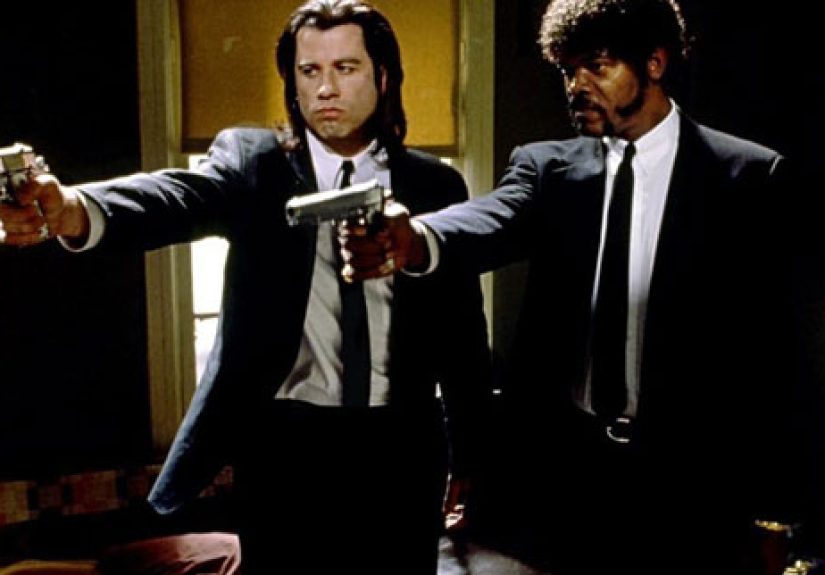
9) Pulp Fiction (1994)
Why it can beat Shawshank
Pulp Fiction is what happens when dialogue becomes a sport and structure becomes a playground. It took crime storytelling, scrambled it like a diner breakfast order, and made it weirdly profound without ever pretending it wasn’t also a blast.
Shawshank is classical: steady build, emotional release. Pulp Fiction is jazz: riffs, loops, sudden turns, and moments that land because the movie commits to its own logic with absolute confidence.
Its superpower
Tone control. It can be absurd, tense, grotesque, and tendersometimes within a few minuteswithout collapsing into nonsense. That’s not luck. That’s craft.
10) Citizen Kane (1941)
Why it can beat Shawshank
Citizen Kane is cinema’s “we can do that?” moment. It’s ambitious in form and theme: fractured storytelling, visual invention, and a central mystery that’s less about a word and more about how people become unknowableeven to themselves.
Shawshank wants to lift you up. Citizen Kane wants to crack you open and examine the pieces: ambition, loneliness, image-making, and the quiet tragedy of getting everything you thought you wanted… and still feeling empty.
What it does better
- Innovation: techniques and choices that shaped film grammar
- Theme density: power, memory, media, identitylayered like geology (Andy would approve)
- Rewatch value: each viewing changes what you think the movie is “about”
How to Enjoy This List Without Starting a Film War
Here’s the cheat code: treat “better than Shawshank” like a set of different categories. If you rank films by comfort, Shawshank is hard to beat. If you rank by influence, innovation, historical weight, or genre-defining impact, these ten can make a very strong case.
And if someone yells at you? Offer them a peace treaty: “Fine. We’ll call it ‘10 Movies That Can Compete With Shawshank.’ Now pass the popcorn.”
Viewer Experiences: The “Shawshank vs. Everything” Movie-Night Effect (500+ Words)
Watching The Shawshank Redemption is a specific kind of experience: you settle in expecting a serious drama, and you walk out feeling like your soul got a warm blanket and a motivational posterwithout the cringe. That’s why it’s a perennial “top-rated film” pick. But the moment you start comparing it to other giants, something interesting happens: you realize your definition of “best” changes depending on your mood, your age, and who you’re watching with.
Example: the “group watch” factor. Shawshank plays beautifully with a crowd because it’s emotionally direct. People can quote it, nod along, and feel smart and moved at the same time. But try a group watch of Citizen Kane and you’ll notice a different vibe: less “aww,” more “waithow did they shoot that?” It becomes a conversation starter, not a comfort watch. That’s not a flaw. It’s a different kind of greatnessthe kind that makes you pause the movie (politely) to point out a visual choice (less politely).
Then there’s the “rewatch discovery” effect. Shawshank rewatched is still satisfying, like revisiting a favorite story. But films like 12 Angry Men and Casablanca feel like they get sharper over time because you notice how much is happening underneath the surface. In 12 Angry Men, a tiny shift in posture can feel like a plot twist. In Casablanca, a casual line reading can suddenly reveal an entire emotional history. Your brain turns into a detective, except the mystery is “how is this screenplay so good?”
Now add the “taste evolution” arc. Many people start with movies that make them feel good, then gradually crave movies that make them feel something complicated. That’s where Schindler’s List and One Flew Over the Cuckoo’s Nest hit: they don’t just uplift; they confront. Viewers often describe finishing them with a kind of heavy silencelike the room has been respectfully recalibrated. You don’t throw on either one for “background vibes.” You commit. It’s cinema as an event.
And let’s talk about energy. Goodfellas and Pulp Fiction can feel like plugging your brain into a wall socket. They’re louder (not just literally), faster, and more mischievous. In a movie-night setting, they tend to produce more laughter, more gasps, and more “did that just happen?” reactions than Shawshank, which is intentionally measured. If Shawshank is a steady, perfect train ride, Pulp Fiction is a rollercoaster that also stops mid-ride to discuss hamburgers.
Finally, there’s the “mythic payoff” experience. Return of the King is the opposite of small and intimateit’s cinematic grand architecture. People who love it often describe the feeling of seeing it as a finale: you’re not just watching a movie, you’re completing a journey. That’s a different kind of satisfaction than Shawshank’s contained catharsis. Both are powerful. One is “I believe in hope again.” The other is “I would follow this soundtrack into battle and also into a long email thread.”
The takeaway is simple: comparing movies to Shawshank becomes a way of learning what you value in storytelling. Comfort? Craft? Cultural impact? Moral force? Pop energy? The “best movie” crown changes depending on the nightand honestly, that’s the fun part.
Conclusion: The Real Winner Is Your Watchlist
The Shawshank Redemption is a modern classic for a reason. But the films above can credibly claim the “better than Shawshank” crown in specific wayswhether it’s the genre-shaping power of The Godfather, the perfect screenplay machinery of Casablanca, the moral weight of Schindler’s List, or the technical and narrative ambition of Citizen Kane.
If you want the best user experience: don’t treat this as a verdict. Treat it as a map. Pick the mood you’re in, hit play, and let greatness argue with greatness.