Table of Contents >> Show >> Hide
- Why Plant Shrubs in Fall?
- Fast Picks Cheat Sheet
- 1) Oakleaf Hydrangea (Hydrangea quercifolia)
- 2) Virginia Sweetspire (Itea virginica)
- 3) Fothergilla (Fothergilla gardenii / major and hybrids)
- 4) Black Chokeberry (Aronia melanocarpa)
- 5) American Beautyberry (Callicarpa americana)
- 6) Highbush Blueberry (Vaccinium corymbosum)
- 7) Viburnum (Try Arrowwood or American Cranberrybush)
- 8) Ninebark (Physocarpus opulifolius)
- 9) Redtwig Dogwood (Cornus sericea)
- 10) Witch Hazel (Hamamelis virginiana or hybrids)
- How to Arrange These Shrubs for “All-Season Color” (Without Chaos)
- Conclusion
- Extra: Real-World Fall Shrub Experiences (The Helpful Kind)
If your garden tends to “clock out” right after summer, fall shrubs are your not-so-secret weapon.
The right shrubs don’t just show up for one glamorous week of autumn color and then ghost you.
They pull a full-season shift: flowers (sometimes), fiery foliage, showy berries, and even winter stems
that look good when everything else is basically a beige sleeping bag.
Below are 10 shrubs that earn their keep from fall into winter (and often beyond). You’ll get practical planting tips,
what each shrub does best, and a few design ideas so your yard doesn’t look like you “panic-planted” five minutes
before guests arrived. (We’ve all been there. The shovel remembers.)
Why Plant Shrubs in Fall?
Fall is prime time for planting shrubs because the weather is cooler, the soil is still warm, and plants can focus on
root growth instead of trying to survive summer’s heat drama. Translation: less stress, better establishment, and a stronger start
next spring. Aim to plant early enough that roots can settle in before hard freezes.
Quick “Plant It Right” Checklist
- Pick the right spot: Match sun/shade and soil moisture to the shrub’s preferences.
- Dig wide, not deep: The hole should be wider than the root ball, with the top of the root flare at/just above soil level.
- Water like you mean it: Soak after planting, then keep soil evenly moist (not swampy) until the ground freezes.
- Mulch, but don’t smother: 2–3 inches of mulch helps moderate temperature and moisture. Keep mulch off the stems.
- Skip heavy fertilizing: Fall isn’t the time to push leafy growth; let the plant settle in.
Fast Picks Cheat Sheet
Use this as your “what fits where” snapshot (details follow).
| Shrub | Best For | Sun | Fall/Winter Star Power |
|---|---|---|---|
| Oakleaf Hydrangea | Big leaves, big impact | Part sun | Maroon-purple fall color + exfoliating bark |
| Virginia Sweetspire | Rain gardens, slopes | Sun–part shade | Red foliage that can linger into winter |
| Fothergilla | Low-maintenance wow | Sun–light shade | Fireworks fall color (yellow/orange/red mix) |
| Black Chokeberry (Aronia) | Wildlife + color | Sun–part shade | Red/purple foliage + dark berries |
| American Beautyberry | “Purple berries!” factor | Sun–part shade | Electric berry clusters into fall |
| Highbush Blueberry | Edible landscaping | Sun | Wine-red fall leaves + summer fruit |
| Viburnum (Arrowwood/Cranberrybush) | Hedges + birds | Sun–part shade | Colorful berries + fall foliage |
| Ninebark | Tough sites | Sun–part shade | Peeling bark + seedheads + foliage color |
| Redtwig Dogwood | Winter color | Sun–part shade | Red stems that glow against snow |
| Witch Hazel | Late-season blooms | Sun–filtered shade | Fall (or winter) flowers + yellow fall leaves |
1) Oakleaf Hydrangea (Hydrangea quercifolia)
Oakleaf hydrangea is the shrub equivalent of showing up overdressed and still looking effortless.
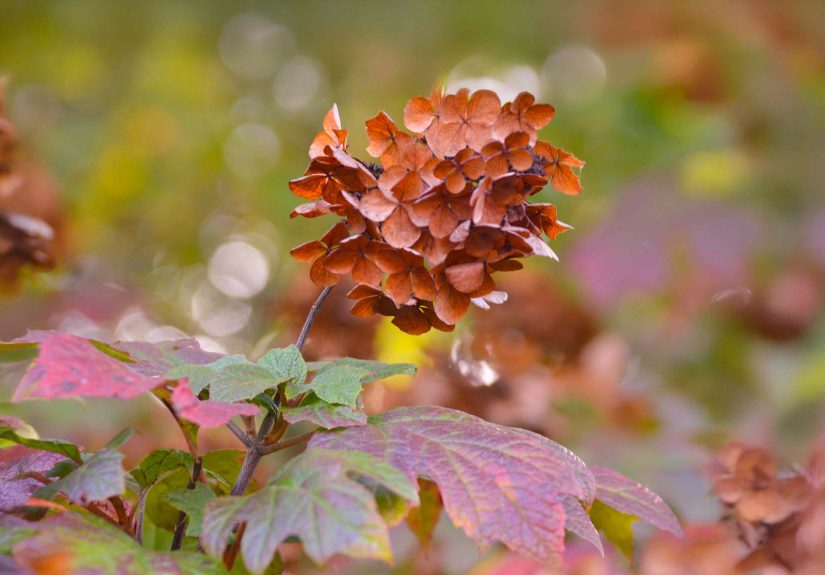
It offers bold, oak-shaped leaves that shift into rich fall tones (often bronze to deep maroon), plus exfoliating bark
that keeps the plant interesting after leaf drop.
Planting tip
Give it morning sun and afternoon shade (or dappled shade), and avoid constantly soggy soil. Use it as a foundation anchor
or as a focal point near a patio where you can enjoy the leaf color up close.
2) Virginia Sweetspire (Itea virginica)
Sweetspire is what you plant when you want fall color that doesn’t quit. In many areas, the foliage turns deep red to purple
and can hang on well into early winter. It also tolerates wetter soils, making it a standout for rain gardens and tricky drainage spots.
Planting tip
For the best fall color, lean toward more sun. Mass it along a slope for erosion control and a “river of red” look in autumn.
Compact cultivars are excellent for smaller yards.
3) Fothergilla (Fothergilla gardenii / major and hybrids)
If fall color were a contest, fothergilla would walk away with the trophy, take a victory lap, and still have time for brunch.
Leaves can turn a mix of yellow, orange, and redoften on the same plantmaking it look like it’s showing off on purpose.
Planting tip
It prefers slightly acidic, well-drained soil and does best with consistent moisture. Full sun boosts color, but in hotter regions,
light afternoon shade can help prevent stress. Great near walkways where the color reads as “up close and personal.”
4) Black Chokeberry (Aronia melanocarpa)
Don’t let the name scare youblack chokeberry is a powerhouse native shrub for multi-season interest.
Spring flowers, glossy summer leaves, dark berries for birds (and humans if you’re into tart), and a vivid red-to-purple fall finale.
Planting tip
Plant in sun for best flowering and fruiting. Use it in mixed borders or as a loose hedge. Bonus: it’s generally tough and adaptable,
including in wetter sites once established.
5) American Beautyberry (Callicarpa americana)
Beautyberry is basically nature’s neon sign. In fall, metallic-purple berry clusters wrap around the stems, turning an ordinary border
into something that looks like it belongs on a magazine coveror at least your neighborhood garden tour.
Planting tip
Plant in sun to part shade. For maximum berry show, avoid heavy pruning in late summer (you don’t want to snip off the future berries).
Pair it with golden foliage plants or ornamental grasses to make the purple pop even more.
6) Highbush Blueberry (Vaccinium corymbosum)
Want fall color you can snack on? Highbush blueberry is edible landscaping that looks good in every season:
spring blooms, summer berries, and fall foliage that can shift into deep maroon and scarletoften lasting for weeks.
Planting tip
Blueberries need acidic soil. If your soil is more “meh” than “acidic woodland,” consider planting in a large container with
an ericaceous mix. Planting more than one variety can improve fruit set (and your summer pancake situation).
7) Viburnum (Try Arrowwood or American Cranberrybush)
Viburnums are the reliable friends of the shrub world: showy flowers, colorful berries, and autumn foliage that can range from yellow
to reddish purple, depending on the species. Many also make excellent screening plants.
Planting tip
Choose a viburnum known for berries and fall color (like arrowwood or American cranberrybush types). Plant in sun to part shade,
and consider adding a second compatible plant if you want the strongest berry display.
8) Ninebark (Physocarpus opulifolius)
Ninebark is the “tough love” shrub: sturdy, adaptable, and not easily impressed by imperfect conditions. It’s also genuinely attractive,
with exfoliating bark and cultivars featuring foliage in shades from chartreuse to deep burgundyplus seedheads that linger.
Planting tip
Full sun generally gives you the best foliage color. Use it as a backdrop shrub, a casual hedge, or a contrast plant behind perennials.
Give it space; it likes to look broad-shouldered and confident.
9) Redtwig Dogwood (Cornus sericea)
If you want color after the leaves drop, redtwig dogwood is the move. In winter, its bright stems stand out dramaticallyespecially
against snow, evergreens, or dark mulch. It also plays nicely in moist soils and wildlife-friendly gardens.
Planting tip
Sun brings out the most vivid stem color. Plan ahead: older stems dull over time, so periodic pruning (often done in late winter)
helps keep the youngest, brightest growth coming.
10) Witch Hazel (Hamamelis virginiana or hybrids)
Witch hazel is the garden’s late-season plot twist. Some types bloom in fall with spidery, fragrant flowers when most plants are already
packing it in. Many also offer clear yellow fall foliage, and the blooms can feel downright magical on a crisp day.
Planting tip
Give it sun to filtered shade and decent soil (not bone-dry). Treat it like a specimen plant where you can appreciate the flowers up close
near a walkway, entry, or favorite window.
How to Arrange These Shrubs for “All-Season Color” (Without Chaos)
- Layer by height: Place taller shrubs (witch hazel, larger viburnums) behind medium shrubs (oakleaf hydrangea, ninebark).
- Mix foliage + fruit: Combine red-leaved sweetspire or aronia with beautyberry’s purple fruit for color contrast.
- Plan for winter: Put redtwig dogwood where you’ll see it from the housewinter color should be enjoyed, not hidden behind the shed.
- Repeat for cohesion: Plant in drifts of 3–5 when space allows; it reads as intentional design instead of “new plant roulette.”
Conclusion
Planting fall shrubs now is one of the easiest ways to make your yard look intentional from September through winterand set yourself up for a stronger,
healthier landscape next spring. Pick a mix: one for foliage fireworks (fothergilla), one for berries (beautyberry or viburnum), and one for winter stems
(redtwig dogwood). Your future self will thank youprobably while holding a mug of something warm and admiring the view.
Extra: Real-World Fall Shrub Experiences (The Helpful Kind)
Ask a bunch of gardeners what happened when they planted shrubs in fall, and you’ll hear a pattern: the ones who watered consistently
(even when the weather felt “cool enough”) got better results than the ones who assumed autumn rain would do all the work. Soil can still dry out fast,
especially under trees or in windy yards. A simple habitchecking the top few inches of soil every few daysoften makes the difference between a shrub
that cruises into spring and one that limps in like it just ran a marathon in flip-flops.
Another common lesson: “I planted it where it fit, not where it thrives.” Fall nurseries tempt us with gorgeous plants in peak color, and it’s easy to
tuck them into any open spot. But a shrub’s best fall show usually depends on sun exposure. Sweetspire and aronia tend to color up more intensely in sunnier
conditions, while oakleaf hydrangea often appreciates some shadeespecially in hotter climates. The practical takeaway? Before digging, stand where you plan to
plant and notice how long the sun actually sticks around. What feels like “full sun” in October can be “blazing summer furnace” in July.
Gardeners also report that mulch is a quiet herowhen used correctly. A 2–3 inch layer helps buffer temperature swings and keeps moisture more consistent,
which matters during those weird fall weeks that alternate between chilly rain and surprise heat. The mistake is piling mulch against stems like you’re
frosting a cupcake. That can trap moisture and invite rot. The best-looking and healthiest approach is a tidy “donut” of mulch: spread out wide, kept a few
inches away from the base.
If you want winter color, people often wish they’d planted redtwig dogwood earlierand in a more visible place. It’s easy to focus on fall foliage, then realize
in January that the best winter show is happening behind the garage. A smart trick is to plant winter-interest shrubs where you naturally look in winter:
outside kitchen windows, near the driveway turn, or by the front walk. Think of it as landscaping for your cold-season routines, not just summer parties.
Finally, there’s the “pruning regret” story: someone cuts back beautyberry or redtwig dogwood at the wrong time and wonders where the berries or bright stems went.
The experience many gardeners share is that timing matters, but you don’t need to be perfectjust avoid aggressive late-season pruning that removes the features
you’re specifically growing the plant for. When in doubt, stick to removing broken or crossing branches in fall, then do heavier shaping at the recommended time
(often late winter for many deciduous shrubs). The result is a garden that looks better with less effortwhich is the real dream.