Table of Contents >> Show >> Hide
- Why Cacti Make Awesome Houseplants
- Indoor Cactus Care 101
- 10 Best Cactus Varieties to Grow Indoors
- 1. Christmas Cactus (Schlumbergera spp.)
- 2. Bunny Ear Cactus (Opuntia microdasys)
- 3. Golden Barrel Cactus (Echinocactus grusonii)
- 4. Moon Cactus (Gymnocalycium mihanovichii)
- 5. Fishbone Cactus (Epiphyllum anguliger)
- 6. Fairy Castle Cactus (Acanthocereus tetragonus)
- 7. Rat Tail Cactus (Aporocactus flagelliformis)
- 8. Old Lady Cactus (Mammillaria hahniana)
- 9. African Milk Tree (Euphorbia trigona)
- 10. Ladyfinger Cactus (Mammillaria elongata)
- How to Choose the Right Indoor Cactus for Your Space
- Experiences and Practical Tips From Indoor Cactus Growers
If you love plants but your schedule looks like a game of Tetris, indoor cacti might be your new best friends. These spiky little sculptures don’t need daily misting, emotional support, or constant pruning. Give them the right light, the right potting mix, and the occasional drink, and they’ll happily hang out on your windowsill for years sometimes decades.
In this guide, we’ll walk through the 10 best cactus varieties to grow indoors, why they work so well in a home environment, and how to keep them looking Instagram-ready instead of shriveled and sad. Whether you’re decorating a sunny loft or just squeezing a plant into a tiny apartment kitchen, there’s a cactus here for you.
Why Cacti Make Awesome Houseplants
Indoor cacti are popular for a few very practical reasons:
- Low maintenance: Most cacti evolved to survive drought, blazing sun, and poor soil. Compared with fussy tropical houseplants, they’re very forgiving of a busy lifestyle.
- Compact and sculptural: Their bold shapes and textures look like living art. You can use them as little design accents on shelves, desks, and windowsills.
- Long-lived: Many indoor cactus species can live for 10–50 years or more with proper care. Think of them as prickly heirlooms.
- Great for small spaces: You don’t need a huge floor area. A few bright windows and some narrow ledges are enough for a solid cactus collection.
Of course, “low maintenance” doesn’t mean “no maintenance.” To pick the best cactus varieties for indoors, you’ll want plants that tolerate stable indoor temperatures, grow well in containers, and can handle the light you actually have not the light you wish you had.
Indoor Cactus Care 101
Light: Bright Is Best
Most desert cacti love strong light. A south- or west-facing window with several hours of direct sun is ideal. If you only have east or north windows, choose varieties that prefer bright but indirect light like holiday cacti and jungle cacti or add a simple LED grow light.
Soil and Pots
Cacti hate wet feet. Use a gritty, fast-draining cactus or succulent mix, or make your own by combining regular potting soil with coarse sand, pumice, or perlite. Always use containers with drainage holes and avoid decorative pots that trap water at the bottom.
Watering and Fertilizing
The golden rule: let the soil dry out completely between waterings. In warm months, that might mean watering every 2–3 weeks. In winter, especially if your plant is resting in cooler temperatures, you may water as little as once a month or less. A light feeding with a diluted, balanced fertilizer once or twice during the growing season is enough for most indoor cactus plants.
Temperature and Humidity
Most indoor cacti enjoy normal household temperatures. They generally prefer low humidity, so they’re perfect for homes where other plants complain about dry air. Just keep them away from chilly drafts, heaters that blow hot, dry air directly on them, or steamy bathrooms (unless you’re growing jungle cacti that like a bit more moisture).
Safety and Handling
Some cacti have big, obvious spines. Others have tiny hair-like barbs called glochids that break off in your skin and itch like crazy. Handle plants with tongs, folded newspaper, or thick gloves, and consider placing spikier varieties out of reach if you have curious kids or pets.
10 Best Cactus Varieties to Grow Indoors
1. Christmas Cactus (Schlumbergera spp.)
The Christmas cactus is the friendly, extroverted cousin of the cactus world. Instead of desert spines, it has soft, segmented stems and bursts into bright flowers around the holidays in shades of pink, red, white, or peach.
Unlike typical desert cacti, Christmas cacti are native to tropical forests, where they grow on trees and rocks in filtered light. That makes them perfect for bright but indirect indoor spots like a north or east window.
- Best spot: Bright, indirect light; avoid harsh afternoon sun.
- Watering: Keep the soil lightly moist during active growth; let the top inch dry out between waterings.
- Bonus: With good care, these can become family heirlooms passed down for generations.
2. Bunny Ear Cactus (Opuntia microdasys)
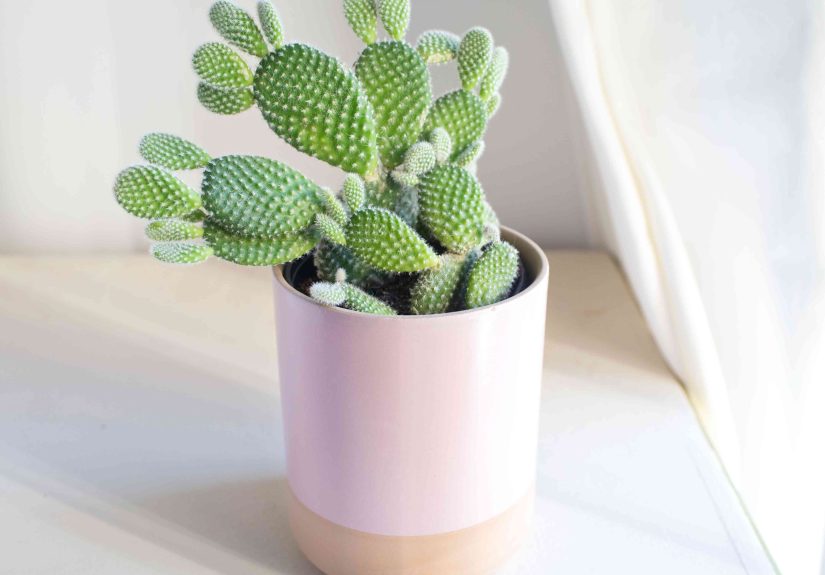
If you’ve ever seen a cactus that looks like a pair of fuzzy green ears sticking out of the pot, you’ve met the bunny ear cactus. Each pad is covered not in big spines but in tiny, soft-looking dots which are actually glochids, so don’t pet them. They’re adorable from a safe distance.
This compact cactus loves sun and does best in a bright, warm window. As it matures, it may grow new pads in clusters, forming a small, sculptural shrub.
- Best spot: South- or west-facing window with lots of sun.
- Watering: Water thoroughly, then allow the soil to dry completely.
- Watch out: Glochids can be hard to remove from skin use gloves and tweezers if needed.
3. Golden Barrel Cactus (Echinocactus grusonii)
The golden barrel cactus looks like a perfectly round green ball wrapped in bright yellow spines. It’s basically a living, spiky sculpture. Indoors, it stays relatively compact, making it an eye-catching statement piece for a sunny windowsill or coffee table (with a coaster, of course).
These cacti crave strong light and very sharp drainage. Over time, a well-cared-for golden barrel can become a cherished focal point in your plant collection.
- Best spot: The sunniest window you have, ideally south-facing.
- Watering: In summer, water every few weeks; in winter, water sparingly.
- Style tip: Pair with a minimalist pot to highlight its natural geometry.
4. Moon Cactus (Gymnocalycium mihanovichii)
Moon cacti are the candy-store cacti of the indoor world. The bright red, pink, yellow, or orange “ball” on top is actually a chlorophyll-free cactus grafted onto a green base cactus that does the photosynthesizing.
Because the colorful top doesn’t produce its own energy, moon cacti benefit from gentle, bright light rather than scorching sun. They’re small, cheerful, and perfect for desks, shelves, and window ledges.
- Best spot: Bright, indirect light or filtered sun.
- Watering: Let the soil dry between waterings; avoid soggy conditions.
- Good to know: They may not live as long as some other cacti, but they’re easy to replace and fun to collect.
5. Fishbone Cactus (Epiphyllum anguliger)
The fishbone cactus, also called zigzag or ric rac cactus, looks like a plant designed by a cartoonist. Its flat, wavy stems spill over the sides of the pot in dramatic waves, making it a fantastic hanging plant.
Like the Christmas cactus, fishbone cacti come from humid, forested regions and grow on trees. That means they enjoy bright, indirect light and slightly more moisture than desert cacti.
- Best spot: Hanging basket near a bright window, out of direct midday sun.
- Watering: Water when the top inch or two of soil feels dry.
- Bonus: They may produce spectacular, fragrant night-blooming flowers if they’re really happy.
6. Fairy Castle Cactus (Acanthocereus tetragonus)
Fairy castle cactus forms clusters of tall, angular stems that look like miniature towers hence the fairy-tale name. It’s a slow grower but eventually creates a little cactus cityscape in its pot.
This variety loves bright light and does especially well in warm, dry indoor environments, making it an easy, architectural choice for beginners.
- Best spot: Bright window ledge with several hours of sun.
- Watering: Infrequent, deep watering followed by long dry periods.
- Great for: Kids’ rooms or whimsical decor (but keep it out of reach of tiny fingers).
7. Rat Tail Cactus (Aporocactus flagelliformis)
The rat tail cactus doesn’t have the cutest name, but it’s an absolute star in hanging baskets. Long, flexible stems dangle and cascade over the pot, sometimes several feet long, often producing flashy tube-shaped flowers in hot pink or red.
Indoors, it likes plenty of bright light and a pot that allows those trailing stems to really show off.
- Best spot: Hanging in a bright window where the stems can trail freely.
- Watering: Water more regularly in spring and summer; very lightly in winter.
- Tip: Rotate the basket occasionally so all sides get light and grow evenly.
8. Old Lady Cactus (Mammillaria hahniana)
The old lady cactus is a small, rounded cactus covered in dense white spines that resemble fluffy hair. In spring, it often crowns itself with a halo of purple or pink flowers like a grandma wearing a floral tiara.
Because of its compact size, this cactus is ideal for tight spaces like windowsill clusters or miniature plant shelves.
- Best spot: A bright, sunny sill in a warm room.
- Watering: Moderate during the growing season; cut back in winter.
- Great for: Small apartments and mixed cactus arrangements.
9. African Milk Tree (Euphorbia trigona)
Technically a succulent in the Euphorbia family rather than a true cactus, the African milk tree is often sold in the cactus section because it looks the part. Tall, three-sided green stems with small leaves and occasional spines give it a dramatic, upright profile.
Indoors, it can grow several feet tall over time, acting almost like a living column. It’s tough, fast-growing, and forgiving of occasional neglect.
- Best spot: Bright room with plenty of indirect or filtered sun.
- Watering: Every few weeks in warm months; very lightly in winter.
- Note: The white sap can be irritating, so wear gloves if you prune or repot.
10. Ladyfinger Cactus (Mammillaria elongata)
Ladyfinger cactus forms clusters of slender, finger-like stems wrapped in golden or white spines. In a small pot, it looks like a bundle of tiny torches. It’s compact, charming, and especially popular in mixed cactus dish gardens.
This species is hardy indoors as long as it gets enough light and isn’t overwatered. It can reward you with small, starry flowers in shades of cream, yellow, or pale pink.
- Best spot: Sunny sill, plant stand, or bright office corner.
- Watering: Only when the soil is bone dry; even less in winter.
- Perfect for: Small pots, clusters, and minimalist decor.
How to Choose the Right Indoor Cactus for Your Space
When you’re staring at a greenhouse full of spiky options, it helps to narrow your choices by asking a few simple questions:
- How much light do I really have? South- and west-facing windows are best for desert cacti; lower light or indirect light is better for Christmas and fishbone cacti.
- How much space do I want this plant to occupy in five years? If you want something compact, choose golden barrel or ladyfinger cactus over tall growers like African milk tree.
- Do I want hanging, upright, or rounded forms? Rat tail and fishbone cacti trail; fairy castle and African milk tree grow upright; Christmas and golden barrel give you a more rounded silhouette.
- Who else lives here? If you have pets or kids, you might want to keep the spiniest varieties on high shelves or opt for softer-looking jungle cacti.
Start with one or two varieties that match your conditions and style. Once you realize how easy they are, you may suddenly discover that every windowsill in your home has been quietly taken over by cactus pots. It happens.
Experiences and Practical Tips From Indoor Cactus Growers
Once you live with indoor cacti for a while, you pick up a set of “unwritten rules” that rarely show up on a plant tag. Here are some of the most useful real-world lessons people learn from growing cactus varieties indoors.
1. Your Windows Have Microclimates
Most people discover that “bright window” is a spectrum, not a fixed condition. The center of a south-facing sill might be full sun from late morning to afternoon, while the side nearest the frame is cooler and shadier. Desert cacti like golden barrel or bunny ear cactus thrive in the brightest spots, while Christmas and fishbone cacti often prefer being nudged a bit to the side, where the sun is filtered or indirect.
A simple trick is to rotate your pots every few weeks. Not only does this prevent plants from leaning toward the light, but it also lets you see which side of your window is secretly the prime real estate. Plants that color up nicely and grow steadily are telling you, “Keep me right here.” Plants that stretch or fade are casting silent shade on your lighting choices.
2. Overwatering Is a Sneaky Habit
Ask any seasoned cactus parent about their biggest early mistake, and you’ll almost always hear the word “overwatering.” It doesn’t feel like you’re doing anything wrong you’re just being generous with hydration. But in nature, desert cacti often get heavy rain followed by long dry spells. Indoors, constantly damp soil suffocates roots and invites rot.
Many growers find it helpful to set a “wait a week” rule: when you think your cactus might need water, wait another week, then check again. If the soil is still dry all the way down (use your finger or a moisture meter), water deeply until it runs out of the drainage holes. Then walk away. The plant will thank you by staying plump and firm instead of mushy and miserable.
3. Pot Size Matters More Than You Think
It’s tempting to give a small cactus a large pot “to grow into,” but that often backfires. Extra soil holds extra water, and the roots sitting in that damp zone can rot before the plant ever fills the container. Indoors, cacti often do best slightly snug in their pots with just enough room for the root ball plus a small margin.
Many experienced growers repot only every few years, and even then they often move up just one pot size. When they do, they use a gritty mix and gently tease old soil away from the roots, removing any mushy or damaged sections before replanting.
4. Cactus Collections Evolve Over Time
Another common experience: you start with one or two “easy” cacti maybe a Christmas cactus inherited from a relative or a moon cactus impulse buy and suddenly you’re hunting down rarer species and rearranging furniture to fit plant shelves. Over time, growers learn which varieties match their home’s light and temperature and which ones always seem unhappy.
Many people end up with a “core crew” of reliable favorites. For some, that’s a row of small golden barrels and bunny ear cacti on a blazing-hot sill. For others, it’s a hanging garden of rat tail and fishbone cacti in a bright but not-too-sunny room. The fun is in noticing which plants thrive for you and leaning into those instead of fighting your conditions.
5. Seasonal Changes Really Matter Indoors
Even when your cacti never leave the house, the seasons still affect them. Winter often means shorter days and cooler glass near windows, so many growers slide pots a bit further into the room or give them a supplemental grow light. Watering schedules also change: summer might call for watering every two weeks, while winter might stretch that to four or more.
Some indoor gardeners like to keep a simple notebook or notes app where they record when each cactus was last watered or fertilized. Over time, patterns emerge. You’ll discover, for example, that your fairy castle cactus perks up with a feeding in early spring, or that your Christmas cactus needs slightly cooler nights and a few weeks of longer darkness to set flower buds.
6. The Joy Is in the Small Details
Finally, many cactus lovers will tell you that the real magic is in the little things: the first time your old lady cactus produces a ring of flowers around its “crown,” the way the spines of a golden barrel glow like halos in late afternoon sun, or the surprise of a moon cactus pushing out tiny new offsets.
Indoor cacti don’t grow fast or demand constant attention, which makes every new pad, bud, or bloom feel like a tiny, spiky celebration. Give them the right basics bright light, good drainage, and measured watering and they’ll quietly reward you for years with color, texture, and personality.