Table of Contents >> Show >> Hide
- The relationship used to be part of the treatment
- What killed it? A slow, boring, profitable pileup
- 1. Medicine became a paperwork factory
- 2. Insurance companies barged into the exam room
- 3. Your doctor may not actually be “your” doctor anymore
- 4. Primary care has been underfed for years
- 5. Burnout hollowed out the emotional center of care
- 6. Patients now arrive with more information and less certainty
- 7. Access is not the same as relationship
- Nearly dead does not mean gone forever
- How to bring the relationship back from the brink
- Experiences that show what this feels like in real life
- Conclusion
Note: This is an original article synthesized from reputable U.S. medical, policy, and research sources. Source links are intentionally omitted for publication use.
Let’s start with the uncomfortable truth: the doctor-patient relationship is not fully dead, but it is absolutely on life support. The phrase sounds dramatic because it is dramatic. For generations, American medicine sold a familiar picture: you knew your doctor, your doctor knew you, and somewhere between the handshake and the follow-up call, trust did a lot of the healing. Today, that picture often feels like a vintage poster hanging in the lobby of a giant health care machine that no longer works that way.
The old relationship was never perfect. It could be paternalistic, uneven, and exclusionary. But it had something today’s system often lacks: continuity of care, shared memory, and enough time for a human conversation. Now the modern patient may see a different clinician at each visit, explain the same history six times, wrestle with portals, wait on hold for insurers, and leave with the strange feeling that everyone technically “provided care” while nobody actually cared for them. That is not a bedside-manner problem. It is a system-design problem.
So why is the doctor-patient relationship nearly dead? Because American health care has spent years rewarding volume over connection, documentation over eye contact, scale over familiarity, and billing logic over human logic. The stethoscope is still in the room. The stopwatch just got louder.
The relationship used to be part of the treatment
Before we talk about what broke, it is worth remembering what the relationship was supposed to do. A strong doctor-patient relationship is not just a sentimental extra, like a mint on the hotel pillow. It helps patients tell the truth, follow treatment plans, ask embarrassing questions, reveal fears they would not put in an intake form, and return for care before a manageable problem turns into a crisis. It also helps doctors recognize what does not fit the chart: the subtle change in mood, the pattern behind repeated complaints, the family stress hiding behind blood pressure numbers, the sentence that begins with “This is probably nothing, but…” and turns out to be everything.
In primary care especially, continuity of care has long been the secret sauce. When the same clinician sees the same person over time, medicine gets smarter. Advice becomes more personal. Decisions become more efficient. Trust grows. And trust matters because patients are not machines with lab values; they are anxious, inconsistent, busy, skeptical, scared, hopeful people trying to make sense of their bodies while also paying rent and answering texts from work.
That older model did not depend on nostalgia alone. It depended on structure. There had to be time, access, and a reasonable chance that the patient would see the same doctor again. Once those ingredients began disappearing, the relationship started to erode one perfectly rational policy decision at a time.
What killed it? A slow, boring, profitable pileup
1. Medicine became a paperwork factory
If you want to understand the collapse of patient trust, do not start with personality. Start with the keyboard. Much of modern doctoring now happens in the shadow of documentation requirements, quality metrics, inbox overload, coding rules, and electronic health record workflows that often feel designed by someone who has never met a tired human being. The doctor is in the room, but attention is split between the patient, the screen, the insurance checklist, and the tiny internal panic of falling behind.
This changes the emotional texture of care. Patients notice when a clinician is clicking more than listening. Doctors notice when every conversation is compressed by the need to produce a billable, compliant, legally defensible note. Nobody walks out thinking, “What a lovely moment of healing bureaucracy.” The relationship gets flattened into a transaction because the system is built like a transaction.
To be fair, electronic records have brought real benefits. They can improve access to information, reduce duplication, and support coordination. But many doctors have described the same downside: the screen becomes a third party in the room, and not a charming one. When the documentation burden grows too large, the patient experiences the visit as rushed, and the physician experiences it as fragmented. That is a bad recipe for trust.
2. Insurance companies barged into the exam room
Nothing says “deep therapeutic alliance” quite like learning your doctor’s plan now requires permission from a corporation you have never met. Prior authorization has become one of the clearest ways the doctor-patient relationship gets undermined in plain sight. A physician recommends a medication, test, or treatment; the patient believes a decision has been made; and then the real story begins. Forms. Delays. Appeals. Phone calls. More delays. A small army of clerical sadness.
Patients do not experience this as an abstract policy issue. They experience it as confusion, pain, and distrust. Was the doctor wrong? Is the treatment unnecessary? Is somebody lying? In reality, the physician may fully support the plan while being trapped in a maze built by payers. But from the patient’s point of view, the authority of the clinical relationship has already been punctured. The doctor no longer looks like the person steering the ship. They look like another passenger arguing with the ticket booth.
That shift is corrosive. Once patients sense that clinical judgment can be vetoed by paperwork, the relationship changes. The exam room stops feeling like the center of care and starts feeling like a staging area where recommendations are made pending outside approval.
3. Your doctor may not actually be “your” doctor anymore
Another reason the doctor-patient relationship is fading is that health care has become more fragmented and more corporate at the same time. Those two trends sound different, but together they create a powerful kind of impersonality. Many physicians now work within large systems, hospital-owned groups, retail health platforms, or organizations shaped by private equity and aggressive growth strategies. Patients may gain convenience in some settings, but they often lose continuity.
The modern patient journey can feel like speed dating with credentials. Urgent care for the weekend problem. Telehealth for the rash. A hospitalist during the admission. A nurse practitioner for follow-up. A specialist for the scan. Another specialist for the side effect of the first specialist’s treatment. The problem is not that these professionals are unskilled. Many are excellent. The problem is that relationships require repetition, memory, and accountability over time. A relay race can deliver care, but it cannot easily create belonging.
Even the language has changed. Patients are called consumers. Visits are encounters. Networks are optimized. Panels are attributed. Health systems speak fluent spreadsheet. Meanwhile, the patient just wants one competent adult in a white coat to remember that they hate MRI machines and always forget the name of that cholesterol drug.
4. Primary care has been underfed for years
If the doctor-patient relationship were a historic building, primary care would be the foundation. Unfortunately, the U.S. health system has spent decades acting as though foundations are boring and shiny procedural towers are more exciting. Payment models have often favored doing things to patients over talking with them, coordinating care, preventing crises, or managing complexity over time. That imbalance has made primary care harder to sustain and less attractive to many clinicians.
The result is familiar: shortages, long waits, packed schedules, thin staffing, and exhausted doctors trying to deliver comprehensive care in tiny slices of time. None of that is good for continuity of care. None of that helps relationship-based medicine flourish. When the backbone of the system is understaffed and underpaid, the whole structure starts leaning in weird directions.
This is one reason the patient experience can feel paradoxical. Americans spend enormous amounts on health care, yet many still struggle to get timely access to a regular doctor who knows them well. It is like paying luxury prices for an airline ticket and then discovering your seat assignment is “somewhere near the wing, emotionally.”
5. Burnout hollowed out the emotional center of care
Most doctors do not enter medicine hoping to become efficient managers of inboxes, templates, and insurer friction. They enter because they want to diagnose, guide, reassure, and help. But when clinicians are burned out, even the best intentions become harder to deliver. Burnout does not automatically make someone careless or cold, but it does reduce the margin for warmth, patience, and presence.
Patients can feel that depletion. The rushed explanation. The delayed message reply. The shorter fuse. The tired face that says, “I am trying, but I have ten other fires burning.” Many clinicians still care deeply, yet the system often takes that caring and runs it through a meat grinder of alerts, quotas, and moral distress. The relationship suffers not because physicians stopped valuing it, but because the conditions needed to sustain it have been steadily stripped away.
And when burnout affects quality, safety, and retention, patients pay twice: first in the visit itself, and then again when their trusted doctor leaves the practice, cuts back hours, or exits medicine entirely. Continuity of care cannot survive high turnover forever.
6. Patients now arrive with more information and less certainty
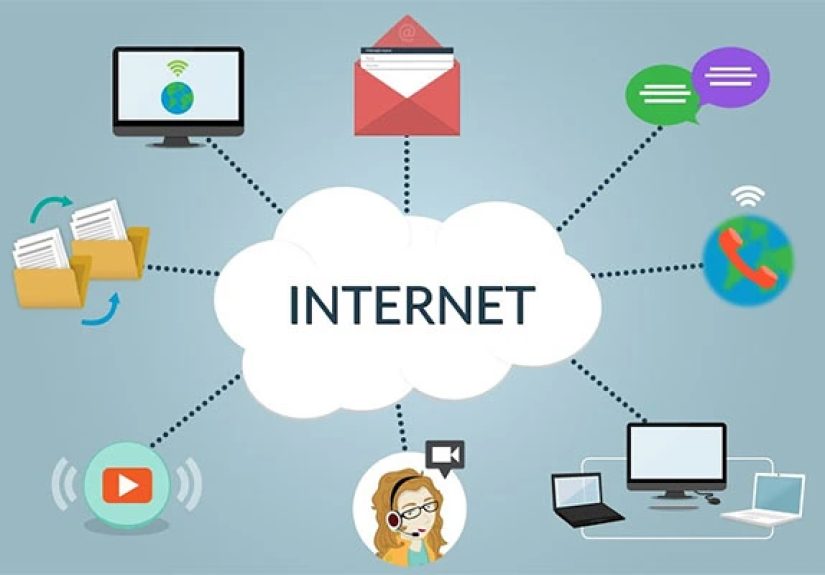
The internet democratized medical information, which is both wonderful and chaotic. Patients can now research symptoms, compare hospitals, join disease communities, and learn the right questions to ask. That is progress. But the same ecosystem also delivers misinformation, miracle cures, fear loops, influencer medicine, and algorithmic nonsense wearing a lab coat costume.
This has changed the relationship in two opposite directions at once. Some patients are more engaged than ever. Others are more suspicious than ever. Doctors are no longer just diagnosticians; they are also interpreters, myth-busters, and occasionally the person explaining why a random video about “toxins” should not outrank cardiology. Trust becomes harder to build when every recommendation competes with a thousand online voices and half of them are yelling in all caps.
At the same time, patients are bringing real frustration to the room: rising costs, surprise bills, delays, opaque networks, and prior authorization denials. That means doctors often inherit mistrust that was created by the larger health care system. The patient may be upset with insurance, a hospital, a pharmacy benefit manager, or a previous clinician. The current doctor becomes the nearest human face of a system the patient no longer believes has their back.
7. Access is not the same as relationship
Modern health care loves to celebrate access. Same-day visits. Walk-in clinics. on-demand video visits. Retail medicine in the strip mall between a smoothie place and a pet store. Some of this is genuinely useful. If your kid wakes up with pink eye on a Saturday, convenience is not the villain. But access alone is not continuity, and convenience alone is not trust.
A patient can have many points of entry into the health system and still feel medically homeless. They can be seen quickly yet never deeply known. They can have records everywhere and a relationship nowhere. The system often measures whether care happened, not whether a bond formed. But for chronic illness, mental health, geriatrics, complex diagnosis, and prevention, the bond is not a luxury. It is part of the clinical infrastructure.
Nearly dead does not mean gone forever
Here is the hopeful part: the doctor-patient relationship is damaged, but not impossible. In many practices, it is still alive. Good primary care doctors, psychiatrists, family physicians, pediatricians, internists, and specialists continue to build extraordinary trust every day. Patients still remember the clinician who sat down, listened carefully, called after bad news, or caught something everyone else missed. The appetite for relationship-based care has not vanished. If anything, people are starved for it.
The real issue is that the current system treats that kind of care like an act of personal heroism instead of standard operating procedure. It relies on exceptionally resilient clinicians and unusually persistent patients to keep something precious alive under terrible conditions. That is admirable. It is also absurd.
How to bring the relationship back from the brink
Make continuity of care a real goal, not a nostalgic slogan
Health systems and payers should reward long-term patient-clinician relationships, not just throughput. If continuity lowers unnecessary hospital use, improves outcomes, and deepens trust, then it should be treated as a quality objective. Patients should have a much better chance of seeing the same primary care clinician over time.
Pay for thinking, listening, and coordinating
Medicine should stop pretending that only procedures are productive. The time spent reviewing records, calling families, reconciling medications, counseling patients, and managing chronic disease is central to good care. Payment models should reflect that reality.
Cut the administrative junk
Not every form is evil, but too many are pointless, duplicative, or badly designed. Reduce note bloat. Simplify prior authorization. Improve EHR usability. Give clinicians support staff that actually support them. If you want more eye contact, remove some clicks.
Use technology to restore presence, not replace it
Technology can help if it reduces friction instead of creating more. Better records, smarter workflows, and tools that lighten documentation may give doctors back time and attention. The goal should not be a more digital relationship. The goal should be a more human one with less digital interference.
Remember that trust is built locally
National debates about medicine are loud, but trust usually rises or falls in small moments: whether someone explains clearly, follows through, tells the truth, and treats the patient like a person rather than a task. Systems should be designed to make those moments easier, not rarer.
Experiences that show what this feels like in real life
Imagine a middle-aged patient with diabetes, high blood pressure, and a job that does not offer much flexibility. He finally gets an appointment after waiting weeks. He arrives with three concerns, two medication questions, and one private fear he has not said out loud: he thinks he may be getting worse. The visit starts late. The doctor is kind but obviously rushed. Half the appointment is spent reviewing portal messages, refill history, and a specialist note nobody had time to summarize. The patient leaves with lab orders, a medication adjustment, and the creeping suspicion that he was managed but not really known.
Or think of a mother bringing in her child for repeated stomach pain. The family has bounced between urgent care, a pediatric office, and a telehealth visit. Each clinician saw one slice of the problem. One suggested constipation. Another suggested anxiety. Another ordered tests. Nobody was careless. Still, nobody held the whole story long enough to connect the dots. By the time the family finds a clinician who sits down and asks the right sequence of questions, what they feel most strongly is relief that someone is finally taking ownership.
Now switch to the doctor’s side. A primary care physician begins the day already behind. Overnight, the inbox filled with refill requests, lab questions, insurer demands, and electronic messages that range from urgent to oddly philosophical. The schedule is packed. A patient cries in room three. A prior authorization denial lands in the middle of lunch. Another patient is upset because the specialist appointment is months away, as though the primary care doctor personally hid all the specialists in a basement. The physician still wants to be thoughtful, calm, and connected. But by 4:30 p.m., the emotional bandwidth is frayed into threads.
Then there is the older patient with heart disease, arthritis, and mild memory problems. She has a cardiologist, a primary care doctor, an orthopedist, a physical therapist, and a portal password written on paper somewhere near the phone. She does not need more “touchpoints.” She needs one trusted clinician or care team that can help her make sense of conflicting advice, shifting medications, and the growing feeling that the system is too complicated for ordinary mortals. When that person exists, the whole experience changes. When that person does not exist, health care feels less like care and more like a scavenger hunt with co-pays.
These experiences are not rare horror stories. They are ordinary. That is what makes the problem so serious. The doctor-patient relationship is nearly dead not because dramatic villains showed up in capes, but because normal people now move through a system that makes sustained trust unusually hard to create. Patients feel passed around. Doctors feel buried alive in work that is adjacent to care rather than identical to it. Both sides often leave the encounter dissatisfied, even when both sides are trying hard. That is the tragedy. The affection is still there. The structure is not.
Conclusion
The doctor-patient relationship did not collapse because doctors stopped caring or patients became impossible. It weakened because the American health care system learned to industrialize almost everything except trust. It became very good at producing encounters, documentation, billing events, and network strategies. It became less reliable at producing the one thing many patients still want most: a clinician who knows them, follows them, and has enough time and authority to act in their interest.
If we want that relationship back, we do not need more inspirational slogans about compassion. We need structural reform that gives compassion room to breathe. Restore continuity of care. Strengthen primary care. Reduce administrative burden. Stop letting insurance friction hijack clinical decisions. Build technology around human attention instead of consuming it. Do that, and the doctor-patient relationship will not just survive. It might actually start living again.