Table of Contents >> Show >> Hide
- The Episode That Turned Street Magic Into a Religion (Sort Of)
- What Exactly Is Being Parodied About David Blaine?
- The One Detail That Truly Baffled Him: “Twah”
- Why This Kind of Parody Works (And Why It Can Confuse the Real Person)
- The Blaintology Joke Is Also About America’s “Guru Economy”
- How David Blaine’s Real Career Set the Stage for the Joke
- Takeaways: What Creators (and Public Figures) Can Learn From “Twah”
- Conclusion: The “Twah” Paradox
- of Experiences Related to the Topic
If you’ve ever watched South Park roast a celebrity, you know the show doesn’t do “gentle ribbing.”
It does full-contact satire with a side of chaos, a sprinkle of blasphemy (sometimes literal), and at least one joke
that makes you spit out your drink and ask, “Why is that the detail they chose?”
That last part is the key to understanding why South Park’s David Blaine parody didn’t just entertain audiencesit
genuinely puzzled David Blaine himself. And the funny part is: it wasn’t the show turning him into a cult leader. It wasn’t
the mass-hysteria “Blaintology.” It wasn’t even the way the episode treats street magic like a gateway drug to spiritual
manipulation.
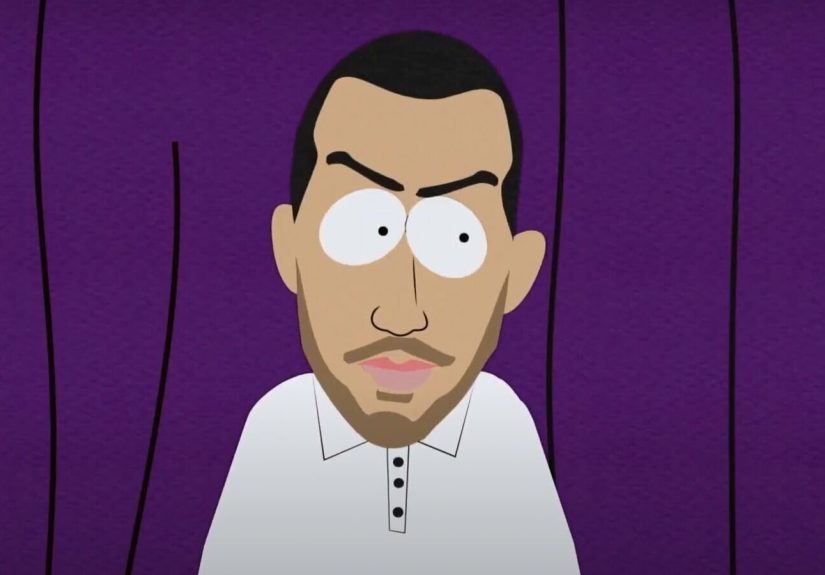
The thing that threw him? One tiny, nonsense soundwritten in various spellings like “twa” or “twah”that the cartoon Blaine
drops at the end of sentences like it’s punctuation from another dimension.
The Episode That Turned Street Magic Into a Religion (Sort Of)
The South Park episode most associated with David Blaine is “Super Best Friends” (Season 5, Episode 3), which originally aired in 2001.
In it, Blaine arrives in town doing street magic and quickly becomes less “magician” and more “charismatic figure with a suspiciously organized belief system.”
The boysStan, Kyle, Cartman, and Kennyget pulled into “Blaintology,” a new “religion” that looks like a mash-up of celebrity worship, self-help marketing,
and cult recruitment with a laminated badge.
As Stan grows uneasy, he seeks help from Jesus, and the episode escalates into a showdown between Blaine’s manufactured mystique and a squad of actual religious
figuresthe “Super Best Friends,” a parody of classic superhero team-ups. It’s a typical South Park move: start with a pop-culture target, then
blow the satire outward until it becomes a commentary on society’s appetite for authority, belonging, and easy answers.
It’s also worth noting that “Super Best Friends” has been difficult to find on streaming at various times, largely because it includes depictions of Muhammad,
which later became far more contentious for networks and platforms. That availability context matters because it helped freeze the episode in timeno pun intended
for a guy famous for endurance stuntsmaking it feel like an especially potent, half-mythical artifact of early-2000s comedy.
Why this parody hit a nerve (even when it was laughing)
Blaintology isn’t just “David Blaine but evil.” It’s “America, but gullible.” The episode takes a recognizable public personamysterious, minimalist, intense
and asks: what happens when people treat that vibe as proof of enlightenment? The joke is less “Blaine is a cult leader” and more
“We are extremely easy to recruit if you say the right spooky-sounding thing in the right voice.”
What Exactly Is Being Parodied About David Blaine?
To get why South Park chose Blaine, you have to remember what his image looked like at the time: the serious young street magician who didn’t perform
like a stagey “ta-da!” entertainer. He performed like a quiet glitch in reality. In his TV work and public stunts, Blaine often leaned into stillness,
controlled tension, and a sense that the camera just happened to catch something impossible.
That “minimalist mystique” is comedy gold because it’s easy to exaggerate without changing the ingredientsjust turn the dial from “mysterious” to “messianic.”
In “Super Best Friends,” the town reacts to magic the way people sometimes react to confidence: with unearned trust and a sudden willingness to hand over money,
autonomy, and basic common sense.
- The vibe parody: The show amplifies Blaine’s calm, intense persona into “I speak in cryptic fragments and you should probably sell your car to fund my enlightenment.”
- The celebrity parody: People aren’t joining because they’ve investigated anything; they’re joining because Blaine is famous, and fame feels like authority.
- The cult parody: The episode borrows recognizable cult dynamicsrecruitment, isolation, devotion, pressurethen wraps them in comedy until it’s absurd and unsettling at once.
This is why the cult angle didn’t shock Blaine as much as you might expect. It’s not actually saying, “You did this.”
It’s saying, “Your public image is so strong that we can use it as a vehicle to make fun of how humans behave.”
The One Detail That Truly Baffled Him: “Twah”
In interviews years later, Blaine has sounded pretty chill about being spoofed. Parodies come with the territory when your job involves making strangers scream,
laugh, or question the laws of physics on camera. But he singled out South Park for one reason: the cartoon version of him kept ending lines with a
strange “twah/twa” soundlike a verbal period nobody agreed on.
Blaine’s confusion makes sense. Unlike a joke about “Blaintology” or street-magic hype, “twah” isn’t an obvious exaggeration of something he actually does.
It’s not a catchphrase he used on TV. It’s not a recognizable mannerism that audiences would immediately label as “classic Blaine.”
It’s pure South Park: a random-seeming detail that becomes memorable because it’s repeated with total commitment.
So what was “twah” supposed to mean?
Here’s the best explanation: it didn’t “mean” anything in the traditional parody sense. It’s the kind of comedy choice that works because it’s oddly specific,
slightly annoying, and impossible to forget. In other words, it’s the perfect viral hookespecially in an era when people repeated TV quotes at school and at work
until language itself begged for mercy.
Blaine reportedly asked the creators about it. The answer wasn’t a deep psychological breakdown of his stage persona. It was closer to a shrug: the sound came
from a real-life acquaintance whose speech pattern they found funny, so they stapled it onto the Blaine character. That’s why it baffled him: he was looking
for the logic of a mirror, but South Park was using the logic of a collage.
Why This Kind of Parody Works (And Why It Can Confuse the Real Person)
A strong parody usually has two layers:
- The accurate layer: The part that reflects something realBlaine’s intense vibe, the street-magic intimacy, the public’s fascination with “how is that possible?”
- The sticky layer: The part that’s not “accurate,” but is memorablea verbal tic, a weird facial expression, a made-up phrase, a single repeated word.
For audiences, the sticky layer is the souvenir. It’s what you quote the next day. It’s what turns a parody into a cultural reference.
But for the person being parodied, that sticky layer can feel unmoored. You can understand “they exaggerated my seriousness.”
You can even understand “they used me as a symbol for cultish celebrity worship.”
But “Why do I say ‘twah’?” is a different category. It’s not commentary; it’s a mystery.
In a weird way, that mystery mirrors magic itself. Magic thrives on the gap between what you saw and what you can explain.
South Park accidentally did a magic trick on Blaine: it made him ask, sincerely, “How did that get there?”
The Blaintology Joke Is Also About America’s “Guru Economy”
Blaintology lands because it’s a satire of something bigger than a magician: the way modern culture can treat confidence, branding, and exclusivity as proof of truth.
The episode riffs on how new movements sell certaintythrough jargon, through community pressure, through a promise that you’re special for being “in.”
That’s why the show frames Blaine’s “religion” with recruitment energy that feels familiar. It’s not a documentary about any one organization.
It’s a comedic warning label slapped onto the human tendency to confuse “charismatic” with “credible.”
And that ties directly to why Blaine was a smart target. At the height of his early fame, he wasn’t a chatty host or a flashy Vegas ringmaster.
He was a controlled presence, often silent, sometimes stoican image that the public could project meaning onto. When people project meaning onto a person,
satire can ask: “What if they project too much?”
How David Blaine’s Real Career Set the Stage for the Joke
Blaine’s brand has always lived at the intersection of close-up magic and endurance spectacle. Around the era when “Super Best Friends” aired, he was already
known for extreme feats and high-visibility specials. He’s done challenges like being buried underground for days, encased in ice in Times Square,
and breath-holding record attempts on daytime television. Those stunts weren’t “gotcha” illusions; they were marketed as tests of will.
That matters because South Park thrives on taking something that already feels a little mythic and asking, “What if people treat this like religion?”
Once an entertainer becomes a symbol of superhuman self-control, audiences are halfway to making them a prophetcomedy just finishes the sentence.
(Twah.)
Street magic + silence = perfect parody fuel
The quieter the persona, the more room there is for the parody to invent “meaningful” nonsense. A loud comedian has punchlines you can imitate.
A quiet magician has a vibe you can reinterpret. That’s how you end up with a cult, shaved heads, and a catchphrase that wasn’t even yours.
Takeaways: What Creators (and Public Figures) Can Learn From “Twah”
- Parody isn’t always a mirror; sometimes it’s a remix. The most memorable details can be the least “true.”
- A single weird choice can outlive the whole plot. People may forget the episode’s structure, but “twah” sticks like gum on a shoe.
- Being baffled is part of the gig. If your work depends on mystery, you’ll occasionally become the one asking “how did they do that?”
- Satire often targets the audience as much as the celebrity. Blaintology is funny because it’s a joke about followers, not just the leader.
Conclusion: The “Twah” Paradox
David Blaine wasn’t baffled because South Park was cruel. He was baffled because the show did something both comedians and magicians do:
it introduced a detail that felt deliberate, repeated it until it became real, and refused to explain it in a satisfying way.
That’s the paradox. A parody about magic ended up performing a small magic trick on the magician. The audience got a catchphrase.
Blaine got a question mark. And somewhere in the multiverse, a cartoon version of him is still floating away, whispering a nonsense syllable
like it’s the final secret of the universe.
Twah.
of Experiences Related to the Topic
Even if you’ve never been parodied on national television (most of us have notthank goodness), you’ve probably experienced the smaller, everyday version of what
happened to Blaine: someone imitates you, and the imitation includes a detail you don’t recognize, yet everyone else starts associating it with you anyway.
Think about how catchphrases are born in friend groups. You say something oncemaybe you mispronounce a word, maybe you sigh in a particular way, maybe you end a
sentence with a weird noise because you’re tired and your brain is buffering. One friend repeats it. Another friend repeats it louder. Within a week, it becomes
“your thing,” even if you never did it again. The group doesn’t care about historical accuracy; they care about what’s funny and repeatable.
That’s basically “twah,” just scaled up to millions of viewers. The experience isn’t “they got me wrong,” exactlyit’s “they added a sticker to my forehead and
now the world thinks I came that way.” People who watched the episode didn’t need “twah” to be authentic; they needed it to be memorable. And because it was
memorable, it became a shorthand for the whole parody. You can bring up “Blaintology,” but “twah” is what people actually say out loud.
There’s also a very real audience experience baked into this: the moment when satire makes you notice something you hadn’t consciously clocked before.
Fans often describe watching Blaine’s early specials and realizing how much the tone relies on tensionlong pauses, serious faces, reactions that feel raw rather
than staged. After you’ve seen the South Park version, it becomes hard not to hear a little extra “dramatic gravity” in the real thing.
That’s not an insult; it’s how parody changes perception. It highlights a pattern, then your brain starts spotting it everywhere.
And finally, there’s the creator experiencecomedians talk about how they sometimes choose details for reasons that are almost embarrassingly simple.
Not every joke has a thesis statement. Sometimes the funniest option is the one that makes the writers laugh at 2 a.m. in a room full of cold pizza and caffeine.
That kind of choice can confuse the subject later because the subject assumes the joke is a commentary. But comedy is often closer to collage: it stitches together
impressions, vibes, and random human quirks into something that feels “true” even when it’s invented.
So if you’ve ever heard someone quote a parody version of youyour tone, your job, your hobby, your “type”and wondered, “Wait, is that what I sound like?”
then you’ve already lived a tiny piece of this story. The difference is that Blaine’s version got broadcast, replayed, memed, and baked into pop culture.
The bafflement is understandable. The joke is sticky. And the weirdest part is how quickly everyone accepts the sticker as the original label.