Table of Contents >> Show >> Hide
- Excitatory Neurotransmitters: The Simple Definition
- How Excitatory Neurotransmission Works (Without the Headache)
- The Big Players: Common Excitatory Neurotransmitters
- Why Excitatory Neurotransmitters Matter
- The Balance Problem: When Excitation Outruns Inhibition
- How the Brain Keeps Excitatory Signaling Under Control
- Real-World Examples of Excitatory Neurotransmitters in Action
- FAQ: Quick Answers (That Still Respect Your Intelligence)
- Everyday Experiences Related to Excitatory Neurotransmitters (About )
- Conclusion: The Spark That Needs a Circuit Breaker
Your brain is basically a nonstop group chat. Neurons are the chatty friends, synapses are the Wi-Fi, and
neurotransmitters are the “send” button. Some messages calm things down (inhibitory). Others crank the
volume up and shout, “DO THE THING!” Those are excitatory neurotransmittersthe chemicals that
make a neuron more likely to fire an electrical signal.
If that sounds like your group project teammate who suddenly discovers urgency at 11:58 PM, you’re not wrong.
Excitatory signaling is essential for thinking, moving, learning, and staying alert. It’s also the reason your
nervous system needs balancebecause “more go-go-go” is great until it’s not.
Excitatory Neurotransmitters: The Simple Definition
Excitatory neurotransmitters are chemical messengers that typically increase the likelihood
that the receiving neuron will fire an action potential (a nerve impulse). They do this by creating an
excitatory postsynaptic potential (EPSP)a small electrical nudge that moves the neuron closer to its
firing threshold.
Excitatory vs. Inhibitory: It’s Not a Personality Test
“Excitatory” doesn’t mean “good” and “inhibitory” doesn’t mean “bad.” These are job descriptions, not moral
alignments. Your brain needs both:
- Excitatory signaling helps you initiate actions and form thoughts.
- Inhibitory signaling prevents runaway activity (like seizures) and sharpens signals by reducing noise.
Also, one neurotransmitter can be excitatory in one place and inhibitory in another depending on which receptor
it binds to. Same messenger, different mailbox.
How Excitatory Neurotransmission Works (Without the Headache)
Here’s the classic synapse play-by-play:
- A neuron fires an electrical signal down its axon.
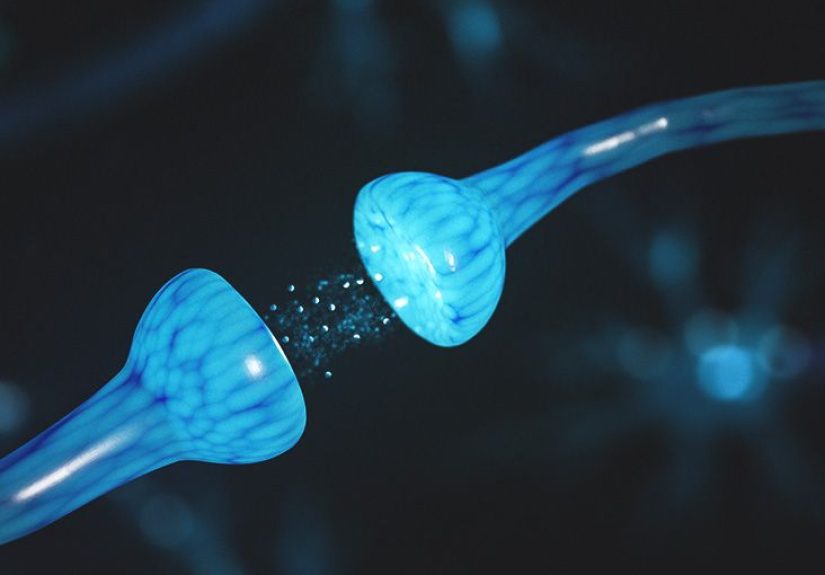
- That triggers release of neurotransmitter molecules into the synaptic cleft (the tiny gap between cells).
- The neurotransmitter binds to receptors on the next neuron.
- Receptors open ion channels or start signaling cascades, changing the neuron’s voltage.
- If enough EPSPs add up (spatially and over time), the neuron fires too.
Ion Channels: The “Door Policy” for Excitation
A lot of excitatory effects come from letting positively charged ions (like sodium, Na+, or calcium,
Ca2+) flow into the neuron. More positive charge inside = the neuron becomes more likely to fire. Think of it as
the cell getting “pep talked” into action.
The Big Players: Common Excitatory Neurotransmitters
Many neurotransmitters can act excitatorily depending on receptor type. But a few show up constantly in the
“motivation-to-fire” category.
1) Glutamate (The Main Event)
Glutamate is the most abundant and most common excitatory neurotransmitter in the central nervous
system. If your brain were a city, glutamate would be the trafficeverywhere, all the time, keeping things moving.
Glutamate is central to learning, memory, and synaptic plasticitythe ability of connections between
neurons to strengthen or weaken over time. That’s the biological backbone of “practice makes better.”
Glutamate Receptors: AMPA vs. NMDA (A Tale of Two Gates)
Glutamate works by binding to different receptors. Two headline acts:
- AMPA receptors: fast excitatory signaling. They open quickly and help generate rapid EPSPsperfect for quick processing.
-
NMDA receptors: more complex “coincidence detectors.” They’re heavily involved in plasticity and learning because they respond strongly when
pre- and postsynaptic neurons are active together.
If AMPA is a regular door that opens when you turn the knob, NMDA is the fancy door with a keypad, a bouncer,
and a “members only” sign. It makes sure the timing is right before letting in calcium signals that help
rewire synapses.
When Glutamate Overdoes It: Excitotoxicity
Glutamate is powerfulwhich means too much can be harmful. Excessive glutamate signaling can overactivate receptors,
lead to too much calcium influx, and contribute to cell injury in certain conditions. This phenomenon is often discussed
in the context of brain injury, stroke, and seizures. In normal physiology, the brain tightly regulates glutamate levels
and clears it efficiently to prevent overload.
2) Acetylcholine (Movement + Attention, With Range)
Acetylcholine (ACh) is famous for one very concrete job: muscle contraction. At the neuromuscular junction,
motor neurons release ACh, which activates nicotinic receptors on muscle fibers and triggers contraction. That’s excitatory
neurotransmission you can literally flex.
In the brain, acetylcholine also supports attention, arousal, and aspects of learning and memory.
But remember: receptor type matters. ACh can be excitatory or inhibitory depending on whether it binds nicotinic or certain
muscarinic receptors and where those receptors live.
3) Norepinephrine & Epinephrine (The “Wake Up, We’re Doing This” Duo)
Norepinephrine (and its close cousin epinephrine) helps coordinate alertness, focus, and the classic
fight-or-flight response. In many brain circuits, norepinephrine increases signal-to-noisehelping important inputs
stand out, especially under stress or high attention demands.
Sometimes this is great (you notice the car drifting into your lane). Sometimes it’s annoying (your brain treats a mildly
awkward email like it’s a saber-toothed tiger).
4) Dopamine (Motivation, Reward, and “Just One More Episode”)
Dopamine is often summarized as the “pleasure chemical,” but that’s like calling the ocean “a bit wet.”
Dopamine is involved in reward prediction, motivation, movement, and reinforcement learning.
Is dopamine excitatory? It can bedepending on receptor subtype and the neural circuit. Some dopamine receptors increase
excitability in target neurons, while others reduce it. In other words: dopamine is more like a manager than a cheerleader;
it can approve or deny the request.
5) Histamine (Yes, That Histamine)
Brain histamine helps regulate wakefulness. This is why many “first-generation” antihistamines can make people drowsy:
they block histamine signaling involved in staying alert. In several contexts, histamine acts in an excitatory, arousal-promoting way.
Why Excitatory Neurotransmitters Matter
They Turn Sensation into Action
Touch a hot pan. Sensory neurons fire. Spinal cord circuits rapidly process the signal. Motor neurons activate muscles to pull
your hand away. Excitatory neurotransmission is the “GO” signal that makes that chain reaction possible.
They Build Learning and Memory
Learning isn’t just “saving info.” It’s the nervous system changing how strongly neurons talk to one another. Glutamate receptors,
especially AMPA and NMDA, are central to many models of synaptic plasticity. That’s why glutamatergic signaling shows up in research
on everything from language learning to motor skill practice.
They Help You Stay Awake and Focused
Systems involving acetylcholine and norepinephrine help tune attention and arousalso your brain can switch from “background mode”
to “okay, this matters.” Of course, if your brain flips that switch at 2 AM over a social interaction from 2017, please submit a bug report.
The Balance Problem: When Excitation Outruns Inhibition
Your nervous system aims for a functional balance between excitatory and inhibitory signaling (often called the E/I balance). Too much excitation
can contribute to excessive network activity; too much inhibition can dull responsiveness. The brain constantly adjusts via receptor sensitivity,
neurotransmitter release, reuptake transporters, and broader neuromodulatory control.
Runaway Excitation and Seizures
Seizures are complex and have many causes, but at a basic network level they can involve unusually synchronized, excessive firing.
Excitatory neurotransmission (and its regulation) is part of why that synchronization can occur. Inhibitory systemsespecially GABAact as an
important counterweight.
Stress, Sleep, and “Why Am I Like This?”
Chronic stress can shift how certain neurotransmitter systems behave, including arousal-related circuits. Sleep also matters: during healthy sleep,
the brain recalibrates many systems, and sleep loss can make attention and emotion regulation feel harder. Not because you’re weakbecause your
neurochemistry is tired and would like a snack and a nap.
How the Brain Keeps Excitatory Signaling Under Control
If excitatory neurotransmitters are the gas pedal, your brain has an entire engineering department devoted to brakes and traction control:
- Reuptake transporters that clear neurotransmitters from the synapse (especially important for glutamate).
- Enzymes that break down neurotransmitters when needed.
- Inhibitory interneurons that dampen overactive circuits.
- Receptor regulation that adjusts sensitivity (up/down regulation).
- Glial cells (like astrocytes) that help manage extracellular neurotransmitter levels.
Real-World Examples of Excitatory Neurotransmitters in Action
Example 1: Learning a New Skill
You start learning guitar. At first, your fingers feel like they’re wearing oven mitts. Repetition strengthens certain synapsesoften involving
glutamatergic signalingso movements become smoother and faster. You didn’t “become talented.” Your brain re-tuned the wiring.
Example 2: The Startle Response
A loud bang triggers rapid sensory processing and motor readiness. Excitatory circuits help propagate the signal quickly so your body can react
in milliseconds. Later, your higher cortex shows up and says, “Relax, it was a dropped pan.” Thanks for coming, cortex.
Example 3: Muscle Movement
At the neuromuscular junction, acetylcholine release leads to muscle fiber activation. It’s a clean demonstration of excitatory neurotransmission:
chemical signal → receptor activation → ion flow → contraction. No philosophy, just biomechanics.
FAQ: Quick Answers (That Still Respect Your Intelligence)
Is glutamate always excitatory?
In the central nervous system, glutamate is the primary excitatory neurotransmitter. Its effects depend on receptor type, but it’s strongly associated
with excitation and plasticity in many circuits.
Can one neurotransmitter be both excitatory and inhibitory?
Yes. The receptor determines the effect. Acetylcholine and dopamine are classic examples of neurotransmitters whose effects vary by receptor subtype
and target tissue.
Should I try to “increase excitatory neurotransmitters” for focus?
Be cautious with simplistic “boost your neurotransmitters” advice. Neurotransmitters are regulated systems, not a volume knob you want to crank to
max. If focus, mood, or sleep problems are persistent, a qualified clinician can help you sort out causes and safe options.
Everyday Experiences Related to Excitatory Neurotransmitters (About )
You don’t need a neuroscience degree to bump into excitatory neurotransmitters daily. In fact, your morning routine is basically a live demonstration
of your brain negotiating arousal, attention, and motivationsometimes gracefully, sometimes like a squirrel trying to carry five acorns at once.
The “Coffee Kicks In” Moment
Many people notice a distinct shift about 15–45 minutes after caffeine: sharper focus, faster thoughts, and a stronger sense of “okay, let’s do this.”
Caffeine doesn’t pour glutamate into your brain like topping off windshield washer fluid. Instead, it alters signaling (notably by blocking adenosine
receptors), which can indirectly tilt networks toward wakefulness and readiness. Subjectively, this feels like excitatory circuits are more willing to
light upyour mental engine revs more easily. Of course, too much can feel like your brain is trying to open 37 browser tabs at once, and one of them
is playing music you can’t find.
Learning Something Under Pressure
Think about studying for a test, prepping for a presentation, or learning a new software tool at work. Early on, your brain spends a lot of effort
routing signals through unfamiliar paths. You might reread the same paragraph five times and still feel like it’s written in ancient riddles. With practice,
excitatory synapses strengthen in the relevant networks, and the task starts to feel smoother. That “it finally clicked” sensation often reflects more
efficient excitatory transmission and better timing across circuitsless friction, more flow.
The Workout Afterglow
During exercise, your nervous system ramps up motor control, sensory feedback, and cardiovascular regulation. Excitatory signaling helps coordinate
movement, posture, and reaction time. Many people also report improved mood and mental clarity afterward. While multiple systems contribute (including
neuromodulators and hormones), part of the experience is your brain recalibrating arousal and attention networks. It can feel like “clean energy”:
focused but not jittery, engaged but not frantic.
When Stress Turns the Dial Too Far
There’s a difference between being alert and being stuck in high gear. Under chronic stress, some people experience racing thoughts, light sleep,
irritability, or feeling “wired but tired.” In plain language, arousal systems are over-signaling. Norepinephrine-related circuits, designed to help you
respond to real threats, may keep tagging everyday situations as urgent. It’s not a character flawit’s your brain treating your inbox like a lion.
Rebalancing often involves sleep hygiene, stress management, and sometimes professional support, because these systems are deeply interconnected.
A Note on “Biohacking” Neurotransmitters
It’s tempting to chase quick fixes: supplements, stacks, extreme routines. But excitatory neurotransmission is powerful and tightly regulated for a reason.
The goal isn’t “more excitation.” The goal is “the right excitation at the right time.” In real life, the most reliable ways to support healthy signaling
tend to be the unglamorous basics: consistent sleep, regular movement, meaningful social connection, and managing chronic stress. Not viral, but effective.
Conclusion: The Spark That Needs a Circuit Breaker
Excitatory neurotransmitters are the nervous system’s spark plugs. They help neurons fire, power learning and memory, drive attention and action, and
keep your brain responsive to the world. Glutamate is the heavyweight champion of excitation, acetylcholine links thought to movement, and modulators like
norepinephrine and dopamine shape motivation and alertness. But the real magic is balance: excitation works best when inhibitory systems keep it precise,
stable, and appropriately timed. In your brain, “GO” is essentialso is knowing when to stop.