Table of Contents >> Show >> Hide
If you still picture ARM as the land of phones, tiny dev boards, and mysterious boot chains held together with hope and a serial cable, you are not alone. For years, “real PC firmware” and “ARM hardware” felt like two guests at the same party who never actually spoke. UEFI belonged to desktop and server culture. ARM belonged to mobile and embedded culture. End of story.
Except that story is now badly outdated.
UEFI on ARM is not some niche science fair project anymore. It is already baked into many Windows on Arm PCs, increasingly common across ARM64 servers, visible in cloud platforms, and showing up in specialized systems that need standard boot flows, stronger security, and a cleaner contract between firmware and the operating system. In other words, UEFI on ARM is no longer weird. In plenty of places, it is simply the grown-up choice.
This matters because firmware is not just the opening act before the “real computer stuff” starts. Firmware decides how a system boots, how the OS discovers hardware, how Secure Boot works, how updates are handled, and whether installing an operating system feels like using a modern machine or excavating ancient ruins with a flashlight and a prayer.
So let’s clear the fog. UEFI on ARM is more common than many people realize, more useful than many people expect, and more important to the future of Windows on Arm, Linux on ARM64, and ARM servers than it gets credit for.
What UEFI on ARM Actually Means
UEFI, short for Unified Extensible Firmware Interface, is a standard firmware interface that sits between platform firmware and the operating system. In plain English, it provides a consistent way for firmware to expose boot services, runtime services, configuration tables, boot variables, and the information an OS loader needs to start the system without guessing what kind of hardware magic is hiding under the hood.
On x86 systems, people already expect that behavior. You get an EFI System Partition, boot entries, Secure Boot controls, firmware settings, and a fairly predictable path from power-on to operating system. On ARM, however, the ecosystem historically grew up with far more variety. Some platforms used U-Boot. Some relied on vendor boot ROM chains. Some booted directly with a device tree. Some acted like appliances rather than general-purpose computers. That flexibility was great for experimentation, but it was not always great for portability.
UEFI changes that equation. It makes an ARM platform behave less like a custom hardware puzzle and more like a standard computer with a documented, reusable boot contract.
Why That Standardization Matters
Standardization sounds boring until you have lived without it.
When firmware is standardized, operating systems can use predictable interfaces instead of platform-specific hacks. Installers become more reusable. Boot loaders become less custom. Security features such as Secure Boot become easier to implement consistently. Firmware updates become easier to reason about. Diagnostics become less like folklore and more like engineering.
That is the real charm of UEFI on ARM. It is not exciting because it is flashy. It is exciting because it quietly removes chaos.
Why People Still Assume ARM and UEFI Don’t Go Together
The confusion comes from a very real history. For a long time, many ARM devices were not trying to be general-purpose PCs or standard servers. They were phones, tablets, IoT gear, industrial boxes, single-board computers, or tightly controlled appliances. Those systems often used custom boot stacks because they were optimized for a specific product, a fixed kernel, or a controlled software image.
That world still exists. Plenty of ARM hardware today still does not use UEFI, and in some categories it probably should not. Tiny embedded systems and vendor-specific devices do not always need the full PC-style firmware experience. If a device has one job and will never run random operating systems, the case for a full UEFI stack is weaker.
But here is the part that gets missed: a growing slice of ARM hardware does want to behave like a standard computer. That includes laptops, enterprise endpoints, servers, cloud instances, developer platforms, and edge systems expected to run stock operating systems or conventional enterprise software. Once you want that level of interoperability, UEFI starts looking a lot less optional.
Device Tree, ACPI, and the Big Boot Debate
Part of the confusion also comes from mixing together three related but different things: UEFI, ACPI, and device tree.
UEFI is the firmware interface. ACPI is a standardized way to describe platform hardware and configuration to the OS. Device tree is another hardware description mechanism that has long been common in the Linux-on-ARM world.
These are not all enemies. In fact, ARM64 Linux can support both device tree and ACPI in the kernel. But the runtime path still matters. On Linux arm64, if you want ACPI, you are effectively in UEFI territory. If you boot with device tree, you may still use UEFI in some scenarios, but the platform is not obligated to behave like an ACPI-based PC-style machine.
That is why UEFI on ARM is especially important for “industry-standard” systems. It is the bridge that helps ARM stop being “that board with the weird boot process” and start being “that machine I can actually deploy like a normal adult.”
Where UEFI on ARM Is Already Showing Up
Windows on Arm PCs
If you have used or followed modern Windows on Arm devices, you have already wandered into UEFI-on-ARM territory whether you noticed or not. Windows on Arm platforms are designed around a real UEFI environment, not a legacy BIOS fantasy and not a one-off bootloader adventure.
That matters because Windows expects a well-defined firmware setup. It expects a proper EFI system table. It expects access to the EFI System Partition. It expects GPT-style installation layouts. It expects Secure Boot. It expects the firmware to expose core platform details in a structured way so the operating system does not need to play detective at boot time.
This is one reason Snapdragon-powered Windows laptops feel like actual PCs instead of exotic gadgets wearing a laptop costume. Under the hood, their firmware model is much closer to the modern PC world than many people assume.
Linux on ARM64 Servers
UEFI is also deeply relevant in ARM server land. That is where standardization really earns its keep.
Servers are supposed to be boring in the best possible way. You want predictable installation, predictable boot behavior, predictable hardware discovery, predictable remote management, and predictable support lifecycles. Nobody wants a data center full of special snowflakes with custom board-specific boot rituals.
That is why the Linux server ecosystem has leaned hard into standards for ARM64 systems. With UEFI plus ACPI, distributions can target ARM servers in a more generic, reusable way. Instead of treating every board as its own civilization, they can support platforms through more stable and conventional interfaces.
Red Hat, for example, documents UEFI Secure Boot, signed boot chains, and GRUB-based flows on supported systems, including ARM64. That is not hobbyist territory. That is enterprise firmware plumbing.
Cloud Platforms and AWS Graviton
Cloud is another strong clue that UEFI on ARM is already mainstream enough to matter. AWS documents UEFI as the default boot mode on Graviton instance types, and Graviton-based Linux instances are expected to support UEFI boot with ACPI tables.
That detail is easy to overlook, but it says a lot. The cloud does not tolerate firmware drama well. Hyperscale platforms prefer repeatable boot behavior, automation-friendly provisioning, and operating system images that behave consistently across fleets. UEFI helps make ARM infrastructure feel standardized rather than improvised.
So if you thought UEFI on ARM was just a lab experiment, the cloud would like a word.
Arm SystemReady and the Standards Push
Arm’s SystemReady effort is one of the clearest signals that the industry wants ARM systems to boot and behave more like standard computers. Different SystemReady bands target different use cases, but several are explicitly aimed at platforms that support operating systems requiring UEFI and ACPI in firmware.
That is a big philosophical shift. The goal is not merely to make an ARM chip run software. The goal is to make diverse ARM platforms interoperable enough that generic operating systems and hypervisors can install, boot, and run with less custom glue.
Put differently, SystemReady is ARM’s way of saying, “Can we please stop making every OS image feel like it needs its own personal horoscope?”
Specialized ARM Systems
UEFI on ARM is not limited to laptops and cloud servers. It also appears in more specialized gear. NVIDIA’s BlueField documentation, for instance, describes a boot stack where UEFI sits between Arm trusted firmware and the OS, with the firmware enumerating devices and supplying ACPI-related information to the operating system.
That is a useful reminder that UEFI is not only for consumer PCs. It is also attractive anywhere a system benefits from strong boot semantics, structured hardware exposure, and maintainable integration with conventional operating systems.
Developer Platforms and Open Firmware Work
Then there is the open-source side. TianoCore’s EDK II is a modern open-source implementation framework for UEFI, and it includes AArch64 support. There are also public build and platform examples showing UEFI on ARM developer environments and fixed virtual platforms.
That matters because it lowers the barrier to experimentation. UEFI on ARM is not locked away in secret corporate vaults. Developers can study it, build it, port it, and test it. Once that happens, the idea starts moving from “rare special feature” to “normal option on the table.”
What UEFI Buys You on ARM
More Portable Operating Systems
The biggest practical win is portability. UEFI makes it easier for stock operating systems and installers to boot on a wider range of ARM platforms without board-specific surgery. That does not eliminate all platform quirks, but it shrinks the amount of custom boot logic needed.
For enterprise deployment, that is huge. For hobbyists, it means less time spelunking through boot scripts. For vendors, it means fewer support nightmares. For everyone, it means fewer moments that begin with, “Why does this image only boot if I sacrifice a Tuesday?”
Cleaner Security Plumbing
UEFI is also a major home for Secure Boot and related trust-chain features. Properly implemented Secure Boot helps ensure that the firmware, bootloader, and OS path only execute trusted code. Key databases, revocation lists, authenticated variables, and signed boot components all live in this world.
That does not make UEFI bulletproof. Firmware security still demands constant maintenance, and revocation updates exist for a reason. But standardization gives vendors and operating systems a common place to implement policy, distribute fixes, and validate the boot chain more consistently.
A Better Contract Between Firmware and the OS
On industry-standard ARM platforms, UEFI plus ACPI gives the operating system a much more stable description of the machine. That helps with core resources, hardware discovery, power management hooks, memory maps, and the general agreement about who initializes what before the OS takes over.
For Windows on Arm, this is foundational. For Linux servers, it is a major reason generic distributions can target ARM64 hardware more confidently. For virtualization, it creates a more familiar environment that resembles modern PC and server expectations instead of bespoke platform behavior.
Friendlier Virtualization and Testing
Virtual machines love standards because standards are repeatable. UEFI on ARM makes it easier to create VM environments and developer workflows that match what real operating systems expect. It also helps firmware development feel less tied to one vendor’s private stack.
That is one reason open firmware projects, cloud providers, and enterprise operating system vendors keep circling back to UEFI on ARM. It simplifies the “make this work across many systems” problem, which is one of the least glamorous and most valuable jobs in computing.
Where UEFI on ARM Still Has Limits
Not Every ARM Device Wants To Be a PC
Some ARM devices are still better served by lightweight, purpose-built boot chains. Microcontrollers, deeply embedded devices, and tightly controlled consumer products often care more about size, power, cost, or appliance-style behavior than about generic OS interoperability.
So no, UEFI is not taking over all of ARM. It is becoming more common in the parts of ARM that want standard operating systems, cloud-style deployment, or enterprise-grade lifecycle management.
UEFI Does Not Magically Fix Driver Support
UEFI can make booting more standard, but it does not conjure a missing GPU driver out of thin air or solve every vendor support gap. A platform can have lovely firmware and still disappoint you later if graphics, wireless, suspend behavior, or device-specific features are poorly supported.
Think of UEFI as a better front door, not a guarantee that the whole house is furnished.
Secure Boot Adds Rules, and Rules Add Friction
Secure Boot is useful, but it also means more signing, more keys, more certificate management, and more care when boot components change. That is manageable in enterprise deployments and expected on consumer systems, but tinkerers sometimes discover that “secure” and “frictionless” are not always best friends.
Still, that friction is often the price of turning an ARM platform into something organizations can trust at scale.
Experiences From the Field: What UEFI on ARM Actually Feels Like
Once you move beyond the theory, the most interesting part of UEFI on ARM is how normal it can feel when it is done well. That is the surprising part. People often expect ARM firmware to feel exotic, delicate, and vaguely cursed. In practice, on a well-designed ARM64 platform, UEFI makes the experience feel refreshingly boring. And in infrastructure, boring is beautiful.
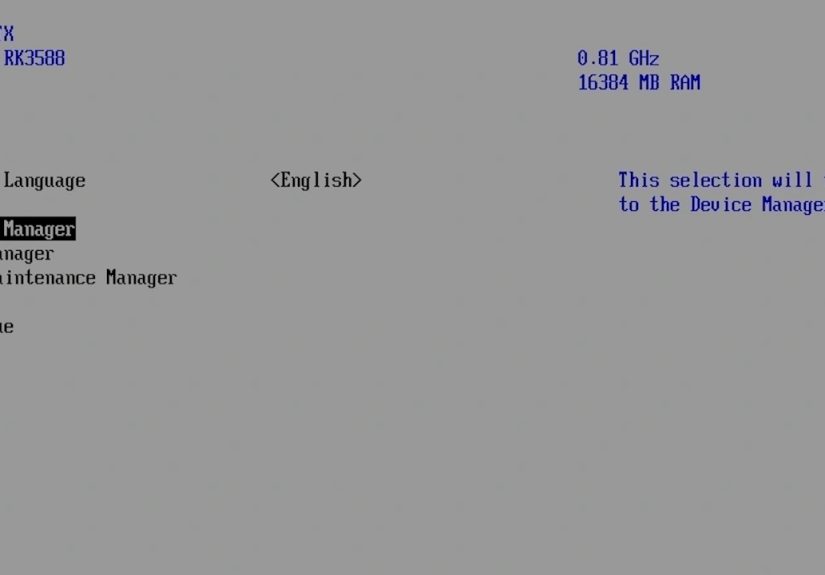
Take a modern Windows on Arm laptop. From the outside, you open the firmware menu, adjust boot configuration, deal with Secure Boot settings, and manage startup behavior much like you would on a contemporary x86 machine. You are not dropped into a vendor-specific maze where every option sounds like it was translated from ancient runes. It feels like a real PC because the platform is following a real PC-style firmware model.
On the Linux side, the experience is often even more revealing. When an ARM server or developer platform uses a solid UEFI implementation, the conversation changes. Instead of asking, “Which custom bootloader patch set does this board need?” you start asking ordinary system administration questions: Is the EFI System Partition laid out properly? Is Secure Boot enabled? Does the distro bootloader install cleanly? Are the ACPI tables sane? That is a huge cultural shift. It means ARM is being treated less like a special project and more like infrastructure.
Cloud administrators see the same pattern from a different angle. With ARM instances in the cloud, nobody wants a one-off ritual for every image or every boot mode. The whole point is automation, repeatability, and scale. UEFI on ARM helps turn that into a practical reality. When a cloud image boots with the expectations a normal operating system already has, teams spend less time fighting firmware and more time doing actual work.
There is also a subtle psychological benefit for developers. Standard firmware reduces fear. If you know the platform speaks UEFI, has an EFI System Partition, supports standard boot entries, and follows expected security behavior, you are more willing to experiment. You are more likely to try another distro, test another kernel, or validate a new deployment workflow. The platform feels legible. And legible systems get adopted faster than mysterious ones.
Of course, the experience is not perfect everywhere. Some ARM platforms still live in an awkward middle ground where UEFI exists, but surrounding support is unfinished. You may get a clean boot path and then discover that certain peripherals still depend on vendor-specific software, or that a firmware setting you expected is missing, or that the OS boots fine but some hardware features are not fully mature yet. That happens. Standard firmware is a major step forward, not a magic wand.
Even so, the overall trajectory is obvious. The more ARM platforms aim at mainstream computing, enterprise deployment, and generic operating system support, the more UEFI starts to feel inevitable. It brings order to a historically fragmented boot story. It makes ARM machines easier to install, easier to secure, easier to document, and easier to support. And after years of ARM being treated like the interesting cousin with unusual habits, that shift feels less like a technical footnote and more like a graduation ceremony.
The Bottom Line
UEFI on ARM is not a fantasy, a future plan, or a weird edge case. It is already a practical reality across Windows on Arm systems, ARM64 servers, cloud infrastructure, standards programs, and specialized enterprise hardware.
No, it does not cover every ARM device. And no, it does not erase every platform-specific challenge. But in the parts of the ARM ecosystem that want interoperability, standard operating system support, stronger security, and saner deployment, UEFI is increasingly the firmware language that makes the whole thing work.
So the next time someone talks about UEFI as an x86-only club, feel free to smile politely. ARM has already slipped past the velvet rope, grabbed a badge, and started helping run the event.
Note: This is publication-ready HTML body content and intentionally excludes source-link markup, placeholder citations, and artifacts such as contentReference tags.