Table of Contents >> Show >> Hide
- Who Is Djarii?
- How Djarii Helped Shape Twitch Body Painting
- Setting the Record Straight: It Is Not “Just Skin”
- The Gender Problem Nobody Should Ignore
- Why Twitch Body Painting Became a Cultural Flashpoint
- The Business of Being Djarii
- What Viewers Can Learn From Djarii’s Work
- Body Painting, Rules, and Responsibility
- Why Djarii Still Matters
- Real-World Experiences Inspired by Djarii’s Body Painting Journey
- Conclusion
On Twitch, where a viewer can jump from a speedrun to a chess match to someone building a keyboard with the seriousness of a NASA launch, Sophia Whitebetter known as Djariifound her own lane with brushes, pigment, patience, and a very stubborn refusal to let the internet define her work for her.
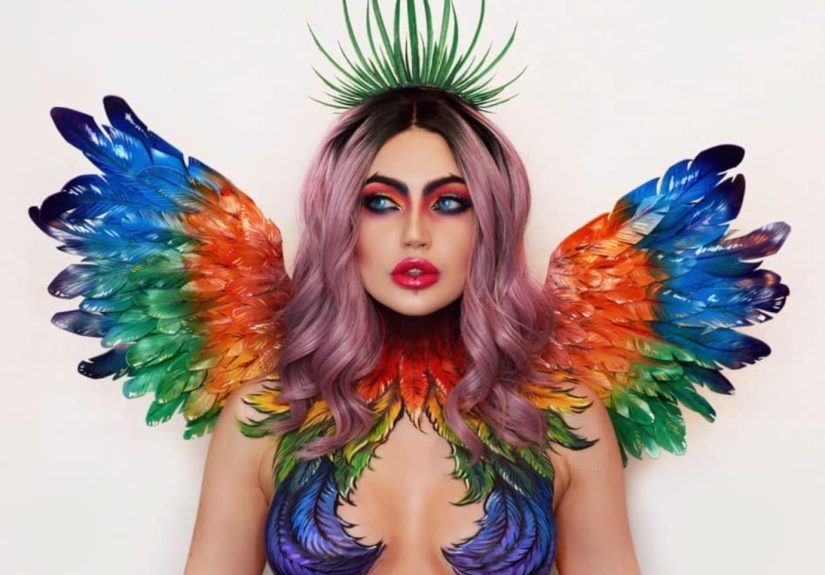
Djarii is widely known as a Twitch streamer, gamer, makeup artist, and body painter who helped normalize live body art on a platform once seen almost entirely as a gaming arena. Her broadcasts are not just “watch me paint.” They are part art studio, part performance, part community hangout, and part endurance sport. Anyone who has tried to draw matching eyeliner on both eyes knows the difficulty level. Now imagine painting armor, scales, glowing fantasy skin, or a full character design across your body while reading chat, staying within platform rules, keeping the camera framed, and pretending your back does not feel like a folding chair from 1998.
That is the real story behind Djarii’s rise: not controversy for controversy’s sake, but creative labor in public. The debate around her body painting has often focused on what viewers think they are seeing. Djarii has consistently tried to redirect the conversation toward what she is actually doing: making art, honoring gaming and fantasy characters, and building a creator career in a space where women’s bodies are frequently discussed more loudly than their skills.
Who Is Djarii?
Djarii is the online alias of Sophia White, a UK-based creator who has been broadcasting on Twitch full-time since 2014. Her content has included gaming, Just Chatting, beauty, body art, cosplay-inspired work, and community-driven streams. She is also known as one of Twitch’s early ambassadors and has been described through her own branding as “the woman of a thousand faces,” a title that fits someone whose work can move from video game characters to pop culture icons to experimental makeup looks with impressive range.
Before body painting became a defining part of her channel, Djarii was already part of Twitch’s gaming culture. Her background included games such as World of Warcraft, and her connection to the gaming community helped shape the style of her body art. Rather than painting random patterns for shock value, she often builds looks around recognizable characters, fantasy worlds, and fandom references. That matters because it places her work closer to cosplay, special effects makeup, and live illustration than to the lazy label critics sometimes apply: “attention-seeking.”
The irony, of course, is that attention is literally the currency of livestreaming. Every creator on Twitch is trying to hold an audience. The difference is that Djarii does it with hours of technical work, physical stamina, and a visual transformation that unfolds in real time. That is not a loophole. That is a skill set.
How Djarii Helped Shape Twitch Body Painting
Twitch did not always have a comfortable home for creators like Djarii. The platform began with gaming at its center, and while creative categories expanded over time, viewers and moderators alike had to adjust to the idea that Twitch could also be a place for painting, music, cooking, talk shows, and beauty content. When Djarii began exploring makeup and body art more seriously around 2017, she entered a space that was still figuring out its boundaries.
Body painting on livestreams sits at a complicated intersection. It involves the body, obviously, but it is not automatically adult entertainment. It can be theatrical, educational, fandom-based, artistic, or all of the above. The confusion often comes from people treating the canvas as more important than the artwork. Djarii’s position has been clear: her body painting is creative content, not a disguised attempt to break rules.
That distinction became especially important as Twitch refined its nudity and attire policies. Platform rules have had to account for special cases such as body art, cosplay, swimming, fitness, and performances where standard clothing expectations may not apply in a simple way. Twitch has clarified over the years that nudity is not allowed, while body painting can be permitted when streamers meet coverage and attire requirements. In plain English: paint is art, but paint is not magic clothing unless the rules say the coverage is acceptable. The platform has tried to draw lines, and creators like Djarii have had to work within those lines while also making the lines visible to viewers.
Setting the Record Straight: It Is Not “Just Skin”
The most persistent misunderstanding around Djarii’s body painting is the claim that it is simply sexual content wearing an art hat. That argument is tidy, loud, and usually wrong. It reduces a full creative process to the viewer’s reaction, which is a bit like saying the Mona Lisa is only about someone staring at you from a chair. Technically present? Sure. The whole point? Absolutely not.
Body painting requires planning, sketching, layering, color theory, anatomy awareness, costume reference, camera awareness, and time management. When Djarii paints a character-inspired design, she is not simply applying color. She is translating a 2D or 3D concept onto a living, moving surface. That means accounting for curves, shadows, posture, lighting, and the fact that skin does not behave like canvas. It stretches. It absorbs pigment differently. It sweats. It moves when the artist breathes. In other words, the medium fights back politely.
Live body painting adds another level of difficulty. A studio artist can pause, step away, return tomorrow, and quietly curse at a bad brushstroke in private. A Twitch body painter works while an audience watches every decision. Chat may be supportive, curious, distracting, hilarious, or, on a bad day, deeply weird. The creator has to maintain a safe environment, moderate comments, explain technique, respond to viewers, and finish the artwork before energy disappears completely.
The Gender Problem Nobody Should Ignore
Djarii’s experience also reveals a larger issue in gaming and livestreaming culture: women creators are often forced to defend the legitimacy of their work before the work is even evaluated. A male streamer can sit in gym shorts and yell at a ranked match for six hours without becoming a philosophical debate about the future of civilization. A woman paints a fantasy character on herself, and suddenly half the internet becomes a committee on artistic purity.
This double standard is not new. Women in gaming spaces have long dealt with questions about whether they are “real gamers,” whether their appearance is part of their success, or whether their content deserves its audience. Djarii’s body painting made that double standard highly visible because her work combines gaming culture, beauty, cosplay, and performance. Those categories are often undervalued precisely because they are associated with femininity, even when the technical skill involved is obvious.
Setting the record straight means recognizing that a creator can be talented, attractive, strategic, funny, business-minded, and artistic at the same time. None of those traits cancel out the others. The internet loves putting creators into tiny boxes. Djarii’s career keeps refusing to fit inside one.
Why Twitch Body Painting Became a Cultural Flashpoint
Body painting became a flashpoint on Twitch because it challenged old assumptions about what livestreaming was supposed to be. For years, many users saw Twitch as a gaming-first platform. As categories like Creative, IRL, Just Chatting, and Beauty & Body Art gained attention, some viewers reacted as though non-gaming content had broken into the house and eaten all the cereal.
But livestreaming was always headed toward variety. Twitch is not just a place where people watch gameplay; it is a place where people watch people. That includes artists, musicians, commentators, chefs, teachers, speedrunners, role-players, and creators who blend several formats into one. Djarii’s channel represents that shift. She did not abandon Twitch’s gaming roots; she expanded what gaming-adjacent creativity could look like.
Her body painting often connects to characters from games, fantasy franchises, and pop culture. This gives her work a bridge between cosplay and live art. Fans are not only watching the final reveal. They are watching the transformation happen brushstroke by brushstroke. That process turns the audience into witnesses of craft, not just consumers of a finished image.
The Business of Being Djarii
Behind the paint is a serious creator business. Djarii has built a cross-platform presence across Twitch, Instagram, YouTube, X, TikTok, and other social channels. Like many modern creators, she is not simply “a streamer.” She is a personal brand, a performer, a community manager, a marketer, a production planner, and sometimes her own customer support department. Glamorous? Occasionally. Exhausting? Almost certainly.
Brand partnerships, event hosting, sponsored campaigns, conventions, charity fundraising, and guest appearances have all played a role in her broader career. Her work shows how niche expertise can become commercially valuable when it is consistent and recognizable. Body painting may look unusual compared with traditional influencer content, but that is exactly why it stands out. In a crowded creator economy, being memorable is not a bonus. It is survival.
Djarii’s advice to creators has often emphasized authenticity and knowing one’s value. That message matters because new streamers frequently chase sponsorships before they have built a clear identity. Djarii’s path suggests the opposite: develop the thing only you can do, build trust with a community, and let opportunities grow from there. The brush comes before the brand deal.
What Viewers Can Learn From Djarii’s Work
One reason Djarii’s body painting resonates is that it makes transformation feel accessible. Most viewers will not spend 12 hours turning themselves into a video game sorceress, and that is probably healthy for their lower back. But they can still learn something from watching the process. They see patience. They see mistakes corrected in real time. They see how highlights and shadows create shape. They see that art is not instant magic; it is a long series of choices.
Her streams also challenge the idea that beauty content is shallow. Makeup and body art can be deeply expressive. They can connect to identity, fandom, confidence, performance, and storytelling. A face or body paint design can say, “This character means something to me,” or “I wanted to see if I could become this idea for a few hours.” That is not shallow. That is creative play with a deadline.
Body Painting, Rules, and Responsibility
To discuss Djarii fairly, it is important to acknowledge that platform rules exist for a reason. Twitch has to balance creative freedom, advertiser expectations, community safety, age-appropriate access, and enforcement consistency. Body painting can be allowed, but creators must still follow attire and sexual content guidelines. That is not always easy, especially when rules change or when moderation decisions feel inconsistent.
Djarii has been part of that conversation because her work lives near the edge of categories Twitch has had to define more clearly. But being near a boundary is not the same as trying to break it. In many cases, creators like her have helped platforms understand how to write better policies for creative content. When a new kind of work becomes popular, rules have to evolve beyond one-size-fits-all language.
The best version of Twitch is one where artists can create safely, viewers know what category they are entering, and moderation standards are clear enough that creators are not left guessing. Djarii’s career is a reminder that creative communities need both freedom and structure. Without freedom, the platform becomes boring. Without structure, it becomes chaos wearing a headset.
Why Djarii Still Matters
Djarii matters because she helped prove that Twitch audiences would watch live creative transformation, not just gameplay outcomes. She showed that a body painting stream could be technical, entertaining, community-driven, and commercially viable. She also helped push back against the idea that women creators must choose between being visible and being respected.
Her influence can be seen in the broader acceptance of beauty, body art, cosplay, and maker content on livestreaming platforms. Today, it is easier to understand Twitch as a place for creative niches. That did not happen by accident. It happened because creators took risks, absorbed criticism, kept showing up, and made audiences reconsider what counted as “real content.”
In Djarii’s case, setting the record straight means saying the obvious thing that somehow still needs saying: body painting is art when it is made as art. It deserves to be judged by its craft, context, and intentnot by the loudest person in chat who thinks every brush is a scandal.
Real-World Experiences Inspired by Djarii’s Body Painting Journey
For anyone who has ever experimented with body paint, cosplay makeup, or livestreamed creative work, Djarii’s journey feels familiar in a very practical way. The first lesson is that the final image never tells the full story. A finished photo might look effortless, but the process usually includes uneven base layers, brushes that suddenly develop the personality of a garden rake, pigments that refuse to blend, and at least one moment where the artist quietly wonders whether becoming a minimalist was the better life choice.
Trying body painting at home quickly teaches respect for creators like Djarii. Even a simple design on one arm can take longer than expected. You need safe cosmetic-grade products, clean tools, mirrors, lighting, reference images, towels, water, patience, and a plan for cleanup. Cleanup deserves its own dramatic soundtrack. Blue paint has a special talent for appearing in places where blue paint was never invited.
Another experience related to this topic is learning how different body art feels from traditional painting. Paper stays still. Skin does not. A straight line on a sketchpad becomes a negotiation when painted across a shoulder or collarbone. Shadows change as the person moves. Details that look perfect up close may disappear on camera. This is why livestreamed body painting is not just makeup; it is visual problem-solving under pressure.
Creators who stream art also learn that audience interaction is both a gift and a challenge. A supportive chat can make a long session feel like a shared adventure. Viewers suggest ideas, cheer through difficult sections, laugh at small mistakes, and celebrate the reveal. But the artist also has to set boundaries. Comments about the body rather than the artwork can derail the mood quickly. Djarii’s career shows why moderation, confidence, and community standards matter. The best creative streams feel like a studio with friends, not a public trial with emojis.
There is also a business lesson here. Many new creators think the secret is to copy whatever is trending. Djarii’s success suggests something more durable: build around a skill, refine it publicly, and let the audience grow around the process. Body painting is visually striking, but the reason people return is not only the final look. They return for personality, consistency, humor, honesty, and the feeling that they are part of the transformation.
For fans, watching Djarii can also change how they view cosplay and makeup. A character look is not just “dressing up.” It is research, design, adaptation, and performance. It can be a tribute to a game, a story, or a community. It can help people explore confidence and creativity without needing permission from traditional art spaces. That is powerful. Not everyone gets a gallery wall, but a livestream can become its own gallery if the work is strong enough.
The most relatable part of Djarii’s story may be the persistence. Creative work online invites praise, criticism, confusion, and unsolicited expertise from strangers named things like “DragonSnack42.” Continuing anyway is part of the job. Djarii’s body painting trendsetting is not just about colorful designs; it is about staying focused when the conversation around the work gets noisy. That lesson applies far beyond Twitch. Whether someone is painting, writing, streaming, building a small business, or learning a new craft, the challenge is the same: keep making the work clear enough that it can speak louder than the misunderstanding.
Conclusion
Djarii’s place in Twitch culture is bigger than body paint. She represents the platform’s evolution from a gaming-only destination into a sprawling live entertainment ecosystem where art, fandom, performance, and personality collide. Her work has sparked debate, but it has also opened doors for more creative formats and helped clarify how body art can exist responsibly in livestreaming spaces.
The record, then, is not complicated. Djarii is not a gimmick. She is a creator who turned makeup and body painting into a recognizable Twitch format, handled scrutiny that many artists never face, and continued building a career around transformation. One brushstroke at a time, she helped show that livestreaming can be a canvas too.