Table of Contents >> Show >> Hide
- What a Tummy Tuck Really Does (and Doesn’t)
- Who’s a Good Candidate for a Tummy Tuck?
- Types of Tummy Tucks (Because One Size Never Fits Anyone)
- Step-by-Step: How the Tummy Tuck Procedure Typically Works
- Recovery: The Un-Instagrammed Part (But the Most Important)
- Scars, Sensation, and the Belly Button Question
- Risks and Possible Complications (The Responsible Section)
- Cost and Insurance: The “Adulting” Section
- Choosing a Surgeon Without Falling for Fancy Filters
- Results: How Long They Last (and How to Keep Them)
- FAQ: Quick Answers to Common Questions
- Conclusion
- Real-World Experiences (500+ Words): What Patients Often Say
If your midsection has ever felt like it’s holding a grudge after pregnancy, major weight loss, or simply the passage of time (rude),
you’ve probably Googled “tummy tuck” at least onceright after Googling “how to un-eat a whole pizza.” This guide breaks down the
tummy tuck procedure (abdominoplasty) in plain, standard American English: what it does, what it doesn’t, who it’s for,
what recovery is really like, and how to pick a surgeon without getting hypnotized by perfect lighting and strategic angles.
Heads-up: this is educational content, not medical advice. Your body is not a math problem, and the internet cannot examine you. A
board-certified plastic surgeon can.
What a Tummy Tuck Really Does (and Doesn’t)
What it does
A tummy tuck, medically called abdominoplasty, is a surgical body-contouring procedure designed to:
- Remove excess abdominal skin (think: loose, hanging, “apron” skin).
- Reduce stubborn fat in the area (often with help from liposuction when appropriate).
- Tighten the inner “girdle” (the fascia) that supports the abdominal wallcommonly associated with postpartum “pooch” and diastasis recti concerns.
- Create a smoother, flatter abdominal contour and (sometimes) a more defined waistline.
What it doesn’t
A tummy tuck is not a weight-loss procedure. It can improve shape dramatically, but it won’t replace nutrition, strength training,
sleep, or stress management (sorry). If you’re planning significant weight loss, many surgeons recommend waitingbecause major weight
changes after surgery can “remix” your results.
Also: a tummy tuck isn’t the same thing as liposuction. Lipo removes fat; it does not remove significant loose skin or tighten the abdominal
wall. Many patients benefit from combining procedures, but they solve different problems.
Who’s a Good Candidate for a Tummy Tuck?
Great candidates tend to share a few traitsmostly boring, responsible-adult things:
- Stable weight (ideally maintained for months, not weeks).
- Good general health with medical conditions well controlled.
- Non-smoker (or willing to stop before and after surgerysmoking increases healing complications).
- Realistic expectations about scars, swelling, and timelines.
- Done having children (pregnancy can stretch skin and muscles again).
People often consider abdominoplasty after pregnancy, major weight loss, aging-related skin laxity, or when exercise improves strength but
can’t “shrink” excess skin. A consultation is where a surgeon determines whether you’ll benefit from a full tummy tuck, a mini tummy tuck,
or something else entirely.
Types of Tummy Tucks (Because One Size Never Fits Anyone)
“Tummy tuck” is an umbrella term. Here are common variations you may hear:
Mini tummy tuck
Best for mild looseness primarily below the belly button. It usually involves a smaller lower-abdominal incision and may not
require moving the belly button. Recovery can be shorter for the right candidate.
Full tummy tuck
The classic option for more significant loose skin and muscle separation. It typically includes a low horizontal incision (often along the
bikini line) and an incision around the navel to reposition it naturally.
Extended tummy tuck
Designed for people with excess skin that extends to the flanks/hips. The incision is longer to address more side-to-side looseness.
Circumferential (belt) lipectomy / lower body lift
Often considered after massive weight loss when looseness wraps around the trunk, affecting the abdomen, hips, and sometimes buttocks.
This is a bigger operation with a bigger recovery footprint.
Lipoabdominoplasty (tummy tuck + liposuction)
Lipo can refine contour around the waist and upper abdomen in select patients. The right combination depends on anatomy, skin quality, and
safety considerations (because “more done” is not always “better done”).
Step-by-Step: How the Tummy Tuck Procedure Typically Works
Every surgeon has their own technique, but a typical full abdominoplasty follows a familiar storyline:
1) Anesthesia and safety prep
Most tummy tucks are performed under general anesthesia, meaning you’re fully asleep and monitored by an anesthesia
professional. Your team may use compression devices on your legs and encourage early walking afterward to reduce blood clot risk.
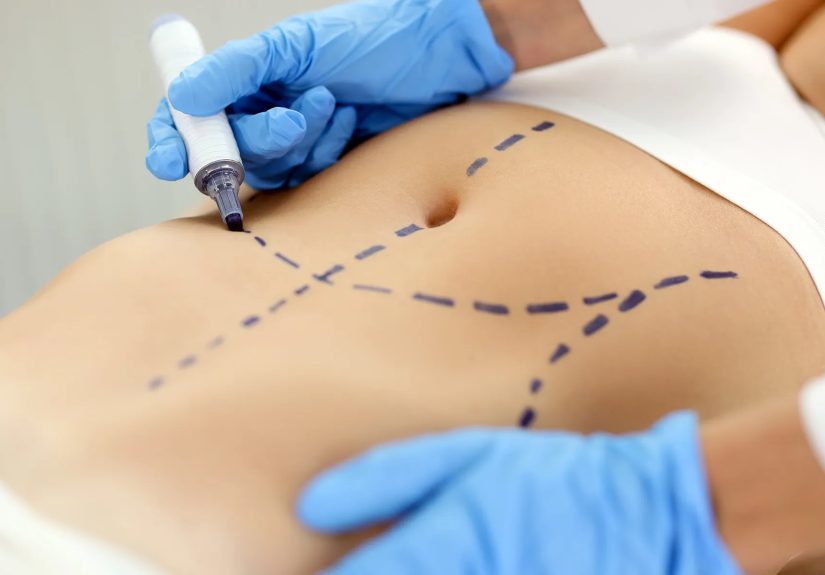
2) Incisions (strategically placed, not magically invisible)
A low horizontal incision is made across the lower abdomenoften positioned to hide under underwear or swimwear. In many full tummy tucks,
there’s also an incision around the belly button so it can be brought through the tightened skin later.
3) Tightening the abdominal wall
Here’s the part many people describe as “muscle tightening,” but technically it’s often the fascia being tightened with sutures. This can help
restore a firmer abdominal profile when the midline has stretched (common after pregnancy).
4) Removing excess skin and reshaping
The surgeon removes the extra skin and any targeted fat, then re-drapes the remaining skin for a smoother contour. The belly button is
repositioned to look natural (a good belly button should not scream “I have a story to tell”).
5) Drains, dressings, and compression
Many surgeons use temporary drains to reduce fluid accumulation. Dressings and a compression garment or binder are commonly used to support
healing and reduce swelling.
Recovery: The Un-Instagrammed Part (But the Most Important)
Recovery isn’t just “rest and binge a show.” It’s a structured process. Your surgeon will tailor instructions to you, but here’s what many
patients can expect:
The first 24–72 hours
- Walking early (short, frequent walks) is usually encouraged to support circulation.
- Expect soreness, tightness, swelling, and fatigueyour body is spending energy on repair.
- You may need help standing up, using the bathroom, and managing medications safely.
Week 1: The “I Shuffle, Therefore I Am” phase
- You may walk slightly bent at the waist to reduce tension on the incision.
- Drains, if placed, require daily measuring/logging and careful handling.
- Many people take about a week off work (sometimes more), depending on job demands.
Weeks 2–4: The turning point
- Discomfort often improves, though swelling can hang around like an uninvited guest.
- You’ll likely continue wearing compression as instructed.
- Light activity usually increases, but heavy lifting and intense exercise remain restricted.
Weeks 4–6+: back to more normal movement
- Many people gradually resume workouts with surgeon clearance.
- Scar care may become more consistent (silicone, massage, sun protectionper your surgeon’s guidance).
Months 2–3 and beyond: results refine
You may see improvement quickly, but the “final” result is a slow reveal as swelling resolves. Scars typically continue to mature for many
monthsand often look better at one year than at three months.
Scars, Sensation, and the Belly Button Question
Let’s be honest: scars are part of the deal. Surgeons typically place incisions low so they can be hidden, but scar appearance varies by
genetics, skin type, aftercare, and healing conditions.
Scar reality check
- A shorter procedure (like a mini tummy tuck) usually means a smaller scar.
- Scars often fade and flatten over time, but they don’t vanish like a magic trick.
- Sun exposure can darken scarssun protection matters.
Numbness and sensation changes
Temporary numbness around the lower abdomen is common because nerves are affected during surgery. Sensation often improves over months, but
some changes can last longer.
Risks and Possible Complications (The Responsible Section)
Every surgery has risks. The goal is to understand them, reduce them, and know what “not normal” looks like.
Commonly discussed risks include:
- Anesthesia-related risks
- Bleeding and infection
- Fluid accumulation (seroma)
- Poor wound healing or wound separation
- Changes in skin sensation (numbness, tingling)
- Scarring concerns
- Fat necrosis (damage to deeper fatty tissue)
- Blood clots (DVT) and rare cardiac/pulmonary complications
- Asymmetry or the need for revision surgery
How surgeons lower risk (and how you help)
- Stop smoking as instructednicotine impairs blood flow and healing.
- Be transparent about medications and supplements (some increase bleeding risk).
- Follow movement restrictions and wound/drain care instructions exactly.
- Call your surgeon if you have severe pain, fever, rapidly worsening swelling, shortness of breath, or unusual drainage.
Cost and Insurance: The “Adulting” Section
In the U.S., tummy tuck pricing varies widely by region, surgeon experience, facility fees, and whether liposuction or other procedures are
combined. A frequently cited national average surgeon fee (not the total all-in price) is in the several-thousand-dollar range; anesthesia and
facility costs are typically additional.
Insurance usually doesn’t cover cosmetic abdominoplasty. In certain medical situationslike significant functional problems from excess skinother procedures (such as panniculectomy) may be handled differently, but that’s case-by-case and requires documentation.
Choosing a Surgeon Without Falling for Fancy Filters
A great tummy tuck is part planning, part technical skill, and part “the patient followed instructions like it was their side hustle.”
Here’s how to choose wisely:
Look for board certification and the right training
- Confirm the surgeon is board-certified in plastic surgery (not just “board-certified” in something vague).
- Ask where they operate and whether the facility is accredited.
- Ask how often they perform tummy tucks and what their complication protocols are.
Ask better questions than “Will it be perfect?”
- “Which tummy tuck type fits my anatomy and goals?”
- “Will you use drains? For how long?”
- “What’s your plan for preventing blood clots?”
- “What does a typical recovery timeline look like for your patients?”
- “If I get a seroma or wound issue, how do you handle follow-up care?”
Be cautious with bargain deals
Surgery is not the moment to channel your inner extreme couponer. A safe operation in a properly equipped settingwith trained staff and
reliable follow-up carecosts what it costs. “Discount tummy tuck” should not be a lifestyle.
Results: How Long They Last (and How to Keep Them)
A tummy tuck can be long-lastingeven permanentif your weight stays relatively stable and you avoid major abdominal stretching events
(pregnancy is the classic example). Healthy habits help preserve contour: consistent movement, protein-rich nutrition, hydration, and strength
training once cleared.
FAQ: Quick Answers to Common Questions
Does a tummy tuck remove stretch marks?
Sometimes. If stretch marks are on the skin that gets removed (often below the belly button), they may be reduced or removed. Stretch marks
outside that area usually remain, though the skin may be tighter and less wrinkled.
What’s the difference between a tummy tuck and a panniculectomy?
A tummy tuck focuses on contour (skin removal + tightening + reshaping, often with belly button work). A panniculectomy primarily removes
overhanging lower-abdominal skin/fat and usually does not focus on muscle tightening or aesthetic reshaping in the same way.
When will I stand up straight?
Many patients walk slightly bent early on and gradually straighten as comfort allows. Your surgeon will guide yourushing it can stress the
incision and internal repair.
Can men get a tummy tuck?
Yes. The goals may differ slightly (often emphasizing a flatter, more athletic contour), but candidacy and safety principles are the same.
Conclusion
The tummy tuck procedure can be a powerful option for people who want to address loose skin and abdominal wall laxity that
diet and exercise can’t fully fix. The keys to a good outcome aren’t mysterious: choose a properly qualified surgeon, understand the tradeoffs
(hello, scars), plan for real recovery time, and follow aftercare instructions like your results depend on itbecause they do.
Real-World Experiences (500+ Words): What Patients Often Say
You can read a million clinical descriptions of abdominoplasty and still feel unprepared for the lived experience of recovery. Below are
common themes patients reportshared here so you can set expectations realistically (and maybe laugh a little while you’re at it).
1) “I thought I was tough… and then I tried to sit up.”
Many patients say the first surprise is how much your core does in everyday life. Sitting up, standing from a chair, climbing into bedyour abs
are suddenly very opinionated about all of it. The best hack patients mention? Preparation. Set up a recovery nest: extra pillows, a place to
keep meds and water, and a clear pathway so you’re not doing obstacle-course parkour on day two. People also frequently say they were glad they
arranged help for the first night (and sometimes the first few days), because “independent adult” energy hits different when you’re walking like
a polite question mark.
2) The Drain Diaries: “So… this is my emotional support bulb?”
If your surgeon uses drains, patients often describe a short learning curve: empty, measure, log, repeat. It’s not glamorous, but it’s temporary.
A common tip is to wear clothing with pockets or use a lanyard-style drain holder so the bulbs don’t dangle or tug. Patients also say the mental
part matters: drains can make you feel “medical” longer than you want. Reminding yourself that drains are there to reduce fluid buildupand that
they come outcan make the process feel more like a step, not a sentence.
3) Week Two is when hope shows up with snacks
A lot of people describe week one as the most humbling. Then somewhere in week two, they notice they can move more easily, sleep a bit better,
and feel more like themselves. Swelling is still present (and can be weirdly uneven), but the panic fades. Patients often say that taking short,
frequent walks helps both physically and mentally. It’s not about cardio; it’s about circulation, stiffness, and mood. Think of it as “gentle
movement with main-character energy.”
4) The Scar Confidence Curve is real
Early scars can look angry. That’s normal. Many patients report an emotional roller coaster: excitement about a flatter abdomen, followed by
“Why does my incision look like it’s auditioning for a horror movie?” The scar typically changes a lot over monthsflattening and fading with
time. People who feel best long-term often treat scar care as a routine: follow surgeon instructions, avoid sun, and don’t improvise with random
internet remedies that sound like they were invented in a medieval kitchen.
5) The “I did it for me” moment
One of the most consistent patient reflections is that satisfaction is highest when the decision is personalnot pressure-driven. Some people
want clothing to fit comfortably again. Others want to feel less self-conscious at the beach. Some are simply tired of skin irritation and
folding. Whatever the reason, patients who go in with clear goals and realistic expectations tend to feel happiest: they understand that a tummy
tuck is a tradereplacing loose skin and frustration with a scar and recovery. And for many, that trade is absolutely worth it.
Bottom line: the experience is usually a mix of practicality and patience. Plan your recovery like it matters (because it does), give your body
time, and judge your results on a months-long timelinenot a “three days later in a hotel mirror” timeline.