Table of Contents >> Show >> Hide
- What Happens in Triangle, Really?
- Triangle Explained in Plain English
- The True Meaning of Triangle
- Is Triangle About Purgatory, Time Travel, or Mental Collapse?
- What the Taxi Driver Likely Means
- Why Triangle Still Messes With Audiences
- My Best Interpretation of the Ending
- The Viewer Experience: Why Watching Triangle Feels So Unsettling
- Final Thoughts
Note: Spoilers ahead for Triangle (2009).
Some movies end, and you walk away. Triangle ends, and your brain keeps pacing the hallway like it forgot where it parked. Christopher Smith’s 2009 psychological horror thriller has earned its reputation as one of the sneakiest mind-benders in modern genre cinema because it does two things at once: it gives you a clever time-loop puzzle, and it quietly slips in a devastating emotional tragedy underneath all the screaming, déjà vu, and shipboard chaos.
On the surface, Triangle is about Jess, a stressed single mother who joins friends on a boating trip, survives a sudden storm, and boards an eerie ocean liner called the Aeolus. Then reality starts folding in on itself like a cheap beach chair. People die, return, repeat, and the movie reveals that the masked killer stalking the ship is not a stranger at all, but another version of Jess. That is the hook. The sting in the tail is that the film is not mainly about “what happened?” It is about “why can’t this woman stop doing the same thing?”
If you came looking for a clean, neat, one-size-fits-all explanation, I have good news and bad news. The good news: Triangle absolutely makes sense. The bad news: it makes sense in the kind of way that ruins your peace and quiet. The true meaning of the film sits at the intersection of guilt, grief, punishment, denial, and the human habit of believing that one more try will fix everything. In other words, it is a horror movie about the world’s least relaxing second chance.
What Happens in Triangle, Really?
Let’s untangle the rope before we talk symbolism. Jess boards Greg’s sailboat, also called the Triangle, with a group of friends. A violent storm flips the boat, the survivors cling to the hull, and then they spot the Aeolus drifting nearby like the universe has sent over a haunted Uber. They board it and discover that the ship appears deserted, except for signs that someone is watching them.
Then the movie goes full nightmare kaleidoscope. Members of the group are hunted and killed, Jess sees clues that suggest these events have happened before, and eventually she discovers the ugly truth: there are multiple versions of herself moving through the ship at different points in the same cycle. The masked shooter is simply Jess further along in the loop, trying to force events toward a reset. Every time the group dies, the pattern starts again, and a new set of survivors boards the Aeolus.
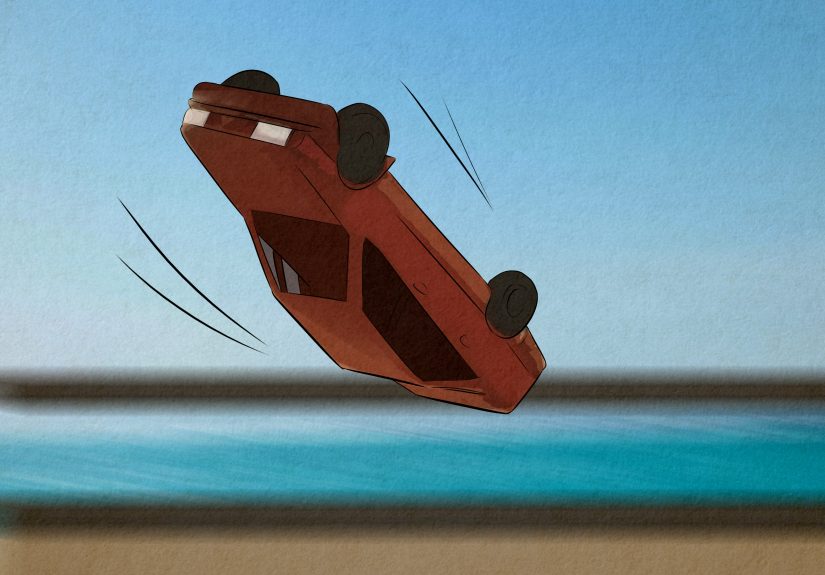
Later, Jess falls overboard, washes ashore, and appears to return to the beginning of the day. She goes home, sees another version of herself with her son Tommy, kills that version, and tries to leave with Tommy in the car. Then comes the cruel punch line: a crash kills Tommy, and Jess ends up returning to the harbor anyway, getting back on Greg’s boat as if maybe this time, somehow, someway, the day can end differently.
That is the loop in a nutshell. The film shows a recurring cycle in which Jess keeps trying to beat fate, but every attempt becomes another brick in the maze. She does not escape the system. She powers it.
Triangle Explained in Plain English
The movie is one big loop with smaller spirals inside it
The easiest way to understand Triangle is to picture one large loop and one tighter coil inside it. The large loop is Jess’s entire day: home, harbor, boat, storm, Aeolus, shore, home again, road, crash, harbor again. The smaller spiral is what happens aboard the Aeolus, where several versions of Jess overlap and collide. That overlap is why the ship feels so confusing on a first watch. It is not random. It is stacked.
All the Jesses are the same Jess
This is not a multiverse movie full of alternate-reality Jesses with different hair conditioner and different life choices. These are the same woman at different stages of the cycle. Past Jess, panicked Jess, masked Jess, defeated Jess, determined Jessthey are all one person moving through a system she barely understands. The horror comes from watching her become the thing she is trying to stop.
Jess becomes the killer because she thinks violence will restore order
At first, Jess wants to save everyone. Then she realizes the pattern seems to reset when everyone dies. In her exhausted, frightened, unraveling logic, killing the group becomes a desperate attempt to reboot reality. She is not suddenly transformed into a comic-book villain twirling a fake mustache. She is a terrified person trying to force a solution onto a situation that keeps rejecting her. That makes her more tragic than monstrous, but it does not make her innocent.
The ending loops back because Jess cannot accept the truth
The crash is crucial. It suggests that Tommy’s death is the wound at the center of everything. Whether you read the film as supernatural punishment, purgatory, psychological collapse, or all three at once, the ending tells us that Jess cannot accept loss. She would rather repeat horror forever than surrender the fantasy that one more attempt could save her son.
The True Meaning of Triangle
It is a horror movie about guilt
The deepest current running through Triangle is guilt. Jess is not presented as a saintly mother crushed by random fate. The film shows strain, impatience, and ugly behavior in her home life. When she later promises things will be different, the film asks whether repentance means anything if it never becomes action. Her loop is therefore not just about time. It is about moral repetition. She keeps reliving the same failure because, at a spiritual level, she has not truly changed.
It is also about grief and denial
Jess is chasing the impossible: a version of reality in which Tommy lives and she gets to erase what happened. That is the emotional engine of the movie. The time loop is not just clever science-fiction dressing. It is the shape of denial itself. Grief moves forward; denial keeps circling. The film dramatizes that circling with brutal efficiency. Jess sees evidence, learns the pattern, suffers the consequences, and still returns to the harbor. Why? Because grief accepted is final, and she is not ready for final.
The Sisyphus connection matters more than most viewers think
Plenty of explainers mention Sisyphus and then jog off like they have done their cardio. But the myth is central. Sisyphus is punished by repeating a task that can never be completed. Jess is doing the emotional version of that punishment. She keeps pushing the boulder up the hill by trying to “fix” the day, but the boulder always rolls back down because the loop is built from the same flaw every time: she mistakes repetition for redemption.
The film weaponizes repetition to show moral paralysis
Most time-loop stories are built around learning. A character repeats events until they improve, grow, or crack the code. Triangle is nastier than that. Jess does learn details, but not in a way that frees her. She becomes more informed and more trapped at the same time. The repetition does not make her wiser. It makes her more frantic. That is the film’s mean little masterpiece trick.
Is Triangle About Purgatory, Time Travel, or Mental Collapse?
Interpretation 1: Jess is in purgatory
This is the most common reading, and for good reason. The taxi driver has a deathly, mythic quality. The ship names echo Greek mythology. The repetition feels less like physics and more like punishment. The pile-ups of objects and bodies suggest endless failed cycles. In this reading, Jess is spiritually trapped, reliving events because she cannot move past guilt and loss.
Interpretation 2: It is a literal supernatural time loop
You can also take the film more literally. The Aeolus becomes the site of a bizarre temporal trap in which Jess is physically looping, overlapping with herself, and unknowingly fulfilling the same pattern. This version preserves the movie as a puzzle-box thriller. It also works because the film is extremely careful about cause and effect inside the loop, even when it is trying to make your frontal lobe file a complaint.
Interpretation 3: The entire ship section is an extension of trauma
There is also a more psychological reading, hinted at by the film’s dreamlike structure and mirrored spaces. In that version, the Aeolus may be less a place than a mental architecture built from fear, guilt, and memory. The house and ship feel eerily connected, as though Jess never really escapes herself. This reading does not cancel the others. In fact, Triangle works best when you let the literal and symbolic readings overlap instead of making them arm-wrestle.
What the Taxi Driver Likely Means
The taxi driver is the movie’s quietest and creepiest detail. He feels less like a normal person and more like an underworld ferryman. Jess tells him she will come back, and that promise hangs over the ending like a curse. If the driver represents death, fate, or some supernatural gatekeeper, then Jess’s return to the harbor is not a free choice in the normal sense. It is part compulsion, part refusal, part sentence.
But even if you do not go full mythology mode, the taxi driver still matters because he frames Jess’s decision. She has a pause. A threshold. A moment where the film practically begs her not to step back into the cycle. And then she does. That is the movie’s whole thesis in miniature: sometimes the scariest prison is the one built out of our own refusal to stop.
Why Triangle Still Messes With Audiences
Triangle lasts because it is not just “confusing”; it is structured to change shape after the credits. On a first watch, it plays like survival horror with puzzle elements. On a second watch, it becomes tragic because you realize Jess is racing toward roles she thinks she is avoiding. On a third watch, it starts to feel like a movie about behavioral patternshow people repeat damage, justify it, and convince themselves they are doing it for the right reasons.
That is also why the film has become such a cult favorite. It does not reward the viewer with one tidy answer and a gold star sticker. It rewards rewatching. Every repeated line, every hallway movement, every appearance of an object suddenly feels loaded. The movie is basically daring you to come back and notice what it was telling you all along. Rude, honestly. Effective, but rude.
My Best Interpretation of the Ending
The best interpretation of Triangle is a hybrid one. Jess is trapped in a real loop within the story, but that loop is shaped like a moral and emotional punishment. The mechanics matter, but the meaning matters more. She cannot escape because escape would require more than surviving the ship. It would require accepting Tommy’s death, facing her failures honestly, and surrendering the fantasy of a perfect redo.
Instead, she chooses repetition. That choice is everything. It turns the movie from a simple mind-bender into a tragedy. Jess does not just get trapped. She participates in her trap because hope, guilt, and denial have fused into one impossible obsession. The true meaning of the film, then, is not that time is broken. It is that grief can become a machine, and once you feed guilt into it, it keeps running.
The Viewer Experience: Why Watching Triangle Feels So Unsettling
One of the most fascinating things about Triangle is the experience of watching it, because the movie practically turns the audience into another version of Jess. The first time through, you are lost, off-balance, and constantly trying to catch up. You notice clues, but they do not settle into meaning yet. The ship feels wrong before it feels explainable. The repeated dialogue sounds familiar before it sounds important. The film places you in a state of nervous déjà vu, which is exactly where Jess lives. That is not an accident. It is form meeting theme with a sly grin.
For many viewers, the first watch is less about solving the plot than surviving the sensation of it. You keep waiting for the movie to hand you a flashlight and a map, and instead it gives you another hallway and another Jess. That can be disorienting, but it is also why the film lands so hard. You are not standing outside the story like a detached observer. You are trapped in its rhythm. You feel the repetition before you fully understand it, and that emotional confusion becomes part of the point.
Then comes the second-watch experience, which is where Triangle goes from “clever” to “haunting.” Once you know where the story is headed, Jess stops looking like a standard horror protagonist and starts looking like a doomed figure in a tragedy. Her fear is still real, but now every choice carries dramatic irony. You know that the person she is hunting is herself. You know that the reset she craves is the trap she is feeding. You know that her determination is sincere, and you also know it is doomed. That combination makes the film strangely sadder on rewatch than on first viewing.
The movie also creates an oddly physical viewing experience. The repeated corridors, stairwells, decks, and mirrored encounters make the Aeolus feel like a maze that is shrinking around you. Even when the camera is calm, the structure is claustrophobic. You start to feel like space itself has become unreliable. The ship is huge, but it does not feel open. It feels trapped. That contradiction is part of what makes the film so sticky in memory: the setting is expansive in theory and suffocating in practice, just like Jess’s hope. She keeps believing there must be a way out, even as every path bends back toward the same nightmare.
There is also an emotional aftereffect that lingers once the puzzle pieces click. A lot of twisty thrillers lose their power once you know the answer. Triangle does the opposite. The more clearly you see its design, the more tragic it becomes. You realize that what seemed at first like a cool time-loop gimmick is really a story about a person who cannot stop bargaining with reality. That makes the film feel more human, not less. Viewers often walk away talking about timelines, but what sticks is the desperation. Jess is terrifying, yes, but she is also painfully recognizable in the way people cling to one more try, one more fix, one more impossible version of the past.
That is why the experience of Triangle tends to stay with people. It is not only a movie you decode. It is a movie you revisit in your head. Hours later, you are still replaying scenes, not because the plot is messy, but because the emotion underneath it is sharp. The puzzle invites you in, but the grief keeps you there.
Final Thoughts
Triangle is not just a clever thriller about loops and doubles. It is a brutal little story about what happens when guilt refuses to move forward. Jess is trapped because she keeps confusing motion with progress, repetition with repair, and determination with redemption. The film’s true meaning lives in that confusion. It says that some people would rather relive hell than accept reality, especially if reality includes the one loss they cannot bear.
That is why the ending hits so hard. Jess goes back. Not because the movie needs one last twist, but because the character cannot let go. In the end, the scariest thing in Triangle is not the ship, the storm, or the masked killer. It is the idea that a person can become trapped inside their own refusal to stop asking for another chance.