Table of Contents >> Show >> Hide
There are two kinds of home entrances. The first says, “Yes, this is technically a house.” The second says, “Come in, stay awhile, and please admire my olive tree before you ring the bell.” This article is about the second kind.
“Making an entrance” is one of those phrases that sounds dramatic, but in garden design it is surprisingly practical. A memorable entrance is not only about a pretty front door. It is about the full approach: the path underfoot, the plants that frame the view, the gate that sets the tone, the lighting that keeps the whole thing glowing after sunset, and the subtle details that make guests feel expected rather than merely tolerated. In the Gardenista universe, this idea shows up again and again: the entrance is not a single feature. It is a sequence.
That sequence can be grand, restrained, rustic, formal, modern, or delightfully quirky. A polished iron gate may announce elegance. A gravel path softened by grasses may suggest a relaxed, California-cool attitude. A pair of oversized pots flanking the steps can turn an ordinary entry into something that feels curated, even if the rest of the front yard is still recovering from a rough summer and one unfortunate weed-whacker incident.
The best entrance designs also solve real problems. They tell visitors where to go. They make walking safer. They soften architecture. They create curb appeal without looking like a real-estate listing trying too hard. Most importantly, they make the transition from street to home feel intentional.
Why the Front Entrance Matters More Than Ever
The front entrance is the handshake of the house. Before anyone notices your kitchen renovation, your carefully selected paint color, or your expensive pendant light that took three weeks to choose and six months to install, they notice the approach. A strong entrance creates a first impression that feels calm, considered, and welcoming.
Design-wise, this area also does a lot of heavy lifting. It links architecture with landscape. It connects public space to private space. It can make a small home feel more substantial, a plain facade feel more charming, and a brand-new build feel like it has been there long enough to know where the good sunlight lands at 4 p.m.
That is why so many current front-yard trends focus less on “decorating the porch” and more on creating an experience. Instead of a giant lawn and a lonely shrub, today’s best entrances use layers: hardscaping, planting, lighting, containers, and architectural details working together. The result is a look that feels lived-in, useful, and a little bit magical.
The Anatomy of a Gardenista-Worthy Entrance
1. Start with the path, not the panic
If the entrance is a story, the path is the opening line. Good paths make movement obvious and effortless. Great paths do that while also adding beauty, texture, and rhythm. A straight path can feel formal and efficient. A gently curving path can slow the journey just enough to make it more enjoyable. Neither is automatically better. The right choice depends on the architecture, the lot, and how people actually approach the house.
Material matters too. Flagstone brings softness and age. Brick adds classic order. Gravel feels relaxed and organic. Concrete pavers can read modern or timeless depending on shape and spacing. Stepping stones introduce a playful pace, while broad continuous paving feels more solid and architectural. When the path is wide enough to feel generous, the house immediately seems more welcoming.
The trick is proportion. An oversized path leading to a modest stoop looks like it took a wrong turn from a civic plaza. A path that is too narrow makes guests feel like they are walking a balance beam. The most successful entrances use a path scaled to both the home and the experience of arrival.
2. Add a threshold with personality
An entrance becomes memorable when there is a clear moment of transition. A gate, arbor, low wall, hedge opening, or even a subtle change in paving can create that feeling. It tells visitors, “You are leaving the sidewalk world and entering somewhere special.”
This is where Gardenista-style design shines. The threshold does not have to be flashy. In fact, it is often better when it is restrained. A simple iron gate, a weathered wooden latch, or a painted garden door can do more for character than a dozen fussy ornaments. Even a glamorous little detail, like a beautiful doorbell or refined house numbers, can elevate the whole scene. It is proof that small objects at the threshold matter because they are encountered up close.
If you have room, an arbor or pergola can frame the approach and introduce vertical interest. If you do not, a pair of tall containers or clipped shrubs can create the same sense of arrival without hogging the walkway.
3. Use planting to guide, soften, and edit
Planting near the entrance should not feel random, even when the look is loose. The goal is not to cram every favorite plant within five feet of the front steps. The goal is to create structure, softness, and a visual invitation.
Layering is key. Start with evergreen structure or shrubs that anchor the composition through all seasons. Then add perennials, grasses, or flowering plants for movement and seasonal interest. Finally, use ground covers or low edging plants to tidy the transition between path and bed. When done well, this layered approach makes the entrance feel lush but controlled, not like the garden center exploded in a charming yet legally questionable way.
Height also matters. Taller plantings can frame a doorway or disguise awkward foundation lines. Lower planting near the path keeps sightlines open and prevents the dreaded “guests brushed by wet boxwood and now resent you” scenario. Repeating a few plant types rather than using one of everything often creates the strongest effect.
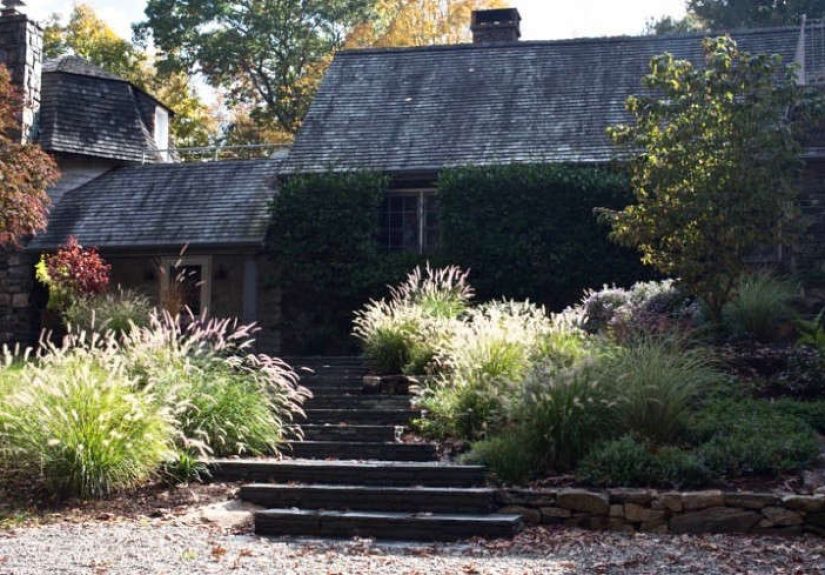
There is also a growing preference for lawn-light front yards. Instead of a large expanse of turf, more homeowners are using gravel gardens, meadow-like planting, drought-tolerant beds, specimen shrubs, flowering trees, or broad swaths of perennials. The look is fresher, often more sustainable, and much more interesting than a square of grass with commitment issues.
4. Let containers do some of the heavy lifting
If there is one easy upgrade that repeatedly delivers, it is the front-door container. Pots are useful because they add instant height, color, and personality without requiring a major landscape overhaul. They are also forgiving. If a container arrangement fails, you can replant it. If a concrete path fails, that is called a project.
The most elegant container arrangements balance structure and looseness. Think clipped myrtle, boxwood, or small evergreens paired with trailing vines, herbs, grasses, or seasonal blooms. Matching pots create symmetry and formality. Mixed containers feel collected and relaxed. The style can shift with the house: Mediterranean with terracotta and rosemary, cottage with overflowing annuals, modern with restrained foliage and sculptural forms.
Containers are also one of the best tools for seasonal entrances. In spring, they can carry bulbs and cool-weather flowers. In summer, they can go lush and generous. In fall, they can lean into seed heads, ornamental cabbage, grasses, or warm-toned foliage. In winter, evergreens and branches keep the threshold alive when the rest of the garden is taking a very well-earned nap.
5. Design for the evening, not just the afternoon
Many entrances look lovely at noon and disappear entirely by dinner. Good lighting fixes that. It adds safety, highlights architectural details, and gives the front approach real atmosphere after dark.
The best lighting plans are layered. A porch pendant or ceiling fixture provides ambient glow. Wall sconces define the doorway. Low path lights guide the approach. Accent lighting can graze a tree, spotlight a gate, or make grasses shimmer. Warm light nearly always feels more welcoming than stark, overly bright illumination that makes the house look like it is being interrogated.
Lighting should reveal the route, not overwhelm it. A few well-placed fixtures often feel more luxurious than a yard blazing like a sports complex. The entrance should glow, not shout.
6. Don’t forget the door, steps, and hardware
Once the path and planting are working, the architectural details deserve equal attention. Fresh paint on the front door can transform the whole composition. Contrasting trim adds definition. Clean, updated hardware sharpens the look. House numbers, railings, and a polished doorbell may seem minor, but they are precisely the elements that guests notice from close range.
Even the steps matter more than people think. Painted risers, tile accents, stone treads, or a simple faux runner effect can add energy to an otherwise plain approach. These details work especially well when they echo the home’s style rather than fighting with it. A cottage wants romance. A modern home wants clarity. A historic house wants respect, not random trend-chasing.
Four Entrance Styles That Are Trending for Good Reason
The relaxed naturalist
This look favors gravel, irregular stone, airy grasses, and planting that feels edited but not uptight. It is ideal for homes that want to look settled into the landscape rather than imposed on it.
The modern threshold
Think simple pavers, sculptural containers, architectural shrubs, restrained color, and strong geometry. The entrance feels intentional, calm, and a little expensive in that annoyingly effortless way.
The cottage approach
Brick or flagstone paths, climbers, flowering perennials, painted gates, and layered pots define this style. It is welcoming, romantic, and wonderfully forgiving when plants lean into each other like old friends.
The polished porch
For homes with a usable porch, the trend is to treat it as a true transitional room. Seating, lighting, pots, fresh paint, and refined hardware turn the porch into more than a pass-through. It becomes part of the welcome.
Mistakes That Quietly Ruin the Entrance
Too much symmetry can feel stiff. Too little structure can feel messy. Plants that block the path, lighting that blasts the eyes, undersized pots, fake-looking materials, and cluttered decor all weaken the approach. So does ignoring maintenance. A beautiful entrance still needs sweeping, pruning, deadheading, and the occasional reality check.
Another common mistake is treating each part separately. The path, gate, porch, planters, and lighting should feel connected. That does not mean everything must match. It means everything should belong to the same visual sentence.
How to Make an Entrance on a Real-World Budget
You do not need a full landscape renovation to create a stronger arrival sequence. Start with the most visible moves. Paint the front door. Upgrade the light fixture. Add two substantial containers. Define the path edges. Prune existing shrubs so the architecture can breathe. Refresh the mulch or gravel. Replace flimsy house numbers with something handsome and readable. Clean the steps. Suddenly the place looks intentional.
Next, focus on one structural improvement. That may be widening the path, adding a gate, planting a small flowering tree, or replacing a patch of struggling lawn with a planted bed. The smartest entrances often come together in stages. They evolve, which is fitting for gardens and also for budgets that prefer not to be attacked all at once.
Experience: What It Feels Like to Truly Make an Entrance
What people rarely talk about is how different a good entrance feels once you actually live with it. At first, it seems like an exterior design project. Then, very quickly, it becomes part of your daily rhythm. You stop just “walking to the door” and start noticing the sequence. The gravel crunches differently after rain. The scent from the rosemary in the pots catches you when the afternoon warms up. A low branch flowers just enough to brush the edge of your vision without smacking you in the face, which is the ideal level of botanical enthusiasm.
You begin to understand that an entrance is not only for guests. It is for you, several times a day. It is the thing you see when you come home tired, carrying too many bags, muttering about traffic, weather, or the general behavior of strangers in parking lots. A good entrance has a calming effect. It helps the house feel like a destination instead of merely the place where the Wi-Fi reconnects automatically.
There is also something deeply satisfying about how an entrance changes your relationship to maintenance. When the front approach is thoughtfully designed, you are more likely to care for it in small, regular ways. You sweep the steps because they look worth sweeping. You deadhead the containers because the pots are doing such good work. You replace a tired porch bulb faster because now the evening glow matters. Maintenance stops feeling like punishment and starts feeling like stewardship.
Guests notice it too, even when they do not have the vocabulary for why it works. They pause at the gate. They comment on the path. They ask where the pots came from. They stand on the porch for an extra moment because the lighting is soft and the place feels welcoming. Delivery drivers somehow stop leaving packages in deeply confusing locations. Neighbors slow down when they walk by. The front of the house becomes part of daily life instead of a strip of land you only think about when weeds get bold.
One of the best things about a strong entrance is that it can make a modest home feel unusually special. You do not need a grand estate, a circular drive, or limestone lions with trust-fund energy. You need intention. A clear path, a sense of framing, some layered planting, a few details with personality, and enough editing to keep the whole thing from feeling overdone. That is the real lesson behind the trend: making an entrance is not about showing off. It is about creating a welcome with style, clarity, and a little pleasure built into the journey.
And that, in the end, is why the idea has such staying power. The entrance is where the outside world hands you back to yourself. Done well, it is practical, beautiful, and quietly emotional. It says home before the lock even turns.
Conclusion
The best Gardenista-inspired entrances succeed because they blend beauty with purpose. They guide movement, frame architecture, soften hard edges, and make the approach feel gracious in every season. Whether your style leans modern, cottage, naturalistic, or porch-centric, the formula is remarkably consistent: a clear path, a defined threshold, layered planting, strong containers, warm lighting, and a few close-up details that reward attention.
In other words, making an entrance is less about one dramatic gesture and more about a series of smart, welcoming decisions. That is good news for homeowners, because it means you can build the look over time. One pot, one path edge, one flowering tree, one freshly painted door at a time. Suddenly the front of the house is not just tidy. It tells a story. And it tells that story before anyone even knocks.