Table of Contents >> Show >> Hide
- The Short Answer: Your “Should” Depends on Your Goal
- What Actually Makes Up Your Daily Calorie Burn?
- So How Many Calories Should You Burn Each Day?
- Why Calorie Calculators Can Help and Why They Are Not the Boss of You
- Common Mistakes People Make When Chasing Calorie Burn
- A Smarter Way to Set Your Own Daily Target
- What This Looks Like in Real Life
- Experiences People Commonly Have With This Topic
- Conclusion
If you came here hoping for a single magic number, I have good news and mildly annoying news. The good news: your body is smarter than a clickbait headline. The mildly annoying news: there is no one universal number of calories every person “should” burn each day.
That does not mean the topic is a mystery wrapped in a treadmill ad. It just means the real answer is more useful than a random number pulled from the internet. The calories you burn in a day depend on your age, sex, body size, muscle mass, routine, health status, and how much you move when you are not technically “working out.” Yes, pacing while deciding what to watch absolutely counts as movement. The body keeps score, even if your streaming app does not.
So instead of chasing a one-size-fits-all calorie target, the smarter goal is understanding what healthy calorie burn looks like for your life. In practice, that means paying attention to total daily movement, exercise habits, strength work, recovery, and whether your routine supports your health goals instead of turning into a full-time math problem.
The Short Answer: Your “Should” Depends on Your Goal
For most adults, the healthier question is not, “How many calories should I burn today?” It is, “Am I active enough to support my heart, muscles, metabolism, mood, and long-term health?” That shift matters because daily calorie burn is an output, not a personality trait.
If your goal is general health, your target is usually best measured by activity guidelines, not by trying to torch a heroic number of calories before dinner. If your goal is weight maintenance, the answer depends on your total calorie needs and daily routine. If your goal is weight loss, burning more can help, but only as part of a realistic plan that also includes nutritious eating, sleep, and consistency. And if you are a teen, pregnant, postpartum, a competitive athlete, or living with a medical condition, your needs may be different enough that generic calorie advice starts to wobble like a folding card table.
In other words, there is no universal daily calorie-burn badge of honor. There is only what works safely, sustainably, and sanely.
What Actually Makes Up Your Daily Calorie Burn?
1. Resting metabolism does most of the heavy lifting
Your body burns calories even when you are doing absolutely nothing dramatic. Breathing, circulating blood, regulating temperature, repairing tissues, and keeping your brain online all require energy. This is your resting metabolic rate or basal calorie burn, and it often makes up the largest share of your total daily energy expenditure.
This is one reason the internet’s obsession with workout calories can get a little silly. Your body is already working a full shift before you lace up your sneakers. Larger bodies generally burn more at rest than smaller bodies, and people with more muscle often burn more than people with less muscle. Age can also change the picture over time. That does not mean your metabolism is “broken” because your smartwatch did not applaud you today. It means biology is real and comparison is a scam.
2. Digestion burns calories too
Even eating requires energy. Your body uses calories to digest, absorb, and process food. That does not mean you can outsmart the system by eating a mountain of celery and calling it a metabolic hack, but it does mean your daily calorie burn is happening all day long, not just during workouts.
3. NEAT matters more than most people realize
NEAT stands for non-exercise activity thermogenesis, which sounds like something a fitness robot would say, but it simply means all the movement you do outside planned exercise. Walking to the kitchen, carrying groceries, standing up, tidying the house, taking the stairs, wandering around while on a call, and generally refusing to become one with the couch all count.
For many people, NEAT makes a major difference in how many calories they burn in a day. This is why two people can do the same 40-minute workout and still end up with very different daily calorie totals. One person goes back to a desk for 10 straight hours. The other keeps moving throughout the day. Tiny movements are not glamorous, but they are sneaky little overachievers.
4. Exercise is important, but it is not the whole story
Cardio, sports, brisk walking, cycling, swimming, dancing, and strength training all raise calorie burn. Exercise can improve cardiovascular health, insulin sensitivity, mood, sleep, strength, and body composition. It can also help with weight management. But the idea that exercise alone will solve every health goal is where many people get frustrated.
A single hard workout does not cancel a low-movement week. On the flip side, regular moderate activity done consistently can have a huge health payoff even if it does not produce dramatic calorie numbers on a screen.
So How Many Calories Should You Burn Each Day?
Here is the most practical answer: for most adults, aim to be active enough to meet evidence-based movement guidelines, then adjust based on your personal goals and needs.
For general adult health
A strong baseline is:
- At least 150 minutes per week of moderate-intensity aerobic activity, such as brisk walking, or 75 minutes per week of vigorous activity, or a combination of both.
- Muscle-strengthening activity at least 2 days per week.
- Less sitting and more movement throughout the day.
That translates to roughly 30 minutes of moderate activity on 5 days a week for many adults, though it can be broken into smaller chunks. Ten minutes here, fifteen there, a walk after lunch, a short ride, a dance session in the kitchen while pretending you are “just putting away groceries.” It all adds up.
If you want additional health benefits, more activity can help. Many guidelines suggest a broader weekly range, especially if you are building fitness. But more is not automatically better if it pushes you toward burnout, under-fueling, or turning exercise into punishment.
For teens and adolescents
If you are younger, the focus should be even less about chasing a calorie-burn number and more about regular movement. Kids and teens generally need about 60 minutes of physical activity per day, including activities that get the heart pumping and help build muscles and bones. For teenagers especially, obsessing over calorie burn is not the goal. Building a strong, active, enjoyable routine is.
For weight maintenance
Weight maintenance is where the phrase “it depends” earns its paycheck. Some people maintain their weight while doing the basic guidelines. Others may need more movement depending on their body, workday, age, and eating pattern. That does not mean you failed. It means your body did not read a listicle and agree to cooperate.
Practical takeaway: if your weight has been gradually creeping up and you do not want it to, increasing daily movement, adding structured exercise, and reducing long stretches of sitting are often smarter starting points than trying to guess a perfect calorie-burn number.
For fat loss
Yes, calorie burn matters for fat loss. But the healthiest approach is usually a moderate, sustainable increase in activity paired with balanced eating, not a dramatic attempt to “earn” every meal. A common mistake is trying to create a giant gap between calories eaten and calories burned through punishing workouts. That can backfire fast by increasing fatigue, hunger, irritability, and the urge to quit everything and order fries with emotional conviction.
A better strategy is to build a routine you can repeat: walking more, lifting weights a couple of times a week, doing cardio you do not hate, eating enough protein and fiber, sleeping well, and letting consistency do the boring but effective work.
Why Calorie Calculators Can Help and Why They Are Not the Boss of You
Online calorie calculators and body-weight planners can be useful starting points. They estimate how many calories your body may use based on factors like age, sex, height, weight, and activity level. That gives you a rough maintenance range and a better sense of how much movement you may need for a specific goal.
But these tools are estimates, not destiny. They can overestimate or underestimate needs, especially for athletes, pregnant people, people with metabolic conditions, older adults, or anyone whose daily movement does not fit neatly into a drop-down menu. “Moderately active” sounds clear until you realize one person means “I walk the dog twice,” and another means “I coach soccer and never sit down.”
Use calculators like weather forecasts. Helpful? Yes. Perfect? Not even close. You still need to look outside.
Common Mistakes People Make When Chasing Calorie Burn
Turning workouts into punishment
Exercise works better when it is something you can sustain. If every session feels like payback for lunch, the relationship gets weird quickly.
Ignoring strength training
Many people focus only on cardio because it seems to burn more calories in the moment. But strength training helps preserve or build muscle, supports metabolism, improves function, and often makes body composition goals more realistic over time.
Forgetting about daily movement
A 45-minute workout is great. Sitting motionless for the other waking hours is less great. The healthiest routines usually combine exercise with frequent movement throughout the day.
Believing all burned-calorie numbers are accurate
Treadmills, watches, and apps can be useful, but they are not courtroom evidence. Treat those numbers as estimates, not sacred text handed down from Mount Cardio.
Cutting calories too hard while increasing exercise
This combo can leave people tired, sore, hungry, moody, and more likely to quit. Burning more is only helpful when your body is fueled well enough to recover and function.
A Smarter Way to Set Your Own Daily Target
If you want a real-world framework, try this:
Start with activity, not with calorie obsession
Make sure you are meeting baseline movement guidelines first. That gives you a strong health foundation whether or not weight change is part of the picture.
Track patterns, not perfection
Look at your week as a whole. One active Tuesday does not magically cancel six motionless days, and one lazy Sunday does not ruin a good routine.
Choose a few measurable habits
Examples include a daily walk, strength training twice a week, a step target, standing up every hour, or adding one active hobby you actually enjoy. A plan you like is better than a perfect plan you abandon in three days.
Adjust based on your goal
If your goal is better energy, mood, and heart health, consistency matters most. If your goal is weight maintenance or fat loss, you may need a bit more movement or a closer look at eating habits. But keep the changes realistic enough that Future You does not hate Present You.
Pay attention to feedback from your body
Good signs include better endurance, improved sleep, stable energy, stronger workouts, and a routine you can maintain. Warning signs include constant exhaustion, dizziness, irritability, fixation on food or calories, and workouts that feel more punishing than productive.
What This Looks Like in Real Life
A desk worker who starts walking 25 to 30 minutes most days, lifts weights twice a week, and stands up more often may see meaningful health benefits even without chasing a precise calorie number.
A retired adult who adds brisk walking, light resistance work, and balance exercises may improve stamina, strength, and daily function while also increasing calorie burn in a manageable way.
A teen athlete, on the other hand, may already burn a lot through practice and growth. For that person, the goal is not “burn more.” It may be “fuel better, recover well, and stay consistent.”
That is why the best answer to “how many calories should I burn each day?” is usually not a number. It is a plan.
Experiences People Commonly Have With This Topic
One of the most common experiences people have is realizing they were asking the wrong question in the first place. They start out wanting a clean, satisfying number. Something neat. Something like, “Burn 500 calories a day and all your problems will politely leave.” Then real life arrives wearing sweatpants and carrying a half-charged fitness tracker. Some days are active. Some are not. Some workouts feel amazing. Some feel like your legs filed a complaint.
Another common experience is discovering that calorie burn from daily life is bigger than expected. A lot of people assume exercise is the entire game, then they begin paying attention to walking, stairs, errands, housework, commuting, and how much sitting they actually do. Suddenly the picture changes. The person who thought they “did nothing” all day may realize they are moving more than they gave themselves credit for. The person who thought a single intense workout covered everything may realize the rest of the day matters too.
People also tend to notice that motivation changes when the goal changes. Chasing a big calorie number can make movement feel like a chore. Walking becomes “not enough.” Lifting becomes “not enough.” A bike ride becomes “good, but how many calories though?” That mindset can suck the joy out of healthy habits fast. But when people shift toward goals like energy, strength, mood, blood pressure, endurance, or simply feeling more capable, movement often becomes easier to stick with. It is not a punishment anymore. It is part of life.
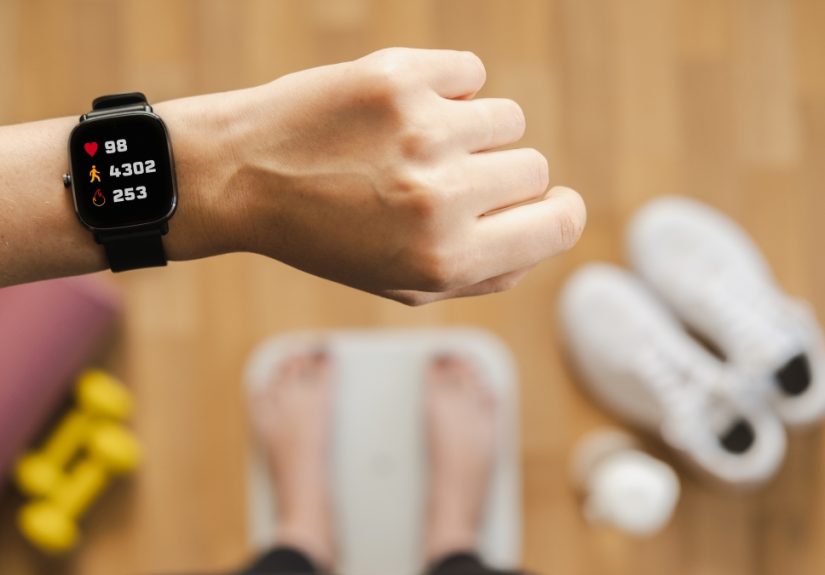
There is also the classic smartwatch experience. You work hard. You sweat. You feel like a champion. Then your device reports a calorie number that seems personally insulting. This is where many people learn that estimates are just that: estimates. Devices can be useful for spotting patterns, but they are not perfect reflections of what your body is doing. The healthiest response is usually not panic. It is perspective.
Many people also report that strength training changes how they think about calorie burn. At first, it may seem less exciting than cardio because the calorie number looks smaller in the moment. But over time, feeling stronger, moving better, and improving body composition can make that trade-off feel pretty worthwhile. The win is not always in the immediate burn. Sometimes it is in what your body becomes better at doing every day afterward.
Perhaps the biggest experience of all is learning that consistency beats drama. A dramatic week of overexercising and under-eating might produce a flashy story, but it rarely creates a stable lifestyle. Meanwhile, a boring routine of daily walks, regular strength sessions, decent meals, and enough sleep can quietly transform health over months. It is not glamorous. It will never trend like a miracle hack. But it works, and that is a lovely trait in a plan.
So if you have ever felt confused by calorie-burn advice, welcome to the club. The useful answer is not hidden inside one magical number. It is hidden inside your routine, your recovery, your habits, and your willingness to play the long game.
Conclusion
The number of calories you “should” burn each day is not a fixed commandment. It is a moving target shaped by your body and your lifestyle. For most adults, the healthiest benchmark is meeting weekly physical activity guidelines, adding strength work, and moving more throughout the day. For teens, the focus should be on regular daily activity rather than calorie math. For everyone, the goal is a routine that supports health without turning exercise into punishment or food into a scorecard.
If there is one message worth keeping, it is this: do not chase a random calorie number just because it sounds impressive. Build a routine that helps you feel stronger, healthier, and more consistent. Your body is not asking for perfection. It is asking for support.
Note: This article is for general informational purposes and is not a personalized medical prescription. Teens, pregnant people, competitive athletes, older adults, and anyone with a health condition may need individualized guidance from a qualified healthcare professional.