Table of Contents >> Show >> Hide
- Who Is The Artist Behind These Parenting Comics?
- Why These 42 Comics Feel So Ridiculously Relatable
- What Makes Stay-At-Home Parent Humor So Powerful?
- Representation Matters, And These Comics Know It
- Why Readers Keep Coming Back For More
- What These Comics Say About Modern Parenting
- Extra Reflections: The Stay-At-Home Parent Experience Behind The Joke
- Final Thoughts
There are two kinds of parenting humor in this world. The first kind is the polished, picture-perfect sort that pretends every family morning begins with sunlight, pancakes, and a child who says “Good morning, Father” like a tiny Victorian gentleman. The second kind is the honest kind: the kind with spilled snacks, weaponized silence, rogue crayons, and a grown adult negotiating with a toddler like a hostage mediator who has not slept since Thursday. George Gant’s comic strip lives gloriously in that second category, and that is exactly why readers can’t get enough of it.
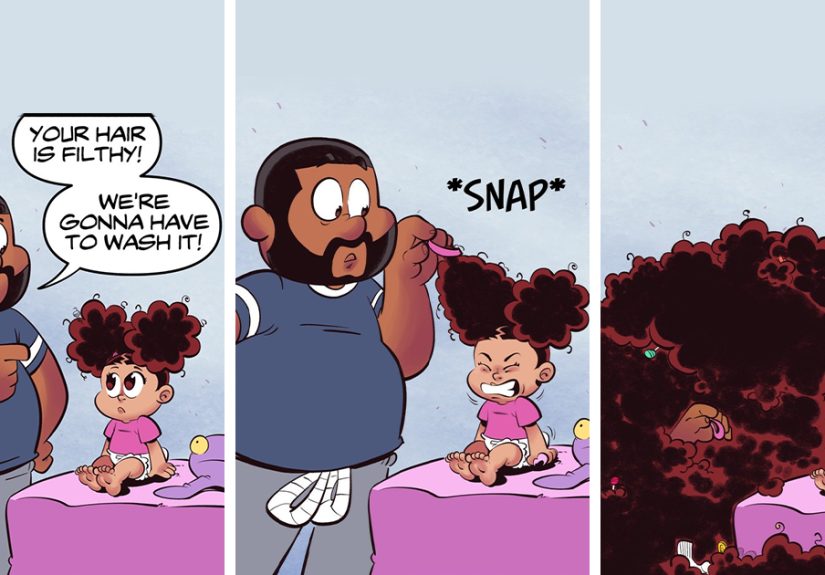
In this collection of 42 hilarious comics inspired by life as a stay-at-home parent, Gant turns ordinary domestic chaos into something sharper than a parenting meme and warmer than a stand-up routine. His work does not laugh at family life from a distance. It laughs inside it, with all the mess, love, fatigue, and absurdity still stuck to the furniture. That difference matters. It is what makes these comics feel less like disposable internet jokes and more like a comic diary from the front lines of juice boxes, hide-and-seek, and suspiciously quiet afternoons.
And yes, that is a compliment. Because when a house gets too quiet around a toddler, every parent knows one thing: trouble is not gone. Trouble is simply charging its batteries.
Who Is The Artist Behind These Parenting Comics?
The artist at the center of this story is George Gant, creator of Beware of Toddler, a comic strip built around the daily adventures of a stay-at-home dad and his wildly unpredictable child. Gant’s work stands out because it feels lived-in. The setup is simple, but the comedy is precise: a parent tries to do one reasonable thing, a toddler interprets reality through goblin logic, and the resulting disaster somehow becomes both ridiculous and emotionally true.
That truth is the real engine here. Plenty of comics can land a punchline. Fewer can make readers laugh and then mutter, “Oh wow, that happened in my house yesterday.” Gant’s best strips manage both. They capture those tiny domestic moments that are so specific they become universal: a child demanding snacks seconds after a meal, a parent attempting a two-minute break that becomes a mythological quest, or a harmless household object suddenly promoted to “favorite toy of all time” for no logical reason whatsoever.
His humor also benefits from the traditional rhythm of newspaper-style comics. The pacing is tight. The panels do not overexplain. The joke arrives quickly, but the emotional recognition lingers. That is a big reason these strips work so well online too. They are compact enough to scroll through, yet clever enough to stick in your head long after your coffee has gone cold for the third time.
Why These 42 Comics Feel So Ridiculously Relatable
The genius of these comics is not that they reveal parenting to be hard. Every parent, babysitter, grandparent, and exhausted older sibling already knows that. The genius is that they reveal how parenting is hard: not always in dramatic, movie-ready ways, but in small, relentless, deeply funny ways. Life with a toddler is rarely one giant catastrophe. It is usually thirty-seven tiny catastrophes wearing socks that do not match.
That is why Gant’s comics hit so well. He understands that the stay-at-home parent experience is built on contradictions. You are overworked and under-stimulated at the same time. You are constantly needed and strangely invisible. You love your child more than oxygen but would also like, just once, to finish a thought without someone yelling from the bathroom. The comics lean into those contradictions rather than flattening them into bland “kids say the darndest things” material.
Take the recurring themes that show up in so much parenting humor: wall scribbles, disappearing personal space, snack negotiations, nap-time roulette, and a child’s baffling fascination with objects that are absolutely not toys. On paper, these are tiny incidents. In real life, they are the architecture of the day. A comic that captures them well is doing more than telling jokes. It is documenting a form of labor that can be emotionally intense, physically draining, and somehow still full of love.
The Comedy Comes From Recognition, Not Exaggeration
That is the secret sauce. These strips do not need wild fantasy setups because real family life is already weird enough. A toddler can turn a cardboard box into a spaceship, a couch into a mountain range, and a parent’s attempt to read the news into an act of personal betrayal. Gant’s humor thrives in those moments where adult logic crashes headfirst into toddler logic and loses badly.
And honestly, adult logic deserves it sometimes. Parenting is one of the few parts of life where a person can have a mortgage, taxes, and a serious opinion about interest rates, yet still spend ten minutes arguing about why applesauce cannot be worn as a hat. Comics that understand this are not merely funny. They are historically accurate.
What Makes Stay-At-Home Parent Humor So Powerful?
Humor about stay-at-home parenting works best when it respects the role instead of reducing it to a lazy stereotype. That is where Gant’s work feels especially fresh. The parent in these comics is not a clueless mascot who wandered into childcare by mistake. He is tired, outnumbered, occasionally bewildered, but clearly engaged. He is doing the work. That distinction matters because popular culture has not always known what to do with stay-at-home dads except make them look confused, emasculated, or comically unqualified.
These comics push in the opposite direction. They present caregiving as skilled, frustrating, repetitive, loving, and funny all at once. That makes them more believable, but it also makes them more generous. The jokes do not rely on the assumption that fathers are naturally bad at this or that home life is somehow less serious than paid work. Instead, the strip treats domestic labor like what it actually is: real labor with real stakes, real fatigue, and real comic potential.
That perspective gives the entire collection more weight. The best parenting comics are not just about being funny. They are about making hidden work visible. They show what a day looks like when one person is the household’s snack distributor, emotional support department, safety inspector, cleanup crew, conflict negotiator, and entertainment channel. In other words, they show what happens when one adult becomes a one-person startup called “Keeping Everybody Alive.”
Representation Matters, And These Comics Know It
Another reason this collection stands out is that it adds visibility to a type of family story that still does not appear often enough in mainstream media. A comic centered on a stay-at-home dad already pushes against old assumptions. A comic centered on Black fatherhood adds another layer of importance. Gant’s work broadens the picture of what parenting stories can look like without turning itself into homework. It leads with laughter, then quietly expands representation while readers are busy chuckling.
That balance is hard to pull off. Some creators become too didactic and lose the joke. Others chase broad humor so hard that the work becomes generic. These comics avoid both traps. They feel personal enough to be meaningful and funny enough to be addictive. The result is a strip that can entertain casual readers while also offering something more valuable: visibility, familiarity, and a better picture of modern caregiving.
In a media landscape that still too often treats fathers as side characters in family life, that matters. It matters to dads who want to see themselves reflected. It matters to moms who know firsthand how invisible domestic labor can be. And it matters to readers who enjoy comedy that actually comes from observation instead of stereotype.
Why Readers Keep Coming Back For More
People return to comics like these for the same reason they rewatch favorite sitcoms: comfort through recognition. The setting is chaos, but the effect is strangely reassuring. These strips say, “No, you are not the only person whose child has transformed bedtime into an Olympic event.” That message has real value, especially in a culture where parenting is often packaged as either perfect bliss or total collapse, with very little room for the weird middle ground where most real families actually live.
Gant’s comics sit squarely in that middle ground. They understand that family life is rarely glamorous and almost never efficient, but it is full of moments worth noticing. Some are sweet. Some are maddening. Many are both at once. The punchlines land because the emotional setup is honest. Readers are not just laughing at a joke. They are laughing at a truth that has finally been phrased correctly.
That is why a set of 42 parenting comics can feel bigger than a simple roundup. Together, they become a portrait of daily life in miniature. They show how a home can be both battlefield and playground, comedy club and endurance sport. They remind readers that parenting stories do not need giant milestones to be meaningful. Sometimes the funniest, truest material comes from trying to use the bathroom alone or recovering your phone from a location no phone should ever be.
What These Comics Say About Modern Parenting
At a deeper level, this collection works because it reflects a broader truth about modern family life: parents are under pressure, and humor is one of the healthiest survival tools they have. Stay-at-home parenting can be joyful, but it can also be isolating. The days can feel repetitive. The work can be invisible. The victories are often microscopic. Nobody throws a parade because the toddler wore pants without filing an official complaint.
That is precisely why comics like these matter. They turn invisible labor into visible art. They elevate the tiny moments most people never document. They take the emotional weather of the home, with all its sudden storms and weird sunshine, and make it legible. When readers laugh at these strips, they are not escaping real life. They are seeing real life translated into a language that feels manageable.
There is also something quietly radical about that. Parenting humor, at its best, does not trivialize the work. It honors the work by admitting how bonkers it can be. It says that the person who packed the snacks, cleaned the floor, answered the same question twelve times, and prevented a miniature catastrophe before noon deserves more than vague appreciation. They deserve a laugh. Possibly several.
Extra Reflections: The Stay-At-Home Parent Experience Behind The Joke
To make this article longer and more useful for readers, it is worth slowing down and talking about the lived experience behind the comedy. Because while the comics are hilarious, the reason they are hilarious is that they are built on patterns every stay-at-home parent eventually knows by heart. There is the morning sprint, when the day begins at full volume and absolutely nobody respects the concept of “starting slow.” There is the snack loop, where a child requests food, rejects the food, steals your food, then announces hunger like none of those previous events ever happened. There is the impossible search for five uninterrupted minutes, which feels less like self-care and more like trying to smuggle peace across a heavily guarded border.
Then there is the mental load, the part nobody can see from the outside. A stay-at-home parent is not simply “at home.” That phrase makes it sound like someone is lounging near a throw pillow, perhaps contemplating lemon-scented candle choices. In reality, that parent is often keeping track of meals, moods, appointments, spills, laundry, safety hazards, missing shoes, bedtime strategy, educational guilt, and whether the silence coming from the next room is peaceful or deeply suspicious. Usually it is the second one. Silence in a house with small children often feels like a trap set by a tiny genius.
These experiences also explain why humor hits differently for stay-at-home parents. A good joke can release pressure that has been building all day. It can turn embarrassment into perspective. It can transform a ridiculous moment into a story worth retelling instead of a meltdown worth regretting. When a comic nails the exact expression of a parent who has just discovered marker on a wall, it is not merely funny art. It is emotional validation in panel form.
Another truth behind these comics is the loneliness that can creep into full-time caregiving. Even loving, capable, devoted parents can feel isolated when much of their day is spent with a child who communicates through half-formed sentences, sound effects, or dramatic floor work. Adult conversation starts to feel luxurious. So does finishing a cup of coffee while it is still hot. Comics become a way of restoring connection. They say, “Someone else has lived this too.” That message may be wrapped in a joke, but its effect is deeply human.
And finally, there is the strange beauty of it all. Stay-at-home parenting is exhausting, repetitive, and occasionally absurd enough to deserve its own Olympic category. But it is also intimate in a way few jobs can match. You witness language forming. You witness personality arriving. You witness tiny rituals becoming family folklore. The same child who drove you to the edge over socks in the morning may say something hilarious or unexpectedly tender by afternoon and completely rearrange your heart. That emotional whiplash is hard to explain in plain prose. In comics, though, it makes perfect sense. One panel can hold frustration. The next can hold affection. The next can hold a punchline. That is parenting, basically: chaos, love, mess, repeat.
Final Thoughts
This collection is more than a batch of funny parenting comics. It is a sharp, affectionate portrait of what full-time caregiving actually feels like when you strip away the clichés and keep the truth. George Gant understands that the stay-at-home parent experience is not built from grand speeches or cinematic milestones. It is built from tiny negotiations, ridiculous mishaps, private exhaustion, and love so constant it becomes the background music of the entire day.
That is why these 42 comics land. They are funny, yes, but they are also observant, generous, and grounded in real life. They respect the work, mock the chaos, and somehow make readers feel more seen in the process. In a crowded internet full of disposable jokes, that is a serious achievement. Or, to put it in parenting terms, this artist did the impossible: he made something smart, heartfelt, and laugh-out-loud funny before someone yelled, “Dad, where are my socks?”