Table of Contents >> Show >> Hide
- What Are “Devil Horns,” Exactly?
- A Symbol Older Than Amplifiers
- How a Folk Gesture Became a Metal Salute
- So Why Call Them “Devil Horns”?
- Hook ’Em Horns vs. Metal Horns: The Most American Plotline Possible
- The Trademark Fiasco That Proved the Horns Belong to Everyone
- So… Where Did the Devil Horns Really Come From?
- of Real-World “Devil Horns” Experiences
Somewhere between the first power chord and the first spilled energy drink, heavy metal acquired a universal language:
loud riffs, louder drums, and one tiny hand gesture that says, “Yes. This. More of this.” The “devil horns”
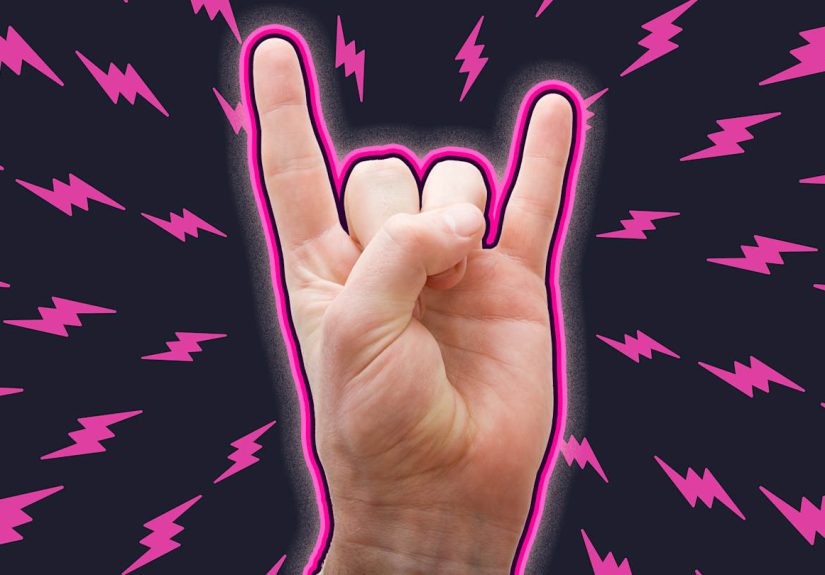
(also called the “metal horns” or the “sign of the horns”) looks simpleindex and pinky up, middle and ring tucked,
thumb doing crowd-control dutybut its backstory is anything but simple.
Depending on who you ask, the horns are: an occult symbol, a folk charm, a sports chant, a sign language cousin,
a concert reflex, or a highly efficient way to tell your friend, “I can’t hear you, but I spiritually agree.”
The truth is more interesting than a single origin story. The horns didn’t drop from the sky on a leather jacket.
They traveledacross centuries, countries, subcultures, and stagesbefore becoming heavy metal’s default “hell yeah.”
What Are “Devil Horns,” Exactly?
In the heavy metal world, “devil horns” usually means a raised fist with the index finger and pinky finger extended,
with the middle and ring fingers folded down. Sometimes the thumb is tucked in; sometimes it’s extended outward.
That detail matters, because one thumb decision can change your meaning from “metal forever” to “I love you,”
or from “rock on” to “go Longhorns.”
That identity crisis is part of the mystique. The horns are a symbol, not a sentence.
They communicate moodsolidarity, approval, intensitymore than literal words. And because they’re so easy,
they’ve been borrowed everywhere: concerts, photos, sports crowds, and yes, the occasional family barbecue
where your uncle thinks he’s “down with the kids.” (He isn’t. But we support his journey.)
A Symbol Older Than Amplifiers
The Evil Eye: A Very Old Fear With Excellent Branding
Long before metal fans used horns to salute a guitar solo, many cultures used horn imagery as protection.
One of the oldest and most widespread ideas behind that is the “evil eye”the belief that a jealous or hostile
glance can cause harm, misfortune, or illness. The evil eye isn’t a niche superstition; it shows up across
continents and religious traditions, from ancient societies to modern folk practices.
Whether you personally believe in it or not, the evil eye is a powerful cultural concept: it turns everyday envy
into something you can “defend against.” And humans love defensive accessories. Hence: charms, amulets,
and protective gesturessmall actions that say, “Not today, bad vibes.”
Italy’s Horn Tradition: Cornicello and “Don’t Jinx Me” Energy
In parts of Italyespecially around Naplesyou’ll find a famous protective symbol: the cornicello,
a small horn-shaped charm often colored red. Traditionally, it’s associated with good luck and protection
against the evil eye, and it’s also been linked to ideas like strength and fertility. It’s an object version
of the same logic: horns protect.
Now connect the dots: if a horn charm is protective, it’s not a huge leap for a horn-like hand gesture
to become protective too. This is where the “mano cornuta” (Italian for “horned hand”) enters the chat.
The gestureindex and pinky extendedhas been used in folk contexts as a way to ward off bad luck or evil influences.
In other words: it started as spiritual pest control.
Here’s the catch: in some places, context changes everything. The horned hand can be protective in one moment,
and insulting in another (especially if it’s aimed at a person in a way that implies ridicule).
It’s a reminder that gestures aren’t universal emojis. They’re cultural artifactsand they don’t come with pop-up
tooltips in real life.
How a Folk Gesture Became a Metal Salute
Ronnie James Dio: The Catalyst (and the Most Famous Messenger)
If heavy metal had a passport stamp for the horns, it would read: “Popularized by Ronnie James Dio.”
Ronnie James Dio didn’t claim he invented the hand shape from scratchhe said he learned it from his Italian family,
describing it as a traditional gesture used to ward off the evil eye. Then he brought it onstage and made it iconic.
The timing mattered. When Dio joined Black Sabbath in 1979 and stepped into arenas full of fans already fluent in
dramatic symbolism, he needed a quick visual signature. Ozzy Osbourne had his peace sign; Dio needed his own
“hello, we are about to summon something very loud” move. The horns fit perfectly: simple, striking, and loaded
with mythic energy even before anyone called it “devil” anything.
From there, the metal world did what it does best: it amplified. A gesture that once lived in folk superstition
became a concert salute. The horns turned into a communal punctuation mark: you throw them up to salute the band,
the riff, the breakdown, the moment you feel your face doing that involuntary “stank face of respect.”
Yes, There Were Earlier Sightings (Because History Loves a Plot Twist)
Here’s where the origin story gets spicy (and by spicy, we mean “arguments on the internet that will outlive us all”).
Some accounts point to earlier uses of the horns in rock culture before Dio’s Black Sabbath era.
One frequently cited example is the late-1960s Chicago occult-rock band Coven, whose imagery is often described
as featuring the sign of the horns well before it became a metal crowd default.
Another layer: members of Black Sabbath have discussed using the gesture earlier as well.
Bassist Geezer Butler, for example, has said he used the horns before Dio and even showed it to him.
That claim doesn’t erase Dio’s role; it just reinforces the bigger point: “origin” and “popularization” are not the same job.
Plenty of people can hold a match. The person who lights the stadium torch still gets remembered.
In other words, Dio may not have been the first human to ever arrange fingers into horn-shape.
But he became the figure most associated with turning it into metal’s global symbolbecause he used it consistently,
visibly, and at exactly the right cultural moment.
So Why Call Them “Devil Horns”?
Horns Are a Shortcut Symbol (For Better or Worse)
The “devil” label is a classic case of image shorthand. In Western pop culture, horns often get linked to devils,
demons, and anything that feels rebellious or taboo. Heavy metal leaned into that theatrical vocabularysometimes as
genuine spiritual aesthetics, often as performance, and very frequently as “please clutch your pearls harder,
we’re trying to put on a show.”
When a gesture looks like horns and appears at a loud concert with dramatic stage lights,
outsiders can jump to “devil” as the easiest explanation. But the older folk meaning is basically the opposite:
the horned hand was often used to repel evil, not invite it in for snacks.
Context Changes Meaning: A Quick Survival Guide
The horns are a perfect example of why gestures can be misunderstood. Same hand shape, different worlds:
- Metal concerts: “This rules.” / “Respect.” / “I am emotionally air-guitaring.”
- Italian folk context: Traditionally tied to warding off bad luck (but can be insulting depending on how and where it’s used).
- American sports (Texas): “Hook ’em Horns” for the University of Texas Longhorns.
- American Sign Language adjacent: A similar-looking handshape with the thumb extended can mean “I love you.”
If you take nothing else from this article, take this: your fingers may be bilingual even if you’re not.
Hook ’Em Horns vs. Metal Horns: The Most American Plotline Possible
How Texas Made Horns a Team Sport
In the United States, the most famous non-metal use of the horns is “Hook ’em Horns,” the hand sign associated with
the University of Texas Longhorns. The tradition is commonly traced back to 1955, when a UT cheerleader named
Harley Clark reportedly led the gesture and the phrase into campus culture.
This is where things get funny: on one side, you have metal fans, leather, and distortion pedals.
On the other side, you have college football, burnt orange, and the kind of school spirit that can be heard
from orbit. Same silhouette. Different soundtrack.
That Awkward Thumb (AKA: The Finger Detail That Starts Debates)
The Texas “Hook ’em” sign is commonly done with the thumb extended outward.
Meanwhile, the metal version often tucks the thumb in, pressing down the middle and ring fingers.
And then there’s the ASL “I love you” handshapethumb, index, and pinky extendedwhich resembles horns
to anyone who isn’t paying attention.
This overlap is not just trivia; it’s why people argue about ownership and meaning.
It’s also why you might see someone throw “horns” in a photo and accidentally send a message they didn’t intend.
(Congratulations, you either pledged allegiance to a football team or told your grandma you love her.
Honestly? Both are wholesome outcomes.)
The Trademark Fiasco That Proved the Horns Belong to Everyone
If you ever want proof that the horns are bigger than any single musician, look at what happened in 2017,
when Gene Simmons of KISS attempted to trademark a version of the gesture. The move sparked backlash,
partly because the sign is widely used across music and culture, and partly because a similar handshape is used in
American Sign Language to mean “I love you.” The application was later abandoned.
The episode turned the horns into a legal-meme moment: a global symbol so widely shared that trying to “own” it
felt like trying to trademark “high fives.” (Next up: someone tries to copyright nodding.)
So… Where Did the Devil Horns Really Come From?
The most accurate answer is: the horns have multiple roots, and heavy metal adopted them because they already carried power.
The gesture echoes ancient and folk traditions in which horns symbolized protection, strength, or luckespecially
in cultures shaped by the fear of envy and the evil eye.
Then, in modern music, the horns became a stage language: a quick, bold visual that matched metal’s intensity.
Ronnie James Dio remains the central figure in this story because he didn’t just use the hornshe made them
unmistakable in the metal context. And once a crowd learns a symbol that feels like belonging, it spreads fast.
Faster than merch lines. Faster than a double-kick drum pattern. Possibly faster than rumors about who “really started it.”
In the end, the devil horns are “mystifying” because they’re not a single invention.
They’re an evolved gesture: part folk charm, part theatrical rebellion, part community salute.
They’re historythrown up in the air, in perfect time with the riff.
of Real-World “Devil Horns” Experiences
If you want to understand why the horns survived every argument about “who did it first,” don’t start with Wikipedia
fightsstart with lived experience. Ask anyone who’s been to a heavy metal show (or a rock show where the guitars
are loud enough to rearrange your posture): the horns are less like a symbol you analyze and more like a reflex you catch.
You walk in as a person with hands. You walk out as a person who has discovered that your hands come with a volume knob.
There’s a moment that happens in a crowd right before the band hits a favorite songwhen the room shifts from “waiting”
to “we all know what’s about to happen.” People raise phones, shoulders tighten, and then the horns appear like a field
of tiny antennas picking up the same frequency. Nobody gives a speech about the evil eye or Italian folk tradition.
Nobody pauses to debate whether the thumb should be tucked. The gesture works because it’s immediate: it says,
“I’m with you,” to the band and to the strangers beside you.
The horns also show up in smaller, quieter moments: outside venues while people compare setlists, in parking lots while
someone recreates a guitar lick on an invisible fretboard, in photos where the expression is half joy and half
“I cannot believe I am seeing this live.” For newer fans, throwing the horns can feel like stepping into a lineage.
It’s a way to participate without needing the perfect vocabulary. Even if you don’t know every album, you know the vibe.
Then there’s the “crossover experience,” when the same gesture means something totally different in a different setting.
Maybe you go to a football game and see “Hook ’em Horns” everywhere. Maybe someone flashes the ASL “I love you” handshape
in a heartfelt moment, and you realize your brain has been auto-captioning it as “rock on.” Those moments can be funny,
but they also teach a real lesson: gestures are social tools, and social tools are shaped by the room you’re in.
Metal fans often learn this quickly when travelingbecause what reads as a friendly salute at a festival can read as rude
in another culture if it’s aimed at someone the wrong way.
And finally, there’s the “memory experience.” Years later, people still throw the horns in photos without thinking,
because the gesture becomes shorthand for a whole era of their life: first concert, favorite tour, that one night the
band played the deep cut you thought you’d never hear live. In that sense, the horns aren’t just about devils,
grandmothers, or myths. They’re about recognitionabout finding a tribe in the noise, and having a simple way to say,
“I was there. I felt that. And it was loud in the best way.”