Table of Contents >> Show >> Hide
- When Polyester Ruled the Waves: The 1970s TV Ecosystem
- Captain Stubing vs. Archie Bunker: Two Very Different Captains
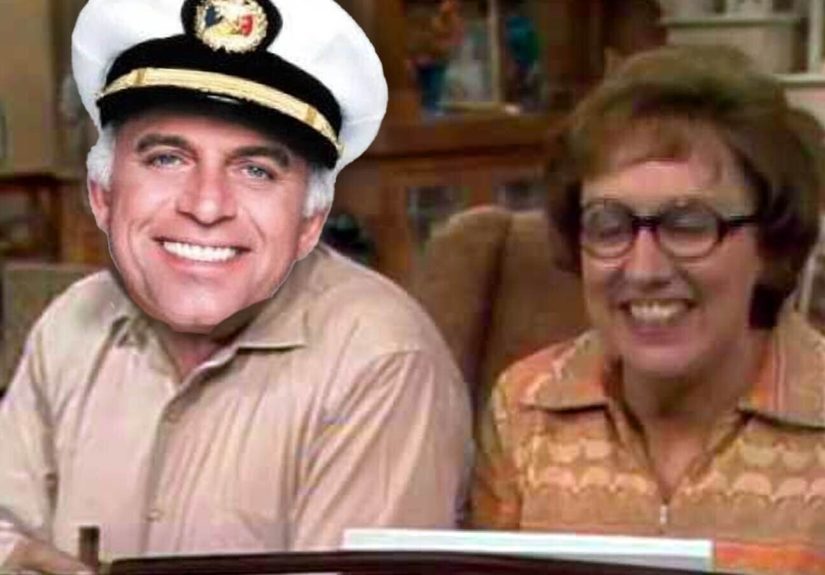
- What If Archie Took the Helm of The Love Boat?
- Why This Fake Crossover Actually Explains Real 1970s TV
- Legacy Check: Two Icons Still Sailing
- Conclusion: Why Archie Never Boarded (And Why That’s Perfect)
- Experiences, Nostalgia, and the Strange Comfort of This What-If
Imagine tuning into The Love Boat on a Saturday night and, instead of the warm,
perpetually understanding Captain Merrill Stubing welcoming you aboard, you get Archie
Bunker leaning over the rail, yelling at the ocean for being “too foreign.”
That’s the alternate timeline we’re sailing into today: a tongue-in-cheek, fact-grounded,
pop culture thought experiment that asks what would have happened if 1970s TV’s most
lovable cruise director of hearts had been replaced by its most stubborn, big-mouthed
armchair nationalist.
No, Archie Bunker was never actually in line to captain the Pacific Princess. But setting
his grumpy worldview against the floating hug machine that was The Love Boat
is the perfect way to understand what American TV thought we needed: tough conversations
vs. pure escapism, social shock therapy vs. champagne and guest stars.
When Polyester Ruled the Waves: The 1970s TV Ecosystem
To get why this hypothetical mashup is so funny (and so revealing), you have to remember
what television looked like back then. All in the Family (1971–1979) dropped Archie
Bunker in our laps as a blue-collar Queens patriarch whose bigotry was the point, not the
punchline. Through him, Norman Lear dragged living-room racism, sexism, and politics into
prime time and made audiences argue with their TV setsand with each other.
A few years later, The Love Boat (1977–1986) docked at ABC as the anti-Archie:
bright, bubbly, formula-driven comfort TV set aboard a Princess Cruises ship. Instead of
raging about changing America, the show specialized in soft lighting, second chances,
and celebrity guest stars finding romance somewhere between the buffet and the shuffleboard
court. It was executive producer Aaron Spelling’s genius distillation of “What if a resort
brochure had feelings?”
One show told you America was changing whether you liked it or not. The other poured you
a piña colada and promised Charo might show up.
Captain Stubing vs. Archie Bunker: Two Very Different Captains
Captain Merrill Stubing: The Gentle Admiral of Escapism
Gavin MacLeod’s Captain Merrill Stubing wasn’t just a character; he was company policy.
He radiated paternal calm, fairness, and mild exasperationthe ideal man to resolve
romantic misunderstandings in under 48 minutes plus ad breaks. His presence helped
turn The Love Boat into a global hit and later into a floating marketing arm for
Princess Cruises, who leaned so hard into the synergy that MacLeod effectively became
an ambassador of high-seas happiness.
Stubing’s authority came wrapped in kindness. He listened, mediated, occasionally
scolded, and made sure everyonecrew, passengers, and guest starsgot a dignified shot
at love, closure, or at least a conga line.
Archie Bunker: The Reluctant “Captain” of America’s Conscience
Archie Bunker, played by Carroll O’Connor, was built to be uncomfortable. A WWII vet and
working-class conservative, Archie was loud, suspicious, biased, and often wrong. The
brilliance was that audiences laughed at him, sometimes with him, and slowly recognized
his blind spots as their own. He became one of television’s most influential characters,
reshaping how sitcoms could tackle race, gender, class, and politics without blinking.
In narrative terms, Archie already was a captainof his worn-out recliner, his row
house, and his rapidly collapsing idea of how the world should work. Put that man on a
cruise ship and the only thing floating is an HR complaint.
What If Archie Took the Helm of The Love Boat?
1. Guest Stars vs. Grievances
The Love Boat thrived on stunt casting: TV icons, movie veterans, singers, comedians,
all parading through the gangway to fall in love, reconcile, or learn a Very Gentle Lesson.
Now picture Archie greeting them:
“Welcome aboard. Don’t touch nothing.”
Instead of a nurturing captain orchestrating heartfelt subplots, we’d get a man who
side-eyes everyone’s haircut, interrogates their background, and complains about
“all these modern people with their feelings.” The Pacific Princess’s legendary inclusivity
would slam into Archie’s suspicion of basically everything invented after 1955.
2. Romance, Rewritten with Reluctant Tolerance
The original show specialized in light, inclusive romance: older couples reconnecting,
cross-cultural relationships, career women juggling love and ambition, and the occasional
social-issue twist tucked inside a sun-drenched montage.
Put Archie in charge, and every progressive relationship becomes a three-act cage match:
Act I: Archie rants. Act II: someone explains why he’s wrong. Act III: he grumbles out a
half-apology that sounds like, “Eh, you ain’t the worst.”
It would be less “feel-good cruise comedy” and more “floating focus group on American
prejudice.” Must-see TV? Absolutely. Brand-safe cruise brochure? Not a chance.
3. Network Executives Would Have Mutinied
ABC already had its “difficult conversations” tentpole in All in the Family-style
programming. The Love Boat was their counterweight: a sunlit guarantee that not every
show would start an argument over dinner.
Making Archie captain would fuse the two strategies into a single chaotic energy:
controversial hot takes at sea. Sponsors who signed up for champagne, sunsets, and
Princess Cruises synergy would suddenly find themselves attached to prime-time debates
about immigration, feminism, and labor unions in the Lido Lounge.
The phrase “valuable four-quadrant family show” would leap overboard.
Why This Fake Crossover Actually Explains Real 1970s TV
Thinking about “Archie Bunker as Love Boat captain” is ridiculousand incredibly useful.
It spotlights how sharply TV separated its missions:
- Shows like All in the Family weaponized comedy to confront hypocrisy,
bigotry, and fear of change. - Shows like The Love Boat offered reassurance that people are basically
kind, problems are solvable, and no matter how weird your situation, you can fix it
before the ship docks.
Archie’s universe says, “The world is changing and it’s messy.” Stubing’s says, “The
world is complicated, but if you talk nicely and wear resort casual, everything will be OK.”
Both were fantasiesjust different flavors. One let you argue through the discomfort; the
other let you escape it with a steel drum soundtrack.
Putting Archie in Stubing’s shoes exposes how fragile that escapism is. One loudly
prejudiced authority figure and the entire pastel fantasy collapses. Which is exactly why
the real show needed a captain like Stubing: calm, decent, unshakably fair. He wasn’t
there just to steer the ship; he was there to keep the fantasy morally upright without
ever calling it homework.
Legacy Check: Two Icons Still Sailing
Decades later, both properties still echo through pop culture. Archie Bunker remains a
benchmark for complex, flawed TV characters who expose social tensions instead of
smoothing them over. Meanwhile, The Love Boat survives as shorthand for breezy,
guest-star-stuffed comfort TV and as a real-world marketing engine for cruising culture.
Our imaginary scenario works because it’s built on real contrasts: a culture-warrior
screaming from his stoop vs. a diplomat in dress whites managing 2,000 feelings and one
ship. TV needed both. Viewers needed both. Just not… at the same time… in the same
uniforms.
Conclusion: Why Archie Never Boarded (And Why That’s Perfect)
In the end, the idea of Archie Bunker captaining The Love Boat is the ultimate
reminder that castingand toneis destiny. Swap Captain Stubing for Archie and you
don’t just tweak the vibe; you detonate the premise. The original series worked because
its captain believed people could grow, love, and redeem themselves with a gentle nudge
and a sunset.
Archie’s world told us that growth is painful and never guaranteed. Stubing’s world told
us that for one hour on Saturday night, it was safe to believe in happy endings. Both
visions mattered. Mixing them would have sunk the shipbut imagining it tells us
everything about how 1970s television balanced confrontation and comfort on the same
cultural ocean.
sapo:
What would happen if TV’s crankiest bigot took the helm of pop culture’s happiest cruise?
This in-depth, humorous breakdown contrasts Archie Bunker’s chaotic honesty with Captain
Stubing’s polished optimism to reveal how 1970s television carefully balanced controversy
and escapism. From network strategy and casting realities to cultural legacy and fan
nostalgia, explore why this wild “what if” is the perfect lens on how America chose to
laugh, argue, and sail away.
Experiences, Nostalgia, and the Strange Comfort of This What-If
Part of the lasting charm of this scenario is how it taps into shared viewing rituals.
Plenty of American households had both shows in their bones: Dad nodding a little too
hard at Archie’s complaints, Mom quietly disagreeing, the kids half-watching from the
floor, then everyone regrouping later to let The Love Boat rinse it all down with
sequins and saxophone solos.
For many viewers, All in the Family was where real conversations started. You’d see
Archie blow up over somethinga neighbor, a headline, a new ideaand then hear your own
relatives respond. Some defended him, some challenged him, some shifted uncomfortably.
The show functioned like an accidental family moderator, using jokes as training wheels
for bigger truths.
The Love Boat, in contrast, played like the collective fantasy of what life might feel
like if people always eventually did the right thing. There was a kind of emotional
tourism in watching it: you might never take a cruise, never sip champagne next to a TV
star, but you could borrow that version of the world for an hour and step off feeling
lighter. The crew became familiar: the firm-but-kind captain, the wisecracking bartender,
the ever-hopeful cruise director. They were less characters and more emotional staff.
When fans later booked actual cruises inspired by the showposing under that iconic
rail, humming the theme songthey weren’t just chasing vacation photos. They were trying
to board a place where every plotline bent toward connection. That’s a powerful legacy
for what began as a mid-budget anthology-of-romance series.
Dropping Archie Bunker into that world, even just in our imaginations, reveals how
carefully built that comfort was. One wrong captain and the illusion cracks: suddenly the
show has to answer harder questions about class, prejudice, and who gets to feel welcome
onboard. And that’s why this thought experiment lands so well with modern audiences:
we’ve seen what happens when beloved franchises, reboots, or “gritty reimaginings” jam
incompatible tones together. It rarely feels brave; it just feels broken.
So the fan experience todayrewatching episodes, trading trivia, joking online about
“Archie at the helm”becomes a way of appreciating the craft behind both shows. We see
how one sitcom used discomfort to push the culture, and another used comfort to sell a
kinder vision of it. We recognize that the right actor in the right role doesn’t just
entertain; it defines whether a story heals, provokes, or accidentally torpedoes itself.
And somewhere out there in the great shared TV memory, viewers are still sailing with
Captain Stubing while arguing with Archie Bunkerand weirdly grateful those two men
never had to share a bridge.