Table of Contents >> Show >> Hide
- Why Mangos Are Tricky to Cut
- The Best Way to Cut a Mango: A Step-by-Step Guide
- Alternative Cutting Methods (Because Everyone Has a Preference)
- How to Tell if a Mango Is Ripe (Expert Tips)
- Choosing the Right Knife (Yes, It Matters)
- Tips to Avoid Mess and Maximize Flavor
- How to Store Cut Mango Properly
- Common Mistakes to Avoid
- Mango Varieties in the U.S. (And Which Are Easiest to Cut)
- Creative Ways to Use Perfectly Cut Mango
- of Real Mango-Cutting Experiences
- Conclusion
If you’ve ever picked up a ripe, sun-kissed mango only to wrestle with it like it’s a slippery bar of soap, you are not alone. Cutting a mango is an art formequal parts technique, confidence, and a healthy respect for that giant pit in the middle. The good news? Once you learn the best way to cut a mango, you’ll unlock a world of sweet, tropical goodness without the mess, frustration, or emergency-room-adjacent knife slips. This guide brings together expert tips from top U.S. cooking and produce authorities and wraps them into a fun, foolproof method that anyone can master.
Let’s get to the juicy part.
Why Mangos Are Tricky to Cut
Mangos look innocent enoughbright, smooth, and fragrantbut the true challenge lies beneath the skin. Inside each mango is a large, flat pit that runs from top to bottom. This seed isn’t round like a peach pit or small like an avocado seed; it’s long, oval, and awkwardly positioned. Add slippery juice and soft flesh, and you’ve got a fruit that deserves its own cutting tutorial.
Understanding the pit’s placement is step one. Once you know where it sits, slicing becomes predictable instead of chaotic. Most reputable American cooking sitesfrom Bon Appétit to The Kitchnagree: cutting around the pit is the foundation of every proper mango-cutting technique.
The Best Way to Cut a Mango: A Step-by-Step Guide
Step 1: Choose a Ripe but Firm Mango
You want a mango that has a little “give” when you squeeze it, similar to a ripe peach. Too soft and you’ll have mango mush. Too firm and it won’t be sweet. A ripe, slightly firm mango gives you easy slicing and the perfect juicy flavor.
Step 2: Wash and Dry the Mango
Mangos often have residue or sap on the surface, so a quick rinse and dry keeps your cutting board clean and prevents slippery handling.
Step 3: Stand the Mango Upright
Place the mango on its end so the stem faces upward. The flat pit inside aligns vertically, so positioning it this way sets you up for clean slices around the seed.
Step 4: Slice Off the “Cheeks”
The “cheeks” are the large, fleshy sides of the mango. Using a sharp knife, cut about 1/4–1/2 inch off center on each side. If you feel resistance, adjust slightly you may be hitting the pit.
Step 5: Score the Flesh
With each cheek in hand, score the flesh in a grid patternbut don’t cut through the skin. This gives you even mango chunks and makes removal much easier. Popular sources like America’s Test Kitchen and Produce for Better Health Foundation recommend the grid method for beginners.
Step 6: Flip and Pop
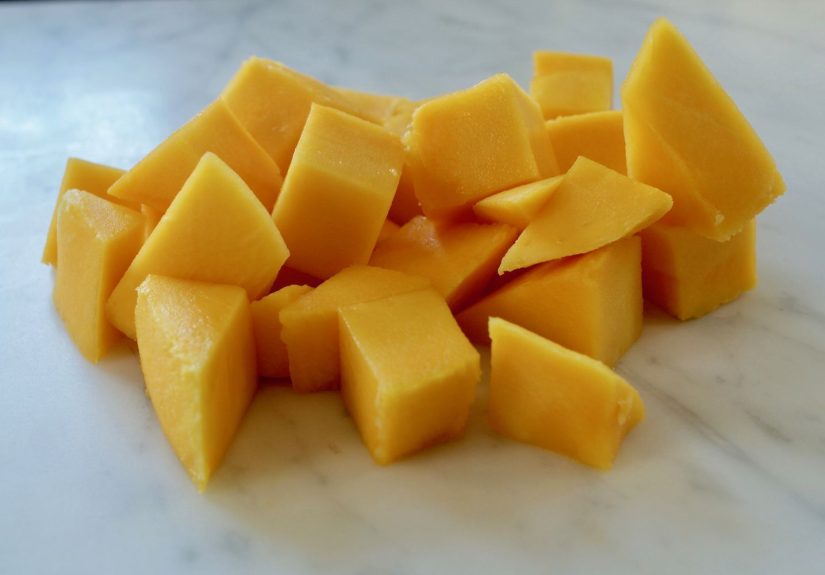
Turn the cheek inside out to push the cubes outward. It should look like a tropical hedgehog. At this stage, you can scoop the cubes out with a spoon or slice them off with the knife.
Step 7: Trim the Remaining Flesh
The edges around the pit still have plenty of edible fruit. Carefully cut them away and slice into strips or cubes.
Alternative Cutting Methods (Because Everyone Has a Preference)
The Slice-and-Scoop Method
This method skips scoring. Simply cut the cheeks, then scoop out the entire cheek in one smooth motion with a large spoon. It produces smooth, clean slices and minimizes juice loss.
The Mango Peeler Method
Some people peel the mango first, then slice it. This method gives beautifully neat cuts but can be slippery and messy if the fruit is very ripe. It’s popular among chefs who prioritize presentation.
The Glass Method (Internet-Famous Hack)
Cut off a cheek, press the flesh side against the rim of a glass, and slide down. The mango pops into the glass, skin left behind. This technique is fun, fast, and oddly satisfyingthough not ideal for very soft mangos.
How to Tell if a Mango Is Ripe (Expert Tips)
- Give it a gentle squeeze: It should yield slightly under pressure.
- Smell the stem area: A ripe mango has a sweet, floral aroma.
- Check skin texture: Minor wrinkles may indicate ripeness.
- Don’t rely on color: Red, green, or yellowcolor doesn’t always signal ripeness.
Experts from U.S. agricultural extensions emphasize that mangos ripen at room temperature, so leave them on the counter until they reach their ideal softness, then refrigerate to extend shelf life.
Choosing the Right Knife (Yes, It Matters)
A sharp chef’s knife is the best tool for cutting a mango cleanly. A dull knife squishes the fruit and increases the risk of slipping. Paring knives are too small and can make handling tricky. If you frequently cut mangos, consider a non-slip cutting board for added safety.
Tips to Avoid Mess and Maximize Flavor
- Use a towel to stabilize the mango if it’s very juicy.
- Chill the mango before cutting for firmer flesh and easier slicing.
- Save the juice! Pour it over smoothies, fruit bowls, or drinks.
- Pair mango cubes with lime juice and chili powder for a refreshing snack.
How to Store Cut Mango Properly
Once cut, mango pieces should be stored in an airtight container in the refrigerator. They stay fresh for up to five days. For longer storage, freeze mango cubes on a tray, then transfer to a freezer bag. These frozen gems are perfect for smoothies, sorbets, and baking.
Common Mistakes to Avoid
- Cutting too close to the pit: You’ll only frustrate yourself.
- Using a dull knife: Leads to squished fruit and messy fingers.
- Peeling too early: Makes the mango slippery and difficult to hold.
- Ignoring mango varieties: Some types are firmer, softer, sweeter, or stringier.
Mango Varieties in the U.S. (And Which Are Easiest to Cut)
Popular varieties like Tommy Atkins, Haden, and Keitt each have different textures:
- Tommy Atkins: Firm and fibrousgreat for slicing.
- Champagne (Ataulfo): Creamy and butteryexcellent for scoring methods.
- Keitt: Large and smoothideal for beginners.
Knowing your mango variety helps you choose the best cutting strategy.
Creative Ways to Use Perfectly Cut Mango
- Add cubes to salads with avocado and feta.
- Toss into yogurt with honey and granola.
- Blend into smoothies for tropical flair.
- Include in salsas with jalapeños and cilantro.
- Serve as a topping for grilled chicken or fish.
of Real Mango-Cutting Experiences
Anyone who’s spent time in the kitchen knows that cutting a mango is an experience that evolves over the years. My own mango-cutting journey started clumsily. The first time I ever cut a mango, I treated it like an applestraight down the middle. I hit the pit, the knife stuck, the mango slipped, and the result was a chaotic mix of juice, confusion, and immediate regret. But like most kitchen skills, practice breeds proficiency.
One memorable moment came during a summer picnic when I was voted “designated fruit cutter.” With kids running around, adults chatting, and the pressure of an audience, I had to cut a whole box of warm mangos quickly. That was the day I mastered the flip-and-pop method. The kids were fascinated by the hedgehog appearance of the turned-out mango cheeks. Even today, I can’t cut a mango without thinking of that summer afternoon and the delighted “ooooh!” from the crowd.
I’ve also learned that the type of mango dramatically changes the cutting experience. Ataulfo mangos, for example, are so smooth and buttery that scoring them feels like slicing through soft butter. On the other hand, Tommy Atkins mangos can be more fibrous, which sometimes makes the cubes cling to the skin. Learning to work with each variety makes the process much smootherand frankly, more enjoyable.
Another lesson learned through experience: never underestimate the mess potential of a mango. Whether you’re cutting over the sink, using a cutting board with channels, or placing a towel beneath your workspace, preparation makes cleanup much easier. I’ve sacrificed enough white T-shirts to mango splatter to know better by now.
Over time, I also realized that cutting a mango is as much about mood as it is about technique. There’s something inherently relaxing about slicing into a ripe onealmost meditative. The scent is fragrant and soothing, the color is bright and sunny, and the process feels like a small ritual of self-care. These days, I often cut mangos simply because the act itself puts me in a good mood.
Ultimately, the best way to cut a mango is the one that makes you feel confident and comfortable. And once you know the fundamentalshow to identify the pit, how to slice off the cheeks, how to score and popyou can adapt the technique to suit your tools, your preferences, and your level of mango devotion.
Conclusion
Cutting a mango doesn’t have to be a slippery mystery. By understanding the fruit’s structure, using proper slicing techniques, and learning a few shortcuts, you can master the art of preparing mangos like a pro. Whether you prefer cubes, slices, scoops, or fancy chef-style cuts, the best way to cut a mango is the one that lets you enjoy every juicy bite with confidence and ease.