Table of Contents >> Show >> Hide
- What Does “Re-Winging” an A-10 Actually Mean?
- Why the A-10 Warthog Keeps Surviving Retirement Plans
- The Re-Winging Timeline: From “Done” to “Not So Fast”
- Why New Wings Matter for an Old Attack Jet
- The A-10’s Mission: Why Close Air Support Is So Hard to Replace
- Retirement Plans, F-35 Transitions, and the Boneyard Reality
- The 2030 Extension: Why the Warthog Still Has a Job
- Re-Winging vs. Replacing: The Budget Balancing Act
- What This Means for Pilots and Maintainers
- Why the A-10 Inspires Such Strong Opinions
- Specific Example: Davis-Monthan and the Mixed Future of the Fleet
- Experience-Based Lessons From the A-10 Re-Winging Story
- Conclusion: The Warthog’s Wings Tell a Bigger Story
- SEO Tags
The A-10 Thunderbolt II has been “almost retired” so many times that the aircraft might qualify for a loyalty card at the boneyard. Yet here we are again: the Air Force is re-winging A-10s after all, and the Warthog is still rumbling through the defense debate with the same stubborn energy as a pickup truck that refuses to die.
For aviation fans, maintainers, lawmakers, and troops who have watched the A-10 story unfold for years, the latest chapter is both surprising and familiar. The Air Force has repeatedly argued that older aircraft must make room for newer platforms, especially in a world shaped by stealth, long-range missiles, drones, and high-end threats. But the A-10 keeps making its case in the most practical way possible: it shows up, does a job that is hard to replace, and reminds everyone that close air support is not just a spreadsheet category.
Re-winging the A-10 is more than a maintenance project. It is a signal. It says the Air Force still sees value in keeping at least part of the Warthog fleet structurally healthy while the service balances modernization, industrial capacity, combat demand, and political pressure. In simple terms: the old Hog is not getting a spa day for fun. It is getting new wings because the mission still matters.
What Does “Re-Winging” an A-10 Actually Mean?
Re-winging sounds like something from a cartoon garage: remove old wings, bolt on new ones, maybe slap the fuselage and say, “That’ll fly.” In reality, the A-10 wing replacement program is a serious structural life-extension effort designed to keep aging aircraft safe, reliable, and useful.
The A-10 fleet has been flying for decades. Many aircraft have accumulated thousands of training and operational hours, and aircraft wings absorb tremendous stress over time. Fatigue, corrosion, inspection requirements, and maintenance complexity all grow as a fleet gets older. At some point, keeping the same wing structure becomes more expensive and less practical than replacing it.
New A-10 wings are designed to extend service life, reduce maintenance burden, and improve availability. Earlier Air Force reporting stated that the enhanced wings were expected to provide up to 10,000 equivalent flight hours without requiring a depot inspection. That matters because every hour an aircraft spends in deep maintenance is an hour it is not available for training, readiness, or operational tasking.
Why the A-10 Warthog Keeps Surviving Retirement Plans
The Air Force has tried for years to retire the A-10, and the argument is not random. The service wants to invest in platforms better suited for contested airspace, especially where advanced air defenses, long-range sensors, and stealth aircraft dominate planning. In that environment, a slow, low-flying attack jet designed in the Cold War is an awkward fit.
But the counterargument is equally powerful: the A-10 was purpose-built for close air support. It was designed to support ground forces, survive punishment, loiter over a battlefield, operate from austere locations, and deliver precise firepower when troops need help quickly. The aircraft’s reputation is not based on glossy marketing. It comes from decades of service in real combat environments.
That tension explains why the A-10 debate never seems to end. Modernization advocates see an old aircraft consuming money and manpower. Warthog supporters see a proven platform with a unique mission profile. Congress often sees both a military capability and a local jobs issue. The result is a defense policy soap opera, except with titanium armor and a very loud soundtrack.
The Re-Winging Timeline: From “Done” to “Not So Fast”
The A-10 re-winging story has several important milestones. Under the Enhanced Wing Assembly replacement program, the Air Force completed installation of new wings on 173 A-10s in 2019. Most of those swaps were performed at the Ogden Air Logistics Complex at Hill Air Force Base in Utah, while a smaller number were installed at Osan Air Base in South Korea.
That seemed like a major finish line. But in defense acquisition, a finish line often comes with a footnote, a new contract, and a committee hearing. In 2019, the Air Force awarded Boeing a new A-10 wing replacement contract with a ceiling near $999 million. The contract allowed for production of additional wing sets and spare kits, with an initial order of 27 wing sets.
The logic was clear: even if the Air Force planned to retire some A-10s, it still needed enough healthy aircraft to bridge the gap. You do not maintain combat power by letting aircraft age into hangar ornaments. You either retire them cleanly or sustain them properly. Re-winging is the sustainment side of that choice.
Why New Wings Matter for an Old Attack Jet
The A-10 is famously rugged, but rugged does not mean immortal. Aircraft age in ways that are both visible and invisible. Paint can be touched up. Tires can be replaced. Engines can be inspected. But structural fatigue inside a wing is a deeper challenge. When the wing is the problem, the solution is not a motivational poster in the maintenance bay.
New wings help the A-10 fleet in several ways. First, they extend the aircraft’s structural life. Second, they can reduce the frequency and complexity of certain inspections. Third, they make it easier for maintenance teams to keep aircraft available. Fourth, they preserve a specialized close air support capability while the Air Force decides how fast it can transition to newer systems.
The improved wing design also included maintenance-friendly changes, such as better wire harness design. That may sound boring until you remember that “boring” maintenance improvements are often what keep aircraft flying. A better harness can reduce damage risk during wing removal and make future work easier. In military aviation, small practical improvements can save time, money, and headaches by the truckload.
The A-10’s Mission: Why Close Air Support Is So Hard to Replace
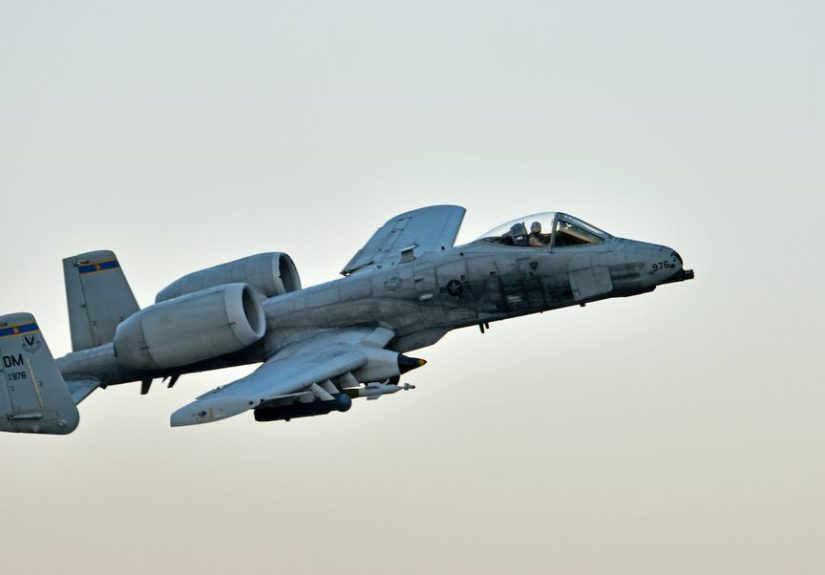
The A-10C Thunderbolt II was the first Air Force aircraft specifically designed for close air support of ground forces. That mission is demanding because it requires more than speed or stealth. It requires communication, persistence, situational awareness, survivability, and the ability to support friendly forces under pressure.
Close air support is not simply “airplane attacks target.” It is a coordinated mission in which aircraft support troops on the ground, often in confusing and fast-changing conditions. Pilots must understand where friendly forces are, where threats may be, and how to deliver support while reducing risk to civilians and allies. That is why the A-10 has such a loyal following among many who value the mission.
Other aircraft can perform close air support, including multirole fighters. The F-35, F-16, F-15E, bombers, drones, and helicopters can all contribute in different ways. But replacing the A-10 is not as simple as swapping one aircraft name for another. The Warthog combines endurance, low-speed handling, armor, visibility, and mission culture in a way that remains distinctive.
Retirement Plans, F-35 Transitions, and the Boneyard Reality
Even as re-winging continues, the Air Force is still retiring A-10s. Davis-Monthan Air Force Base, long associated with the Warthog, began divesting A-10 aircraft as part of a transition toward the F-35. Some aircraft have already been sent to the 309th Aerospace Maintenance and Regeneration Group, commonly known as the boneyard.
This creates an odd but logical situation: some A-10s are being retired while others are being sustained. That is not a contradiction; it is fleet management. The Air Force may decide that some airframes are not worth further investment while others remain useful enough to receive new wings or continued maintenance.
Think of it like managing a fleet of work trucks. One truck has too many miles, too much rust, and a suspicious smell from the glove compartment. Another has a solid frame and just needs major parts to stay productive. You do not treat every vehicle the same just because they share a badge.
The 2030 Extension: Why the Warthog Still Has a Job
Recent reporting indicates that the Air Force has extended the A-10’s service life into 2030, reversing earlier expectations that the aircraft would leave service sooner. The stated reason is straightforward: preserving combat power while the defense industrial base increases combat aircraft production.
That sentence may sound bureaucratic, but it carries a major message. The Air Force cannot modernize by magic. New aircraft take time to build, deliver, train on, maintain, and integrate. If production capacity is tight and operational demand remains high, retiring useful aircraft too quickly can create a capability gap.
The A-10’s renewed lease on life does not mean the Air Force suddenly believes the Warthog is the future of airpower. It means the service sees practical value in keeping some A-10 capacity available while the future arrives at the pace of real factories, real budgets, and real training pipelines.
Re-Winging vs. Replacing: The Budget Balancing Act
Defense budgeting is a constant tug-of-war between today’s needs and tomorrow’s threats. Re-winging A-10s costs money. So do F-35s, F-15EXs, drones, tankers, bombers, missiles, maintenance crews, spare parts, and pilot training. Every dollar has a lobby, a mission, and at least three PowerPoint slides defending it.
The case for replacing the A-10 is based on future survivability. In a high-end fight against an adversary with advanced air defenses, the A-10 would face serious limits. The case for keeping the A-10 is based on current usefulness. Not every mission occurs in the most dangerous airspace imaginable, and not every operational need can wait for a perfect replacement.
Re-winging is therefore a bridge strategy. It does not cancel modernization. It buys time. It allows the Air Force to preserve close air support and combat search-and-rescue support options while newer systems mature. Whether that bridge is wise depends on how long the A-10 remains useful, how quickly replacements arrive, and what kinds of conflicts the United States faces next.
What This Means for Pilots and Maintainers
For pilots, a re-winged A-10 means continued training, continued mission relevance, and continued debate over where the aircraft fits in future war plans. It also means the Warthog community gets more time to pass along hard-earned close air support knowledge before the platform eventually leaves service.
For maintainers, new wings can be both a blessing and a challenge. The blessing is obvious: better structural life and potentially fewer fatigue-related headaches. The challenge is that installing wings on an old aircraft is complex work. It requires experience, careful procedures, parts coordination, inspections, and patience. You do not casually rebuild a combat aircraft like it is a weekend bookshelf project.
The Air Force’s ability to perform some wing swaps away from the main depot also shows how sustainment practices can evolve. Home-station wing work can reduce movement burdens and help units keep aircraft closer to where they operate. That kind of flexibility matters when the fleet is aging and every available aircraft counts.
Why the A-10 Inspires Such Strong Opinions
Few aircraft generate emotion like the A-10 Warthog. Part of that comes from its unusual appearance. It is not sleek in the classic fighter-jet sense. It looks like someone built an aircraft around a cannon, added giant engines high on the fuselage, and then decided beauty was optional. Naturally, people fell in love with it.
But the deeper reason is mission identity. The A-10 is associated with protecting troops on the ground. Its fans see it as a symbol of loyalty: an aircraft that stays nearby when things get ugly. Critics see it as a specialized platform whose best days are behind it. Both views can be sincere, and both can contain truth.
That is why the re-winging decision matters. It is not just about metal. It is about what the Air Force values during a transition period. It is about whether proven capability should be retained until replacements are fully ready. And it is about how much risk the service is willing to accept while reshaping its fleet.
Specific Example: Davis-Monthan and the Mixed Future of the Fleet
Davis-Monthan Air Force Base offers a clear example of the A-10’s mixed future. The base has deep historical ties to the Warthog and has also begun retiring aircraft as it prepares for transition. At the same time, the broader Air Force has continued wing replacement and sustainment efforts for selected aircraft.
This combination can look confusing from the outside. One headline says A-10s are heading to retirement. Another says A-10s are getting new wings. A third says the platform is being extended again. The key is to understand that “the A-10 fleet” is not a single aircraft. It is a collection of airframes with different ages, conditions, costs, and assigned missions.
The Air Force can retire some aircraft, re-wing others, and still plan for eventual replacement. That is not indecision so much as phased transition. The Warthog is leaving, but it is not leaving all at once. Like a dramatic movie character, it keeps finding one more scene to steal.
Experience-Based Lessons From the A-10 Re-Winging Story
The A-10 re-winging saga offers several practical lessons for anyone who follows military aviation, defense planning, or large-scale engineering. The first lesson is simple: old equipment is not automatically obsolete, and new equipment is not automatically available. A platform can be aging and still useful. A replacement can be advanced and still not ready in sufficient numbers.
The second lesson is that sustainment is strategy. People often focus on new aircraft announcements because they are exciting. New jets look great in press photos. But the quiet work of keeping older aircraft safe, inspected, repaired, and structurally sound is just as important. Re-winging an A-10 may not sound as glamorous as unveiling a sixth-generation fighter concept, but it can affect real readiness in the near term.
The third lesson is that maintainers are central to airpower. The public tends to picture pilots first, but every flying hour depends on crews who inspect panels, manage corrosion, troubleshoot wiring, replace parts, document work, and make sure the aircraft is safe. A wing replacement program is a reminder that aviation is a team sport. The pilot may get the call sign, but the maintainers keep the call sign from becoming a lawn ornament.
The fourth lesson is that politics and military planning are inseparable. The A-10 has survived not only because of mission performance but also because lawmakers have repeatedly questioned whether the Air Force had a truly adequate replacement for close air support. Bases, jobs, local economies, mission requirements, and defense strategy all collide in the A-10 debate. That collision is messy, but it is part of how U.S. defense decisions are made.
The fifth lesson is that real-world operations can change retirement timelines. A platform that looks expendable during budget planning may look valuable during a crisis. When an aircraft is still performing missions commanders need, the argument for immediate retirement becomes harder to sell. That does not mean the aircraft should stay forever. It means timing matters.
Finally, the A-10 story shows that modernization is not a light switch. The Air Force cannot simply turn off the old force and turn on the new one overnight. It must manage overlap, risk, readiness, training, and industrial capacity. Re-winging A-10s after all may feel like a twist, but it reflects a familiar truth in military aviation: the future arrives late, the present keeps calling, and the maintenance team still has work orders to close.
Conclusion: The Warthog’s Wings Tell a Bigger Story
The Air Force is re-winging A-10s after all because the Warthog still occupies a useful, if contested, space in American airpower. The aircraft is old, specialized, and increasingly difficult to justify in some future-war scenarios. Yet it remains proven, beloved, and operationally relevant enough to keep flying while newer aircraft and production capacity catch up.
The A-10 will not last forever. No aircraft does, no matter how many fans quote its nickname with dramatic enthusiasm. But the re-winging program shows that retirement is not always a clean line. Sometimes the smartest move is to sustain a legacy aircraft long enough to avoid a gap, preserve expertise, and keep combat power available.
In the end, the Warthog’s new wings are not a rejection of modernization. They are a reminder that modernization has to survive contact with reality. The A-10 may be ugly, loud, and old-school, but for now, it still has a seat at the tableand apparently, a fresh set of wings to help it get there.