Table of Contents >> Show >> Hide
- Why “Just One More Lap” Is a Real Traffic Problem
- What Machine Learning Changes (And What It Doesn’t)
- Where the Parking Data Comes From
- The Prediction Engine: How ML Guesses a Spot Before It Exists
- Dynamic Wayfinding: Routing You to Success, Not Just to a Destination
- Pricing and Policy: The Unsexy Superpower Behind Less Cruising
- Smart Parking Isn’t Just for Cars: Freight and Truck Parking Matter Too
- The Trust Problem: If the Map Lies Once, Drivers Quit
- Equity and Privacy: The Questions That Decide Whether Cities Say Yes
- What a “Sudo Park” Future Actually Looks Like
- Conclusion: Machine Learning Can’t Create Parking, But It Can Create Certainty
- Experiences From the Curb: When “Sudo Find Me A Parking Space” Feels Real (Extra )
If you’ve ever driven three slow laps around a busy blockwatching every brake light like it’s a Morse-code confessionthen you already understand the oldest urban sport: competitive parking. It’s the only game where the winner gets a 7-foot rectangle of asphalt and the consolation prize is being late to everything.
Now imagine you could type a command like: sudo park –near=”coffee” –now –no-drama. That’s the promise behind modern machine learning parking: use real-time data, prediction models, and smarter curb management to cut the circling, reduce congestion, and make “I’ll just find something” a sentence you no longer regret.
This article breaks down how smart parking works, where the data comes from, why pricing and policy still matter, and what it feels like when the tech actually saves you from turning your steering wheel into a stress ball.
Why “Just One More Lap” Is a Real Traffic Problem
Circling for parking isn’t merely annoyingit’s a measurable slice of city traffic. Studies compiled by transportation researchers (including work associated with UCLA’s Donald Shoup) show that in certain districts, a meaningful share of cars in the flow may be cruising for curb spaces, and average search times can run several minutes, depending on occupancy and local conditions. In the studies summarized, cruising shares and times vary widely by place and era, which is exactly why “parking” is such a stubborn, local problem. Still, the pattern is consistent: when curb spaces are underpriced and frequently full, drivers search longer, add extra vehicle miles, and clog streets that weren’t designed for parking hide-and-seek.
Here’s the hidden twist: parking isn’t just a “where do I leave my car?” question. It’s a real-time resource allocation question. The supply is fixed (those painted spaces don’t multiply when it rains), demand spikes with events and lunch hours, and the curb has to share space with deliveries, accessibility needs, transit, bikes, and ride-hail pickups. If your parking system has no “brain,” it defaults to the only strategy drivers know: circle, hope, and occasionally bargain with the universe.
What Machine Learning Changes (And What It Doesn’t)
Machine learning can’t magically create more parking. What it can do is reduce uncertainty. In parking, uncertainty is the villain. If drivers know where spaces are likely to be availableand how likelythen fewer people will cruise aimlessly. That means:
- Better predictions of where spots will open up (and when).
- Smarter routing that sends you to a facility with a high chance of success.
- More efficient use of existing supply (garages, lots, and curb space).
- Less time spent searching, which reduces congestion and emissions.
But ML isn’t a replacement for policy. If a neighborhood is at 98–100% occupancy all day, your prediction will be extremely accurate… at telling you you’re out of luck. That’s where management toolslike performance-based pricing, time limits, and loading zonesstill do heavy lifting.
Where the Parking Data Comes From
Machine learning needs inputs. Parking data is basically a messy buffet, so systems often combine multiple sources to get a clearer picture:
1) Meter and payment data
Digital meters and pay-by-app systems create a continuous stream of transactions: start time, duration, location, and sometimes turnover. This doesn’t tell you “spot #12 is open,” but it can reveal patternslike which blocks churn quickly and which ones become all-day storage.
2) In-ground sensors and smart meters
Some cities use sensors to detect occupancy and turnover. These can be single-space sensors or systems tied to modern meters. When they work well, they provide near-real-time block-level availability, which is gold for parking availability prediction.
3) Cameras and computer vision
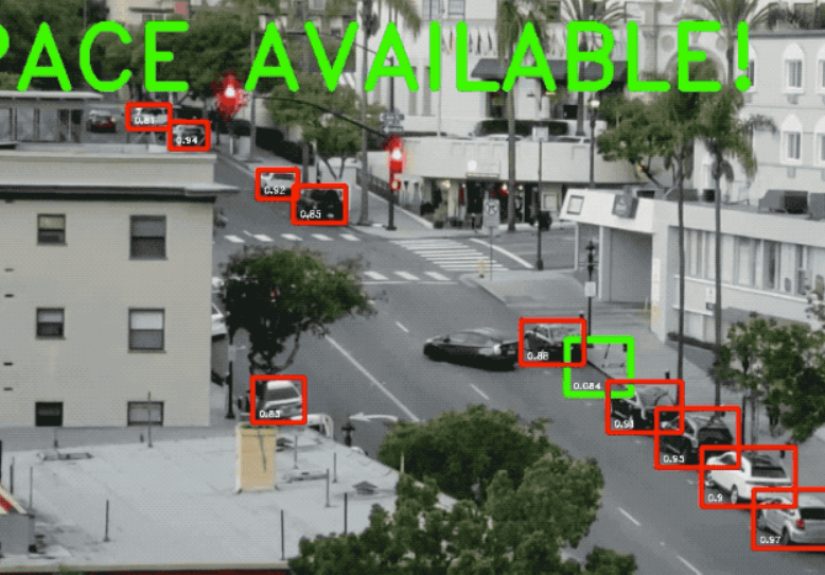
In lots and garages (and sometimes along curbs), cameras paired with computer vision can estimate occupancy. Instead of installing a sensor in every space, a camera can monitor many spaces at oncethough it introduces other concerns, like privacy governance and accuracy in bad weather or glare.
4) Garage and reservation inventory
Off-street operators already track inventory for operations and enforcement. When that data is shared through apps and platforms, it becomes a reliable signal: “This facility has 42 open spots.” It’s not curb parking, but it can dramatically cut the “I’m sure I’ll find something” optimism spiral.
5) Context signals: events, weather, and time-of-day
Parking demand behaves like a creature of habit… until a concert starts, it rains, a sports game ends, or school pickup turns a street into a slow-moving parade. Predictive systems often use calendars, historical trends, and sometimes weather/event indicators to improve forecasts.
The Prediction Engine: How ML Guesses a Spot Before It Exists
Let’s keep it human: ML parking models are basically sophisticated pattern-finders. They look at historical occupancy and turnover, learn “this block fills at 11:45 a.m. on weekdays,” then adjust using real-time signals. Outputs often look like:
- Probability scores (“80% chance of a space within 2 minutes”).
- Availability bands (green/yellow/red blocks on a map).
- Predicted time-to-park (how long you’ll likely search once you arrive).
- Confidence ranges (because predictions should admit uncertainty).
In practice, the best systems don’t pretend they can guarantee curb availability. They behave more like a good friend: “Look, I can’t promise, but I’m pretty sure you’ll have a better time if you try this street first.”
Dynamic Wayfinding: Routing You to Success, Not Just to a Destination
Classic navigation apps solve “how do I get there?” Smart parking adds “how do I finish getting there?” Federal transportation guidance often describes this as dynamic wayfinding: continuously monitoring availability and giving drivers routing information toward available spaces or facilities. The goal is simple: minimize the time spent searching.
This is where ML becomes practical. A model can predict likely availability, and the guidance layer can:
- Route you to a garage with real-time capacity instead of dumping you onto a jammed curb.
- Suggest a block with high turnover rather than a block with long-term parkers.
- Offer “Plan B” options automaticallybecause the first choice will sometimes fail (parking is still parking).
Pricing and Policy: The Unsexy Superpower Behind Less Cruising
Here’s the part nobody wants to hear while searching for a space: the curb is a market. When prices are too low for demand, the “price” becomes timetime spent circling, idling, and competing.
Performance-based pricing aims for a target occupancyoften framed as “enough availability so you can usually find a space.” San Francisco’s SFpark became one of the most cited U.S. examples of demand-responsive meter pricing paired with data collection. In its public evaluation, the city reported improved parking availability and easier parking experiences, along with reductions in vehicle miles traveled and greenhouse gas emissions.
Los Angeles tested a similar concept with LA ExpressPark, which combined smart meters, sensors, and demand-based pricing. Evaluation summaries have reported improvements such as increased parking availability and changes in parking duration (faster turnover in some areas), which is exactly the kind of outcome that reduces cruising pressure.
Machine learning can strengthen these programs by forecasting demand and testing pricing scenarios before implementation. But the key idea stays old-school: if you want fewer cars circling, you need a system that keeps curb spaces from being “always full.”
Smart Parking Isn’t Just for Cars: Freight and Truck Parking Matter Too
When people think “parking tech,” they picture a driver hunting for a space near dinner. But parking is also a logistics issue. Truck drivers face strict hours-of-service rules, and finding safe, legal parking is a real operational and safety need. The U.S. Department of Transportation has supported systems that provide real-time truck parking availability so drivers can make decisions earlier rather than gambling at the last exit. In other words: “no more panic-parking.”
Even in urban cores, freight adds another layer: if deliveries don’t have designated curb access, they double-park, block lanes, and create ripple effects. Good curb managementright space, right use, right timehelps everyone move.
The Trust Problem: If the Map Lies Once, Drivers Quit
Parking predictions must earn trust fast. If an app says “spaces available” and you roll up to a block that looks like a car museum, you will uninstall it with the righteous fury of someone who has now missed brunch.
Common failure points include:
- Sensor errors (false open/occupied readings).
- Lag between real conditions and updates.
- Edge cases like temporary construction, street sweeping, or special events.
- Human behavior (drivers double-park, park illegally, or ignore time limits).
The best systems respond with humility: they show confidence levels, update quickly, and offer fallback options. A small dose of “we’re not 100% sure” beats a confident lie every time.
Equity and Privacy: The Questions That Decide Whether Cities Say Yes
Parking tech sounds harmlessuntil you remember it touches price, access, surveillance concerns, and who gets the curb. Cities and practitioners have increasingly emphasized that curb strategies should balance competing needs (loading, accessibility, transit priority) and avoid turning the curb into a pay-to-play playground.
Key considerations:
- Equity: If pricing and app-based systems make prime areas easier for higher-income drivers, cities may need offsetslike resident programs, time-based access, or reinvesting revenue in local mobility.
- Privacy: Camera-based systems and detailed app data require clear governance: what’s collected, what’s stored, and who can access it.
- Accessibility: Curb rules must protect accessible spaces and safe loading zones, not just maximize turnover.
Recent transportation guidance on parking reforms often frames the core benefit clearly: reducing cruising can reduce congestion and emissionsbut reforms must be designed with local goals in mind, not just revenue or convenience.
What a “Sudo Park” Future Actually Looks Like
So where is this headed? A realistic near-future parking experience looks like this:
- You set your destination and choose preferences (cheapest, closest, EV charging, accessible route).
- The system predicts demand and recommends the best parking option before you arrive.
- Pricing and rules are transparent (no surprise “event rate” jumps after you’re committed).
- You get guidance for the last 300 feetthe part navigation has historically ignored.
- The curb is managed like infrastructure, with loading zones and short stays where they’re needed most.
And yes, some days it will still be messybecause cities are alive. But the big win is fewer “hope laps,” fewer sudden U-turns, and fewer people blocking a lane with the universal signal of parking desperation: hazard lights plus prayer.
Conclusion: Machine Learning Can’t Create Parking, But It Can Create Certainty
Parking pain is often uncertainty wearing a disguise. Machine learning reduces that uncertainty by turning scattered signalsmeters, sensors, cameras, inventories, and patternsinto actionable guidance. Paired with performance-based pricing and sane curb rules, smart parking can cut down on circling, improve turnover, and make cities feel a little less like obstacle courses.
Or, in the language of the streets: fewer laps, fewer sighs, more “nailed it” moments. Your steering wheel deserves it.
Experiences From the Curb: When “Sudo Find Me A Parking Space” Feels Real (Extra )
I didn’t believe the “smart parking” hype until the day I watched it save a friend from what we call Event Parking Chaosthe kind that turns a simple dinner into a slow-motion hostage negotiation with downtown.
It started with a concert night. Streets were packed, every garage sign seemed to flash “FULL” like it was personally offended by our presence, and my friend (let’s call him Ben) did the classic move: “We’ll just find something nearby.” That sentence has the same energy as “I’ll just check one more social media app before bed.” It never ends well.
But this time, Ben’s navigation app didn’t just route us to the venue. It offered a parking recommendation with a confidence score: a garage three blocks away with “high availability,” plus a backup lot slightly farther with “moderate availability.” It even gave a warning that curb parking in the immediate area was predicted to be “very limited” for the next hour.
Ben grumbledbecause drivers love ignoring advice until it becomes their ideabut he tapped the garage option. As we approached, the app updated: availability dropped slightly, but still looked good. What surprised me wasn’t the prediction; it was the calm. Instead of cruising with the windows down like parking pirates hunting treasure, we were simply… going somewhere with a plan.
We pulled in and found a spot in under two minutes. Two. Minutes. That’s practically a miracle in a city where “quick parking” usually means “I only cried once.” And because we weren’t circling, we didn’t add to the traffic jam of other people doing the same desperate loops. We walked to the venue without the usual pre-show stress sweat, which is a real upgrade for humanity.
Another experience that sticks with me came from a delivery driver I met while waiting outside a coffee shop. He described how curb availability datawhen it’s shared and reliablechanges the whole job. Instead of double-parking and hoping nobody notices (spoiler: everybody notices), he could target a block with higher turnover or a designated loading area during a time window when it’s typically available. “It’s like the city stops being a guessing game,” he said. That line hit me. A lot of street chaos is just people guessing at the same time in the same space.
Then there’s the small, everyday moment: picking up a family member from a medical appointment. The clinic was on a busy corridor, and the usual routine was grimcircle, circle, circle, park too far away, then speed-walk back like you’re training for the Olympics. This time, a smart parking map highlighted a side street with a higher probability of a space opening soon. We got there, waited maybe thirty seconds, and a car pulled out. It felt less like luck and more like the world briefly decided to cooperate.
These experiences don’t mean parking becomes effortless. Sometimes the data is wrong. Sometimes a space disappears right before you arrive. Sometimes a construction cone ruins your entire belief system. But when the prediction worksand it works often enoughyou stop circling as a default. You start driving like someone who expects the trip to end with a parked car, not a philosophical crisis.