Table of Contents >> Show >> Hide
- What Is the Playhouse by Kidsonroof NL?
- Why This Cardboard Playhouse Still Stands Out
- What Kids Actually Gain from a Playhouse Like This
- Best Use Cases for the Playhouse by Kidsonroof NL
- Things Parents Should Know Before Buying
- How to Make the Most of a Kidsonroof Playhouse
- Is the Playhouse by Kidsonroof NL Worth It?
- Experiences Related to “Playhouse by Kidsonroof NL”
- Conclusion
- SEO Tags
Some toys arrive with flashing lights, suspiciously loud sound effects, and enough plastic packaging to make your recycling bin file a complaint. Then there is the Playhouse by Kidsonroof NL, a cardboard creation that takes the opposite route. It is simple, design-forward, child-sized, and wonderfully open-ended. In other words, it gives kids the one thing many modern toys accidentally smother: room to imagine.
If you have been researching Kidsonroof playhouse options, you have probably noticed a charming little mystery. Some listings refer to the original HOUSE, others mention Casa Cabana, and the broader brand story now connects to Studio ROOF. But the heart of the idea remains the same: a thoughtfully designed cardboard playhouse that children can build, decorate, claim as their own, and use as a launchpad for pretend play.
That is the real magic here. This is not just a cardboard house for kids. It is a blank theater set, a reading nook, a rocket base, a bakery, a fort, a secret club, andon some especially dramatic afternoonsa veterinary clinic for stuffed animals with very serious paperwork. In a world of over-programmed toys, that kind of flexibility feels refreshingly smart.
What Is the Playhouse by Kidsonroof NL?
Kidsonroof NL began as a Dutch design label built around creativity, sustainability, and playful form. The brand became known for using recycled cardboard in ways that felt artistic rather than disposable. Its playhouses stood out because they did not try to look like oversized copies of adult architecture. Instead, they embraced a modern, slightly whimsical style that appealed to both kids and parents.
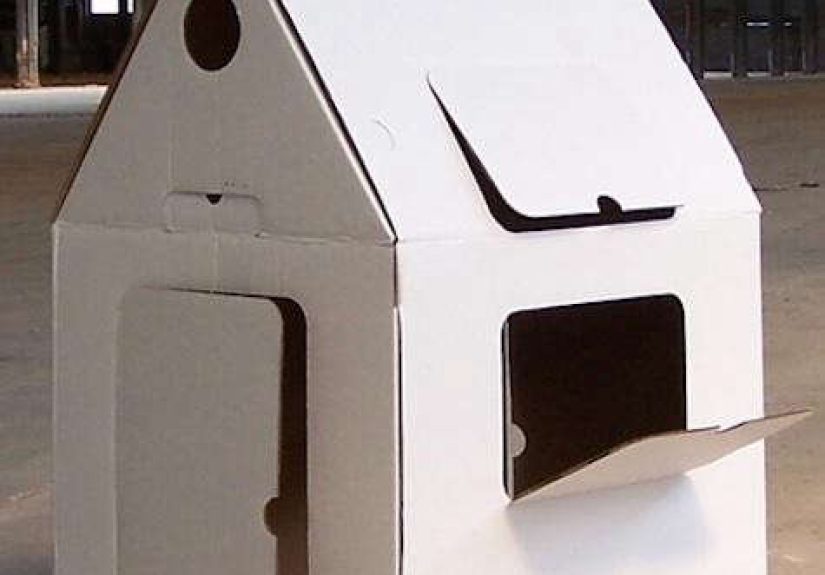
The classic playhouse concept is wonderfully straightforward. It arrives flat, assembles quickly, and becomes a kid-scale structure with windows, doors, and playful details that invite decorating. Depending on the version, you may see a plain exterior ready for markers or a printed design with animals, tree motifs, or curved windows that already give it personality before your child adds the first crayon masterpiece.
That design choice matters more than it might seem. Many children’s products either look aggressively primary-colored or so minimalist they seem designed for adults who fear joy. The Playhouse by Kidsonroof NL lands in a sweet spot: modern enough to look good in a living room, fun enough that a child sees possibility instead of furniture.
Why This Cardboard Playhouse Still Stands Out
1. It makes creativity part of the product
A lot of toys give children a fixed script. Press this button, hear this sound, repeat until the batteries surrender. A cardboard playhouse like this does the opposite. Kids can color the walls, add signs, invent rooms, name the house, assign jobs, and decide whether today it is a castle, café, lighthouse, or secret headquarters.
That ability to customize the toy changes the relationship a child has with it. They are not just using it. They are co-creating it. And children tend to value things more when they have helped shape themeven if that shaping includes a purple dog on the roof and a very questionable rainbow chimney.
2. It supports open-ended pretend play
Pretend play is one of the biggest reasons this design works so well. A playhouse gives children a defined space, but not a fixed storyline. That combination is gold. The structure provides enough boundaries to make the setup feel special, while the cardboard simplicity leaves the narrative wide open.
One day it can be a grocery store. The next day it can be a post office. By Friday, it may be a dragon-proof cottage with a strict no-siblings policy. That is not kids being random; that is children practicing symbolic thinking, communication, and problem-solving in real time.
3. It is easier to live with than many bulky toys
Parents are often interested in a playhouse until they picture a giant plastic cottage swallowing half the den. Kidsonroof’s cardboard approach feels different. It is lighter, easier to move, easier to store, and visually quieter than many large-format play toys. Some versions even fold flat, which is the kind of sentence that makes apartment dwellers tear up with gratitude.
This makes the playhouse especially appealing for families who want to support imaginative play without turning their entire home into a permanent toy showroom. You can bring it out for a rainy weekend, a birthday party, or a school break, then tuck it away when your living room needs to pretend it belongs to adults again.
4. It has eco-minded appeal
Another reason the product keeps popping up in design and parenting conversations is its material story. Recycled cardboard is not just a trendy buzzword here; it is central to the identity of the product. For families trying to buy fewer, better, more flexible things, that matters.
No, cardboard is not indestructible. It will not survive a monsoon, a determined golden retriever, or a toddler who believes all architecture should be climbed like a mountain. But that is also part of its charm. It is light, recyclable, approachable, and refreshingly low on unnecessary fuss.
What Kids Actually Gain from a Playhouse Like This
Here is where the Kidsonroof playhouse stops being a cute design object and becomes a genuinely smart play tool. A child-sized house encourages dramatic play, and dramatic play supports a lot more than entertainment.
When children act out stories inside a playhouse, they practice language skills. They narrate. They negotiate. They repeat phrases they hear from adults. They create roles and rules. One child becomes the shopkeeper, another becomes the customer, and suddenly there is a very intense argument about whether leaves count as money. That is communication practice wearing a silly hat.
They also build social and emotional skills. Pretend play teaches turn-taking, cooperation, and perspective-taking. When kids decide who gets to be the chef, doctor, parent, astronaut, or mysterious forest wizard, they are learning how to share control, resolve conflict, and understand other points of view.
There is also a strong case for problem-solving and independence. A playhouse gives children a small world they can organize on their own. They can decide what goes inside, how it should look, and what happens next. That sense of ownership is powerful. It is one reason dedicated play spaces often keep children engaged longer than toys that do all the work for them.
And then there is the obvious but often overlooked benefit: joy. Kids simply love spaces that feel like theirs. Even a very stylish cardboard house can become a tiny kingdom of confidence when a child gets to shut the door, peek through the window, and announce that visitors must knock first.
Best Use Cases for the Playhouse by Kidsonroof NL
Small homes and apartments
This is one of the best arguments for the product. Families in tighter spaces often want imaginative toys that do not permanently dominate the room. A foldable or lightweight indoor playhouse solves that problem beautifully. It offers scale without demanding a home renovation.
Rainy days and screen-light afternoons
When children are stuck indoors, adults often start bargaining with tablets like exhausted diplomats. A cardboard playhouse offers another route. Add crayons, stuffed animals, a flashlight, and a few snack breaks, and suddenly the afternoon has structure, purpose, and at least a fighting chance of staying cheerful.
Birthday parties and playdates
The playhouse also works well as an activity station. Set out washable markers, stickers, and paper decorations, and children can personalize the house together before diving into group pretend play. It becomes both the craft and the reward, which is honestly a strong deal in party planning.
Reading corners and quiet hideaways
Not every playhouse moment has to involve chaos. Add a floor cushion, a blanket, and a stack of picture books, and the house can become a cozy reading nook. For some kids, that sense of enclosure feels calming. It creates a little retreat within a larger room, which can be especially useful in busy households.
Things Parents Should Know Before Buying
Let us be honest: cardboard is brilliant, but it is still cardboard. So expectations matter.
First, this kind of playhouse is best for families who appreciate open-ended play. If you are looking for a toy that performs tricks on its own, this is not it. The reward comes from what children bring to it. For creative kids, that is excellent news. For children who prefer more guided, feature-heavy toys, it may take a little encouragement at the start.
Second, durability depends on how the house is used. Coloring on the walls? Great. Turning it into a launch ramp for stuffed bears? Less ideal. Gentle indoor use will get you much farther than rough-and-tumble wrestling matches disguised as “pretend construction work.”
Third, adult setup is usually part of the deal, though it is generally much easier than assembling a wooden play structure with 147 screws and a relationship test hiding in every instruction panel.
Finally, think about placement. Put the playhouse somewhere accessible enough to invite use, but not in a constant traffic lane where it becomes a family obstacle course. A corner of the living room, playroom, or child’s bedroom often works well.
How to Make the Most of a Kidsonroof Playhouse
If you want this toy to earn its square footage, keep the setup simple and flexible. Start with a few easy accessories: washable markers, paper signs, stuffed animals, a child-safe lantern, maybe a basket of play food or mail. Do not overfill it. Part of the appeal is that kids can transform the space without needing a truckload of props.
Rotate themes to keep it fresh. One week it is a bakery, the next it is a fire station, then a forest cabin, then a veterinary clinic. The structure stays the same, but the story changes. That helps extend the life of the playhouse and keeps children returning to it with new ideas.
It also helps to let your child lead. Adults are often tempted to “improve” imaginative play by turning it into a Pinterest event with color-coded bins and laminated labels. Resist the urge. A cardboard house decorated with uneven stars, crooked welcome signs, and one suspiciously large potato drawing is usually doing its job perfectly.
Is the Playhouse by Kidsonroof NL Worth It?
For the right family, yes. The Playhouse by Kidsonroof NL is worth it because it offers more than decoration and more than novelty. It combines thoughtful design, eco-conscious materials, and genuine play value in a format that feels light, modern, and refreshingly low-tech.
It will not replace every toy. It is not supposed to. What it does offer is a rare combination of form and function: a beautiful object that children can actually use in messy, imaginative, gloriously childlike ways. It invites storytelling, collaboration, independence, and creativity without screaming for attention.
That may be the smartest thing about it. The playhouse does not try to be the star of the show. It simply hands the spotlight to the child.
Experiences Related to “Playhouse by Kidsonroof NL”
The experience of living with a Kidsonroof-style playhouse usually unfolds in stages, and that is part of the fun. At first, there is the setup moment. Kids watch the flat cardboard pieces turn into a real structure, and that transformation feels a little magical. A house appearing from what looks like packaging material is exactly the kind of plot twist children respect. Parents tend to appreciate that the assembly feels manageable, while kids are mostly busy asking whether they can move in immediately.
Then comes the decorating phase, which is often where the playhouse really becomes personal. This is the point where children stop seeing it as a toy and start seeing it as their place. Names appear over the door. Windows get framed in marker. A mailbox may be invented. There might be flowers, lightning bolts, family portraits, or the universal child design classic: a giant smiling sun that looks slightly judgmental. This creative ownership gives the playhouse a warmth that more finished toys sometimes lack.
After that, the house enters its busiest chapter: daily pretend play. This is usually when families notice how versatile the structure really is. In one home, it may become a mini coffee shop where every drink costs three blocks and a feather. In another, it turns into a reading hut with blankets and books. During playdates, the house often shifts into a social stage set, encouraging children to assign roles, create stories, and practice cooperation. Even siblings who normally negotiate like rival diplomats may find common ground when the mission is urgent enough.
There is also something delightful about how the playhouse changes the mood of a room. It creates a destination. Instead of toys being scattered everywhere, the house gives play a center of gravity. Children return to it because it feels like a world within the home. Parents often like that it offers this immersive feeling without requiring a giant permanent structure in the backyard or a towering plastic cottage in the family room.
Eventually, many families discover that the playhouse’s best feature is not just the cardboard or the design, but the memories it gathers. The doodles on the walls, the made-up businesses, the secret club meetings, the stuffed-animal sleepoversthose are the real product. The cardboard house is just the frame. The experience is the story children build inside it, and that story tends to be a lot bigger than the footprint on the floor.
Conclusion
If you want a toy that encourages creativity, supports pretend play, fits real homes, and does not look like it crash-landed from a neon carnival, the Playhouse by Kidsonroof NL deserves attention. Its charm lies in its restraint. It gives children just enough structure to begin and enough freedom to invent the rest.
That is why this cardboard classic continues to feel relevant. It respects kids’ imaginations, respects parents’ space, and proves that sometimes the smartest toy in the room is the one that leaves the most room for a child to think, build, decorate, and dream.