Table of Contents >> Show >> Hide
- Table of Contents
- What Happens in “Wok Is Dead” (and Why It’s So Loud)
- The Joke With Two Teeth: “F—ing” as Verb and Diagnosis
- Why the Fake Fox News Desk Is the Perfect Satire Machine
- Labubu, Tariffs, and the Most American Panic Spiral Ever
- Season 27’s Bigger Arc: Lawsuits, Media Fear, and Corporate Side-Eye
- Why This Episode Hit So Hard (Even If You Hate It)
- What to Take Away (Besides Emotional Damage)
- Extra: The Viewing Experience in the Age of Instant Outrage
- Conclusion
There are two kinds of television shows: the ones that gently tap the culture on the shoulder and ask,
“Hey, are you okay?” and the ones that kick down the door, throw a drum set into your living room, and yell,
“GOOD NEWS: WE’RE DOING SATIRE AGAIN.”
South Park has always preferred Door-Kicking Mode. But Season 27’s Episode 4titled
“Wok Is Dead”doesn’t just kick the door down. It also hands the door a subpoena, makes the door
cry on live TV, and then invites the door to participate in a demonic ritual involving a trendy toy, a tariff,
and a cable-news meltdown.
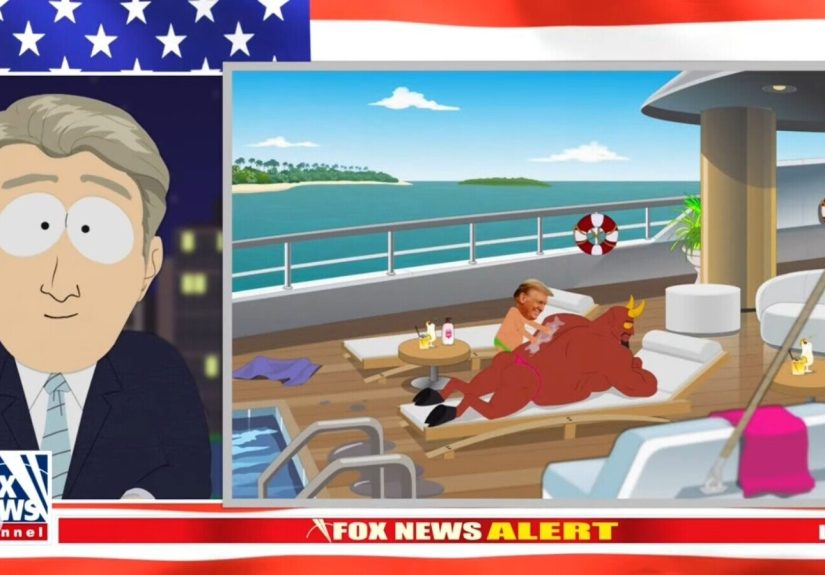
The headline-making moment? A fictionalized Fox News panel (inside the show) reacts to the reveal that
South Park’s version of Donald Trump is “f—ing Satan”and instead of panicking, they
celebrate. Pop champagne. Cheer. Treat it like a patriotic breakthrough, as if the phrase “demonic pregnancy”
belongs on a commemorative coin.
If you’re thinking, “This sounds ridiculous,” congratulations: you’re caught up. Now let’s talk about why
it worksand what it’s actually making fun of (besides, you know, everything that moves).
What Happens in “Wok Is Dead” (and Why It’s So Loud)
“Wok Is Dead” runs two story engines at oncebecause South Park loves nothing more than pairing
a kid problem with an adult crisis and then smashing them together like a shopping cart hitting a display of
glassware.
Plot Engine #1: Kids, Collectibles, and a Toy Trend That Eats Your Brain
The kid side is built around Labubu, a real-world collectible toy that the episode turns into
a full-blown school obsession. You get the familiar South Park rhythm: children worship a new thing,
adults fail to understand it, and somewhere in the background a demon takes notes like, “Ah, yes, the youth
are once again doing my work for me.”
Butters, who is basically a walking “please don’t hurt me” sign, just wants to impress a girl named Red
with a specific Labubu for her birthday. This is sweet. It is also doomed, because the episode uses his
quest to show how quickly a cute consumer trend becomes a financial trap when scarcity, status, and
hype get involved.
Plot Engine #2: A “Relationship” That Cable News Treats Like Breaking Science
Meanwhile, the show continues a season-long bit: Trump (as portrayed in the show) is in a
secret relationship with Satan. It’s played as both a gross-out gag and a metaphorbecause
South Park can’t resist a joke that can be read on two levels and also involves someone saying,
“Relax, guy,” while a fireball happens off-screen.
In “Wok Is Dead,” fictional Fox News reporters obsess over whether Trump has been “f—ing Satan,”
repeatedly pressing the question like it’s the Pentagon Papersexcept the document is a pregnancy test and
the whistleblower is the Prince of Darkness, who looks tired in the way only a character trapped in a
toxic relationship can look tired.
The crescendo is peak South Park: a birthday party turns into a demonic Labubu ritual, the town gets
apocalyptic vibes (think dark clouds and plague energy), and Satan finally reveals why he can’t leave:
he’s pregnant with Trump’s child.
And that’s when the show drops the moment the headline is about: the Fox News desk reacts as if America
just won the Super Bowl of evil.
The Joke With Two Teeth: “F—ing” as Verb and Diagnosis
The reason this storyline gets traction isn’t just shock value. It’s the classic South Park move:
take a phrase people already use as political insult“he’s basically Satan”and literalize it until it becomes
too ridiculous to ignore.
In other words, “Trump is f—ing Satan” works in two lanes:
-
Lane 1 (literal): In the show, he is romantically/sexually involved with Satan. This is played
for discomfort, absurdity, and the kind of juvenile energy that has powered the series since it was animated
on what looked like construction paper. -
Lane 2 (figurative): The phrase becomes a cultural Rorschach testwhat happens when your side’s
“bad guy” label is confirmed in the most explicit way possible? Do you reject it? Rationalize it? Or…
celebrate it?
The punchline in “Wok Is Dead” is that celebration is the most honest outcome for this particular satire.
Because the episode isn’t saying “Fox News would do this exact segment tomorrow.” It’s saying:
in a world where narrative loyalty beats reality, anything can be spun into a win.
The show’s Fox News caricature doesn’t treat the Satan relationship as disqualifying. It treats it as proof of
strengthlike, “If he can dominate Satan, imagine what he can do to your HOA.” That’s the satire:
the point isn’t the devil. The point is the spin.
Why the Fake Fox News Desk Is the Perfect Satire Machine
The funniest thing about using a cable-news panel inside a cartoon is that it’s basically a built-in
laugh trackbut for ideology. The panel can say the quiet part out loud while pretending it’s analysis,
and the show can exaggerate the vibe without having to quote real people.
1) It turns “anything” into “content”
One of the smartest tricks in “Wok Is Dead” is how it frames the Fox News fixation as a media reflex:
if a rumor exists, it must be covered; if it’s covered, it must be escalated; if it’s escalated, it must
become a moral referendum. And if the moral referendum goes sideways, you simply rebrand it as a victory.
2) It makes loyalty look like a performance sport
The fictional anchors don’t merely accept the revelationthey rejoice. It’s not enough to believe; you have
to clap. You have to pop champagne. You have to beam with the kind of joy usually reserved for
gender reveals and tax loopholes.
That’s the “fun” horror of it: the show depicts loyalty as something people broadcast to each other to
prove membership. The story isn’t really about Trump or Satan; it’s about the social rewards of saying,
“My team is winning,” even when the scoreboard is literally on fire.
3) It lets the episode dunk on politics without pausing the plot
A lot of political satire stalls out because it stops being a story and starts being a lecture.
South Park avoids that by making the Fox News segments part of the story’s momentum. The “desk”
becomes the town crier, the hype engine, and the punchline dispenserall while the kids are upstairs
accidentally summoning locusts for TikTok clout.
Labubu, Tariffs, and the Most American Panic Spiral Ever
Under the demonic frosting, “Wok Is Dead” is also a satire about consumer lifespecifically, the way
everyday people experience big economic policy as a sudden price jump on a thing their kid insists is
“basically mandatory for survival.”
Scarcity + status + hype = a perfect storm
The episode treats Labubus like an emotional commodity: kids don’t want the toy because it’s a toy;
they want it because it’s a status token. That’s a familiar modern dynamic, and the show weaponizes it:
Butters isn’t just shoppinghe’s negotiating with a market that has no mercy and no return policy for
crushed feelings.
Tariffs as a punchline that still stings
The tariff angle lands because it’s not presented as a whitepaper debate. It’s presented as the moment
an ordinary person realizes “policy” is just a fancy word for “my wallet is about to get jumped in an alley.”
The joke is blunt: you don’t “win” a trade war; you just pay for it in weird places.
The title joke: “Wok Is Dead”
The episode’s title is a little neon sign pointing at South Park’s long-running love of puns and
cultural arguments. “Wok Is Dead” reads like a jab at “woke is dead” discourse, but it’s also tied to the
City Wok setting and the show’s habit of turning hot-button language into slapstick signage.
In other words, the episode mocks the culture war and the way we sell it back to ourselves as entertainment
sometimes literally, through merchandise.
Season 27’s Bigger Arc: Lawsuits, Media Fear, and Corporate Side-Eye
“Wok Is Dead” doesn’t arrive in a vacuum. Season 27’s loudest running theme is that the show isn’t only
making fun of politicsit’s making fun of the systems that shape what gets said, what gets aired, and what
gets quietly “handled” behind closed doors.
Earlier in the season, the premiere episode (“Sermon on the ’Mount”) made headlines for depicting Trump
in bed with Satan and for firing shots at corporate media anxietyespecially around lawsuits, settlements,
and the fear of angering powerful people. That set the tone: this season’s satire is about power,
but also about the organizations that decide how carefully to talk about power.
By the time you get to “Wok Is Dead,” the Trump/Satan relationship isn’t just a gag; it’s a storytelling
device that keeps raising the stakes. The show’s Trump figure is framed as someone surrounded by
constant affirmation, with critics either dismissed, sued, or turned into content.
That’s why Fox News “loving” the Satan angle matters inside the satire. It’s the episode’s way of saying:
once the ecosystem is built, it doesn’t require truthonly momentum.
Why This Episode Hit So Hard (Even If You Hate It)
A big reason “Wok Is Dead” became headline bait is that it mixes three ingredients that reliably explode
online:
- Gross-out shock (because it’s South Park and it has a PhD in Bad Taste)
- Culture-war language (woke/wok, Fox News, “fake news” energy, the whole buffet)
- Pop-culture specificity (Labubu and TikTok rituals, because the show wants to be current)
That combo produces instant discourse: some viewers applaud the no-fear satire; others roll their eyes at
the extremity; many do both in the same sentence. That’s the modern media loop, and the episode is
self-aware enough to feed it.
The irony is that the show’s fictional Fox News celebration mirrors the internet’s own reaction cycle:
outrage, delight, memes, takes, counter-takes, and a million screenshots. The episode parodies the machine
while also powering itlike a treadmill that mocks you for running while still charging your membership fee.
What to Take Away (Besides Emotional Damage)
If you strip away the demons, the plush toys, and the champagne corks, “Wok Is Dead” is a story about
how narratives survive contact with reality.
Takeaway #1: Satire exposes the “spin reflex”
The show isn’t predicting an exact real-world broadcast. It’s exaggerating a behavior many people already
recognize: the tendency of partisan media ecosystems to treat every development as proof they were right
all alongeven developments that would, under normal conditions, cause a human being to whisper,
“Wait, what?”
Takeaway #2: Consumer trends are political, even when they’re cute
The episode uses Labubu and tariffs to show something basic but often ignored: policy isn’t just a debate
in Washington; it’s the price tag on a toy, the stress in a parent’s face, and the way the internet can turn
“want” into “need” in under 24 hours.
Takeaway #3: The show’s real target is the feedback loop
By making “Trump is f—ing Satan” something the in-show Fox News panel can cheer, South Park
highlights how feedback loops work: loyalty fuels coverage, coverage fuels loyalty, and the storyline keeps
escalating because escalation is the product.
Love it or hate it, that’s the kind of joke that sticksbecause it’s not only crass. It’s structurally accurate.
Extra: The Viewing Experience in the Age of Instant Outrage
Watching an episode like “Wok Is Dead” in 2025 didn’t feel like “sitting down to enjoy television.” It felt
like walking into a room where everyone is already talking over each otherthen realizing the room is your
phone, your group chat, your timeline, and your brain.
The experience often starts before the episode even airs. There’s the trailer clip, the screenshots, the
half-sentence summaries that float around like confetti made of panic. Someone texts: “Have you seen what
they did this week?” Another person replies: “No, but I’m already mad.” A third person is just a string of
crying-laughing emojis, which is the modern equivalent of a smoke signal.
Then you actually watch it. And the first thing you notice is how quickly your brain tries to categorize it.
Is it “brave”? Is it “try-hard”? Is it “too much”? Is it “not enough”? In older eras, a show could be
something you reacted to privately. Now it’s also something you pre-react to publicly, often while the
episode is still playing. The pause button has become a punctuation mark.
Episodes like this also create a specific kind of social ritual: the watch-and-translate.
One person becomes the designated explainer, firing off messages like: “Okay, the Labubu thing is real.”
Another person plays the role of moral editor: “I can’t believe they went there.” Someone else is the
pragmatic friend: “I’m not watching, just tell me the point.” And then there’s always one person who
pretends not to care while writing a paragraph-long take that proves they care the most.
The wild part is how the “Fox News loves it” joke becomes an emotional mirror for viewers. If you’ve ever
watched a real news segment and thought, “How did we get here?” the episode gives you a cartoon answer:
we got here by turning everything into a loyalty test. So when the fictional anchors cheer at the reveal,
you might laughbut it’s a laugh with an uncomfortable aftertaste, because the mechanics are familiar.
And then comes the after-viewing spiral: you open social media and see the episode flattened into a few
frames. People argue about what it “really means,” as if the only valid reaction is a thesis statement.
Clips circulate out of context (because context is slower than outrage). Someone declares it a masterpiece,
someone declares it propaganda, and someone else declares the whole show “dead,” which is funny, because
the show has survived about a thousand funerals and still shows up at the wake with a kazoo.
For a lot of viewers, that’s the most “real” part of the experience: the episode isn’t just satireit’s a
spark that reveals how quickly we all become broadcasters. We don’t just watch the media; we reproduce it.
We clip it, caption it, argue about it, and turn it into a personality quiz: “What did you think about the
Satan pregnancy storyline?” (A sentence that, in any sane society, would get you gently escorted outside.)
That’s why “Wok Is Dead” lands as more than a shock gag. It’s an episode you watch, and then you watch
everyone watching it. The show makes fun of a media ecosystem that can spin anythingand the experience
of consuming the episode proves the ecosystem is alive, well, and currently refreshing for new posts.