Table of Contents >> Show >> Hide
- What OCD Actually Is
- Why OCD Can Make Someone Apologize Constantly
- What Excessive Apologizing Looks Like in Daily Life
- When Is It More Than Just Being Polite?
- Why Reassurance Feels Good for Five Minutes and Then Makes Things Worse
- How OCD-Related Apologizing Is Treated
- Practical Ways to Start Breaking the Apology Loop
- How Loved Ones Can Respond Without Feeding OCD
- Experiences Related to OCD and Apologizing All the Time
- Conclusion
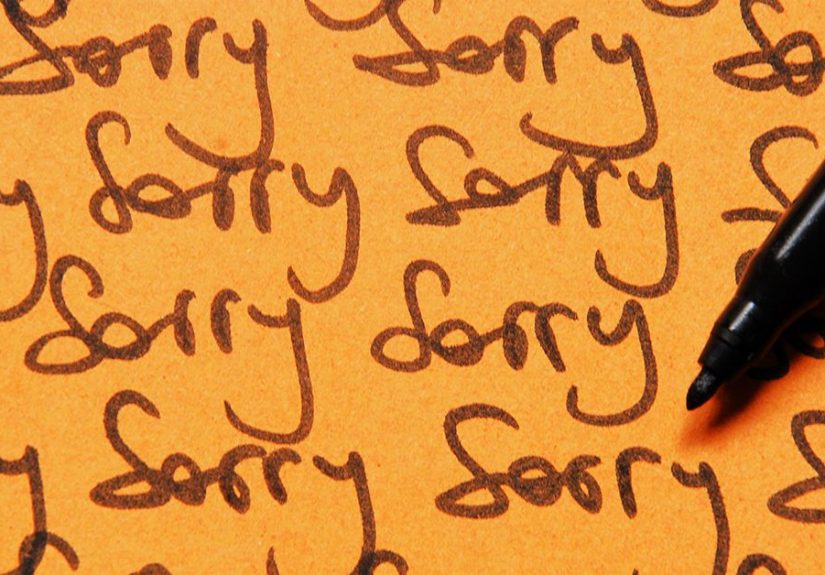
If you say “sorry” when someone bumps into you, welcome to the human race. If you apologize to your email, your chair, and a tree branch that lightly inconvenienced you, well, that may still be normal. But when apologizing becomes constant, urgent, repetitive, and impossible to resist, it can be part of something bigger. For some people, obsessive-compulsive disorder (OCD) turns apologizing into a ritual.
That is the key link: in OCD, apologizing is not always about manners. Sometimes it is about anxiety relief. A person may feel an intense need to apologize to reduce guilt, prevent harm, prove they are not a bad person, or get reassurance that they did not mess something up. The apology becomes less like a social courtesy and more like a fire extinguisher for panic.
Here is the tricky part: not everyone who apologizes a lot has OCD. Frequent apologizing can also show up with social anxiety, trauma, perfectionism, depression, people-pleasing, or low self-esteem. But when the apologies are driven by intrusive doubt, moral fear, mental review, and a desperate need for certainty, OCD may be in the room wearing a “Sorry!” name tag.
This article breaks down why OCD can make someone apologize all the time, what that pattern looks like in real life, how it affects relationships, and what actually helps.
What OCD Actually Is
OCD is a mental health disorder built around two main parts: obsessions and compulsions. Obsessions are intrusive, unwanted thoughts, images, feelings, or urges that create distress. Compulsions are the behaviors or mental acts someone does to reduce that distress or prevent a feared outcome.
Sometimes compulsions are obvious, like washing hands, checking locks, or arranging objects until they feel “right.” Other times, compulsions are sneakier. They can look like asking for reassurance, replaying conversations, mentally reviewing intentions, confessing, or apologizing over and over.
That last category matters here. A person with OCD may not apologize because they are polite. They may apologize because their brain is screaming:
- “What if I offended them?”
- “What if I accidentally lied?”
- “What if I harmed someone and don’t realize it?”
- “What if not apologizing means I’m selfish, cruel, fake, or dangerous?”
Once that doubt hits, the apology can feel urgent, necessary, and morally required. Relief may follow for a moment. Then the doubt returns, often louder than before. That is the OCD loop in action.
Why OCD Can Make Someone Apologize Constantly
Apologizing can become reassurance-seeking
One of the most common compulsions in OCD is reassurance-seeking. The goal is simple: reduce uncertainty right now. A person may say, “Sorry if that sounded weird,” not just to be kind, but to hear, “No, no, you’re fine.” That response briefly lowers anxiety. Unfortunately, OCD learns from the pattern fast. It starts demanding reassurance more often, in more situations, and with less mercy.
So the apology is not really the end of the interaction. It is bait for certainty. The person may apologize, wait for reassurance, then mentally check whether the reassurance sounded sincere. If it did not feel perfect, they may apologize again in a slightly different way. OCD loves a sequel.
OCD often involves inflated responsibility
Many people with OCD feel overly responsible for preventing bad outcomes. They may believe they must be absolutely sure they did not hurt anyone, mislead anyone, disrespect anyone, or leave anything unresolved. Even tiny social moments can feel loaded with catastrophic importance.
Imagine someone leaves a meeting and suddenly thinks, “Did I sound rude when I interrupted?” A person without OCD may shrug and move on. A person with OCD may replay the moment for hours, decide there is a 2% chance they caused damage, and then send a text that says, “Sorry if I came across badly.” Five minutes later: “Also sorry if this message is annoying.” Ten minutes later: “And sorry for apologizing so much.” It is exhausting just reading that, which is exactly the point.
Moral scrupulosity can fuel apology rituals
Some forms of OCD center on morality, ethics, or religion. This is often called scrupulosity. In these cases, the person may become tormented by questions like:
- “What if I am secretly manipulative?”
- “What if I was dishonest without realizing it?”
- “What if having that thought makes me a bad person?”
- “What if I need to confess everything to be morally clean?”
For someone with moral scrupulosity, apologizing can feel like an attempt to purify guilt or neutralize the fear of being “bad.” The problem is that OCD never accepts one apology as enough. It wants perfect certainty, perfect motives, and perfect moral cleanliness. Humans are many things, but we are not legally certified in perfection.
Mental review turns one small moment into a full courtroom drama
OCD is famous for mental reviewing. The brain replays a conversation again and again, searching for proof of wrongdoing. Tone of voice, facial expression, punctuation, word choice, response time, body language, all get dragged into the investigation. After enough reviewing, almost anyone can look guilty in their own mind.
That is why some people with OCD apologize for things other people barely noticed. The apology is a response to an internal trial, not the external event itself.
What Excessive Apologizing Looks Like in Daily Life
OCD-related apologizing does not always look dramatic. In fact, it often hides behind good manners. It may sound like:
- “Sorry if I bothered you.”
- “Sorry if that text sounded weird.”
- “Sorry, I just want to make sure I didn’t offend you.”
- “Sorry, I know I already asked, but are you sure we’re okay?”
- “Sorry for apologizing.”
It may also show up as:
- Repeated confessions about tiny mistakes
- Follow-up texts after a conversation has clearly ended
- Asking multiple people whether something was wrong
- Rewriting messages to sound more harmless
- Avoiding speaking up unless a future apology is already prepared
- Mentally apologizing over and over without saying it out loud
Over time, apologizing can become so frequent that it strains relationships. Loved ones may feel confused, worn out, or accidentally drafted into the role of anxiety custodian. The person with OCD often feels embarrassed by the pattern, which adds even more guilt and creates an even stronger urge to apologize. Yes, OCD can create a feedback loop using the word “sorry” as fuel.
When Is It More Than Just Being Polite?
| Ordinary Apology | OCD-Driven Apology |
|---|---|
| Fits the situation | Feels bigger than the actual event |
| Usually happens once | Repeats or needs follow-up reassurance |
| Brings closure | Brings only brief relief |
| Based on social awareness | Driven by intrusive doubt and fear |
| Does not take over the day | Leads to rumination, checking, and distress |
If someone feels compelled to apologize repeatedly, cannot stop thinking about whether they did something wrong, and uses apologies to get certainty or relief, that pattern starts to look less like etiquette and more like compulsion.
Why Reassurance Feels Good for Five Minutes and Then Makes Things Worse
This is one of the cruelest tricks in OCD. Reassurance works in the short term. That is exactly why people keep doing it. Someone apologizes, hears “You did nothing wrong,” and feels calmer. The brain then stores the lesson: When doubt appears, apologize and ask for reassurance.
So the next time uncertainty shows up, the urge is even stronger. Over time, the person becomes less confident in their own judgment and more dependent on outside comfort. That is why family members, partners, and friends often end up trapped in a cycle of comforting, clarifying, and confirming. It comes from love, but it can accidentally feed the OCD.
How OCD-Related Apologizing Is Treated
Exposure and Response Prevention (ERP)
The gold-standard therapy for OCD is Exposure and Response Prevention, or ERP. This treatment helps people face the thoughts, situations, or feelings that trigger OCD without doing the compulsion that usually follows.
For apologizing compulsions, ERP might involve:
- Sending a normal text without adding a “sorry just checking” follow-up
- Leaving a conversation without asking if everything is okay
- Not confessing every small uncertainty
- Allowing the thought “Maybe I came across wrong” to exist without fixing it
This sounds uncomfortable because it is uncomfortable. ERP is not a spa day for the nervous system. But it teaches the brain a powerful lesson: anxiety can rise and fall on its own, and uncertainty can be tolerated without rituals.
Medication can help some people
For many people, medication is also part of effective treatment. Selective serotonin reuptake inhibitors, often called SSRIs, are commonly used for OCD. A qualified clinician can determine whether medication, therapy, or a combination of both makes sense based on the individual’s symptoms and level of impairment.
Reducing accommodation matters too
Family members and partners often want to help by giving repeated reassurance. Totally understandable. Also sometimes unhelpful. In treatment, loved ones may learn how to support recovery without becoming part of the ritual system. That can mean validating feelings without answering the same fear-driven question ten different ways.
Practical Ways to Start Breaking the Apology Loop
- Name the urge: Ask, “Is this an apology I want to make, or an apology OCD wants me to make?”
- Delay the ritual: Wait ten minutes before apologizing. Then see if the urgency drops even a little.
- Limit the follow-up: One apology, if truly needed, and no repeated checking.
- Stop seeking perfect certainty: Aim for “good enough” instead of “morally flawless.”
- Write, don’t send: Put the apology in a note and sit with the discomfort before deciding what actually needs to be communicated.
- Work with an OCD specialist: Especially if apologizing is tied to rumination, confession, reassurance-seeking, or scrupulosity.
Most importantly, remember this: a genuine apology can be healthy. A compulsive apology is different. One repairs a relationship. The other tries to erase uncertainty. Only one of those jobs is possible.
How Loved Ones Can Respond Without Feeding OCD
If someone you care about apologizes constantly because of OCD, try not to shame them. They are not doing it for fun, strategy, or drama. They are usually scared. But you also do not have to become a 24-hour reassurance kiosk.
A more helpful response may sound like:
- “I can see you’re anxious right now.”
- “This sounds like an OCD moment.”
- “I don’t want to answer in a way that strengthens the loop.”
- “Can you sit with the uncertainty for a minute before responding?”
That approach supports the person without supporting the compulsion. It is compassionate, but not captive.
Experiences Related to OCD and Apologizing All the Time
The lived experience of this pattern is often far more draining than it looks from the outside. Many people describe it as living with an internal alarm system that treats ordinary human interaction like a possible crime scene. A conversation ends, and instead of moving on, the mind starts assembling evidence. “Did I interrupt too sharply? Did my joke sound mean? Was that email too cold? Did I seem arrogant? Was I manipulative without realizing it?” Before long, the person is not responding to what actually happened. They are responding to what might have happened, what could have been implied, or what OCD says the interaction must mean.
One common experience is the post-conversation spiral. Someone leaves a class, meeting, dinner, or phone call and feels a wave of dread. They replay every sentence, zoom in on one awkward pause, and become convinced they owe an apology. They send one. Relief arrives for a moment. Then OCD asks a new question: “Was the apology itself annoying?” That can trigger a second message, then a third, or a long stretch of rumination about whether silence now makes them seem careless.
Another common pattern shows up in moral scrupulosity. A person may feel intense fear about being dishonest, disrespectful, selfish, or impure. They may confess things others would not even classify as offenses: a fleeting thought, a half-second of irritation, an old memory, a harmless omission, or an uncertainty about their intentions. The apology is not really about repairing harm. It is about trying to prove, to themselves and everyone else, “I am not a bad person.” The tragedy is that people stuck in this loop are often deeply conscientious and kind. OCD simply grabs whatever they value most and turns it into a source of torment.
People also describe the social exhaustion that comes with this habit. Friends may say, “You don’t need to apologize,” but the person still feels the urge like an itch under the skin. They may start avoiding conversations altogether because speaking feels risky. Some become hyper-formal, overly agreeable, or painfully cautious in texts and emails, trying to prevent the next apology before it is needed. Ironically, the attempt to be perfectly safe can make them feel less authentic and more isolated.
Recovery stories often include a turning point: realizing that the goal is not to become rude, careless, or indifferent. The goal is to stop using apologies as a ritual. People learn to let a little uncertainty exist. They send the email and do not check whether it sounded perfect. They have the conversation and do not chase the other person down for emotional receipts. They notice the urge to confess, apologize, or clarify, and let the urge sit there without obeying it. That is hard work. It can feel almost absurd at first. But over time, many people say the same thing: the less they ritualize, the freer they feel. And the word “sorry” can finally go back to doing its real job instead of moonlighting as an anxiety medication.
Conclusion
OCD and apologizing all the time are linked when apologizing becomes a compulsion. Instead of serving communication, it serves anxiety. The person is not simply being polite; they may be chasing certainty, trying to neutralize guilt, or attempting to prove they are not harmful, immoral, or irresponsible.
That does not mean every frequent apology equals OCD. But when apologizing is repetitive, urgent, distress-driven, and tied to intrusive doubt, it deserves a closer look. The encouraging news is that OCD is treatable. With the right support, especially ERP and, for some people, medication, it is possible to stop letting “sorry” run the whole show.
Because at the end of the day, healthy relationships need honesty, repair, and accountability. They do not need a nonstop apology subscription.