Table of Contents >> Show >> Hide
- What Is the Kiwi Vision Morgan Square?
- How the Morgan Square Works
- Key Features That Matter
- Does the Kiwi Vision Morgan Square Actually Help You Build Faster?
- Best Uses for the Morgan Square
- What I Like About the Kiwi Vision Morgan Square
- What Could Be Better?
- Kiwi Vision Morgan Square vs. Standard Speed Square
- Who Should Buy the Morgan Square?
- Is It Worth the Price?
- Real-World Experience: Building Faster With a Smarter Layout Rhythm
- Final Verdict: Does the Kiwi Vision Morgan Square Help You Build Faster?
Every workshop has that one tiny villain: the disappearing pencil. You place it beside your tape measure, reach for your square, blink once, and suddenly the pencil has moved to another dimension. The Kiwi Vision Morgan Square was created for exactly that kind of jobsite chaos. It combines a carpenter’s square, tape-measure alignment, centerline layout help, and pencil storage into one measuring and marking tool designed to reduce small mistakes that turn into big delays.
In this Kiwi Vision Morgan Square review, we will look at what the tool is, how it works, who it is best for, where it shines, and whether it truly helps you build faster. The short answer: yes, it can speed up repetitive layout work, especially framing, woodworking, wall openings, shelving, and DIY projects where accuracy and repeatable marks matter. But like any tool, it is not magic. It will not cut the board, fix a warped stud, or make your garage suddenly look like a luxury maker studio. Sadly.
What Is the Kiwi Vision Morgan Square?
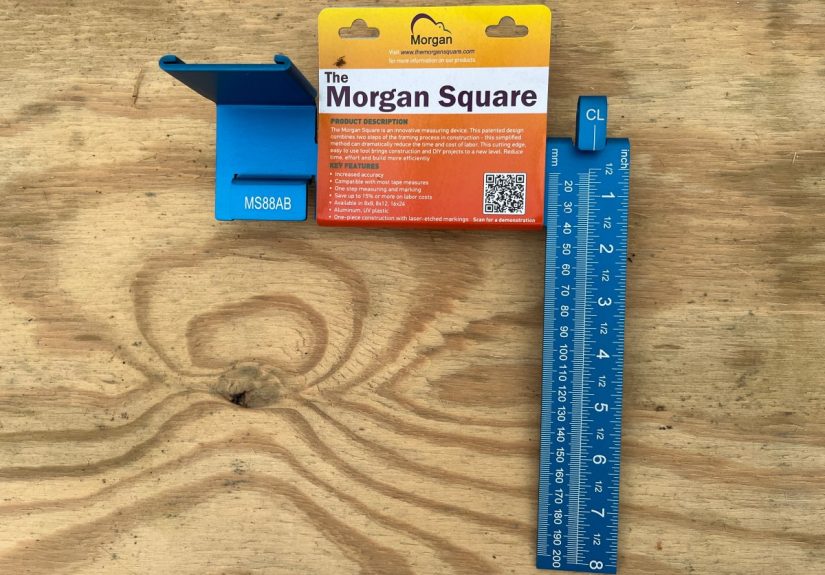
The Kiwi Vision Morgan Square is an innovative measuring and marking tool made for carpenters, woodworkers, remodelers, and DIY builders. At first glance, it looks like a modern carpenter’s square with bold markings and a slightly unusual profile. Look closer and the cleverness shows up: it is designed to hold or guide a tape measure so you can measure and mark in one smoother motion.
Traditional layout work often requires juggling a tape measure, pencil, square, and sometimes the board itself. That juggling act is fine when you are marking one cut. It becomes annoying when you are laying out studs, shelves, repetitive parts, deck boards, cabinet components, or anything that requires consistent spacing. The Morgan Square aims to simplify that process by helping your tape measure and square work together instead of behaving like two coworkers who refuse to read the same email thread.
The tool is available in multiple versions, including 8-inch and 12-inch aluminum models, wide-tape-compatible options, and plastic versions. Common features include imperial and metric markings, a 1-1/2-inch tongue, a centerline mark, a tape measure mount or clip, and a pencil holder. Aluminum models usually feature laser-etched markings and anodized finishes in bright colors, which helps visibility on a busy bench or jobsite.
How the Morgan Square Works
The main idea is simple: attach or align your tape measure with the square, pull the tape to the desired measurement, line up the measurement at the centerline indicator, and mark both sides of the tongue. Since the tongue is 1-1/2 inches wide, it matches the common width of standard 2x framing lumber. This makes it especially useful for stud layout, because you can mark both sides of a stud location quickly without doing extra math.
For example, when laying out studs 16 inches on center, many builders need to account for the actual width of the stud so the center lands where it should. The Morgan Square’s centerline marking is designed to reduce that mental calculation. Instead of measuring, subtracting, shifting the square, marking, and then wondering whether you just made the mark on the wrong side because someone started a circular saw nearby, you can align the tape to the centerline and make the layout marks faster.
The square also includes a 1-1/2-inch reference mark that can help with door and window opening layouts, including king studs, trimmers, and cripple studs. For framers, remodelers, and ambitious weekend warriors, that is a practical detail. It turns the tool from “interesting gadget” into “okay, this might actually save my Saturday.”
Key Features That Matter
1. One-Step Measuring and Marking
The strongest selling point of the Kiwi Vision Morgan Square is single-motion measuring and marking. By keeping the tape measure aligned with the square, the tool reduces the number of separate actions required to mark a board. That means fewer chances to shift the tape, flip the square, lose the pencil, or accidentally mark the wrong edge.
This matters most during repetitive work. If you are marking one board for a floating shelf, a normal speed square is already fast. If you are marking dozens of studs, slats, fence pieces, blocking locations, or cabinet parts, the Morgan Square becomes much more appealing. Small time savings multiply quickly when the same motion happens again and again.
2. Centerline Marking for Framing
The centerline mark is one of the tool’s most useful features. Because the tongue is 1-1/2 inches wide, the CL mark lands in the middle, helping users mark both sides of standard framing lumber from a centered measurement. For framing walls, this can make layout cleaner and more consistent.
In plain English: it helps you put studs where they belong without turning your brain into a calculator with sawdust in the buttons.
3. Tape Measure Compatibility
The Morgan Square is designed to work with most standard tape measures, and some models are made for wider tape measures. That is important because many pros and serious DIYers already have a favorite tape. A layout tool that forces you to abandon your preferred tape measure is like a coffee mug that only accepts decaf. Technically useful, emotionally suspicious.
Still, fit can vary depending on your tape measure’s body, belt clip, blade width, and hook design. If you use a very bulky or unusually shaped tape measure, the wide-compatible version may be the smarter choice.
4. Pencil Holder
The pencil holder sounds like a small bonus until you realize how often pencils disappear during layout. Keeping the marking tool close to the measuring tool prevents wasted steps. However, some thick carpenter pencils may not fit perfectly without adjustment, depending on the model and pencil shape. Standard pencils, mechanical pencils, or slimmer marking tools may fit more easily.
5. Aluminum Construction and Laser-Etched Markings
The aluminum versions are built for durability, visibility, and long-term use. Laser-etched markings are a big advantage because printed markings can fade with time, friction, dust, and abuse. A square that loses its markings is basically modern art with sharp corners.
The bright anodized finishes also help the tool stand out. In a shop full of wood, cords, clamps, and mysterious screws that definitely came from somewhere important, visibility is not a luxury. It is survival.
Does the Kiwi Vision Morgan Square Actually Help You Build Faster?
Yes, but with context. The Morgan Square helps you build faster by speeding up the measuring and marking stage, not by making the entire project magically shorter. It is most useful when your project includes repeated layout marks, centerline references, or 1-1/2-inch framing material.
Think of it like this: if you are building a small picture frame, the time savings may be modest. If you are framing a wall, laying out blocking, marking shelf pin locations, repeating cuts for a garden structure, or building multiple identical parts, the tool can create a smoother rhythm. Less tool switching means fewer interruptions. Fewer interruptions mean fewer mistakes. Fewer mistakes mean fewer boards sacrificed to the “oops pile.”
The biggest speed gain comes from workflow. Instead of setting down the tape, grabbing the square, marking one side, moving the square, marking the other side, and then hunting for your pencil, the Morgan Square keeps the process tighter. For solo builders, that matters. When you are working alone, you do not have a second pair of hands to hold the tape, stabilize the board, or say, “Hey, your pencil is behind your ear.”
Best Uses for the Morgan Square
Framing Walls
This is where the Morgan Square feels most natural. Stud layout, 16-inch-on-center marks, king studs, trimmers, and cripple studs all benefit from centerline marking and a 1-1/2-inch reference. If framing is part of your regular work, this tool is easy to justify.
DIY Home Improvement
For homeowners building shelves, partition walls, small sheds, garage storage, planter boxes, or workbenches, the Morgan Square can reduce layout confusion. It is especially useful for people who are comfortable with basic tools but still occasionally pause to ask, “Wait, which side of the line am I cutting?”
Woodworking and Repetitive Parts
Woodworkers often rely on precision and repeatability. While the Morgan Square is not a replacement for fine measuring tools in furniture-making, it is handy for rough layout, shop fixtures, utility builds, jigs, cabinet blocking, and repeated marks on stock.
Jobsite Layout
On a jobsite, speed and accuracy matter because interruptions are constant. The Morgan Square reduces the number of loose items you need to manage. That is valuable when working on ladders, floors, framing lumber stacks, or makeshift cutting stations.
What I Like About the Kiwi Vision Morgan Square
The first thing to like is the practical design. This is not a novelty tool created only to look clever in a product photo. The Morgan Square solves a real annoyance: switching between a tape measure and square during layout. The design is especially smart for framing because it directly addresses centerline measurement and standard lumber width.
The second strength is ease of use. There is a short adjustment period, especially if you have spent years using a standard speed square. But the learning curve is not steep. After a few marks, the workflow starts to make sense. Pull, align, mark. Repeat. Your brain gets to relax a little, which is nice because it has already been through enough measuring fractions.
The third advantage is accuracy support. No tool can prevent every mistake, but a tool that reduces unnecessary steps can reduce opportunities for errors. The Morgan Square helps keep the tape and square aligned, which makes layout feel more controlled.
The fourth benefit is visibility. The bright aluminum versions are easy to spot, and the etched markings are clean. That matters in real work environments where lighting is not always perfect and tools are constantly moving.
What Could Be Better?
The Morgan Square is useful, but it is not perfect for everyone. The biggest limitation is that it may feel unnecessary if you already have a strong, fast layout system. Experienced carpenters who can mark studs in their sleep may see it as helpful but not essential. For them, it is a workflow upgrade, not a revolution.
The second concern is tape measure fit. Although the tool is designed for broad compatibility, not every tape measure is shaped the same. Users with wide or bulky tapes should choose the wide-compatible version to avoid frustration.
The third issue is pencil fit. Some carpenter pencils may be too thick for the holder. This is not a dealbreaker, but it is worth knowing before you expect every pencil in your bucket to slide in gracefully like it was born there.
The fourth consideration is price. The aluminum models cost more than a basic speed square. If you only do occasional small repairs, a standard square may be enough. If you do repeated layout work, the value becomes much easier to see.
Kiwi Vision Morgan Square vs. Standard Speed Square
A standard speed square is one of the most useful tools ever made. It is affordable, compact, durable, and versatile. You can mark square lines, check angles, guide saw cuts, and perform quick layout tasks. The Morgan Square does not replace every function of a speed square, and it is not trying to.
Instead, the Morgan Square focuses on a specific workflow: measuring and marking with a tape measure attached or aligned. That makes it more specialized. If you want one cheap square for general use, a standard speed square wins. If you want a faster layout tool for repeated measuring and marking, the Morgan Square has the advantage.
The best comparison is not “which one is better?” It is “which one fits the job?” For quick angle marks and saw guides, keep your speed square. For repeated framing layout and centerline marking, the Morgan Square earns its place.
Who Should Buy the Morgan Square?
The Morgan Square is a strong fit for framers, remodelers, contractors, woodworking hobbyists, serious DIYers, and anyone who often marks repeated measurements. It is also a good tool for solo builders because it helps reduce the awkwardness of managing multiple tools at once.
It is less necessary for someone who only occasionally hangs shelves, cuts one board every few months, or already owns layout tools they rarely use. In that case, the Morgan Square may feel like a clever luxury rather than a must-have.
However, for people who regularly build with dimensional lumber, the tool makes sense. It is the kind of product that does not scream for attention but quietly saves a few seconds here, prevents a mistake there, and makes the whole process feel less clumsy.
Is It Worth the Price?
For frequent builders, yes. The value comes from time saved, mistakes avoided, and smoother workflow. If a tool prevents even a few miscuts or reduces layout time on larger projects, it can pay for itself quickly. Lumber is not exactly pocket change anymore, and wasting boards hurts both your wallet and your pride.
For casual users, the decision depends on how often you build. If your projects are mostly small and rare, a standard square may be enough. But if you are planning a shed, remodel, garage wall, workshop bench, basement framing project, or a series of home upgrades, the Morgan Square becomes much more attractive.
Real-World Experience: Building Faster With a Smarter Layout Rhythm
The biggest surprise with a tool like the Kiwi Vision Morgan Square is not that it changes what you build. It changes how your body moves while building. That may sound dramatic for a square, but layout work is full of tiny motions: pull the tape, hold the hook, grab the pencil, set the tape down, grab the square, line it up, mark, move, check again, then wonder why the pencil has vanished into the same universe as missing socks.
When the tape measure and square work together, the process feels more organized. On a framing-style project, for example, you can set your first reference point, pull the tape, align the centerline, mark both sides, and move to the next location without resetting your entire tool arrangement. That rhythm matters. Once you get into it, you stop thinking about the mechanics and start focusing on the build itself.
For a DIYer, that confidence can be just as valuable as speed. Many home projects slow down because the builder keeps second-guessing the marks. Is this the center? Did I account for the board width? Should the line be here or 3/4 inch over? The Morgan Square reduces that uncertainty during common framing and layout tasks. It gives you a repeatable method, and repeatable methods are how projects stop feeling like puzzles and start feeling like progress.
In a garage storage build, the tool would be useful for marking vertical supports, shelf framing, blocking, and repeated crosspieces. In a small shed project, it could help with wall framing layout and opening placement. In a workshop bench build, it could speed up repeated marks for legs, stretchers, and braces. The tool does not eliminate the need to think, but it does eliminate some of the boring little calculations that invite mistakes when you are tired.
Another practical experience point is tool management. Working alone often means you become the measuring department, marking department, cutting department, cleanup crew, and emotional support team for yourself. Anything that reduces tool switching helps. Keeping the pencil, tape, and square connected or close together makes the workbench feel less chaotic. You spend more time marking and less time patting your pockets like you are checking for a passport at the airport.
The Morgan Square also encourages cleaner lines. Because the tongue gives you a consistent marking surface, it is easier to mark both sides of a stud location neatly. That matters when you return later to place lumber, especially if several lines start competing for attention. Clean layout marks are like polite instructions from your past self. Messy layout marks are like a ransom note from a confused raccoon.
Where the experience is less impressive is on one-off tasks. If you need to cut a single board to length, the Morgan Square will work, but it may not feel dramatically faster than a regular square. Its strength appears during repetition. The more marks you make, the more the workflow advantage shows up. That is why framers, remodelers, and busy DIYers will appreciate it more than someone doing occasional light repairs.
Overall, the experience is best described as smoother rather than flashy. The Morgan Square does not feel like a gimmick once you understand the workflow. It feels like a tool built by someone who was tired of wasting time on tiny layout inefficiencies. And honestly, that is where many real project delays beginnot in the dramatic moments, but in the small repeated steps that slowly eat the afternoon.
Final Verdict: Does the Kiwi Vision Morgan Square Help You Build Faster?
The Kiwi Vision Morgan Square is a smart, practical layout tool that can genuinely help builders work faster, especially during repetitive measuring and marking. Its best features are the tape measure mount, centerline marking, 1-1/2-inch tongue, pencil holder, and durable aluminum construction. It is especially useful for framing, remodeling, DIY construction, woodworking layout, and projects where repeated marks need to be accurate.
It will not replace every square in your toolbox, and it may not be essential for very occasional users. But for anyone who regularly measures, marks, and builds with dimensional lumber, it is a worthwhile upgrade. The tool saves time not by doing something wildly futuristic, but by making a common task simpler, cleaner, and less error-prone.
If your projects often involve measuring twice, marking three times, losing the pencil once, and questioning your life choices near a pile of 2x4s, the Morgan Square deserves a serious look.
Note: This review article is written for web publishing in standard American English, based on publicly available product information, retailer specifications, and real-world tool-use analysis.